
Loading, please wait...
LOT 0159
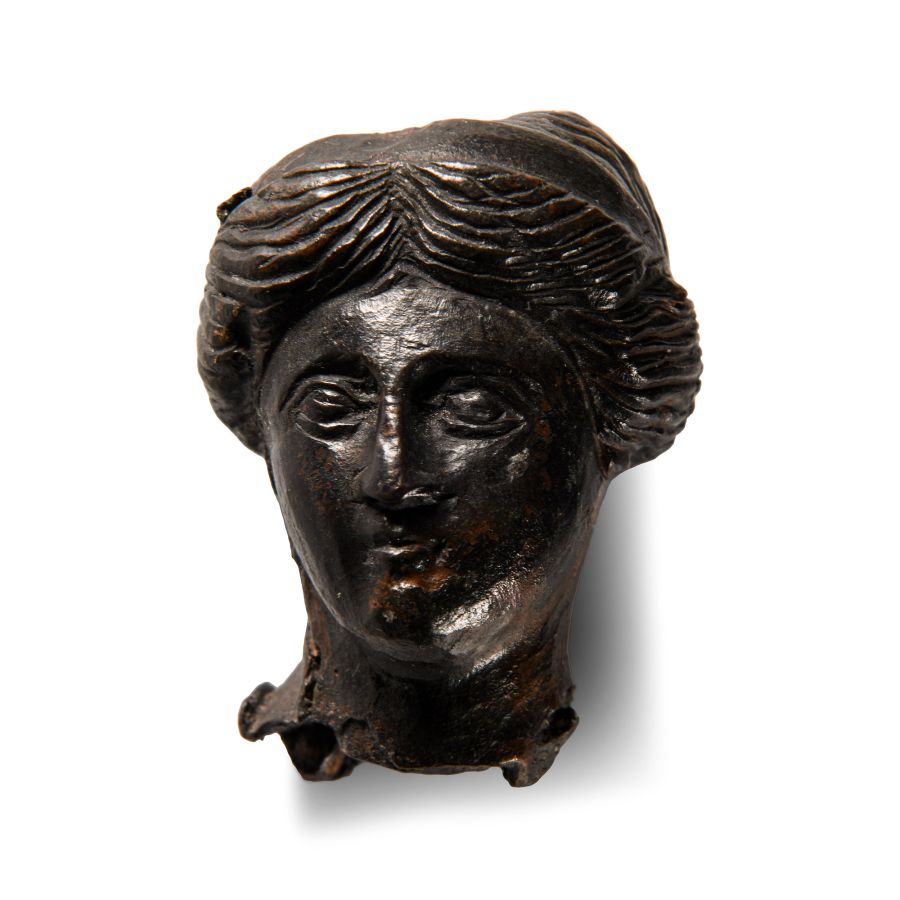
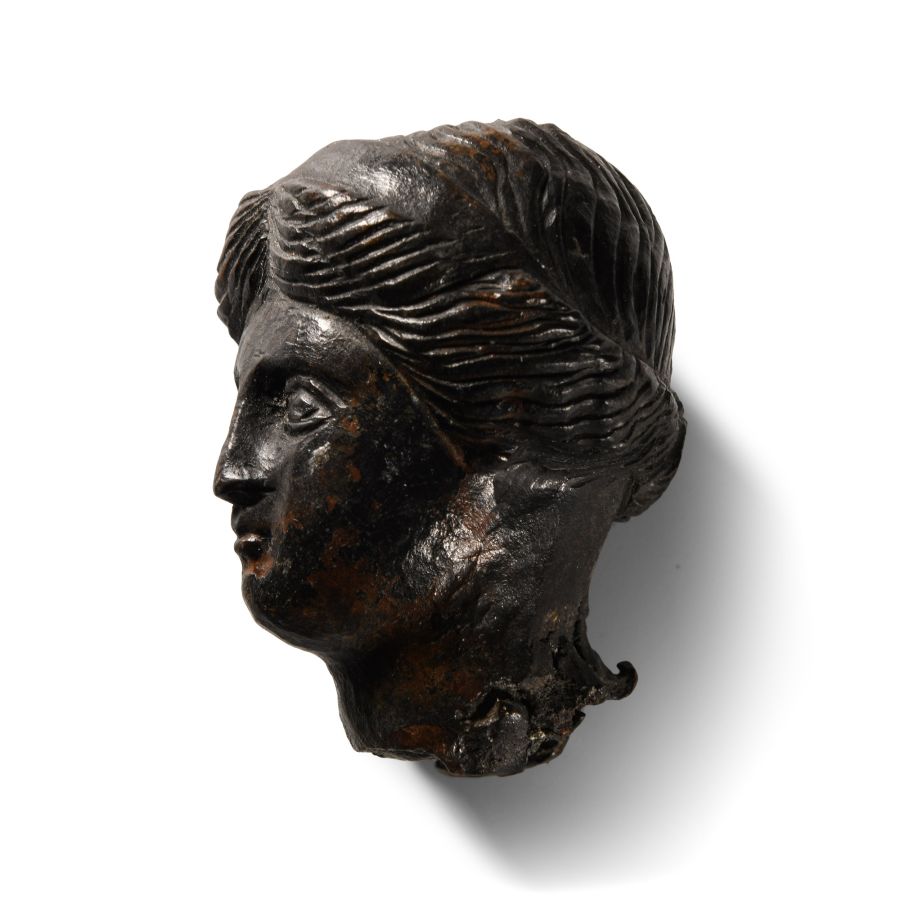
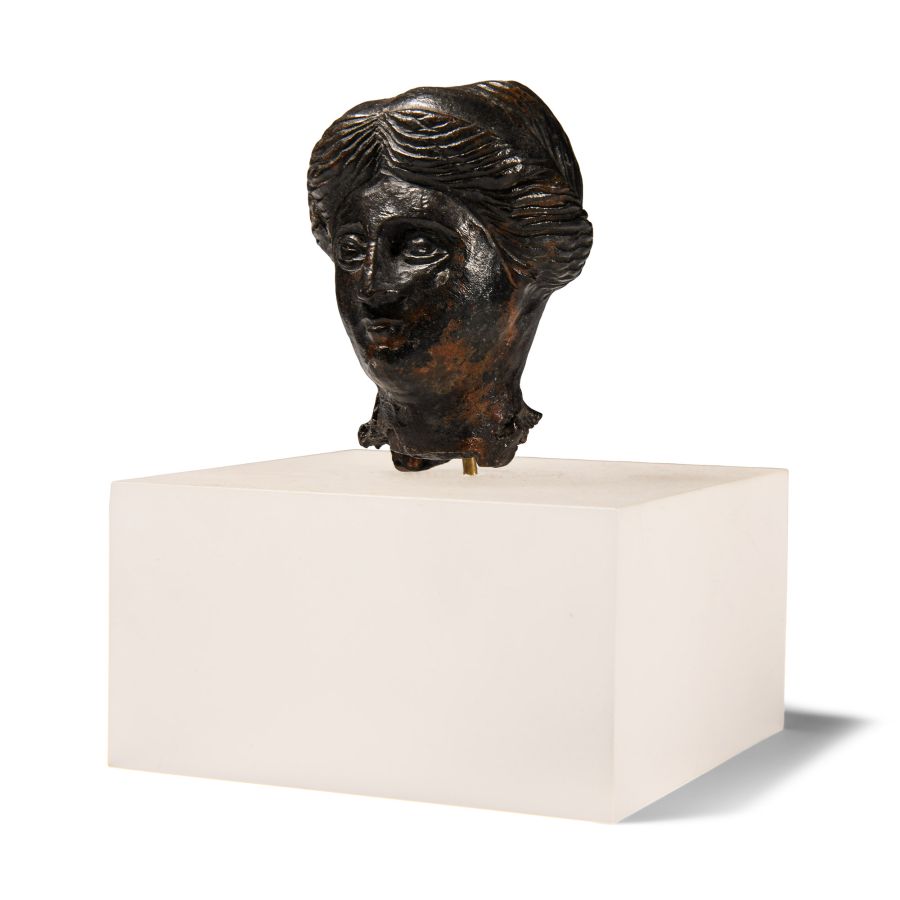
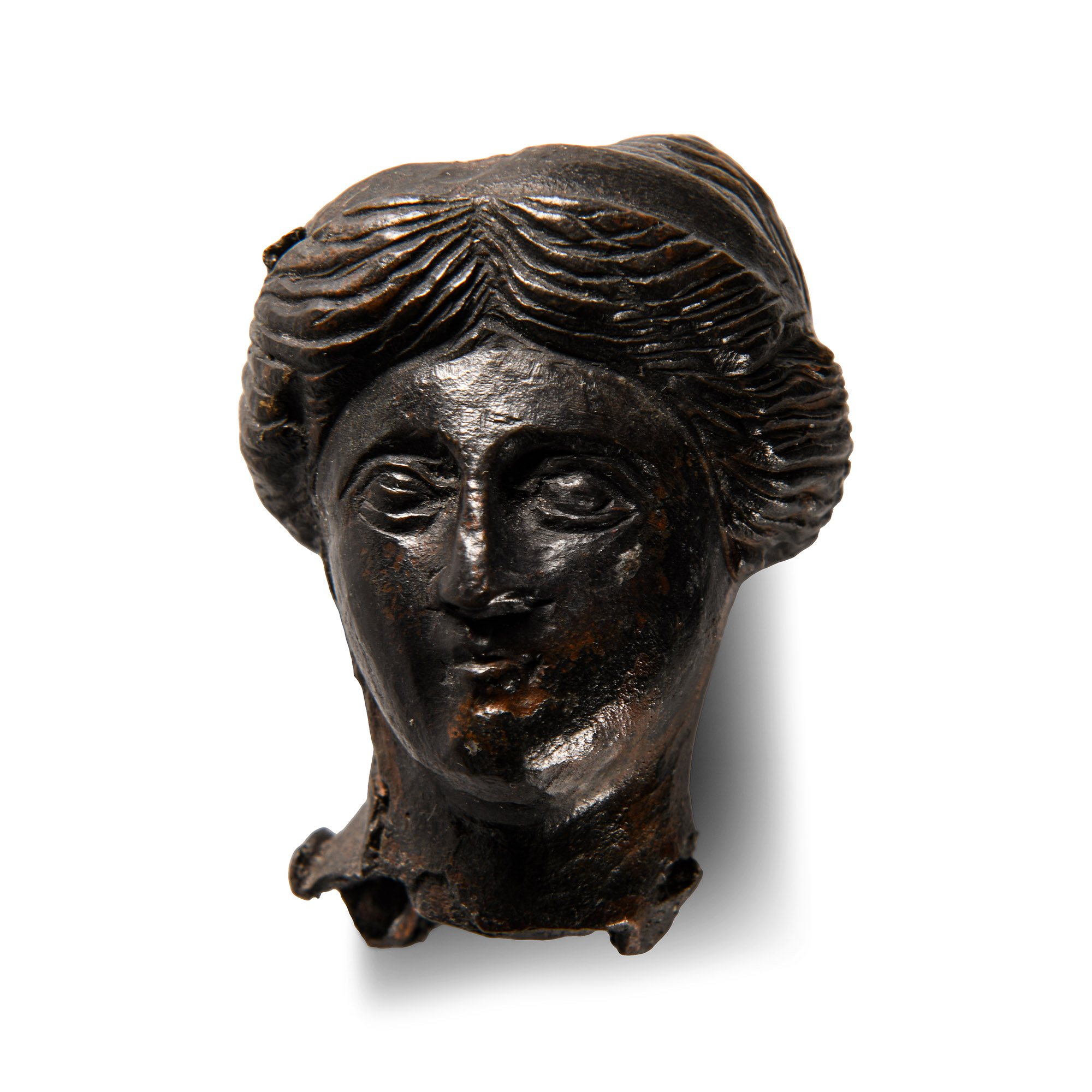
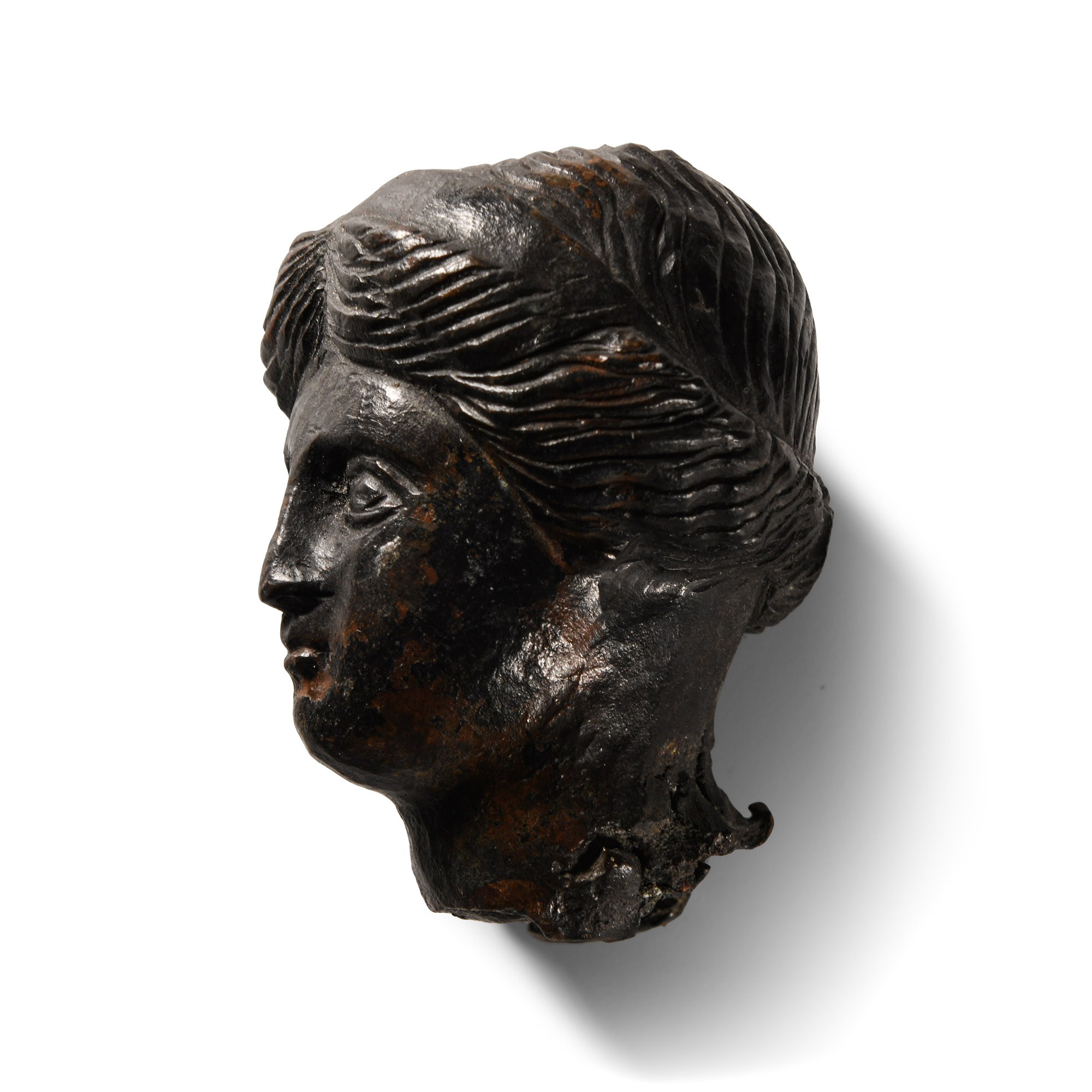
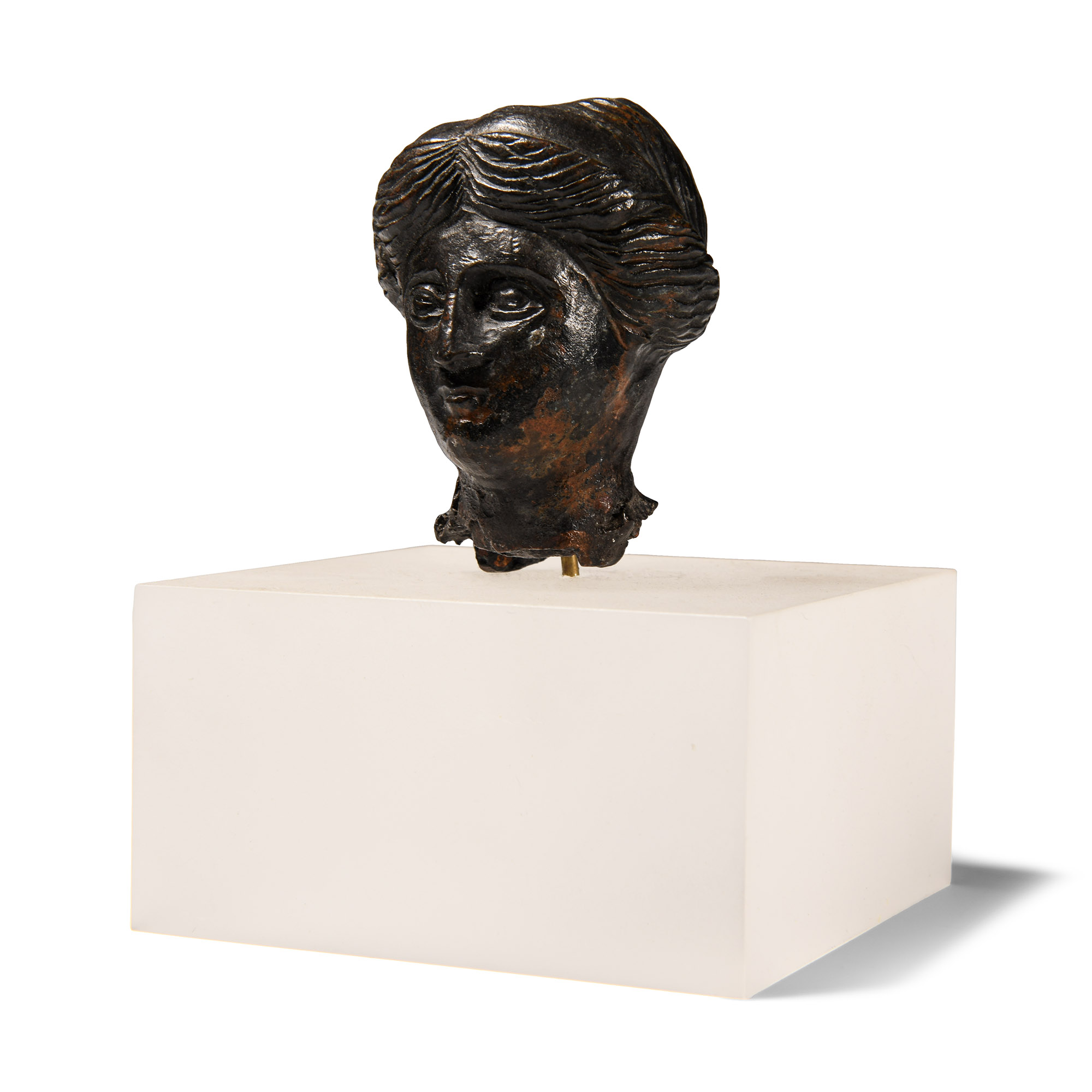
Roman Bronze Head of a Goddess
1ST CENTURY A.D.
3 3/4 in. (415 grams total, 94 mm including stand).
Hollow-formed with neatly dressed hair in a chignon, small facial features and exaggerated eyes; mounted on a custom-made stand. [No Reserve]
ProvenanceFrom a collection acquired on the UK art market from various auction houses and collections mostly before 2000.
From an important Cambridgeshire estate; thence by descent.
Cf. Boucher, S. & Tassinari, S., Musée de la Civilisation Gallo-Romaine a Lyon: Bronzes Antiques I. Inscriptions, Statuaire, Vaisselle, Lyon, 1976, item 34, for type.
FootnotesThe head could be considered to represent the goddesses Juno or Tutela. The head is crowned with a simple diadem, which could fit with the identification of Venus, Juno, or Diana, or more particularly with a series of Roman benefactor and protective goddesses: Fortuna, Abundance or Concordia.
CONDITIONTimeLine Auctions follows a vetting process to ensure the authenticity and legality of all items, reinforcing our commitment to integrity and responsible trading. Each antiquity, antique, and coin lot undergoes thorough examination by a vetting committee of at least ten external specialists, professional trade association members, scientists, and archaeologists: Our Vetting Process
AUCTIONS:
TimeLine is a leading auction house specialising in antiquities, ancient art, collectables, natural history, coins, medals, and books. Our auctions offer museums, collectors, historians, and enthusiasts the opportunity to acquire unique and historically significant pieces.
-
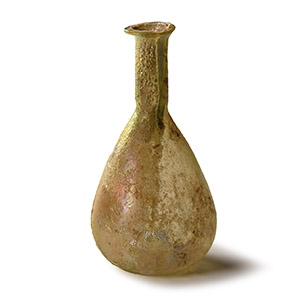
Roman Piriform Glass Flask
1st century A.D.Sold for (Inc. bp): £117
An iridescent glass unguentarium with piriform body, tubular neck with everted rolled rim. 6.65 grams, 69 mm
Acquired 1980-2015. Ex Abelita family collection. -
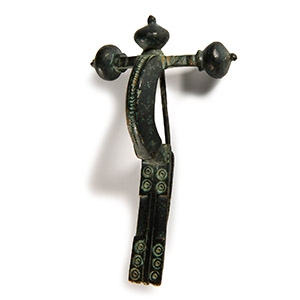
Roman Bronze Crossbow Brooch
4th century A.D.Sold for (Inc. bp): £124
With onion-knop finials, herringbone detailing to the bow, ring-and-dot motifs and chamfered sections to the foot, hinged pin to the reverse. 52 grams, 84 mm
Ex German art market, 2000s. Acquired from an EU collector living in London. From the collection of Surrey, UK, gentleman. -
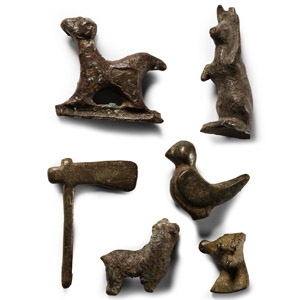
Roman Bronze Artefact Group
Mainly 1st-2nd century A.D.Sold for (Inc. bp): £130
Mixed group of votives including a hare, bull, axe and other items. 48 grams total, 15-33 mm
From a collection acquired on the UK art market from various auction houses and collections mostly before 2000. From an important Cambridgeshire estate; thence by descent.
