
Loading, please wait...
LOT 0864
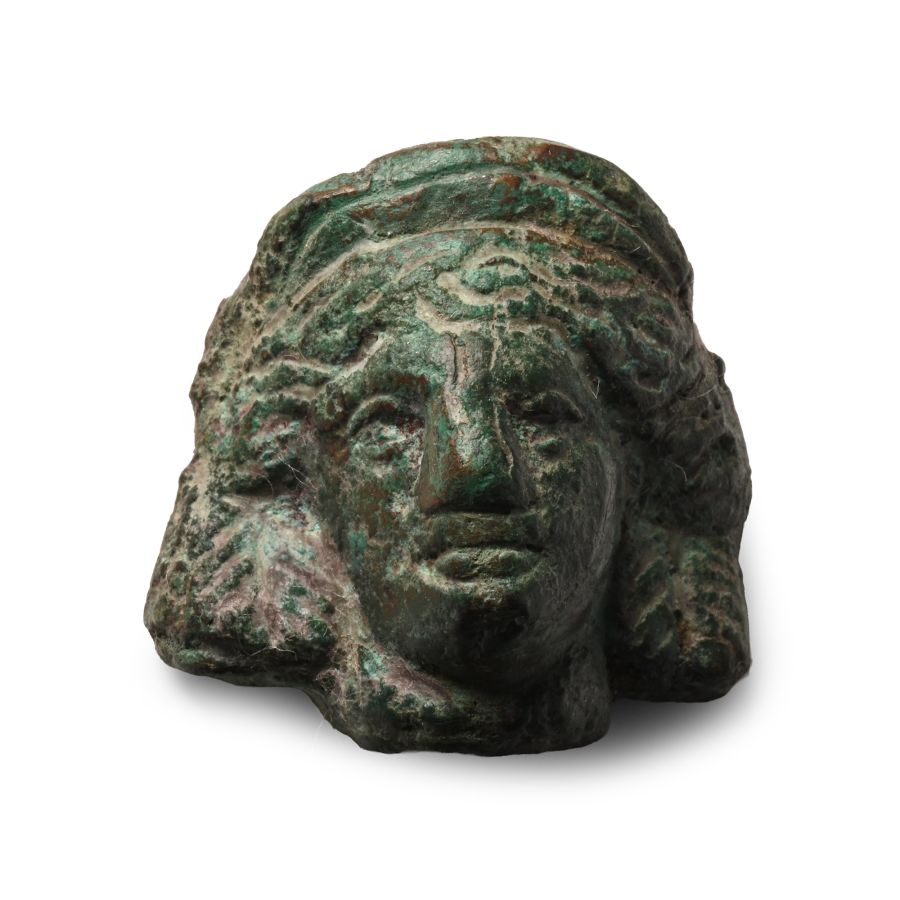
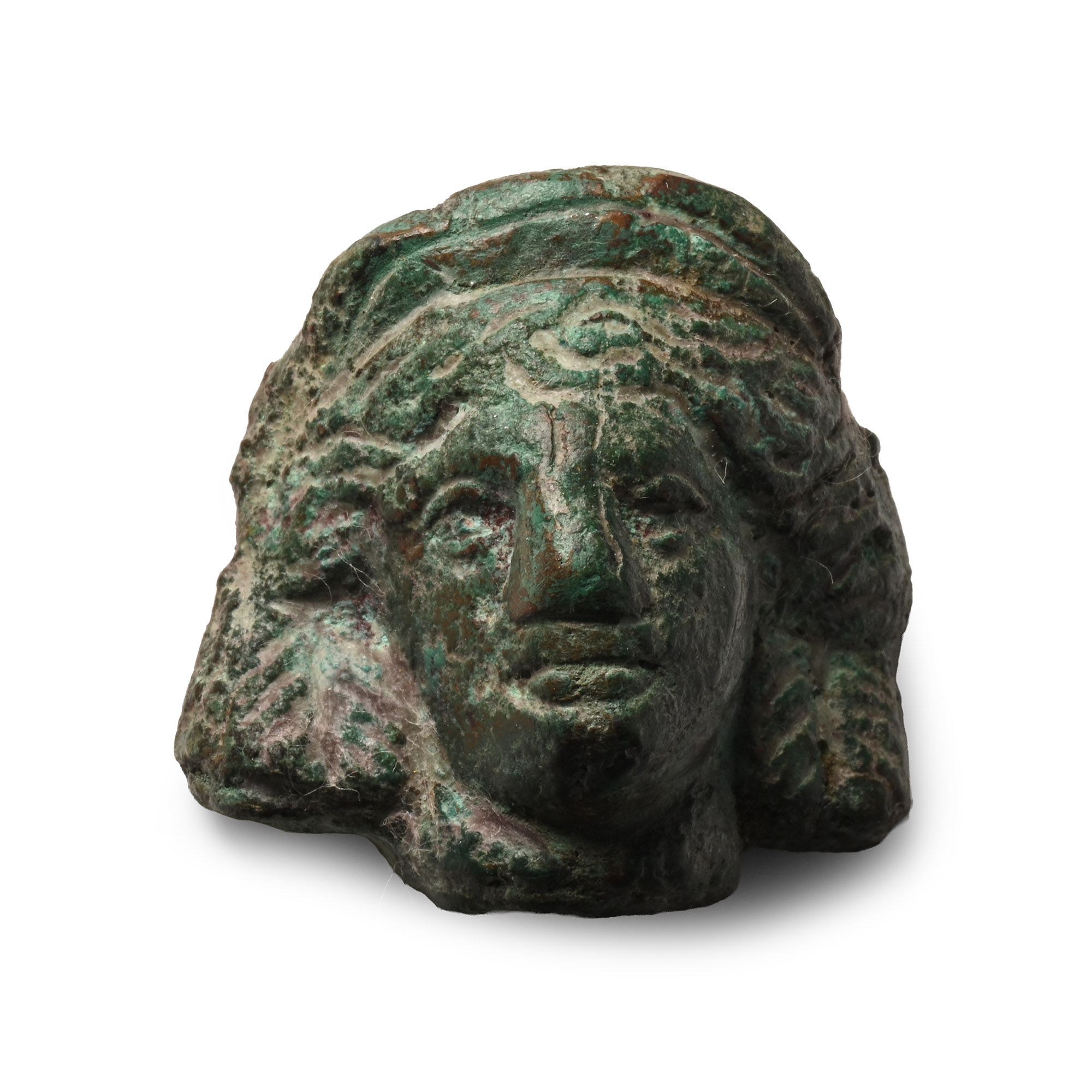
Roman Bronze Head Mount
2ND-4TH CENTURY A.D.
1 1/4 in. (32.7 grams, 30 mm).
Modelled in the half-round, female mask with copious hair and diadem; hollow to reverse. [No Reserve]
ProvenanceEx P Chapman collection, 1980s-1990s.
CONDITIONTimeLine Auctions follows a vetting process to ensure the authenticity and legality of all items, reinforcing our commitment to integrity and responsible trading. Each antiquity, antique, and coin lot undergoes thorough examination by a vetting committee of at least ten external specialists, professional trade association members, scientists, and archaeologists: Our Vetting Process
AUCTIONS:
TimeLine is a leading auction house specialising in antiquities, ancient art, collectables, natural history, coins, medals, and books. Our auctions offer museums, collectors, historians, and enthusiasts the opportunity to acquire unique and historically significant pieces.
-
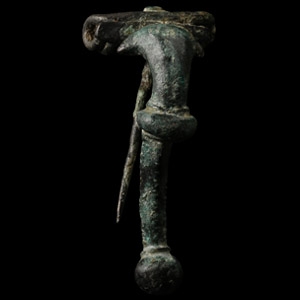
Roman Bronze Bow Brooch
2nd century A.D.Estimate: £100 - 140 (+bp*)
Opening Bid: £40
With chord and pin (now detached) at the head, D-section bow with lateral spurs, collar and swept foot with notched detailing, bulb finial, catch to the reverse. 26.6 grams, 54 mm
Ex important German collection, 1990s. This lot is accompanied by an illustrated lot declaration signed by the Head of the Antiquities Department, Dr Raffaele D’Amato.
This type of fibula, common in Pannonia, was typically worn in men's clothing. It closed the paenula on the chest, arranged horizontally. Naturally, it could also be worn with military attire. -
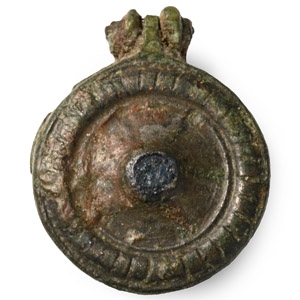
Romano-British Enamelled Bronze Seal Box
2nd century A.D.Sold for (Inc. bp): £46
Circular box with hinged lid decorated with blue enamel in the centre, surrounded by traces of red enamel; base perforated with four holes for affixing to the wrapping and a small notch on each side for the security cord for the bag. 9.39 grams, 25 mm
Found Norfolk, UK. From a Kent collection formed in the 1990s. -
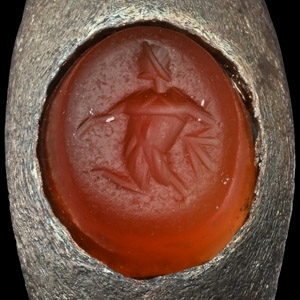
Roman Silver Ring with Harpy Gemstone
2nd-3rd century A.D.Sold for (Inc. bp): £98
D-section hoop with flared shoulders, inset carnelian with intaglio of a Harpy. 5.81 grams, 22.21 mm overall, 17.71 mm internal diameter (approximate size British F 1/2, USA 3, Europe 4.3, Japan 4)
Ex Shiraz Antiques, London, W1, in 1998.
