
Loading, please wait...
LOT 0775
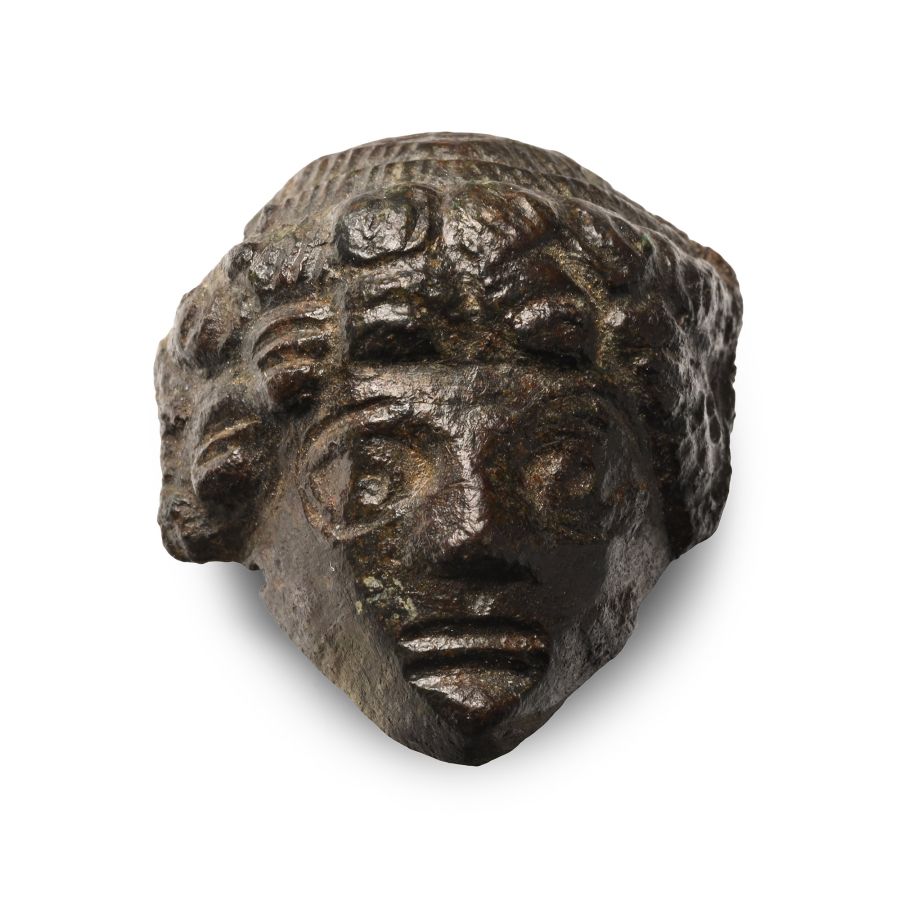
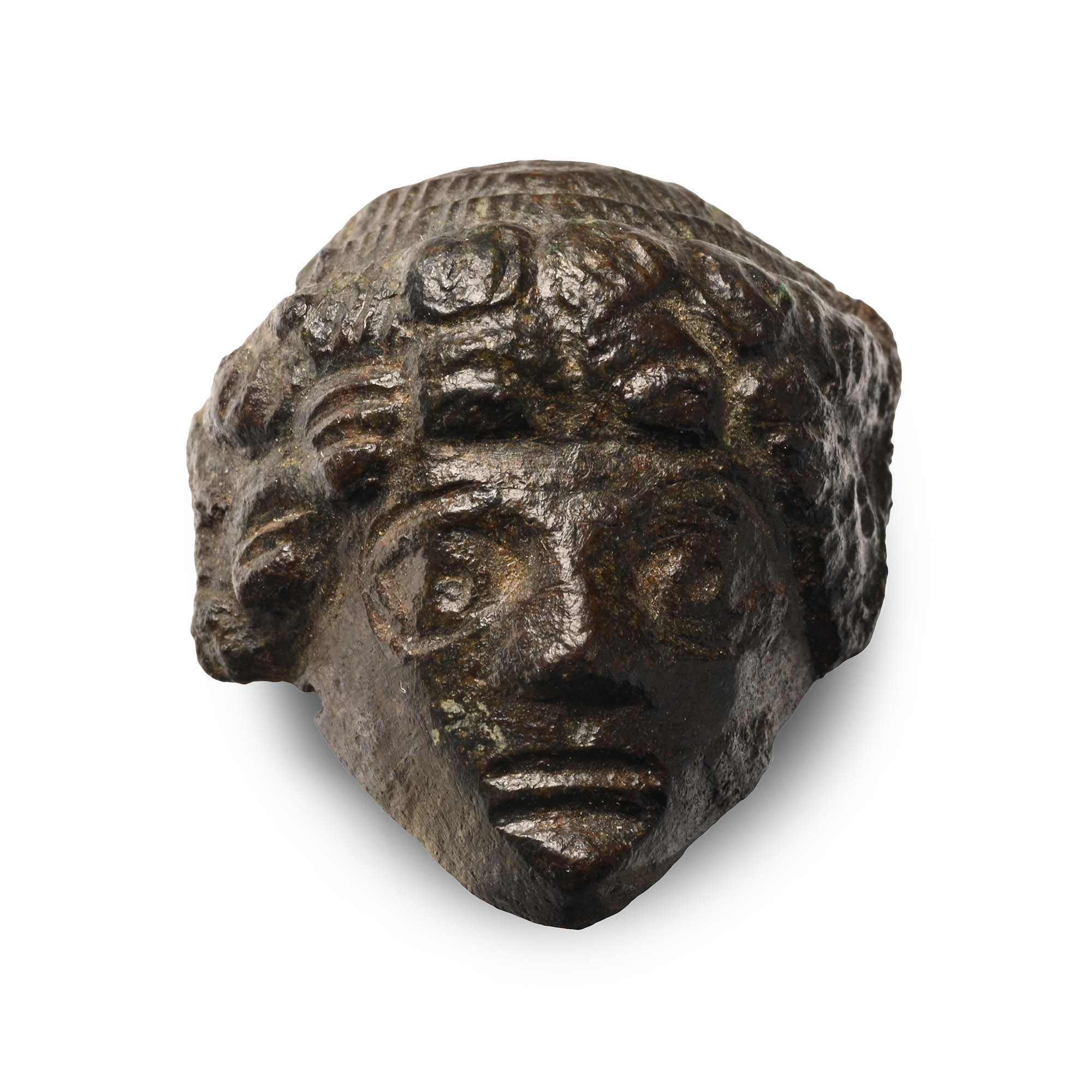
Roman Bronze Head Mount
2ND-4TH CENTURY A.D.
1 1/4 in. (24.5 grams, 30 mm).
Modelled in the half-round mask with copious hair and a circlet; exaggerated eyes, perhaps intended to have a silver overlay; modern mounting stud to the reverse. [No Reserve]
ProvenanceEx P. Chapman collection, 1980s-1990s.
CONDITIONTimeLine Auctions follows a vetting process to ensure the authenticity and legality of all items, reinforcing our commitment to integrity and responsible trading. Each antiquity, antique, and coin lot undergoes thorough examination by a vetting committee of at least ten external specialists, professional trade association members, scientists, and archaeologists: Our Vetting Process
AUCTIONS:
TimeLine is a leading auction house specialising in antiquities, ancient art, collectables, natural history, coins, medals, and books. Our auctions offer museums, collectors, historians, and enthusiasts the opportunity to acquire unique and historically significant pieces.
-
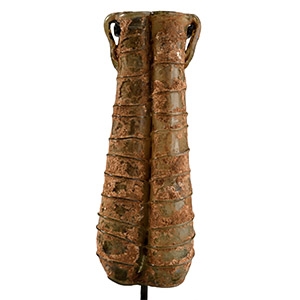
Roman Glass Double Unguentarium
4th-5th century A.D.Estimate: £400 - 600 (+bp*)
Opening Bid: £210
Comprising two conjoined tapering tubular cells, with applied handles at the shoulder; mounted on a custom-made stand. 89 grams total, 13.5 cm including stand
From an important collection of glass, London, UK, 1990s. -
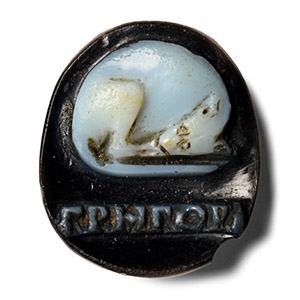
Roman Sardonyx Cameo of a Sleeping Dog with Greek Inscription
2nd-3rd century A.D.Sold for (Inc. bp): £1,690
With a cameo image of a lying dog curled to the right, ancient Greek lettering below 'ΓΡΗΓΟΡΙ (sic)': either 'Be wakeful' or '(ring/seal) of Gregory. 0.61 grams, 12 mm
Private English collection, formed between the late 1970s and early 1990s. Private collection, London, UK. -
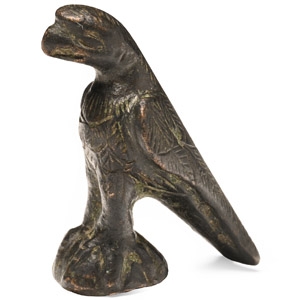
Roman Bronze Eagle Statuette
Circa 3rd-4th century A.D.Sold for (Inc. bp): £85
Depicted standing on a mound, wings folded along the body, large head with lentoid eyes, incised feather detailing. 44.8 grams, 40 mm
From a private Tyneside collection, formed since the early 2000s.
