
Loading, please wait...



LOT 0119
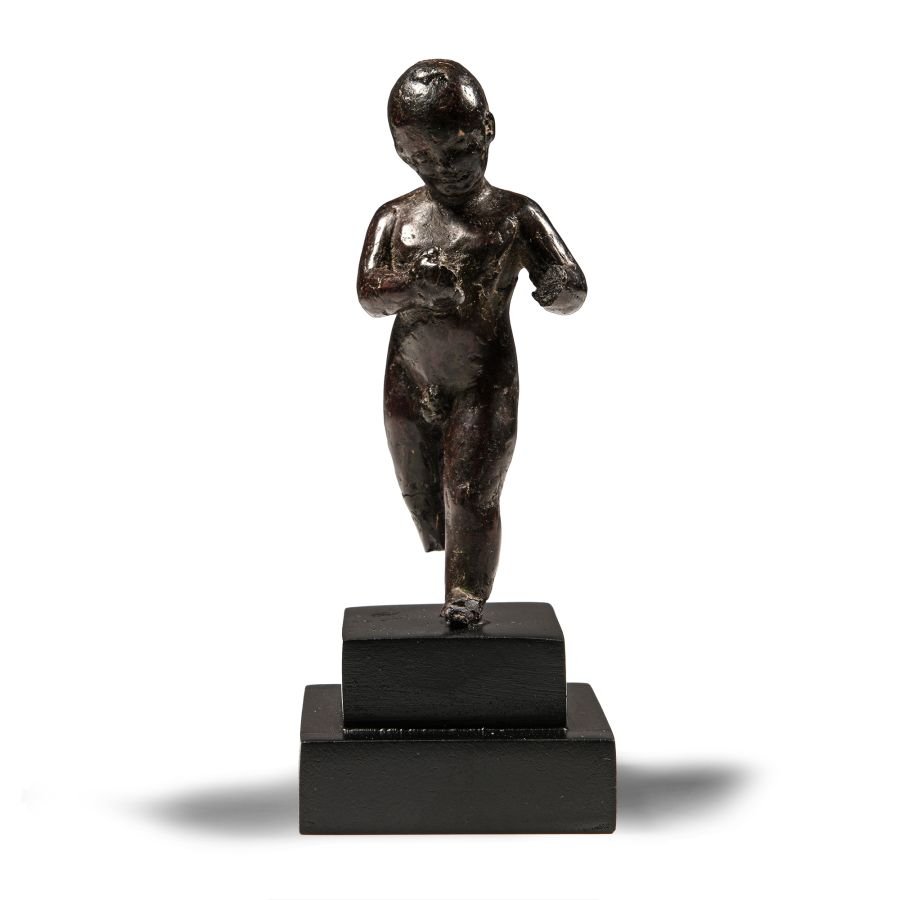
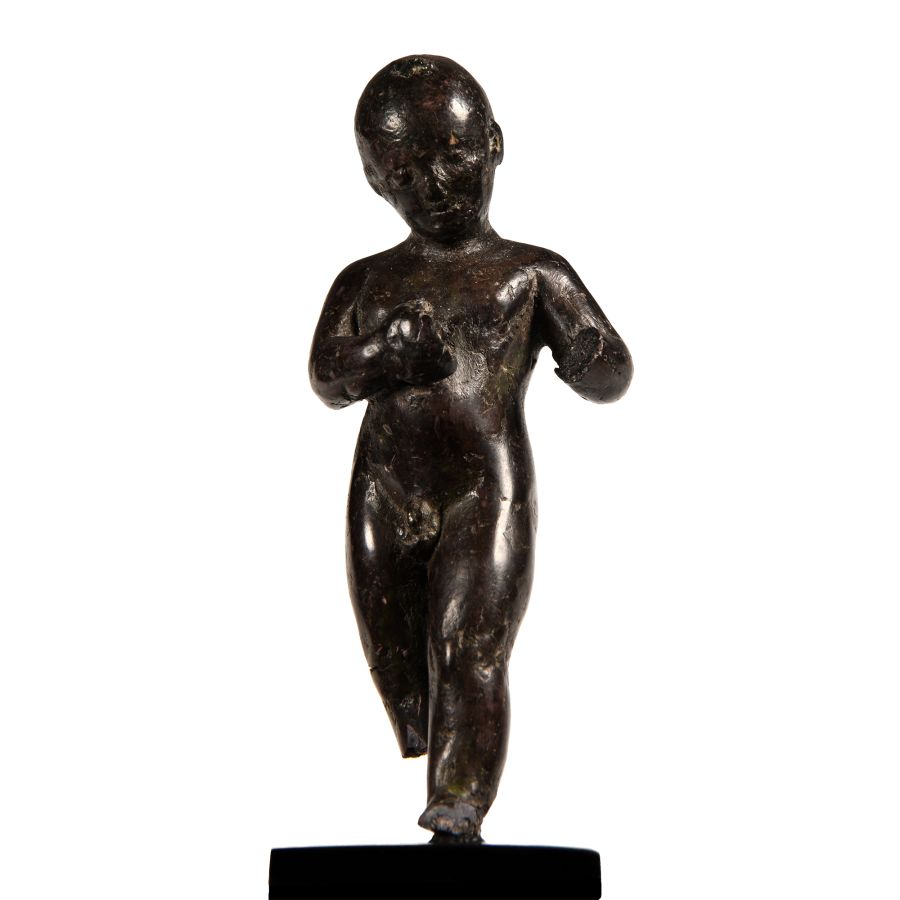
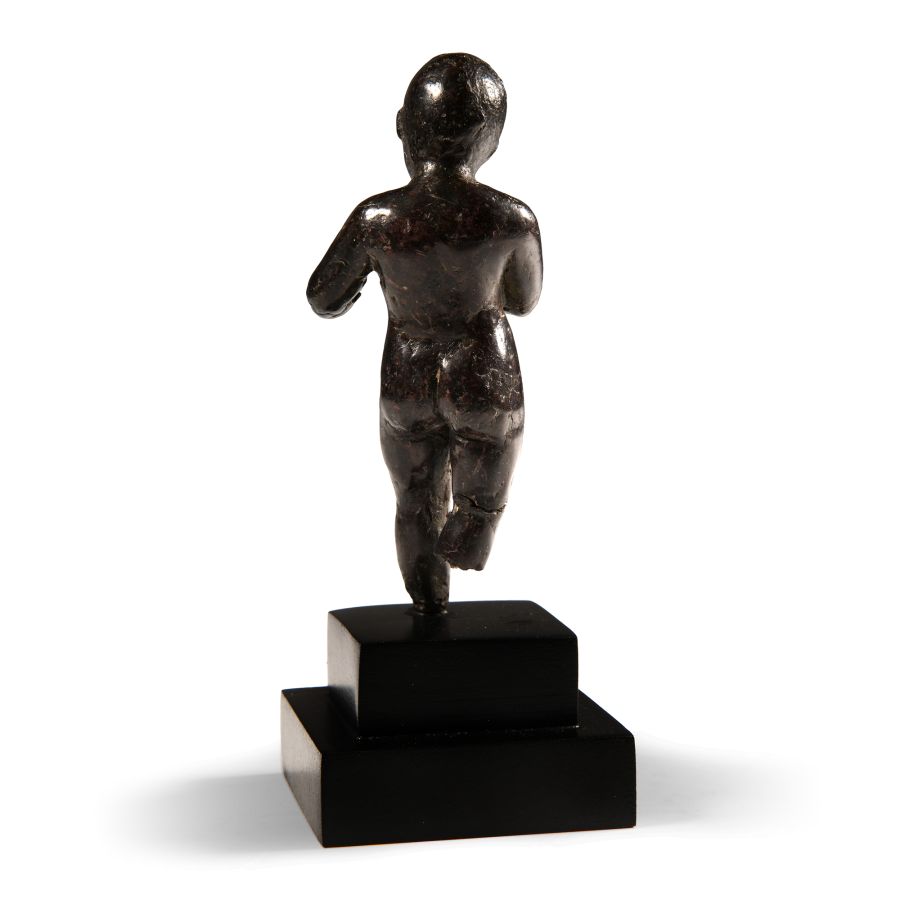
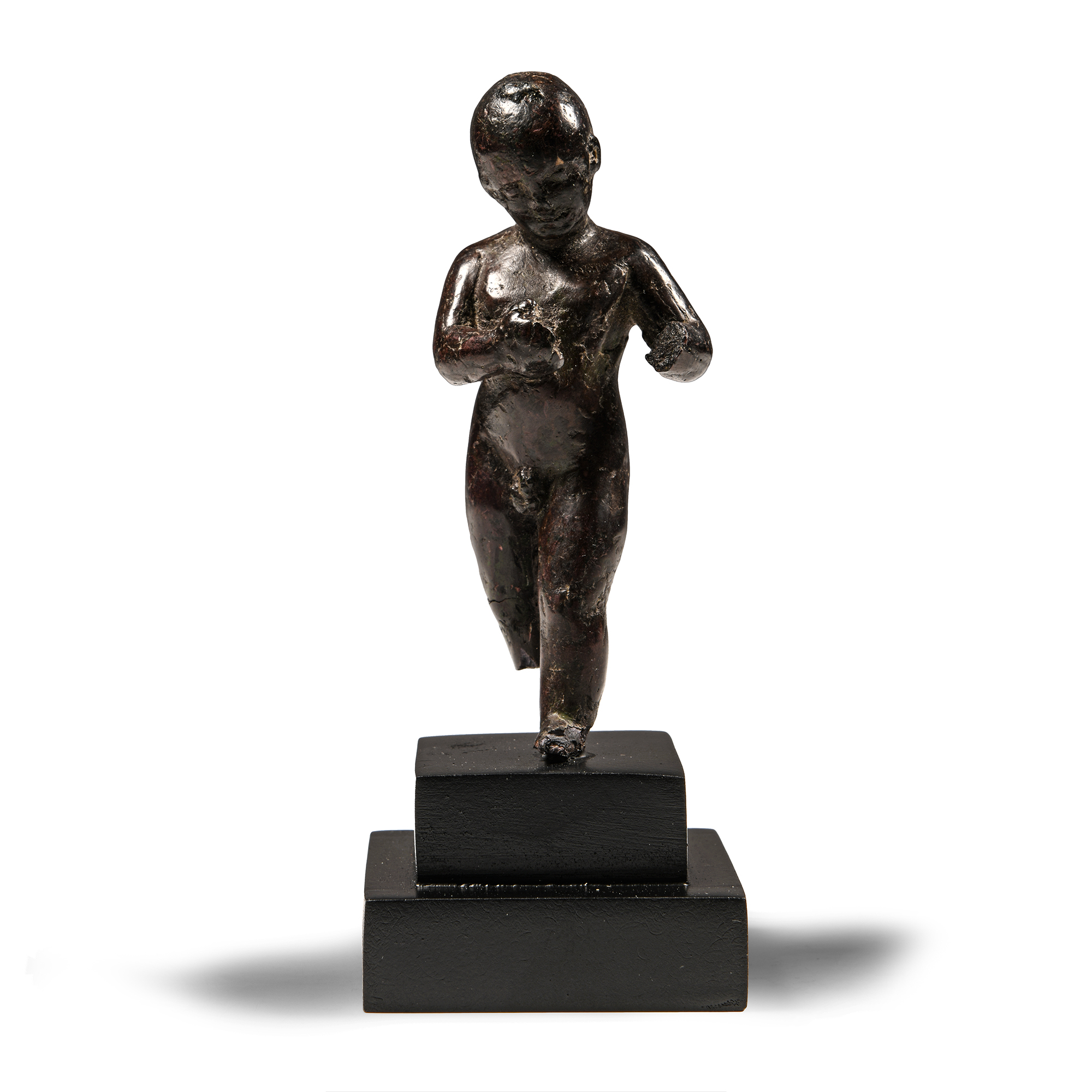
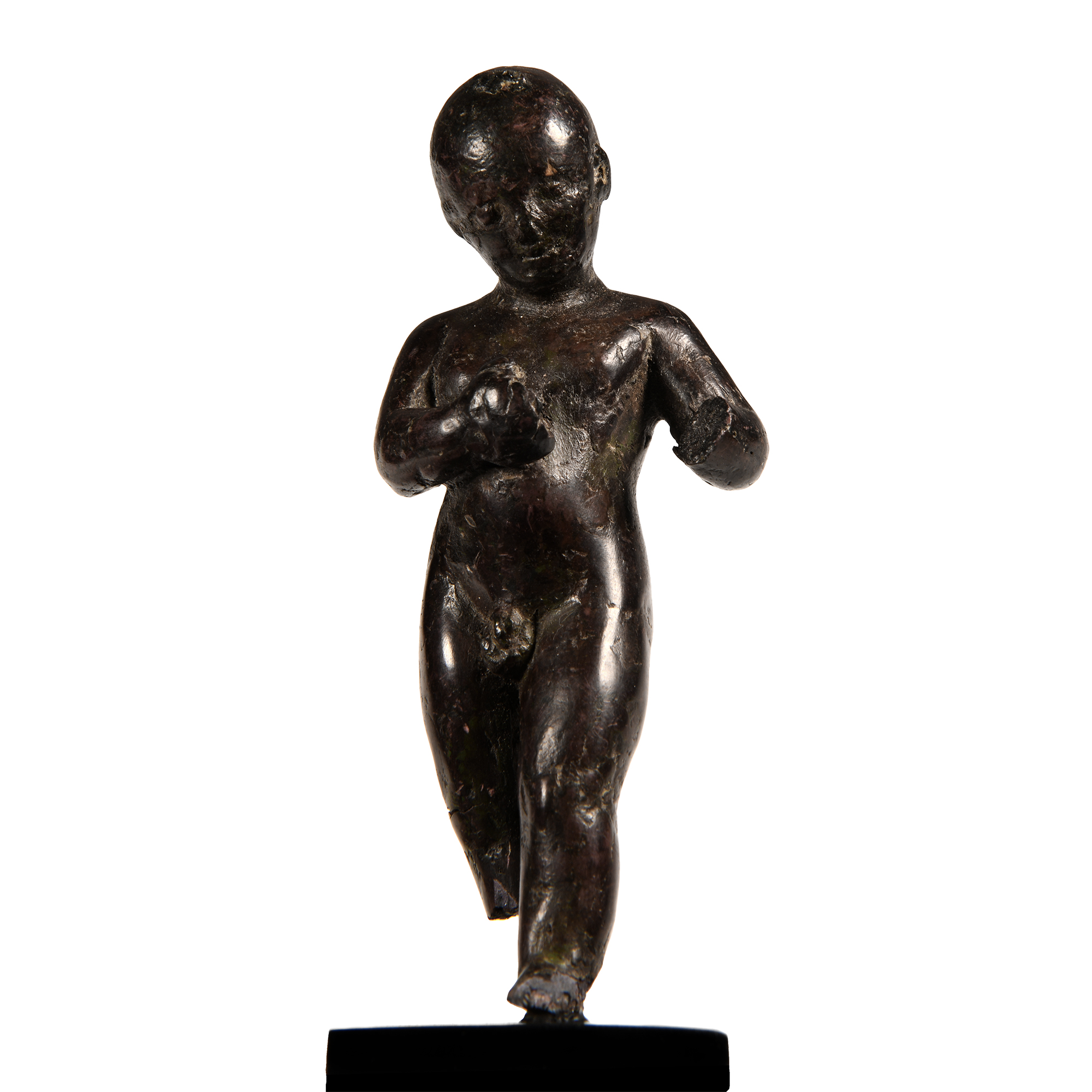
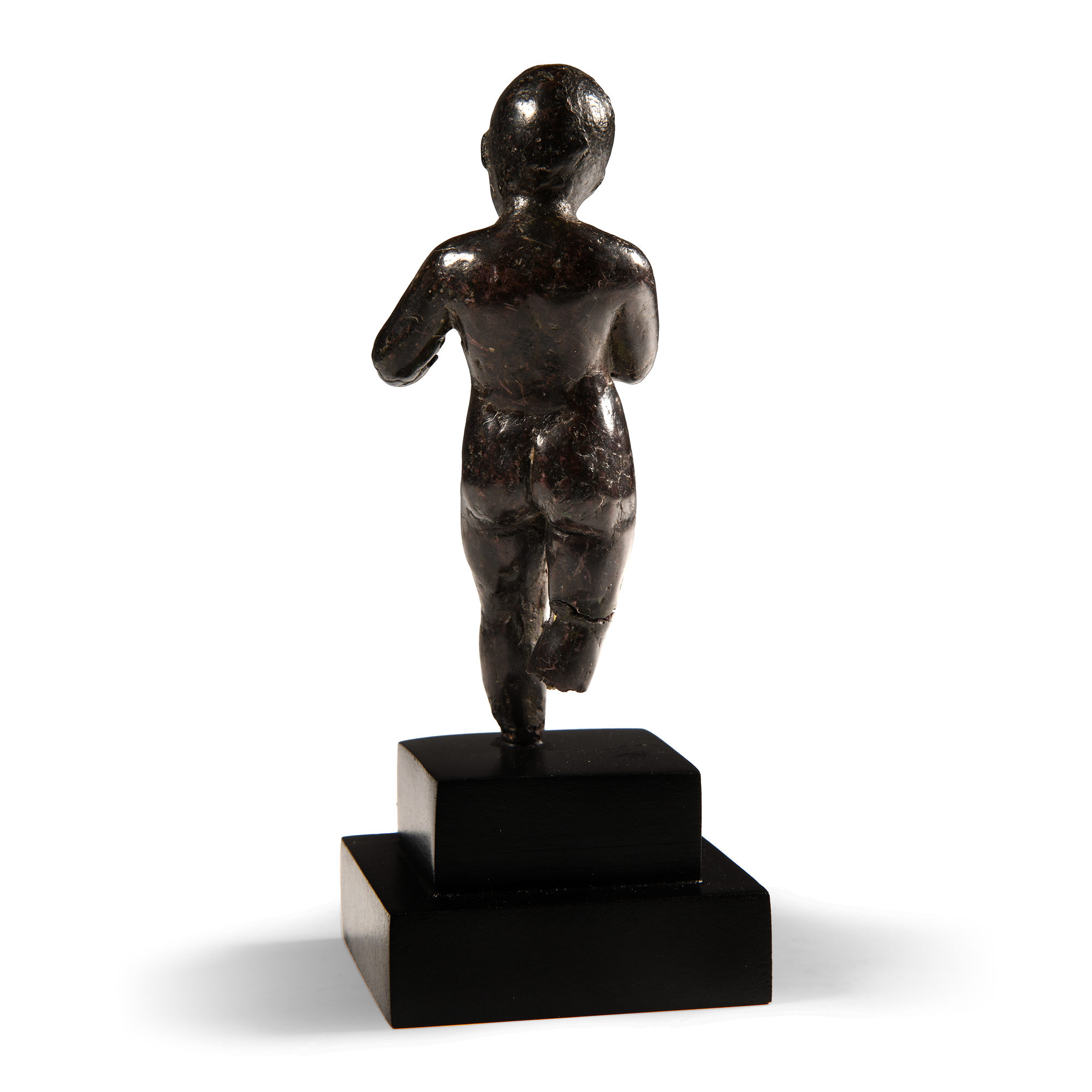
Roman Bronze Harpocrates Statuette
3RD CENTURY A.D.
4 3/4 in. (231 grams total, 12 cm high including stand).
Modelled nude in advancing pose with right arm bent across the body and fist clenched to support an attribute (absent); the facial details in light relief and small forelock to the brow; mounted on a custom-made display stand. [No Reserve]
ProvenanceFrom a collection acquired on the UK art market from various auction houses and collections mostly before 2000.
From an important Cambridgeshire estate; thence by descent.
See Swan Hall, E., 'Harpocrates and Other Child Deities in Ancient Egyptian Sculpture' in Journal of the American Research Center in Egypt, Vol. 14, 1977, pp.55-58, fig.1, pl.XXVII; fig.4, pl.XXVIII, for similar types.
FootnotesThe cult of Harpocrates, began in Ptolemaic times, expanding considerably in the Imperial Roman period, and absorbing influences from the cult of ram of Mendes, the ithyphallic Min, the crocodile god Sobek, and Hercules. The missing left hand probably held a small cornucopia.
CONDITIONTimeLine Auctions follows a vetting process to ensure the authenticity and legality of all items, reinforcing our commitment to integrity and responsible trading. Each antiquity, antique, and coin lot undergoes thorough examination by a vetting committee of at least ten external specialists, professional trade association members, scientists, and archaeologists: Our Vetting Process
AUCTIONS:
TimeLine is a leading auction house specialising in antiquities, ancient art, collectables, natural history, coins, medals, and books. Our auctions offer museums, collectors, historians, and enthusiasts the opportunity to acquire unique and historically significant pieces.
-
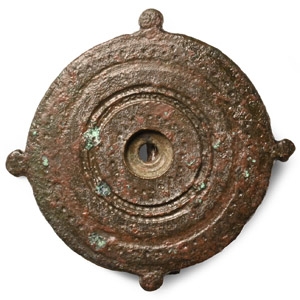
Roman Bronze Discoid Plate Brooch
2nd century A.D.Sold for (Inc. bp): £72
With concentric rings and punched detailing, radiating knops, pin, pin-lugs and catchplate to the reverse. 6.97 grams, 30 mm
Ex property of a London collector, acquired before 1980. Property of a Kent lady collector. -
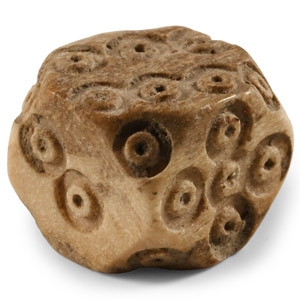
Roman Bone Gaming Dice
1st-4th century A.D.Sold for (Inc. bp): £130
Cuboid with chamfered corners each with a ring-and-dot motif, reserved pellet marks disposed 1:6, 2:4, 3:5. 1.7 grams, 10 mm
Acquired from Red House Antiques, York, UK, in 2006. Ian Wilkinson collection, Nottinghamshire, UK. -
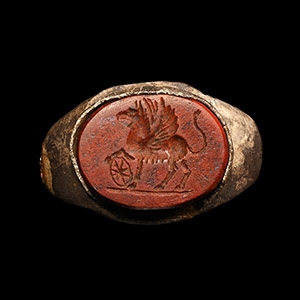
Roman Bronze Ring with Gryphon and Shield Gemstone
Mid 3rd century A.D.Sold for (Inc. bp): £442
With a possibly later inset red jasper plaque with incuse gryphon supporting a shield or spoked wheel. 9.94 grams, 23.87 mm overall, 16.67 mm internal diameter (approximate size British H, USA 3 3/4, Europe 6.18, Japan 6)
Ex German art market, 2000s. Acquired from an EU collector living in London. From the collection of Surrey, UK, gentleman.
