
Loading, please wait...
LOT 0890
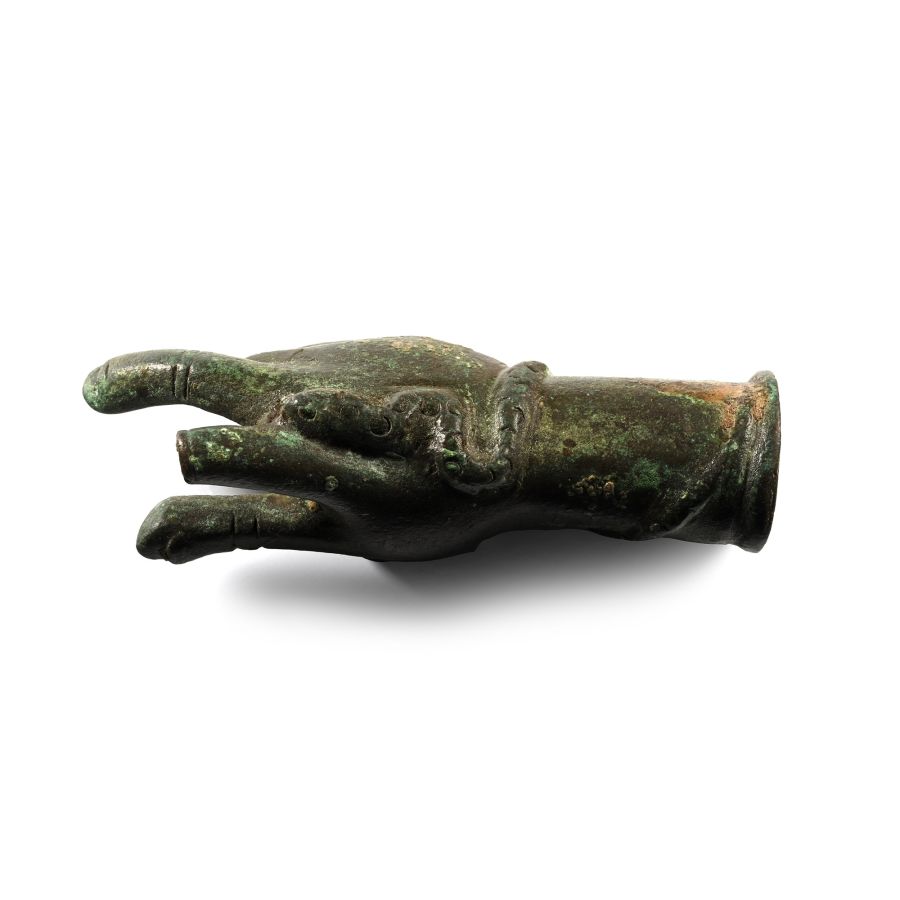
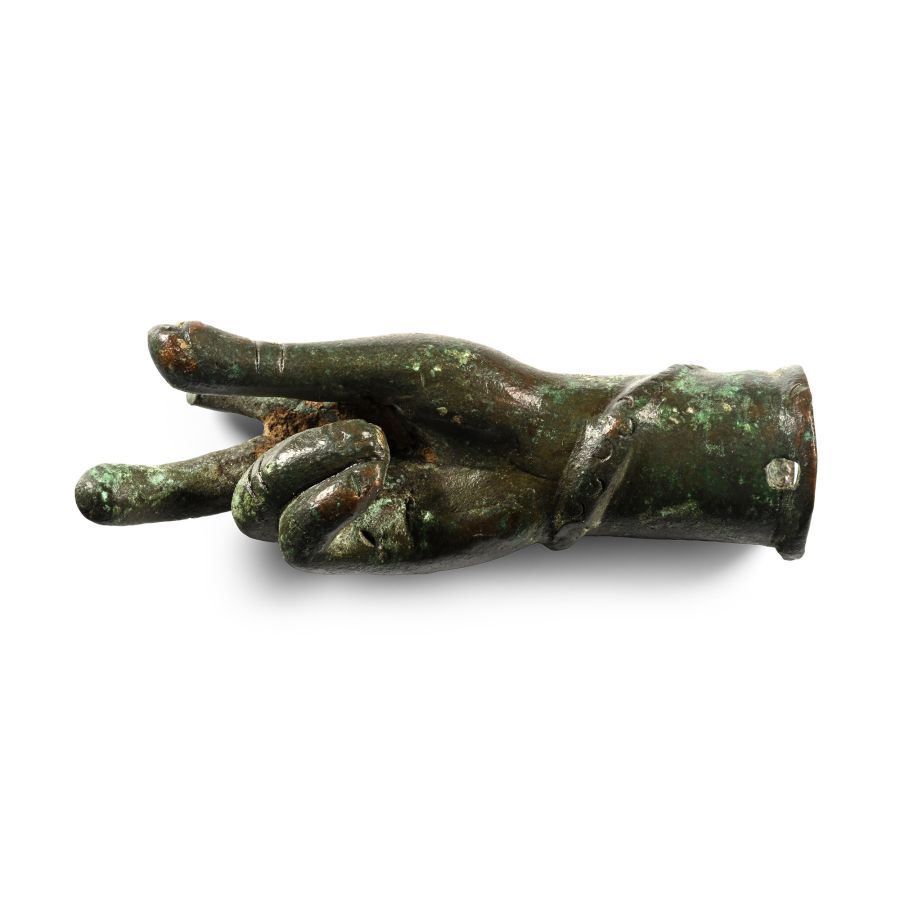
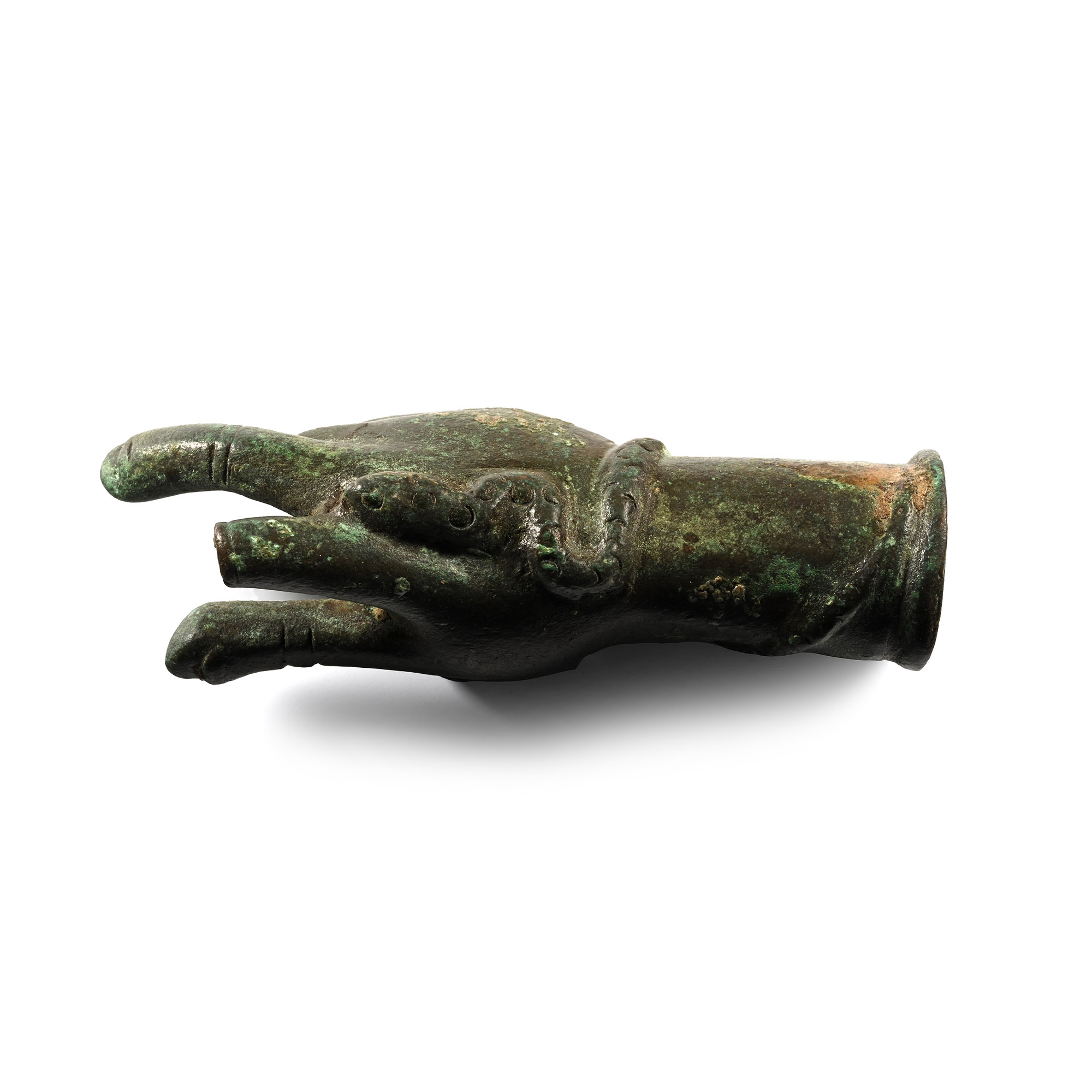
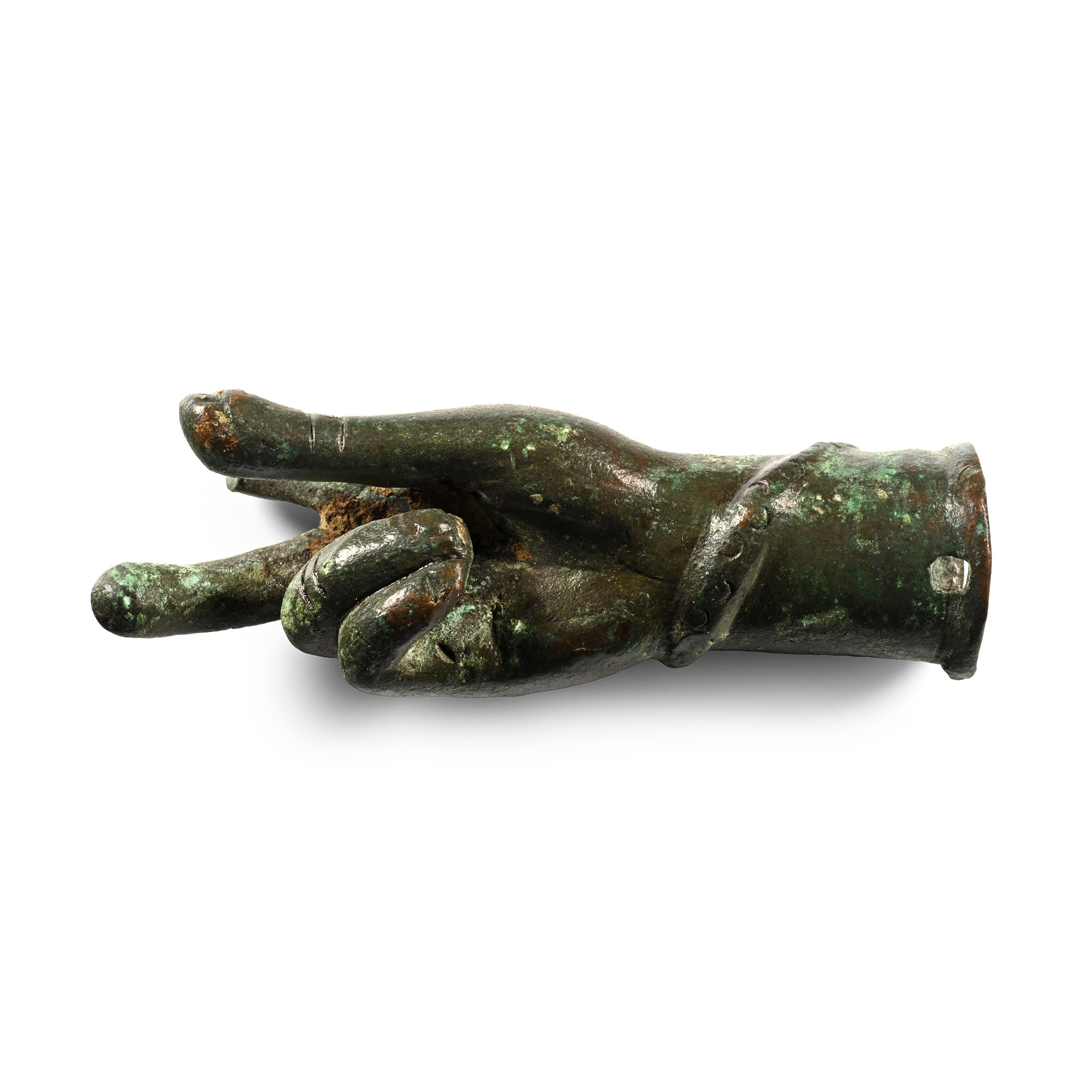
Roman Bronze Hand with Snake for God Sabazios
2ND-3RD CENTURY AD.
3 1/8 in. (105 grams, 80 mm).
Hollow-formed right hand with a rivet hole to the socket, holding up thumb and two fingers, a serpent coiled around the wrist with its head resting against the dorsal side of the hand, punched scale detailing to the body.
ProvenanceEx German art market, 2000s.
Acquired from an EU collector living in London.
From the collection of a Surrey, UK, gentleman.
This lot is accompanied by an illustrated lot declaration signed by the Head of the Antiquities Department, Dr Raffaele D'Amato.
TimeLine Auctions follows a vetting process to ensure the authenticity and legality of all items, reinforcing our commitment to integrity and responsible trading. Each antiquity, antique, and coin lot undergoes thorough examination by a vetting committee of at least ten external specialists, professional trade association members, scientists, and archaeologists: Our Vetting Process
AUCTIONS:
TimeLine is a leading auction house specialising in antiquities, ancient art, collectables, natural history, coins, medals, and books. Our auctions offer museums, collectors, historians, and enthusiasts the opportunity to acquire unique and historically significant pieces.
-
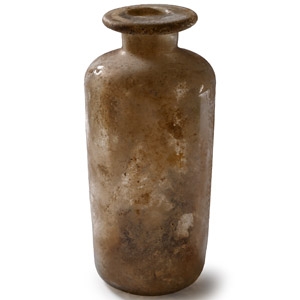
Roman Glass Bottle
3rd-4th century A.D.Estimate: £250 - 350 (+bp*)
Opening Bid: £125
Mould-blown bottle comprising a flat-based tubular body and short neck with returned flange rim. 94.2 grams, 14 cm
From an important London collection of glass, 1990s. This lot is accompanied by an illustrated lot declaration signed by the Head of the Antiquities Department, Dr Raffaele D'Amato. -
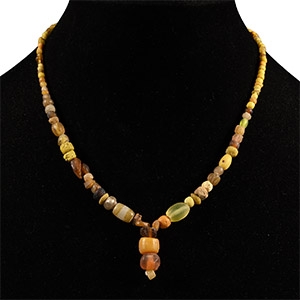
Roman Yellow Glass Bead Necklace String
1st-4th century A.D. and laterSold for (Inc. bp): £46
Restrung group of polyhedral, cylindrical, drum-shaped, melon and other beads. 18.36 grams, 36.5 cm
Ex London, UK, collection, 1990s. This lot is accompanied by an illustrated lot declaration signed by the Head of the Antiquities Department, Dr Raffaele D'Amato. -
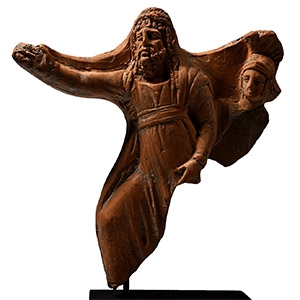
Roman Terracotta Figure of King Priam
1st century B.C.-1st century A.D.Sold for (Inc. bp): £936
A hollow-form figural group comprising an advancing old King Priam with his right arm raised, wearing a belted tunic and a diadem, hair arranged in orderly locks; behind him a smaller figure of a soldier wearing a plumed Pseudo-Attic helmet; the hand of the warrior is holding the old king; mounted on a custom-made display stand. 291 grams total, 18.5 cm high including stand
Private Swiss collection, 1971. with Galerie Rhéa, Zurich, Switzerland. This lot is accompanied by an illustrated lot declaration signed by the Head of the Antiquities Department, Dr Raffaele D'Amato.
The scene probably represents the old King Priam's plea to Achilles' son, Neoptolemus, to spare his son Polites, whom the Greek warrior is about to kill. It is made in a strong classical style with precise costume details, such as the royal diadem, the long sleeved Phrygian-type tunic and the king's belt.
