Loading, please wait...

Use mousewheel to zoom in and out, click to enlarge

Details

LOT 0731

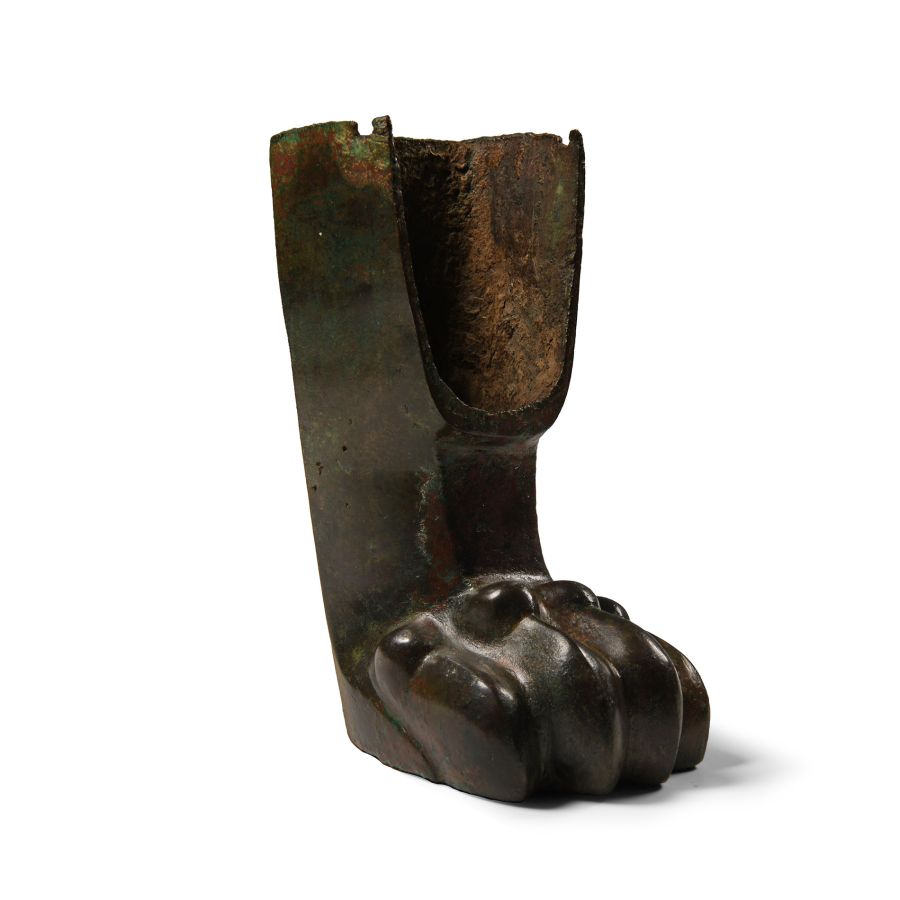
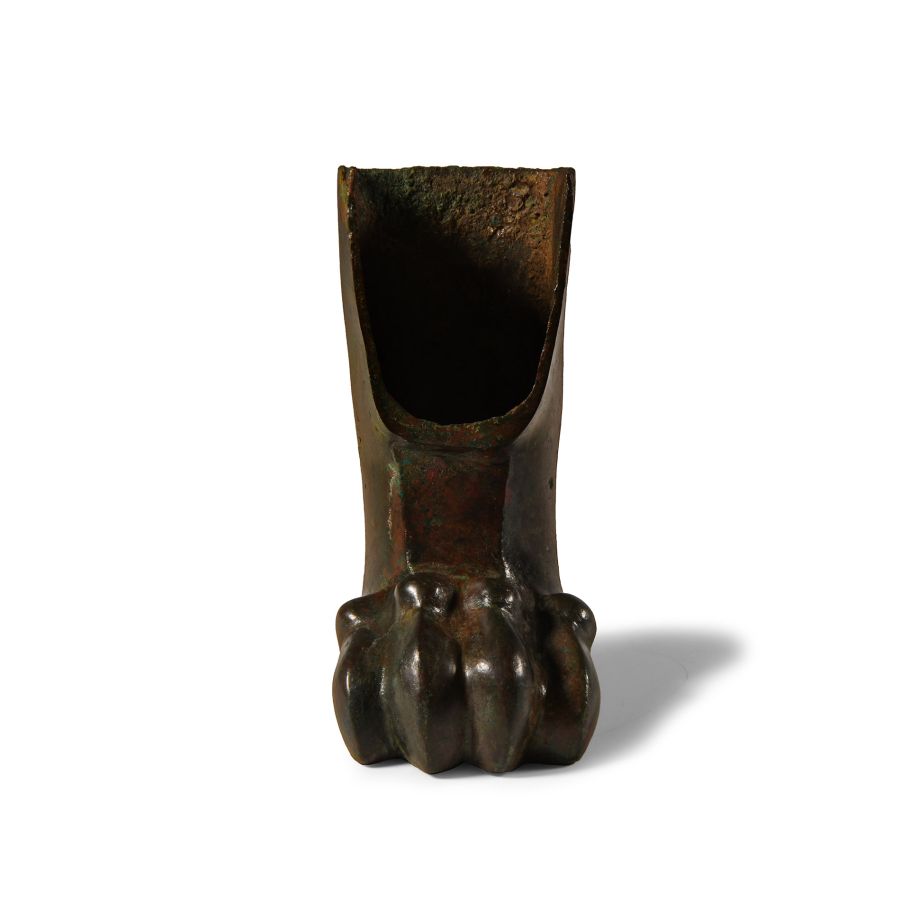
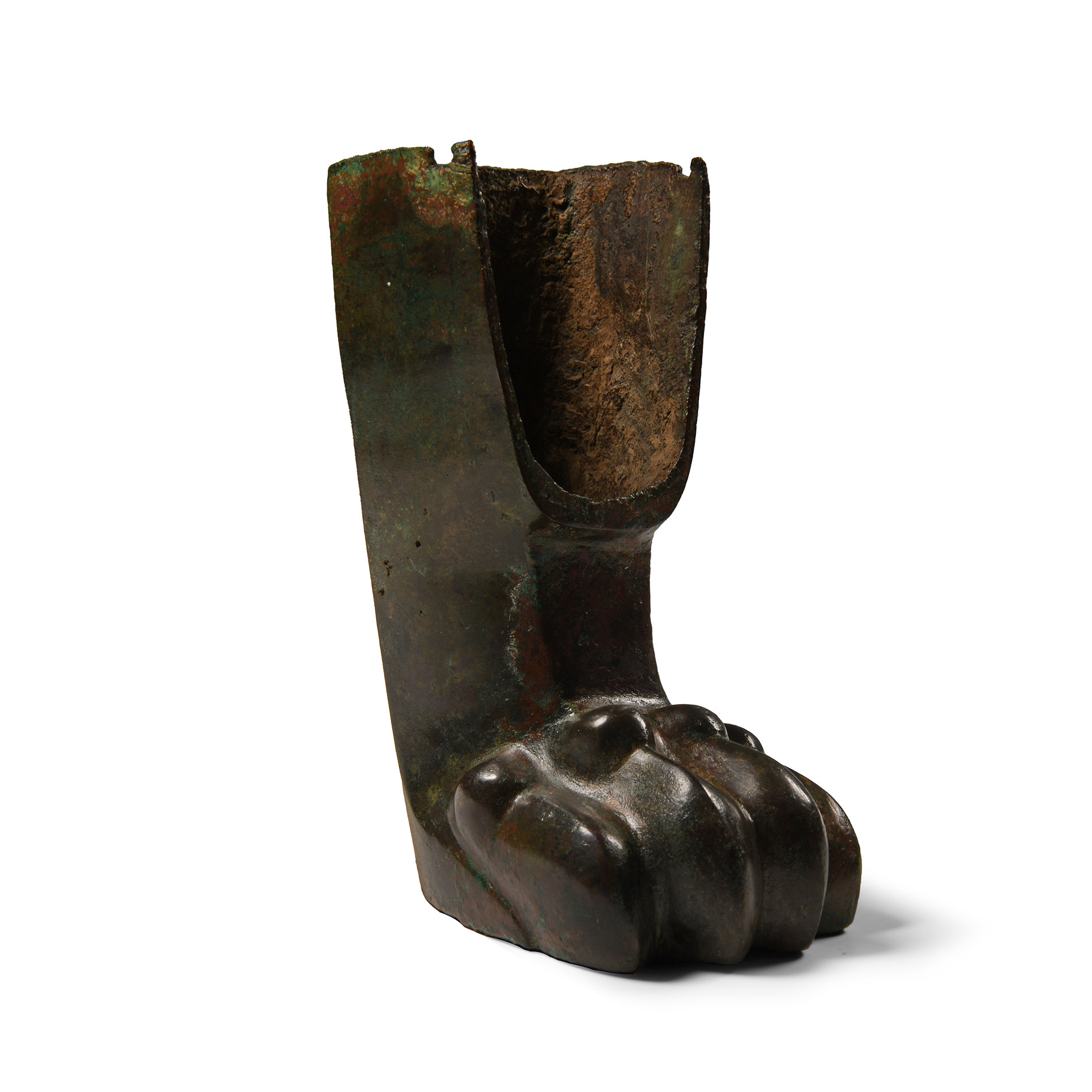
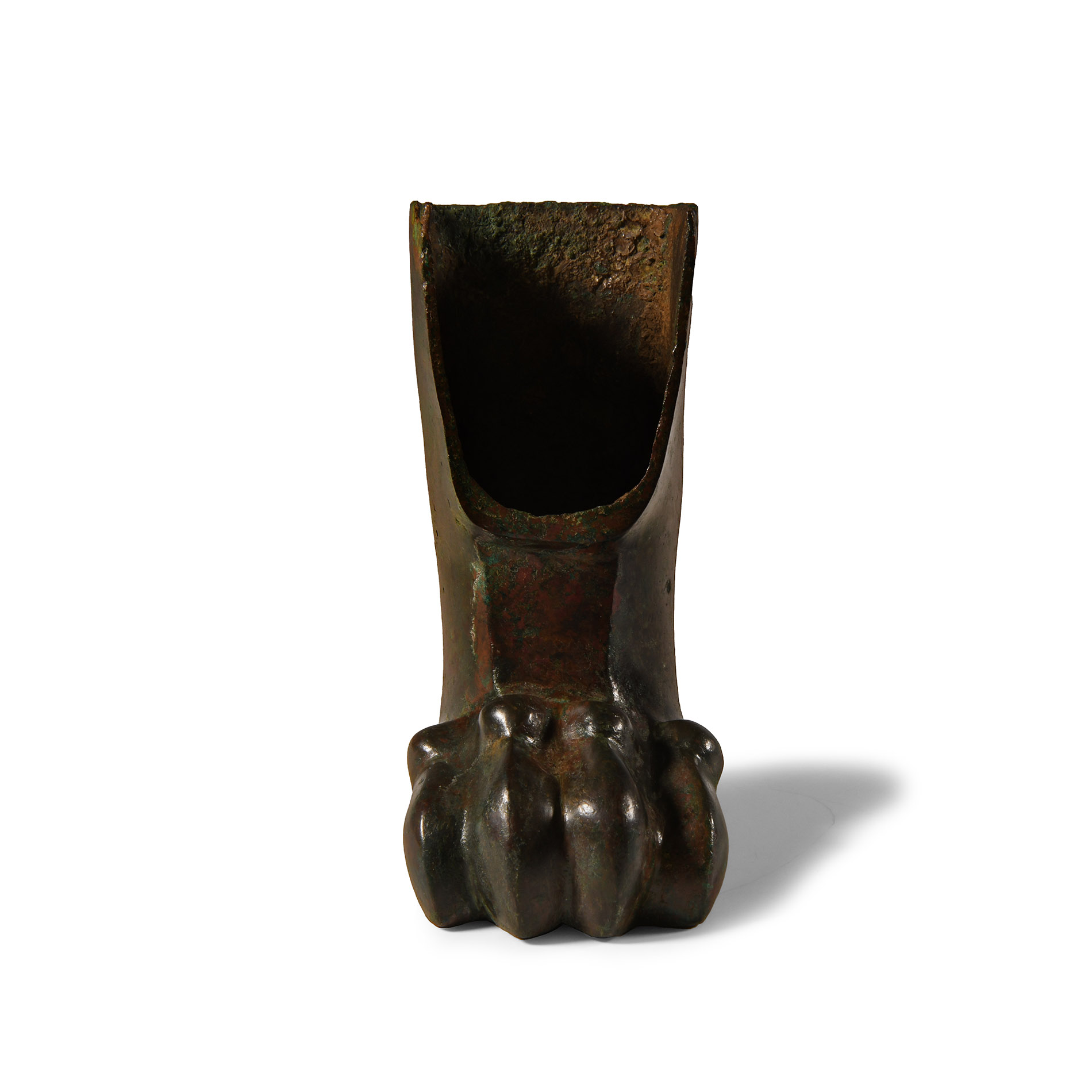
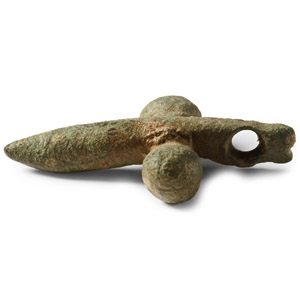
Roman Bronze Gryphon Lectus Foot

1ST-2ND CENTURY A.D.

4 3/8 in. (558 grams, 11.2 cm).

Hollow-formed foot for a lectus couch, the upper square in plan with tongue-shaped opening to the forward face, and vertical strap to the reverse; the foot with four curved claws, bulb knuckles above; open to the underside

Provenance

Acquired from Munich and London, 1990s. From the collection of a London, UK, gentleman.

CONDITION

VETTING:

TimeLine Auctions follows a vetting process to ensure the authenticity and legality of all items, reinforcing our commitment to integrity and responsible trading. Each antiquity, antique, and coin lot undergoes thorough examination by a vetting committee of at least ten external specialists, professional trade association members, scientists, and archaeologists: Our Vetting Process


AUCTIONS:

TimeLine is a leading auction house specialising in antiquities, ancient art, collectables, natural history, coins, medals, and books. Our auctions offer museums, collectors, historians, and enthusiasts the opportunity to acquire unique and historically significant pieces.

LOT 0731

Roman Bronze Gryphon Lectus Foot

Sold for (Inc. bp): £364

Print page

RELATED LOTS

  • Roman Bronze Diana Attachment Pair
    Roman Bronze Diana Attachment Pair
    1st century A.D.

    Sold for (Inc. bp): £624

    Matched pair of appliqués each a bust of the goddess Diana modelled in the round with hair dressed tight to the head, tunic and strap for a quiver passing over the right shoulder; the eyes formed oversize to accept silver inserts. 94 grams total, 60 mm each


    Ex German art market, 2000s. Acquired from an EU collector living in London. From the collection of Surrey, UK, gentleman.

    Lot Details

  • Roman Historic Cut & Polished Porphyry Slice Group
    Roman Historic Cut & Polished Porphyry Slice Group
    1st-5th century A.D. and later

    Sold for (Inc. bp): £104

    Comprising three lacquered porphyry slices of rectangular shape, cut on both faces and polished on one face; probably from recycled material mined in ancient Roman times between the 1st and 5th century A.D.; intended for use as inlay panels. 81 grams total, 5.8-12.2 cm


    From Egypt. Ex Mineral Imports, London, UK. Gregory, Bottley & Lloyd (Gregory's).

    Mons Porphyrites (today Jabal Abu Dukhkhan) is the mountainous site of a group of ancient quarries in the Red Sea Hills of the inhospitable eastern desert in Egypt, a five day trip from the Nile during Roman times. They were discovered by Caius Cominus Leugas in 18 A.D., and during the Roman Empire the mines officially belonged to the emperor and were the only known source of the Imperial Porphyry, Mons Porphyrites. This dark purple stone was associated with royalty and used for prestigious sculpture and architecture. The location of the mines was lost some time in the 5th century, and rediscovered in the early 19th century. Excavations in the area have revealed the well-preserved quarries and the dwelling places of the quarry men, and also thousands of ostraca have been discovered containing messages that provide details of how the quarrying took place, and of how the highly skilled quarrymen ordered their food.

    Lot Details

  • Roman Bronze Figure of a Young Satyr of Dionysian Cortege
    Roman Bronze Figure of a Young Satyr of Dionysian Cortege
    Circa 1st-2nd century A.D.

    Estimate: £2,000 - 3,000 (+bp*)

    Opening Bid: £1,000

    Modelled in the round with putto-like features, holding a nebris draped over his shoulders in the manner of Dionysus, with tousled hair and pointed ears; one foot absent; mounted on a custom-made stand. 316 grams total, 15 cm high including stand


    Acquired on the German art market, 1989-1995. with The Museum Gallery, 19 Bury Place, London, WC1A 2JB, 1998-2003. with Bonhams, London, Knightsbridge, 16-17 May 2002, no.305. Property of a London based academic, 2003-present. Accompanied by copies of the relevant Bonham's catalogue pages. This lot has been checked against the Interpol Database of stolen works of art and is accompanied by a search certificate number no.12052-217493.

    The young satyr is covered by a nebris, a deer skin, similar to an aegis, originally worn as an item of clothing by hunters and subsequently attributed to Dionysus. Consequently, it was adopted by his followers in the processions and ceremonies held in his honour, during the liturgical celebrations of the Dionysia. It was commonly worn in the same way as an aegis, tying the two front legs over the right shoulder to allow the body of the skin to cover the wearer's left side (Ovid, Metamorphoses, VI, 593). In ancient works it is seen worn by characters of the Dionysian procession: Maenads, Bacchae, Satyrs, and Sileni.

    Lot Details

Stay up-to-date with the latest from TimeLine Auctions by joining our mailing list