
Loading, please wait...
LOT 0694
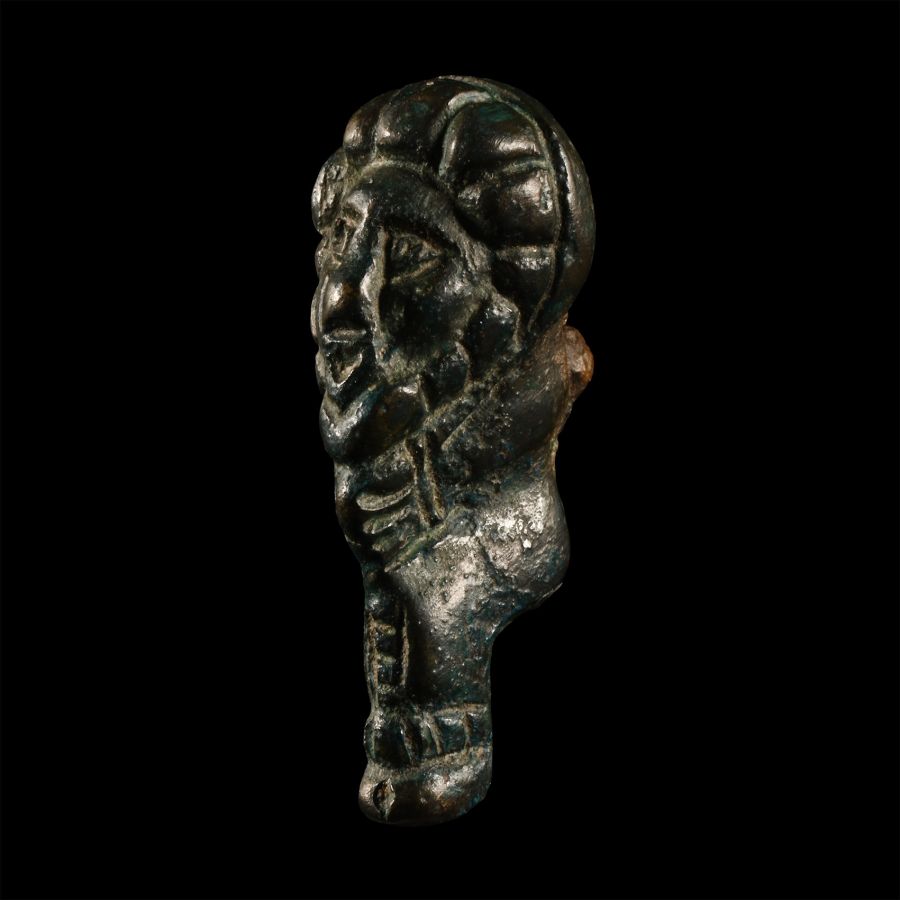
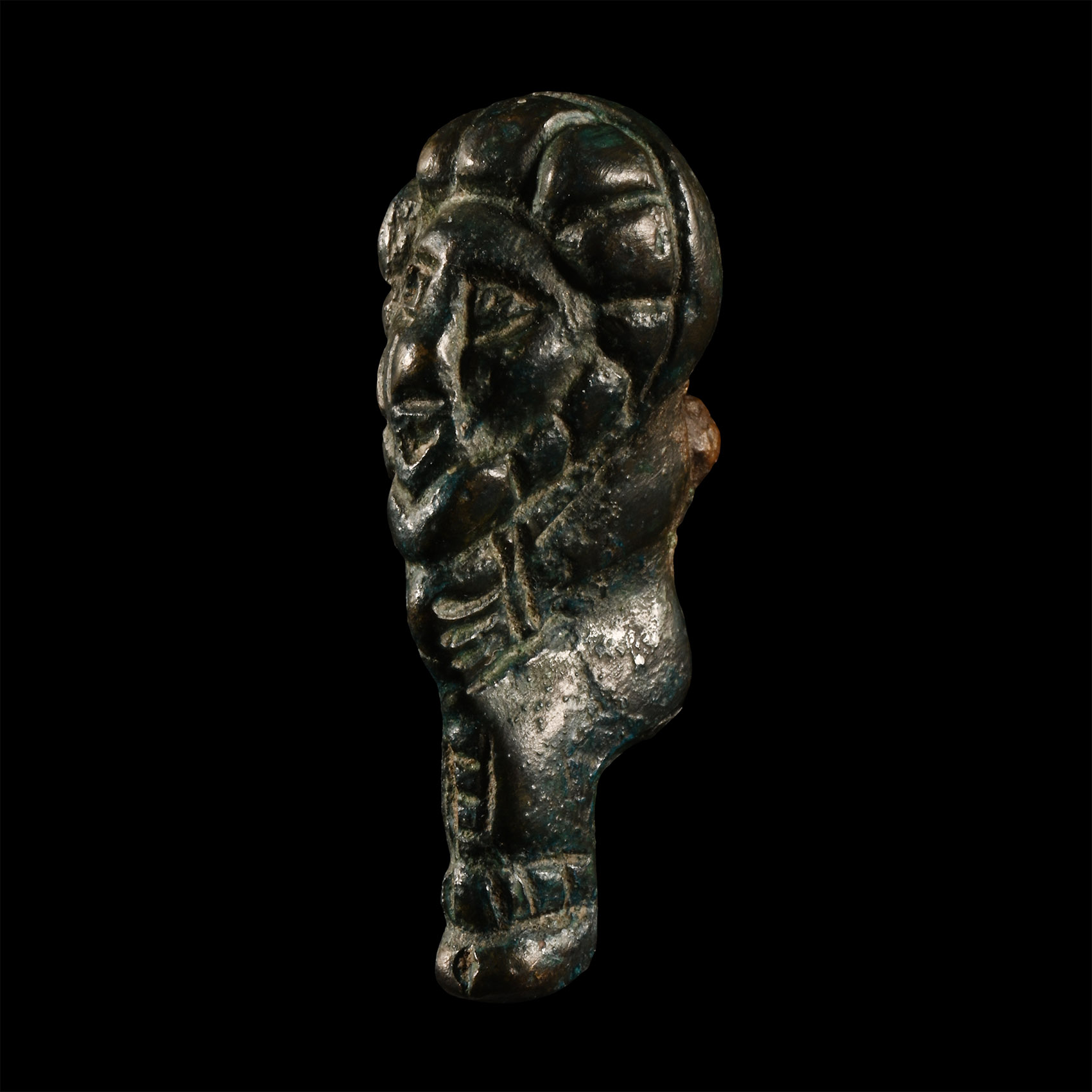
Roman Bronze Germanic Bound Captive Mount
LATE 2ND CENTURY A.D.
1 1/2 in. (24.3 grams, 37 mm).
Depicted as a bearded man, seated and naked apart from a hood or cap on his head, with rope binding the hands together and extending around the neck and ankles; ferrous stud to the back for attachment. [No Reserve]
ProvenanceFrom a collection acquired on the UK art market from various auction houses and collections mostly before 2000.
From an important Cambridgeshire estate; thence by descent.
Cf. Beutler, F. et al., Der Adler Roms. Carnuntum und der Armee der Cäsaren, Bad-Deutsch Altenberg, 2017, items 1006,1010.
FootnotesStatuettes of barbarian prisoners of this type have been found especially along the Danube limes. Some have a vertical and others horizontal position, and were used as horse harnesses or parts of horse's bits. Their diffusion coincides with the Marcomannic wars of the Emperor Marcus Aurelius.
CONDITIONTimeLine Auctions follows a vetting process to ensure the authenticity and legality of all items, reinforcing our commitment to integrity and responsible trading. Each antiquity, antique, and coin lot undergoes thorough examination by a vetting committee of at least ten external specialists, professional trade association members, scientists, and archaeologists: Our Vetting Process
AUCTIONS:
TimeLine is a leading auction house specialising in antiquities, ancient art, collectables, natural history, coins, medals, and books. Our auctions offer museums, collectors, historians, and enthusiasts the opportunity to acquire unique and historically significant pieces.
-
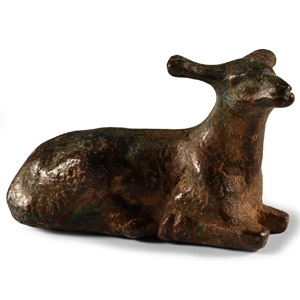
Roman Bronze Lying Doe Statuette
1st-2nd century A.D.Sold for (Inc. bp): £104
Modelled in the round with legs folded beneath the body, light texturing. 59.8 grams, 46 mm
From a collection acquired on the UK art market from various auction houses and collections mostly before 2000. From an important Cambridgeshire estate; thence by descent. -
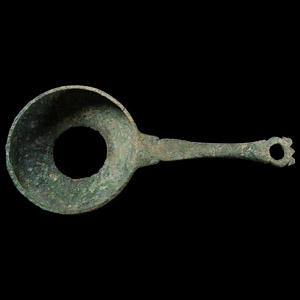
Graeco-Roman Bronze Patera with Duck-Head Handle
3rd century B.C.-3rd century A.D.Estimate: £300 - 400 (‡+bp*)
Opening Bid: £150
The bowl with a convex outer face and notched lip, decoratively waisted handle with addorsed duck heads to the apex of the suspension loop; base of bowl absent. 314 grams, 30 cm
Acquired in Europe before 1995. -
.jpg)
Roman Terracotta Oil Lamp with Head of Medusa
2nd century A.D.Sold for (Inc. bp): £221
Mould-made with convex shoulder separated from the concave discus by a narrow band of triangles and ovules, single groove around the discus, lower filling-hole, burn marks on the nozzle, flat undefined base, discus decorated with the head of Medusa within a laurel. 50 grams, 86 mm
Fine condition.
German collection formed since 1970. Acquired on the UK art market. Property of an Essex gentleman.
A Loeschcke VIII variant. The form and decoration suggest a Hadrianic date, at which time Medusa was one of the most popular subjects depicted on lamps. In ancient mythology, Medusa was one of three monstrous winged female creatures who had venomous snakes living in her hair. The story of Medusa is elaborated by the Roman poet Ovid in his Metamorphosis, which explains that Medusa was a beautiful woman until she had sex with Poseidon in Athena’s temple. Athena exacted punishment on Medusa, turning her into a monstrous creature with a glare that turned all who gazed into her eyes to stone. Medusa was eventually beheaded by the Greek hero Perseus, who used her head as a weapon which, even after being hewn from Medusa's body, could turn his enemies to stone. Perseus later presented Medusa's head to the goddess Athena, which she in turn weaponised, placing it on her shield. In classical antiquity, representations of the head of Medusa appeared in the apotropaic device known as the Gorgoneion, designed to ward-off evil and bad luck.
