
Loading, please wait...
LOT 0745
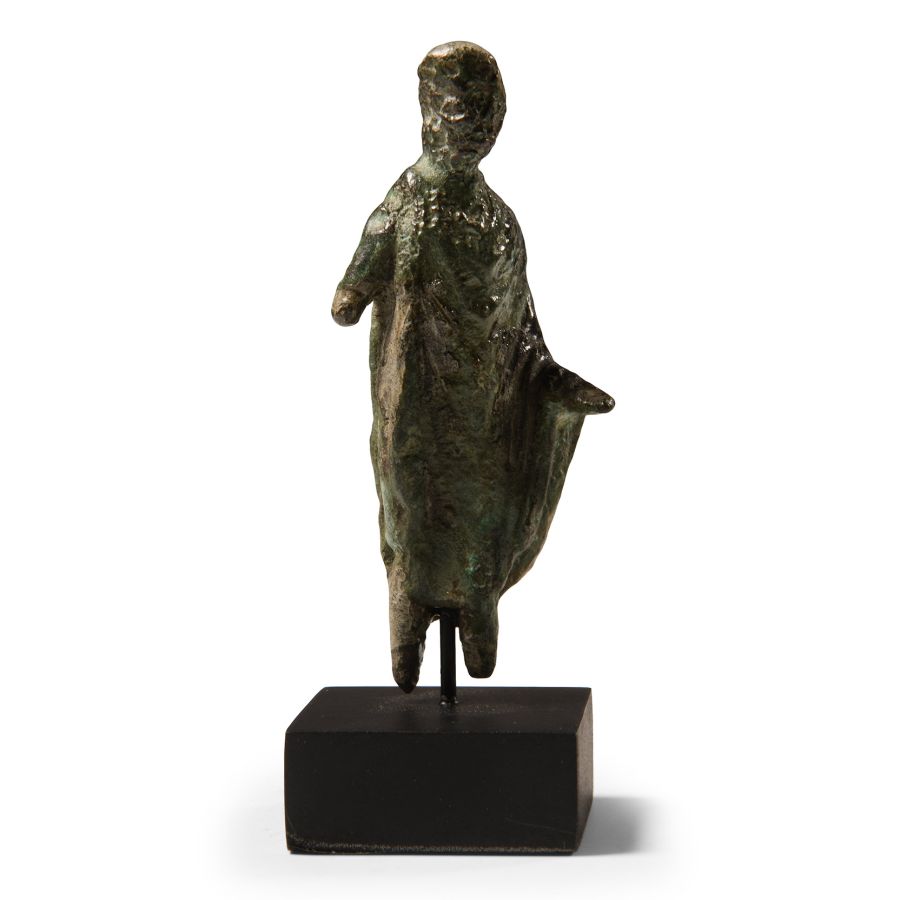
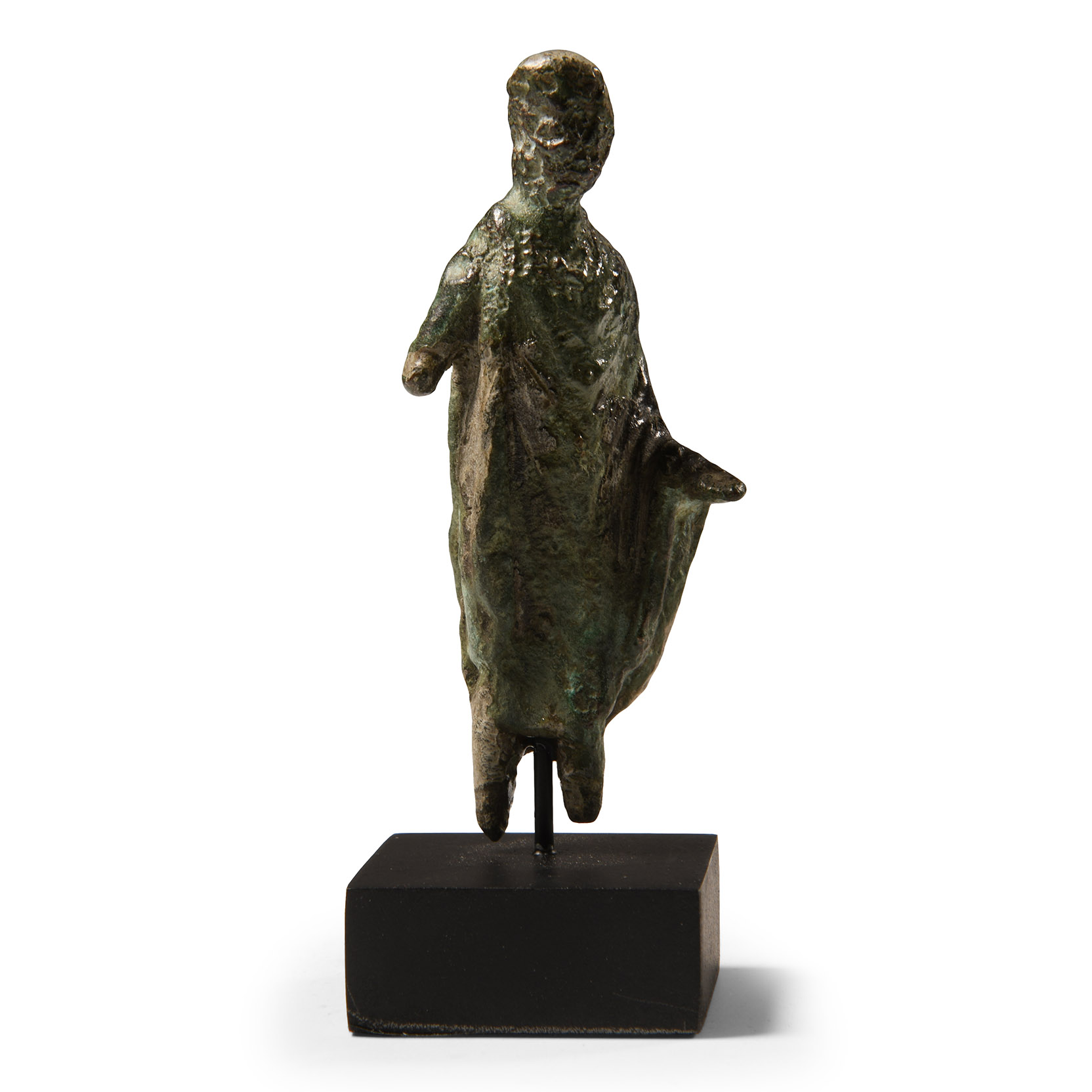
Roman Bronze Genius Statuette
2ND CENTURY A.D.
3 3/4 in. (118 grams total, 96 mm including stand).
Modelled standing, wearing a loosely draped himation hanging from the right shoulder, the folds gathered at the left forearm raised to support a patera; mounted on a custom-made stand. [No Reserve]
ProvenanceFrom a collection acquired on the UK art market from various auction houses and collections mostly before 2000.
From an important Cambridgeshire estate; thence by descent.
Cf. Rolland, H., Bronzes Antiques de Haute Provence, Paris, 1965, items 121-3.
FootnotesA genius was a local spirit or supernatural helper whose favour could be requested with a libation or small offering.
CONDITIONTimeLine Auctions follows a vetting process to ensure the authenticity and legality of all items, reinforcing our commitment to integrity and responsible trading. Each antiquity, antique, and coin lot undergoes thorough examination by a vetting committee of at least ten external specialists, professional trade association members, scientists, and archaeologists: Our Vetting Process
AUCTIONS:
TimeLine is a leading auction house specialising in antiquities, ancient art, collectables, natural history, coins, medals, and books. Our auctions offer museums, collectors, historians, and enthusiasts the opportunity to acquire unique and historically significant pieces.
-
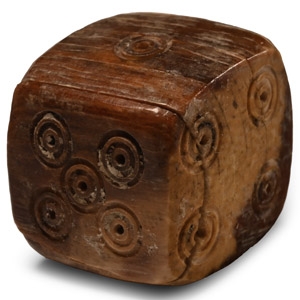
Late Roman Bone Dice Gaming Piece
4th-6th century A.D.Sold for (Inc. bp): £221
Cuboid with rounded edges and corners, ring-and-dot markings disposed 1:2, 3:4, 5:6; with old collector's identification tag '156'. 4.08 grams, 14 mm
Found Wiltshire, UK. From the important private collection of dice and gaming pieces of Colin Narbeth, London, UK, collection no.156. -
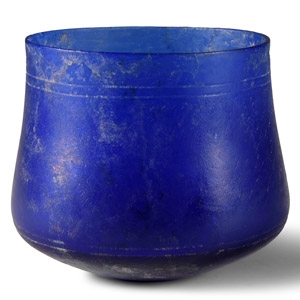
Roman Cobalt Blue Glass Wine Beaker
Circa 1st century A.D.Sold for (Inc. bp): £2,340
Wheel-cut with a narrow base and cylindrical body with gently tapering walls, concentric line decoration to the rim, body and around the base; in exquisite deep colour. 67.6 grams, 56 mm
Previously with a London, UK, gallery, 1990s. Ex JL collection Surrey, UK, early 2000s. This lot has been checked against the Interpol Database of stolen works of art and is accompanied by search certificate no.12035-214140. -
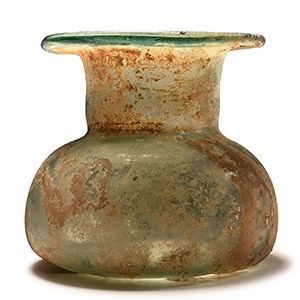
Roman Glass Candlestick Bottle
1st century B.C.-2nd century A.D.Sold for (Inc. bp): £221
A bulbous light blue bottle with dimpled base, wide neck and flared rim. 130 grams, 87 mm
Ex London, UK, collection, 1980-1990s.
A similar vessel was found in the cave 19-4 of Zikhron Yosef at Jerusalem. The shape suggests its use as candlestick or short jar. Small globular bottles, piriform bottles, or small bottles with long, narrow necks (today called candlestick bottles) held perfumes or other precious oils and replicated the shapes found in pottery, alabaster, and stone.
