
Loading, please wait...
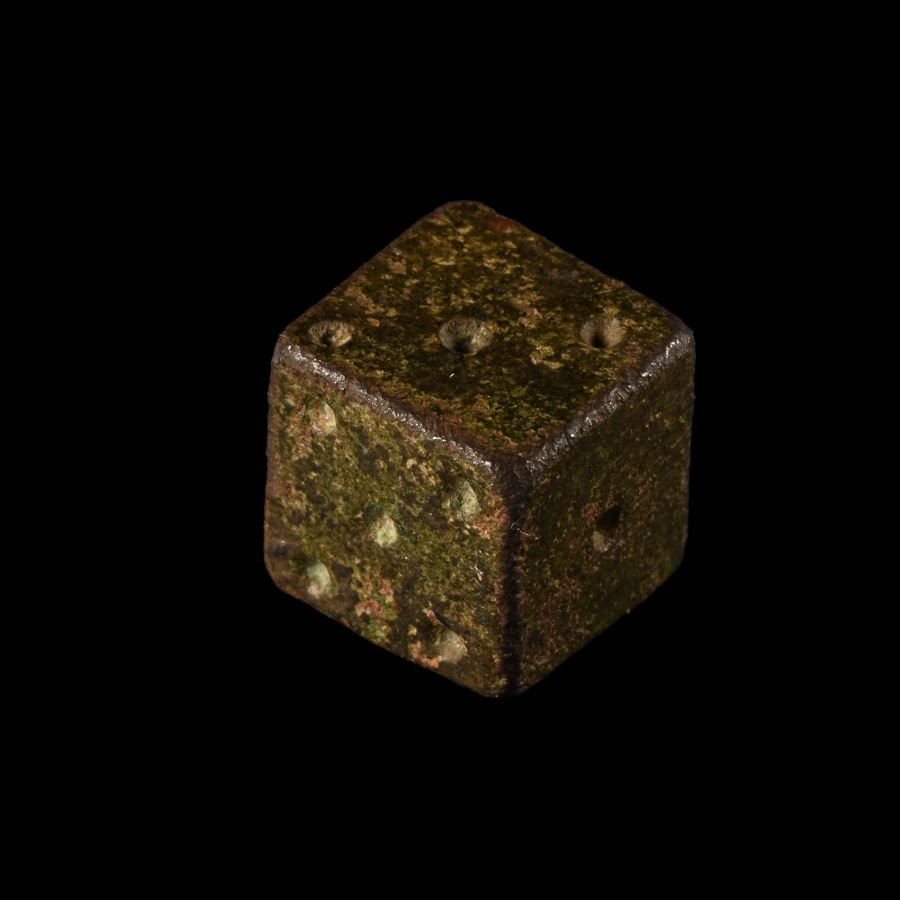


LOT 0656
Roman Bronze Gaming Dice
1ST-4TH CENTURY A.D. OR LATER
1/2 in. (13.8 grams, 12.3 mm).
Cuboid with impressed spots disposed 1:6, 2:3, 4:5. [No Reserve]
ProvenanceEx N. Du Quesne Bird collection.
Acquired 4 February 1999.
From the important private collection of dice and gaming pieces of Colin Narbeth, London, UK, collection no.82.
Accompanied by a Colin Narbeth catalogue identification slip.
TimeLine Auctions follows a vetting process to ensure the authenticity and legality of all items, reinforcing our commitment to integrity and responsible trading. Each antiquity, antique, and coin lot undergoes thorough examination by a vetting committee of at least ten external specialists, professional trade association members, scientists, and archaeologists: Our Vetting Process
AUCTIONS:
TimeLine is a leading auction house specialising in antiquities, ancient art, collectables, natural history, coins, medals, and books. Our auctions offer museums, collectors, historians, and enthusiasts the opportunity to acquire unique and historically significant pieces.
-
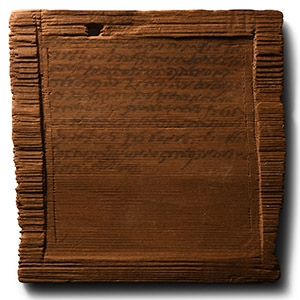
Roman Inked Wooden Tablet, a Legal Document from the Rascotiano Estate
4th century A.D.Sold for (Inc. bp): £13,000
A reused tablet with a recessed panel on one side, the last tablet of a legal document which consisted of two (diptychon) or three tablets (triptychon); ten black inked lines of New Roman cursive script, the end of a record of a transaction in a highly formulaic legal language, confirmed between heirs and elders (heredes et seniores), negotiated on an estate called Rascotiano; one edge irregular, pierced for addition of a thong or string. 23.7 grams, 12.3 x 12.5 cm
From an important London collection since 1975. Accompanied by a collection of eighteen 1970s photographs of the the tablet.
The contract follows standard Roman legal formulae. -
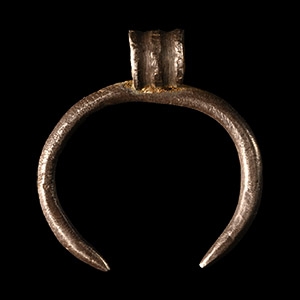
Roman Silver Lunar Pendant
3rd-4th century A.D.Sold for (Inc. bp): £150
With tapering round-section arms and ribbed suspension loop. 1.88 grams, 22 mm
Ex German art market, 2000s. Acquired from an EU collector living in London. From the collection of Surrey, UK, gentleman. -
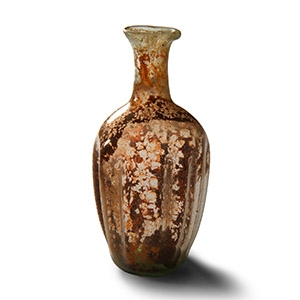
Roman Ribbed Glass Vessel
4th-5th century A.D.Sold for (Inc. bp): £130
With dimple base, radiating ribs to the bulb, gently tapering neck, flared rim with rolled edge. 20.11 grams, 95 mm
Acquired 1980-2015. Ex Abelita family collection.
