
Loading, please wait...
LOT 0883
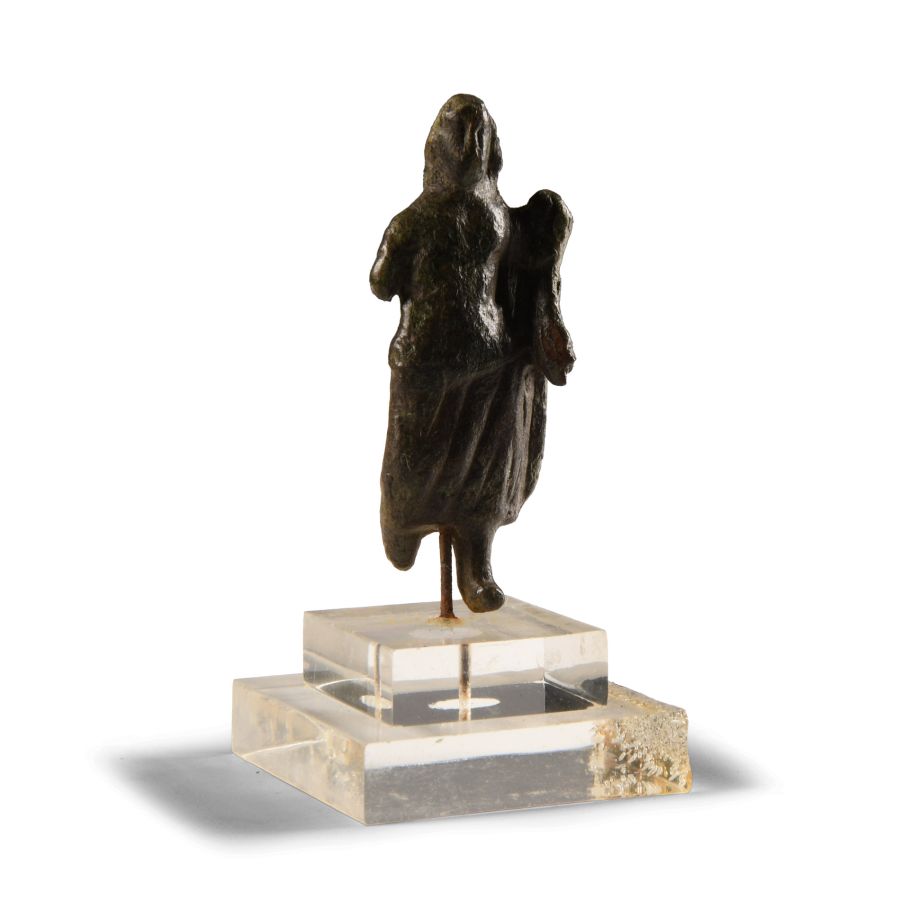
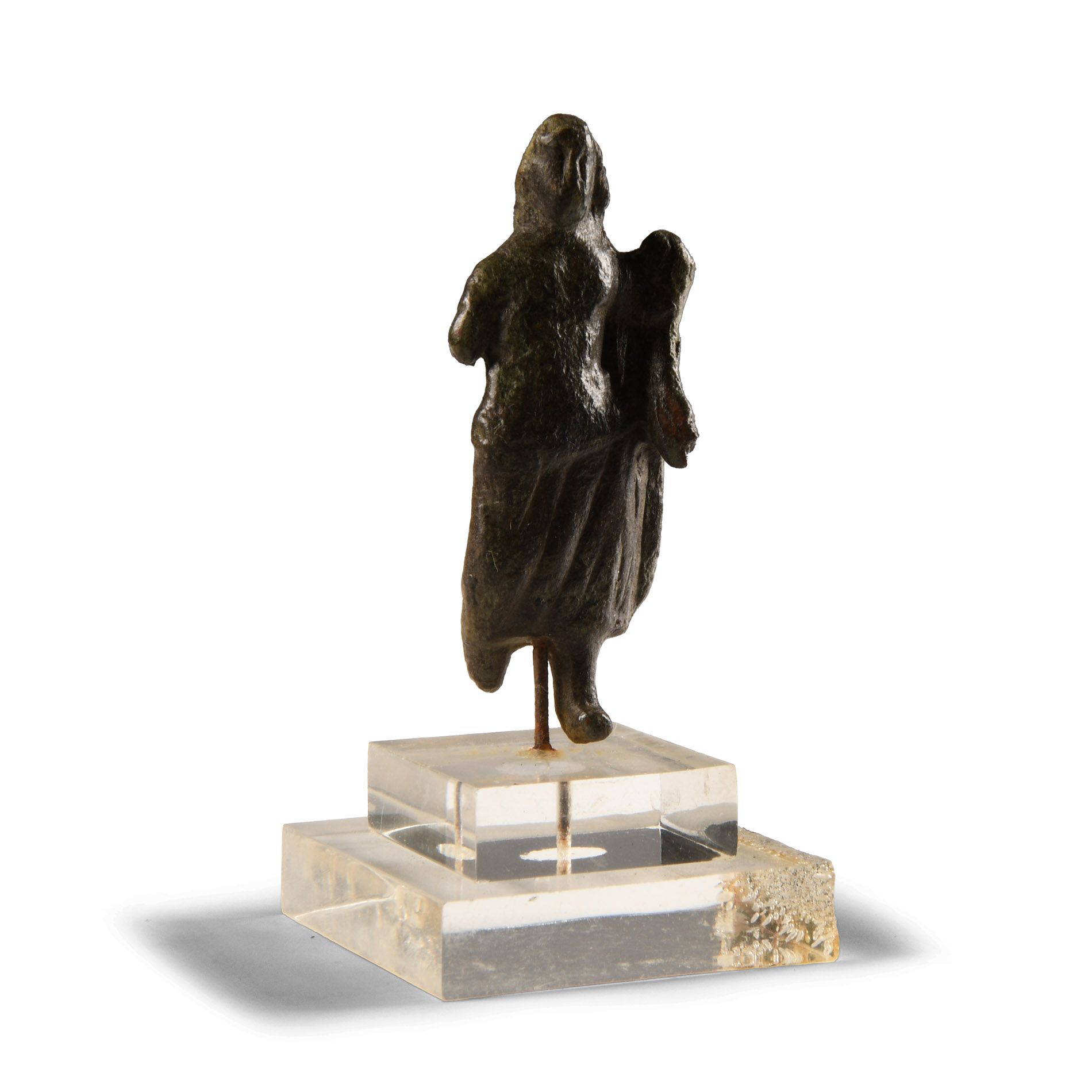
Roman Bronze Fortuna Statuette
CIRCA 2ND-3RD CENTURY A.D.
3 3/8 in. (89 grams total, 87 mm including stand).
The goddess standing wearing a knee-length robe, bearing a cornucopia on her left arm. [No Reserve]
ProvenanceFrom a collection acquired on the UK art market from various auction houses and collections mostly before 2000.
From an important Cambridgeshire estate; thence by descent.
Cf. Boucher, S. & Tassinari, S., Musée de la Civilisation Gallo-Romaine a Lyon: Bronzes Antiques I. Inscriptions, Statuaire, Vaisselle, Lyon, 1976, item 38 (Isis-Fortuna).
FootnotesStatuettes of Fortuna, the goddess of Chance, were evidently popular during the Roman Imperial times judging from the large number that have been found, and with the advent of the cult of Isis inside the Roman Empire the two divinities were identified as a single goddess.
CONDITIONTimeLine Auctions follows a vetting process to ensure the authenticity and legality of all items, reinforcing our commitment to integrity and responsible trading. Each antiquity, antique, and coin lot undergoes thorough examination by a vetting committee of at least ten external specialists, professional trade association members, scientists, and archaeologists: Our Vetting Process
AUCTIONS:
TimeLine is a leading auction house specialising in antiquities, ancient art, collectables, natural history, coins, medals, and books. Our auctions offer museums, collectors, historians, and enthusiasts the opportunity to acquire unique and historically significant pieces.
-
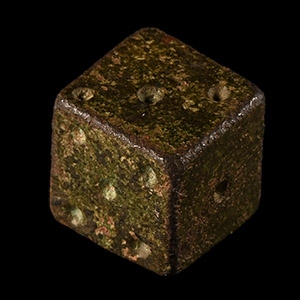
Roman Bronze Gaming Dice
1st-4th century A.D. or laterSold for (Inc. bp): £156
Cuboid with impressed spots disposed 1:6, 2:3, 4:5. 13.8 grams, 12.3 mm
Ex N. Du Quesne Bird collection. Acquired 4 February 1999. From the important private collection of dice and gaming pieces of Colin Narbeth, London, UK, collection no.82. Accompanied by a Colin Narbeth catalogue identification slip. -
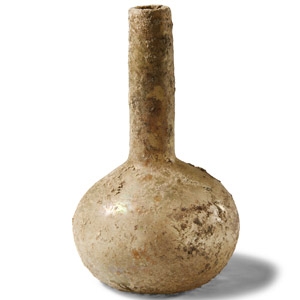
Roman Glass Unguentarium
1st-3rd century A.D.Sold for (Inc. bp): £130
With globular body, convex base, tall tubular neck, flat original rim and iridescent surface. 68 grams, 12.5 cm
Acquired 1980-2015. Ex Abelita family collection. -
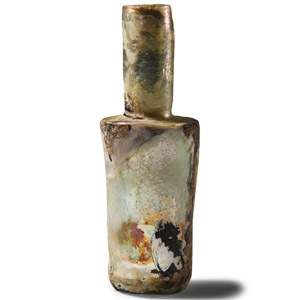
Roman Iridescent Glass Perfume Vessel
1st-4th century A.D.Sold for (Inc. bp): £59
Tall tubular flask with flat shoulder and rim, dimple to the base; iridescent surface. 28 grams, 97 mm
From an old Suffolk, UK, collection, 1990s. Property of an Essex gentleman.
