
Loading, please wait...




LOT 0109
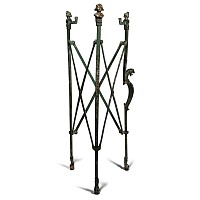
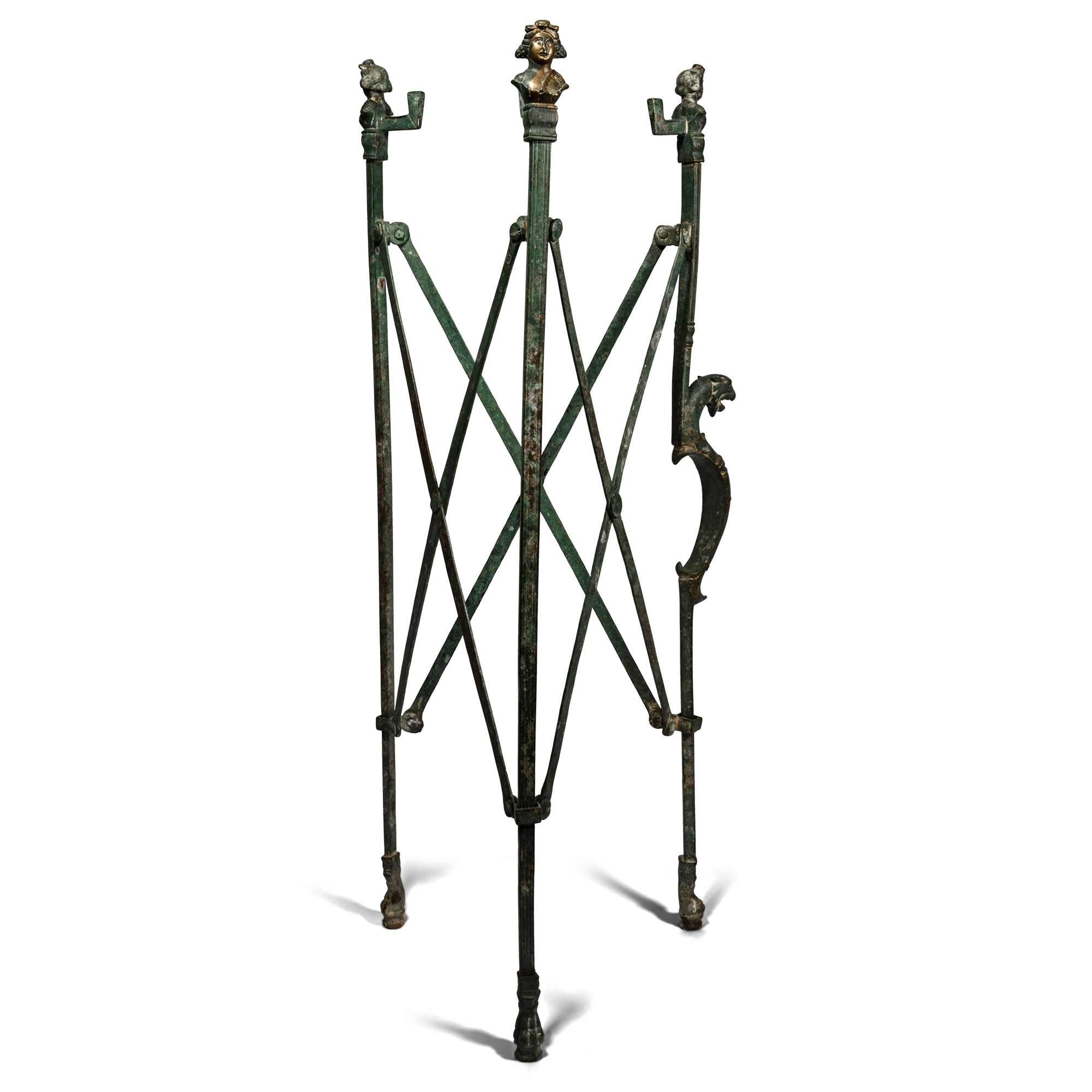
Roman Bronze Folding Tripod Table with Busts of Bacchus and Panther
2ND CENTURY A.D.
39 3/4 in. (9.9 kg, 101 cm).
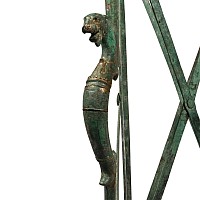
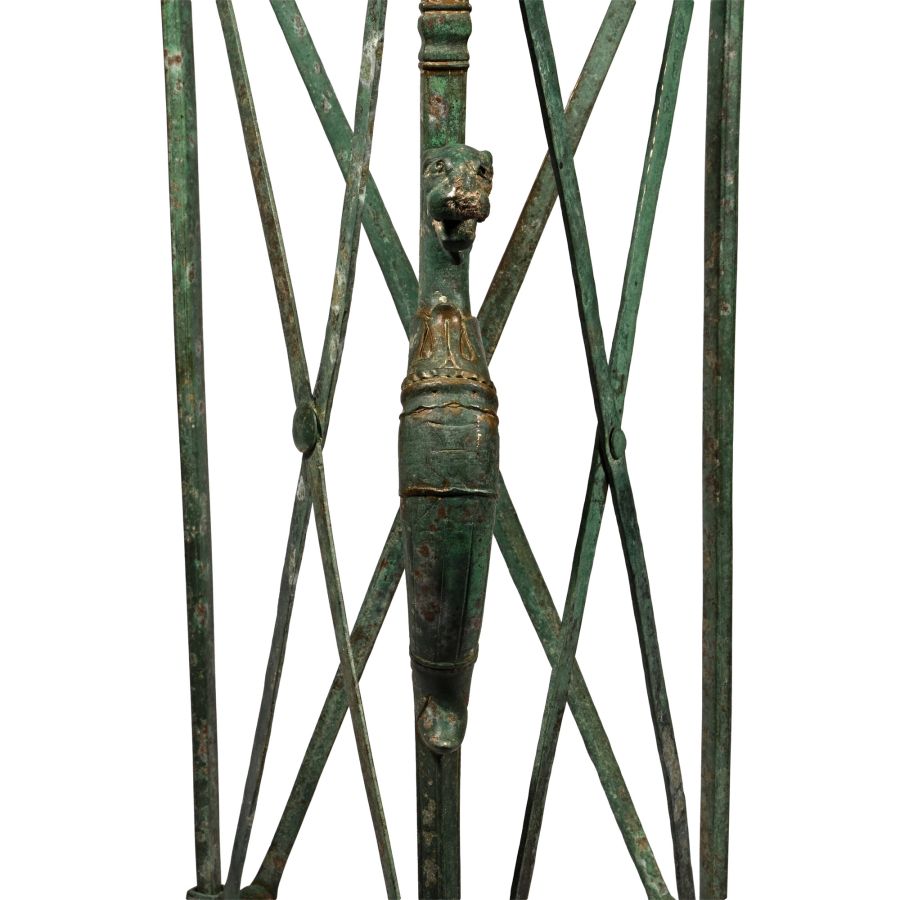
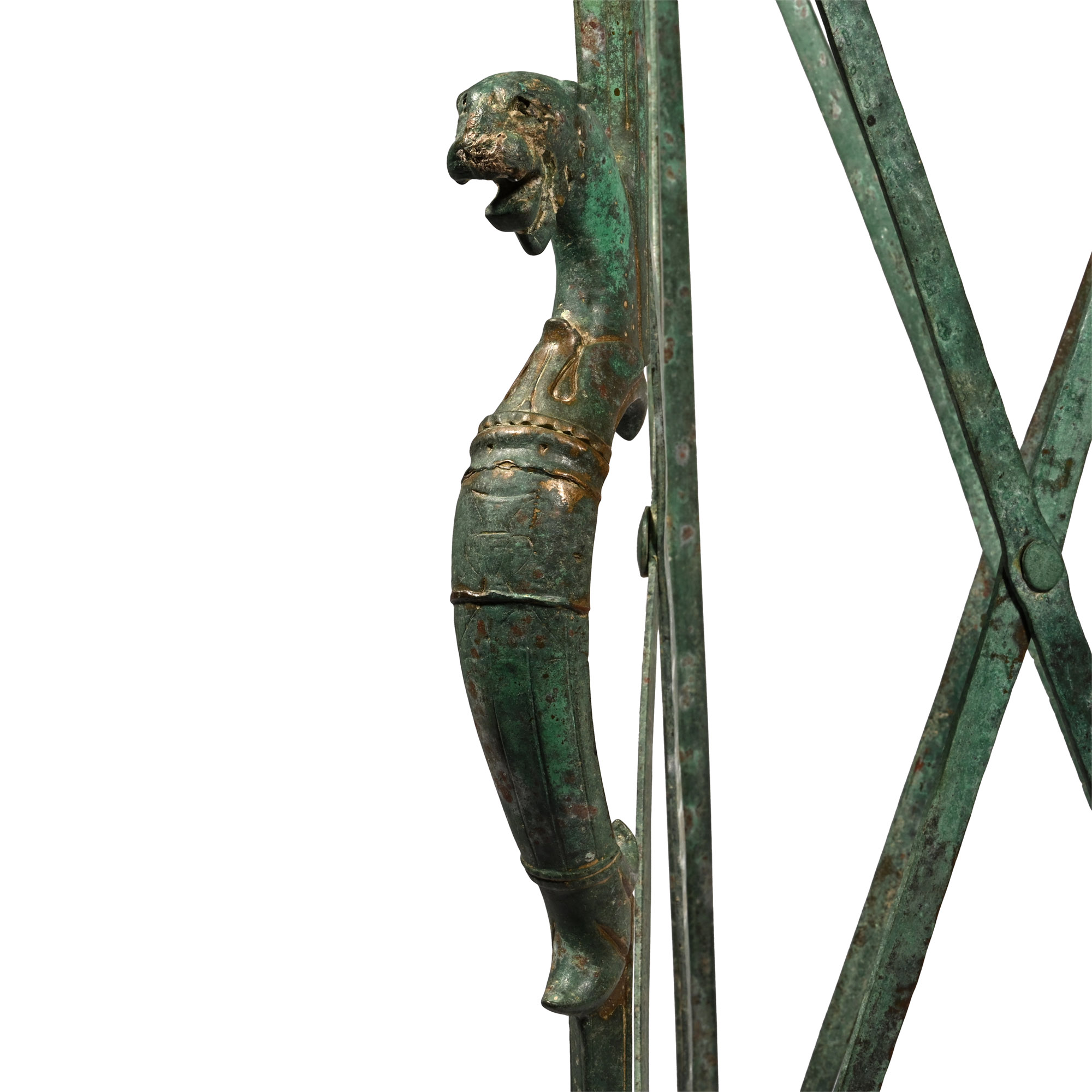
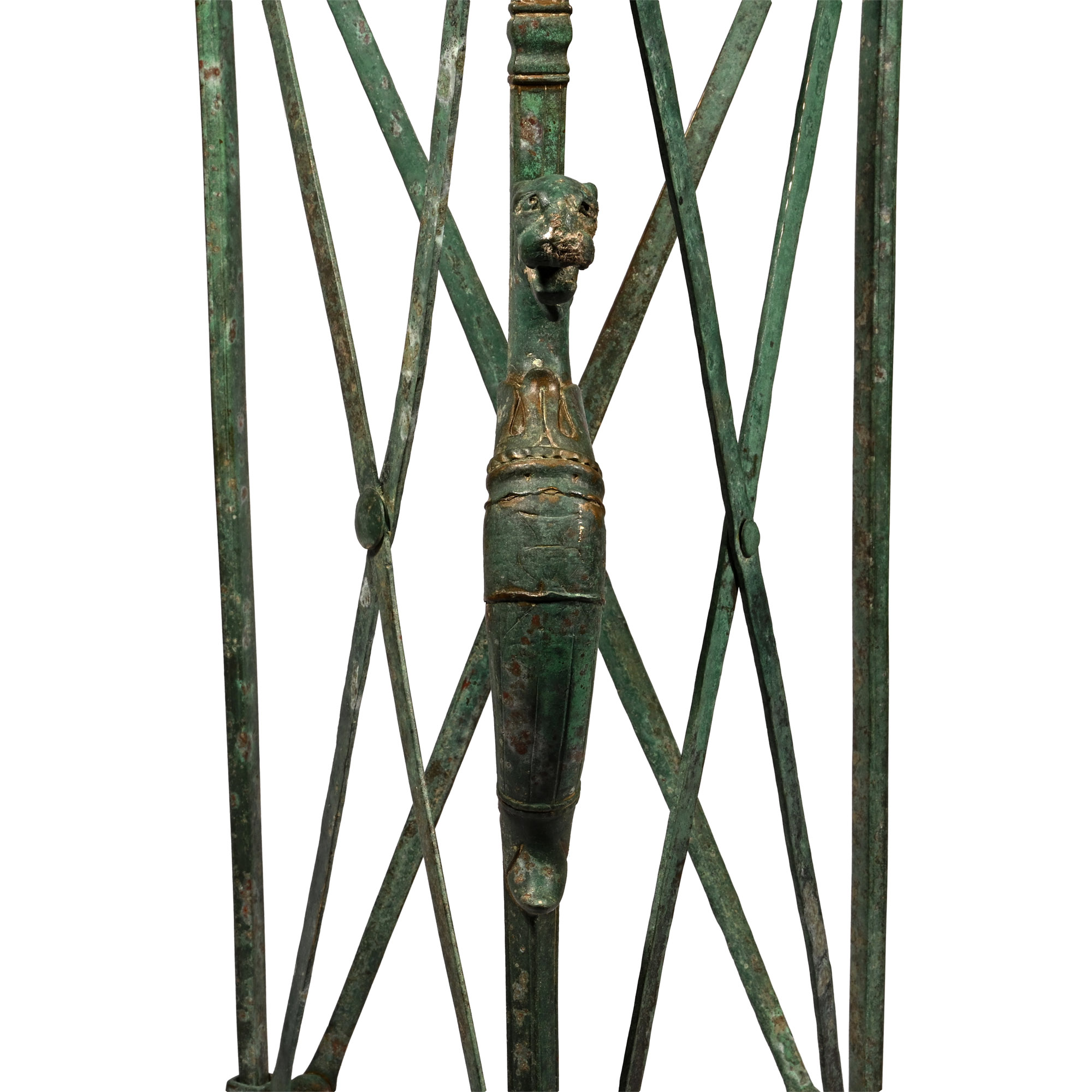
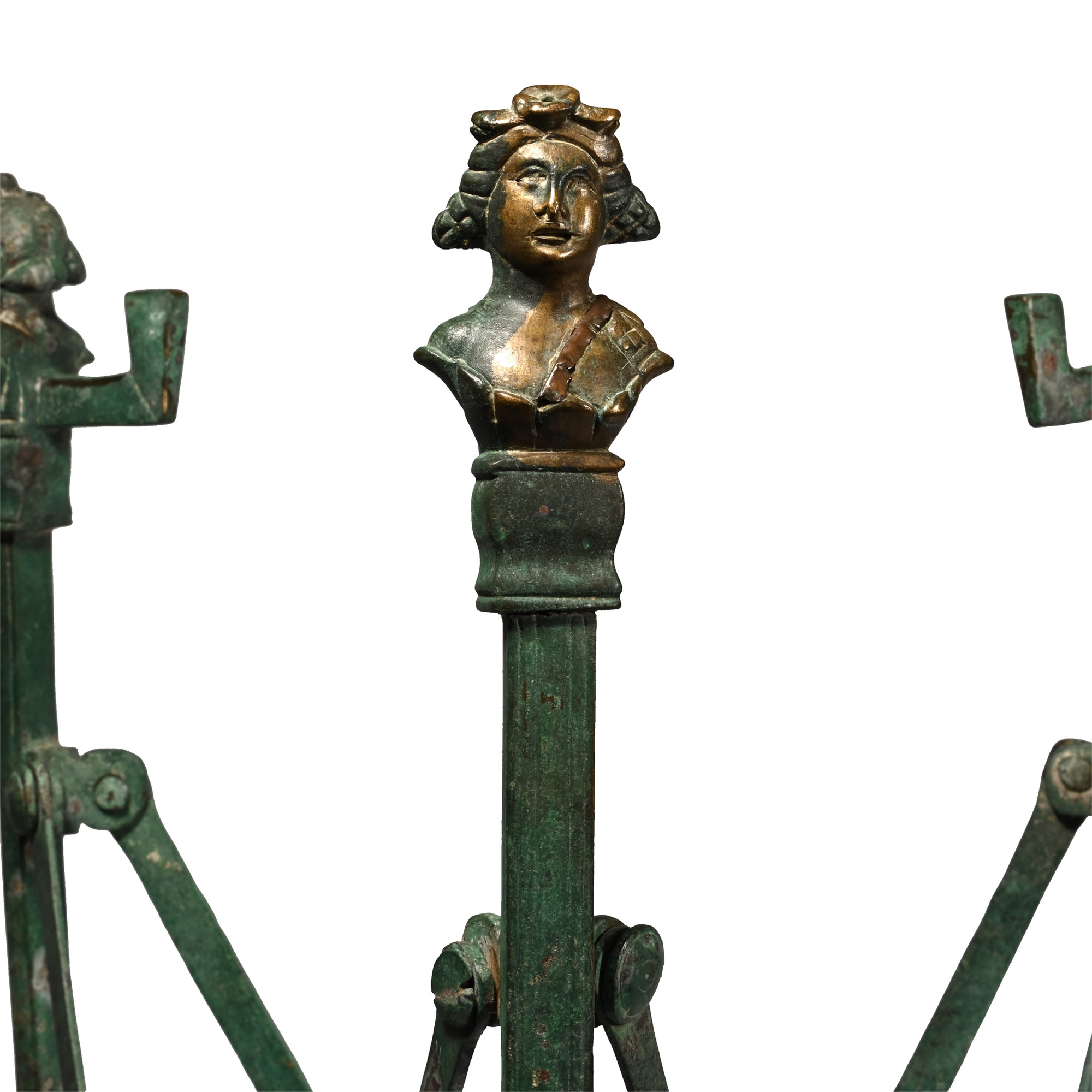
With three extendable legs each topped with bust of Bacchus, his long hair collected in a crown of vine leaves and branches, wearing a panther skin exomis; the feet formed as feline paws; the middle part of the frontal leg formed as an S-curve topped with a panther's head with open jaws; restored.
ProvenanceEx collection of Dr Djafari (1900-1981), Kaiserslautern, Germany.
Accompanied by an academic report by Dr Raffaele D’Amato.
This lot has been checked against the Interpol Database of stolen works of art and is accompanied by search certificate number no.11801-206499.
See a similar tripod decorated with horses in the Paul Getty Museum, in Mattusch, C.C., Enduring Bronze: Ancient Art, Modern Views, Los Angeles, 2014, pp. 72-73, fig. 52a-b, inv. no. 96.AC.203; three similar tripods decorated with the heads of Bacchus and Attis, have been found in Pannonia and Noricum, see Palagyi, T., Facsady, A., Romains de Hongrie, Lyon, 2002, p.37, and fig.103 (from the chariot grave at Környe), fig.291 (from Zomba); Traxler, S., Lang, F., Schlag, B., Die Rücckehr der Legion, Romisches Erbe in Oberössterreich, Linz, 2018, p.74; for a 6th-7th century A.D. Roman example see Wamser, L., Die Welt von Byzanz - Europas Östliches Erbe, München, 2004, fig.355.
FootnotesFolding tripod stands were well known in the ancient world, in both Greek and Roman contexts. These folding supports for tables, bracers and cauldrons are known finds from important excavations in the Roman world, like Pompeii. The purpose of such folding stands varied: during the meal they were placed between the triclinary beds, and bowls and application plates were hung to the hooks at the back of the holders, here shaped like the heads of a Bacchus. They were also used for the fire in military encampments, or in the temples of the gods. Others were used as the support frames for bronze bowls, either for washing or for ritual purposes. Many were offered as funerary gifts, like the splendid example in the chariot grave of Környe. Roman folding tripods were also used in religious rituals (here clearly linked to the cult of the god of wine, as shown by the presence of panthers) and sacrifices. Burnt offerings and libations were offered to the gods in cauldrons that would have been attached to the hooks behind the heads on the upper section.
CONDITIONTimeLine Auctions follows a vetting process to ensure the authenticity and legality of all items, reinforcing our commitment to integrity and responsible trading. Each antiquity, antique, and coin lot undergoes thorough examination by a vetting committee of at least ten external specialists, professional trade association members, scientists, and archaeologists: Our Vetting Process
AUCTIONS:
TimeLine is a leading auction house specialising in antiquities, ancient art, collectables, natural history, coins, medals, and books. Our auctions offer museums, collectors, historians, and enthusiasts the opportunity to acquire unique and historically significant pieces.
LOT 0109
Roman Bronze Folding Tripod Table with Busts of Bacchus and Panther
Estimate £20,000 - 30,000€23,200 - 34,800 (for guidance only)$27,000 - 40,500 (for guidance only)
-
Roman Polychrome Glass Bead Necklace
1st-4th century A.D. and laterSold for (Inc. bp): £39
Comprising a necklace restrung from beads of drilled ancient glass bangle fragments. 11 grams, 72 cm
UK gallery, early 2000s. -
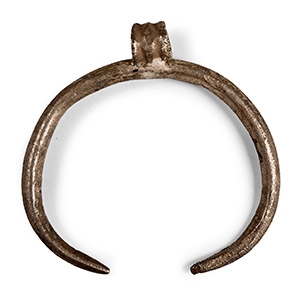
Roman Silver Lunar Pendant
2nd-3rd century A.D.Sold for (Inc. bp): £78
Of crescentic form with integral ribbed suspension loop. 2.66 grams, 30 mm
Ex German art market, 2000s. Acquired from an EU collector living in London. From the collection of Surrey, UK, gentleman. -
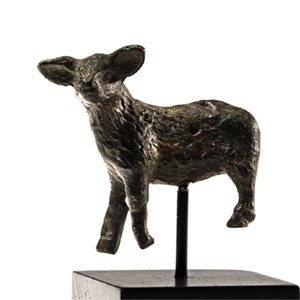
Roman Bronze Sheep Statuette
2nd-3rd century A.D.Sold for (Inc. bp): £312
Modelled standing with head turned, fleece texture to the flanks; mounted on a custom-made stand. 42.8 grams total, 53 mm including stand
From a collection acquired on the UK art market from various auction houses and collections mostly before 2000. From an important Cambridgeshire estate; thence by descent.
