
Loading, please wait...
LOT 0699
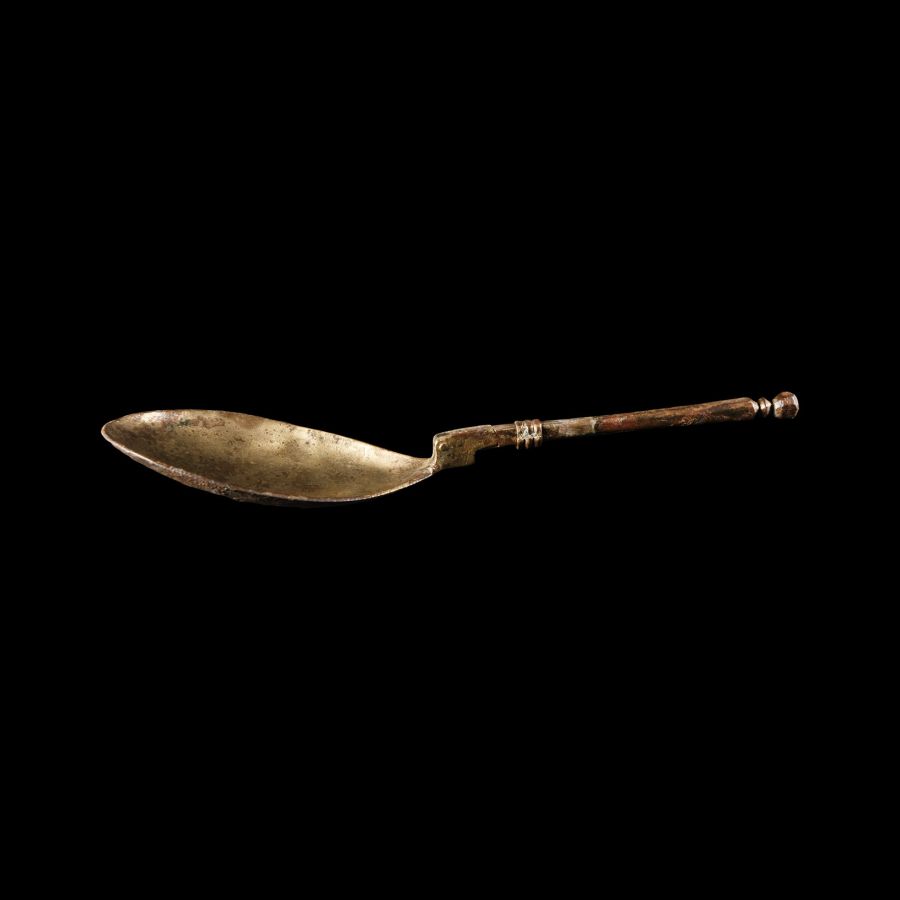
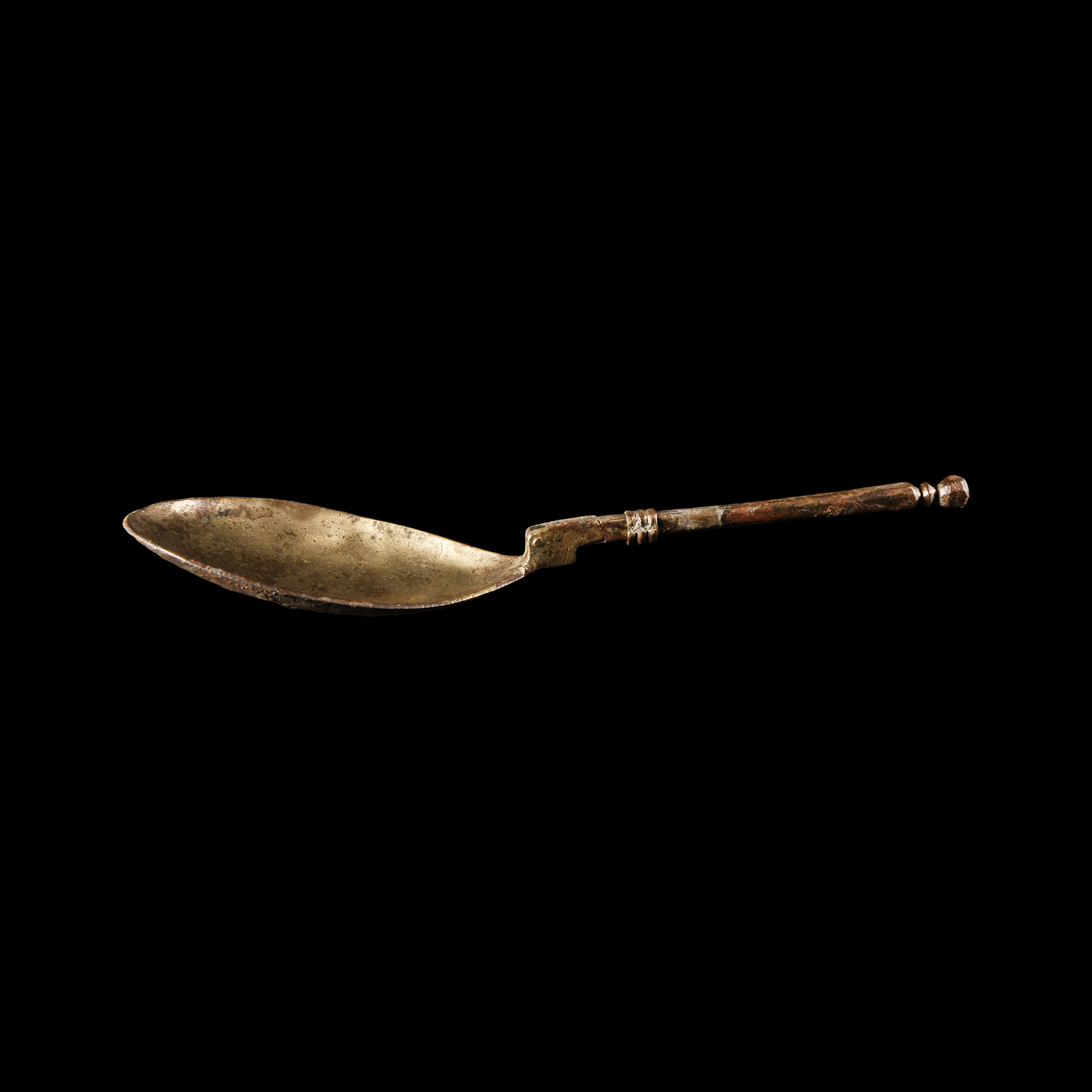
Roman Bronze Folding Spoon
CIRCA 4TH CENTURY A.D.
5 1/2 in. (15.5 grams, 14 cm).
Featuring a shallow piriform bowl, raised neck with movable pinned hinge attached to the hexagonal-section handle and shortened polyhedral knob finial, allowing the handle to be folded into the bowl. [No Reserve]
ProvenanceUK collection, early 1990s and before.
Acquired on the UK art market since the early 2000s.
From a private collection, Lancashire, UK.
Cf. Shelton, K.J., The Esquiline Treasure, London, 1981, item 27, for type.
FootnotesAs today, the spoon was used as a measure for dosage in ancient times. Both the cochlear and the ligula could have been used to measure different quantities, particularly in the practice of medicine and in the kitchen. Isidore (Origines, XVI, 26.3) tells us that the cochlear was the smallest unit size and was worth half a drachma.
CONDITIONTimeLine Auctions follows a vetting process to ensure the authenticity and legality of all items, reinforcing our commitment to integrity and responsible trading. Each antiquity, antique, and coin lot undergoes thorough examination by a vetting committee of at least ten external specialists, professional trade association members, scientists, and archaeologists: Our Vetting Process
AUCTIONS:
TimeLine is a leading auction house specialising in antiquities, ancient art, collectables, natural history, coins, medals, and books. Our auctions offer museums, collectors, historians, and enthusiasts the opportunity to acquire unique and historically significant pieces.
-
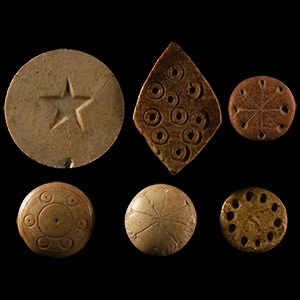
Roman Bone and Other Gaming Piece Collection
1st-4th century A.D.Sold for (Inc. bp): £117
Most discoid in form and displaying a variety of designs: a ring of dimples; dot-in-ring motifs within roundels; 'stars' with dimpled terminals; a five-pointed star; a lozenge-shaped counter displaying punched ring-and-dot motifs to one face. 24.4 grams total, 21-41 mm
Gabby family collection since the late 1960s; thence by descent. -
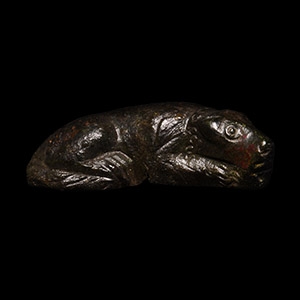
Roman Bronze Sleeping Dog Statuette
3rd-4th century A.D.Sold for (Inc. bp): £130
Modelled in the round at rest with its head on its front paws and wearing a collar, stylised coat and facial detailing; hollow-formed. 18.5 grams, 46 mm
Found Lincolnshire, 1981. -
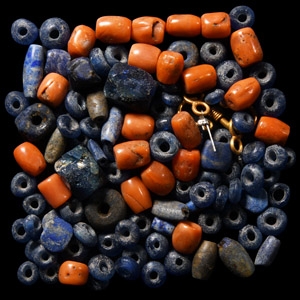
Roman Lapis Lazuli and Coral Bead Group
Circa 1st-2nd century A.D.Sold for (Inc. bp): £195
Large-holed cylindrical and oblate glass, lapis lazuli, and a few barrel-shaped coral examples. 27.9 grams total, 5-12 mm
London private collection, 1979-1983.
