
Loading, please wait...
LOT 0916
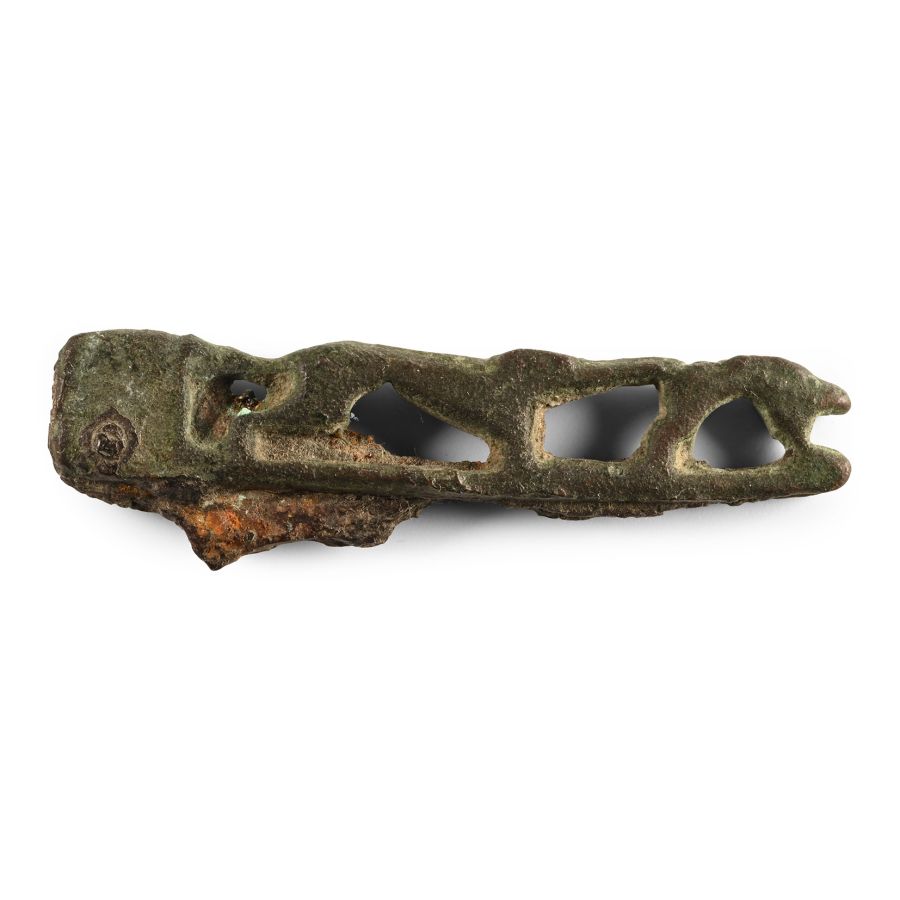
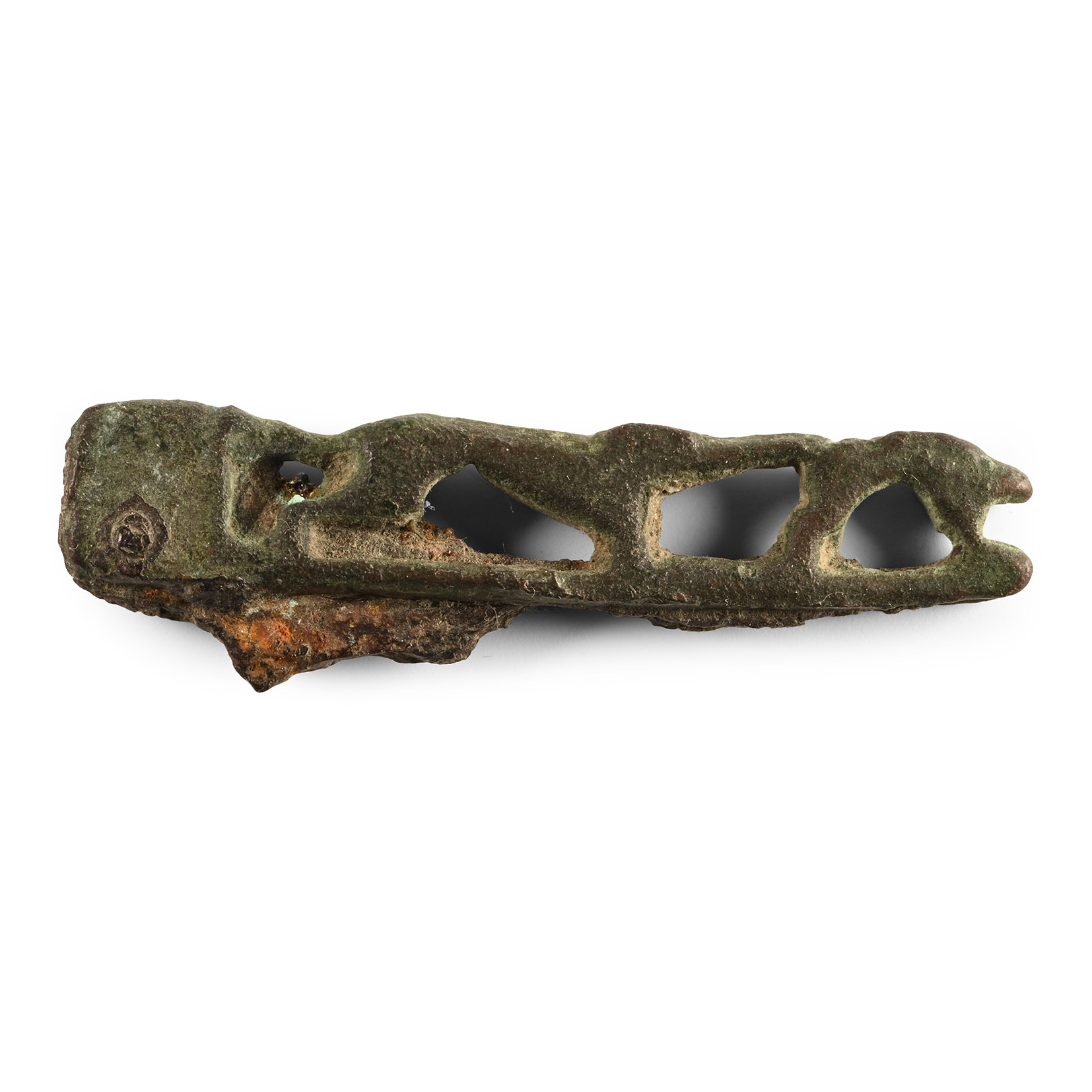
Roman Bronze Folding Knife Handle with Hare and Hound
CIRCA 2ND-3RD CENTURY A.D.
2 5/8 in. (19.1 grams, 66 mm).
Openwork rectangular panel with reserved hare-and-hound motif, remains of ferrous blade below. [No Reserve]
ProvenanceFound Wiltshire, UK, before 1974.
LiteratureSee Bishop, M.C. & Coulston, J.C.N., Roman Military Equipment From the Punic Wars to the Fall of Rome, London, 1993, for discussion.
CONDITIONTimeLine Auctions follows a vetting process to ensure the authenticity and legality of all items, reinforcing our commitment to integrity and responsible trading. Each antiquity, antique, and coin lot undergoes thorough examination by a vetting committee of at least ten external specialists, professional trade association members, scientists, and archaeologists: Our Vetting Process
AUCTIONS:
TimeLine is a leading auction house specialising in antiquities, ancient art, collectables, natural history, coins, medals, and books. Our auctions offer museums, collectors, historians, and enthusiasts the opportunity to acquire unique and historically significant pieces.
-
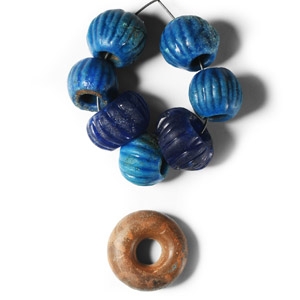
Roman Glass Bead Collection
Circa 1st century A.D.Sold for (Inc. bp): £312
Comprising seven blue glass melon beads and a ring-shaped bead with painted detailing. 66 grams total, 29-67 mm
Found City of London, UK. Acquired from mudlark Steve Brooker in the early 2000s. Ian Wilkinson collection, Nottinghamshire, UK, formed since 1985. -
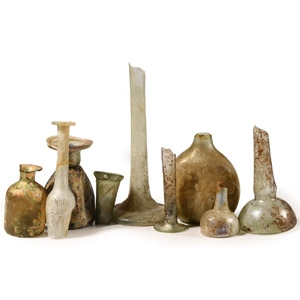
Roman Glass Fragment Group
1st-4th century A.D.Sold for (Inc. bp): £143
Including narrow-stemmed unguentaria and other types. 233 grams total, 5.2-16.5 cm
From the collection of a late East Anglian teacher and antiquarian who retired to the Isle of Wight in Hampshire, UK. He amassed a large collection of objects between the 1960s-1980s. -
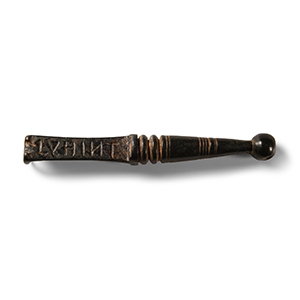
Roman Bronze Medical Implement with Inscription
1st-4th century A.D.Sold for (Inc. bp): £169
Comprising a pierced bulb finial and tapering shank with horizontal bands, ribbed median section and flat panel with perpendicular pierced disc finia; inscribed with Latin letters 'LV. HINT'. 25 grams, 84 mm
Acquired on the London, UK, art market in the 1990s. From a gentleman's private collection.
The fragment is possibly the upper part of a sharp pointed retractor, which was used for delicate operations on the tonsils and other internal parts of the body. The inscription probably refers to the name of the doctor, possibly LV[CIV]S HINT[IUS].
