
Loading, please wait...
LOT 0858
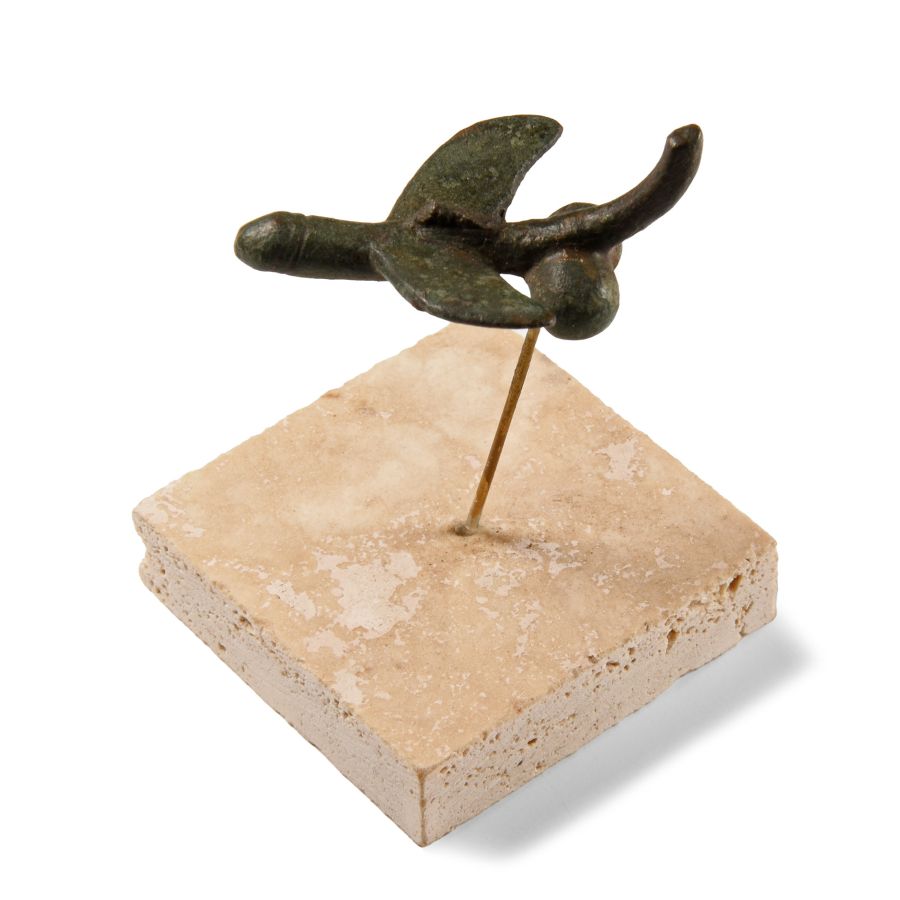
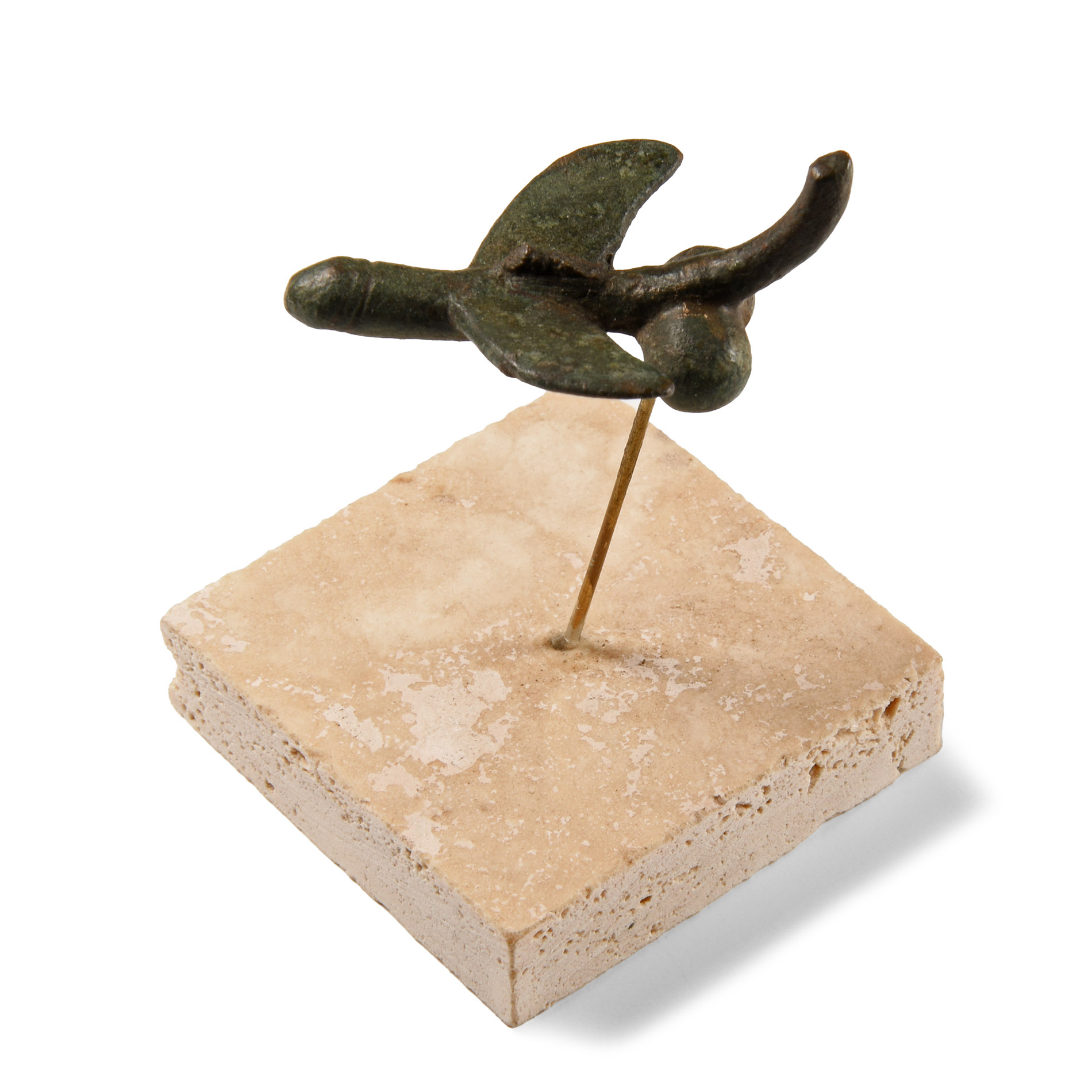
Roman Bronze Flying Phallus
2ND-3RD CENTURY A.D.
2 5/8 in. (99 grams total, 67 mm high including stand).
Amuletic model phallus with swept lateral wings; mounted on a custom-made stand. [No Reserve]
ProvenanceFrom a collection acquired on the UK art market from various auction houses and collections mostly before 2000.
From an important Cambridgeshire estate; thence by descent.
Cf. Beutler, F. et al., Der Adler Roms. Carnuntum und der Armee der Cäsaren, Bad-Deutsch Altenberg, 2017, item 757, for type.
CONDITIONTimeLine Auctions follows a vetting process to ensure the authenticity and legality of all items, reinforcing our commitment to integrity and responsible trading. Each antiquity, antique, and coin lot undergoes thorough examination by a vetting committee of at least ten external specialists, professional trade association members, scientists, and archaeologists: Our Vetting Process
AUCTIONS:
TimeLine is a leading auction house specialising in antiquities, ancient art, collectables, natural history, coins, medals, and books. Our auctions offer museums, collectors, historians, and enthusiasts the opportunity to acquire unique and historically significant pieces.
-
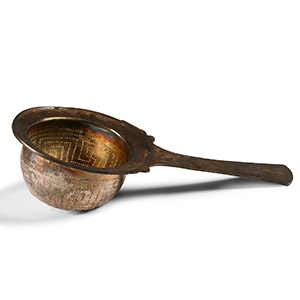
Roman Silver Wine Strainer
Circa 3rd century A.D.Sold for (Inc. bp): £975
Barrel-shaped body with flared rim, stepped rear plaque and flat-section handle; the body with pierced meander pattern; fragmentary base with scrolled tendrils and other patterns. 100 grams, 17.7 cm
Acquired 1990s-early 2000s. East Anglian private collection. Property of a Essex gentleman. -
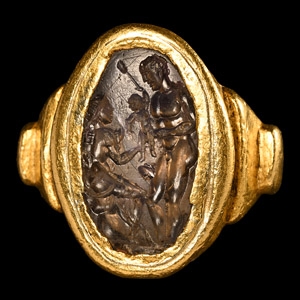
Roman Gold Ring with Amethyst Gemstone with Mercury and Bacchus
1st century B.C.-1st century A.D.Sold for (Inc. bp): £2,340
With stepped shoulders and ellipsoid bezel open to the underside, replaced hoop, inset amethyst intaglio depicting Mercury giving the infant Bacchus to the Nymphs; stone broken. 16.40 grams, 24.07 mm overall, 17.91 mm internal diameter (approximate size British M, USA 6, Europe 12.46, Japan 12)
Acquired on the London art market in the 1990s. Thence by descent. This lot has been checked against the Interpol Database of stolen works of art and is accompanied by search certificate no.12108-212230. -
.jpg)
Roman Silver Fish Brooch
2nd century A.D.Sold for (Inc. bp): £416
Plate brooch formed as a fish with broad, gently curved lozengiform body, small lateral fins, chevron tail, D-shaped head with large discoid eye; the body with five rows of crescent punchmarks denoting scales; hinge-plate and catch to the reverse. 4.98 grams, 38 mm
Fine condition.
Property of a gentleman from Vienna; from his private collection formed since 1970.
The brooch is of a type found in Britain, corresponding to Hull's type 223. The fish represented here is likely a salmon.
