
Loading, please wait...
LOT 0110
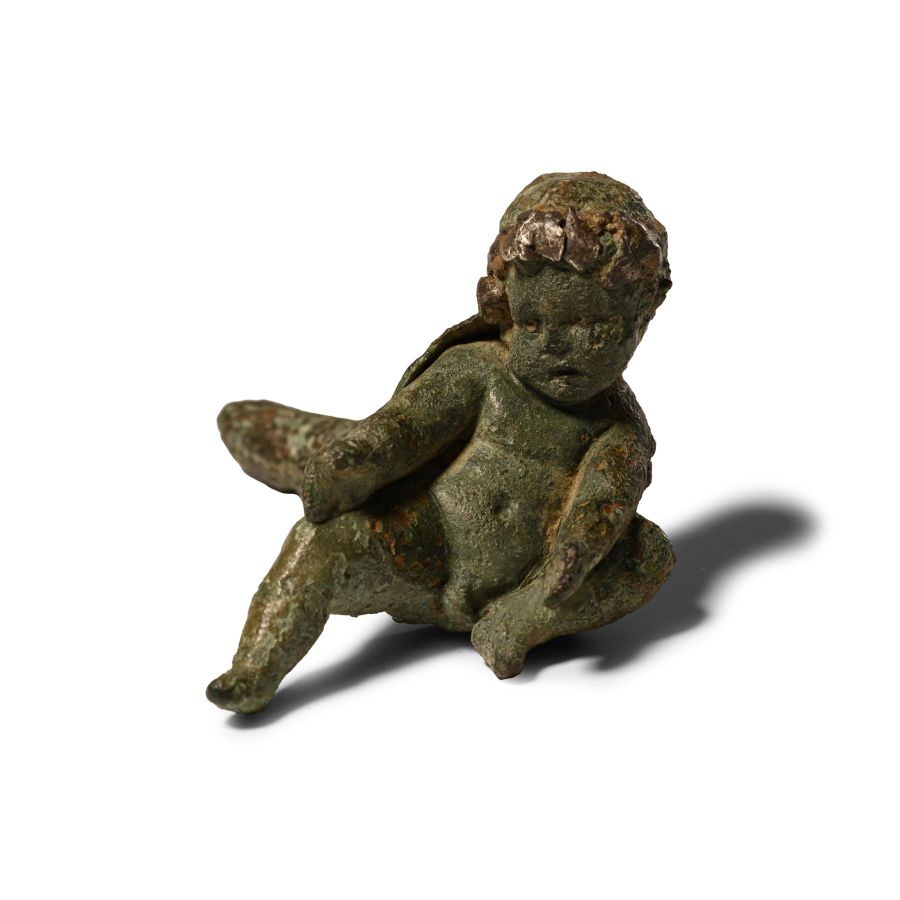
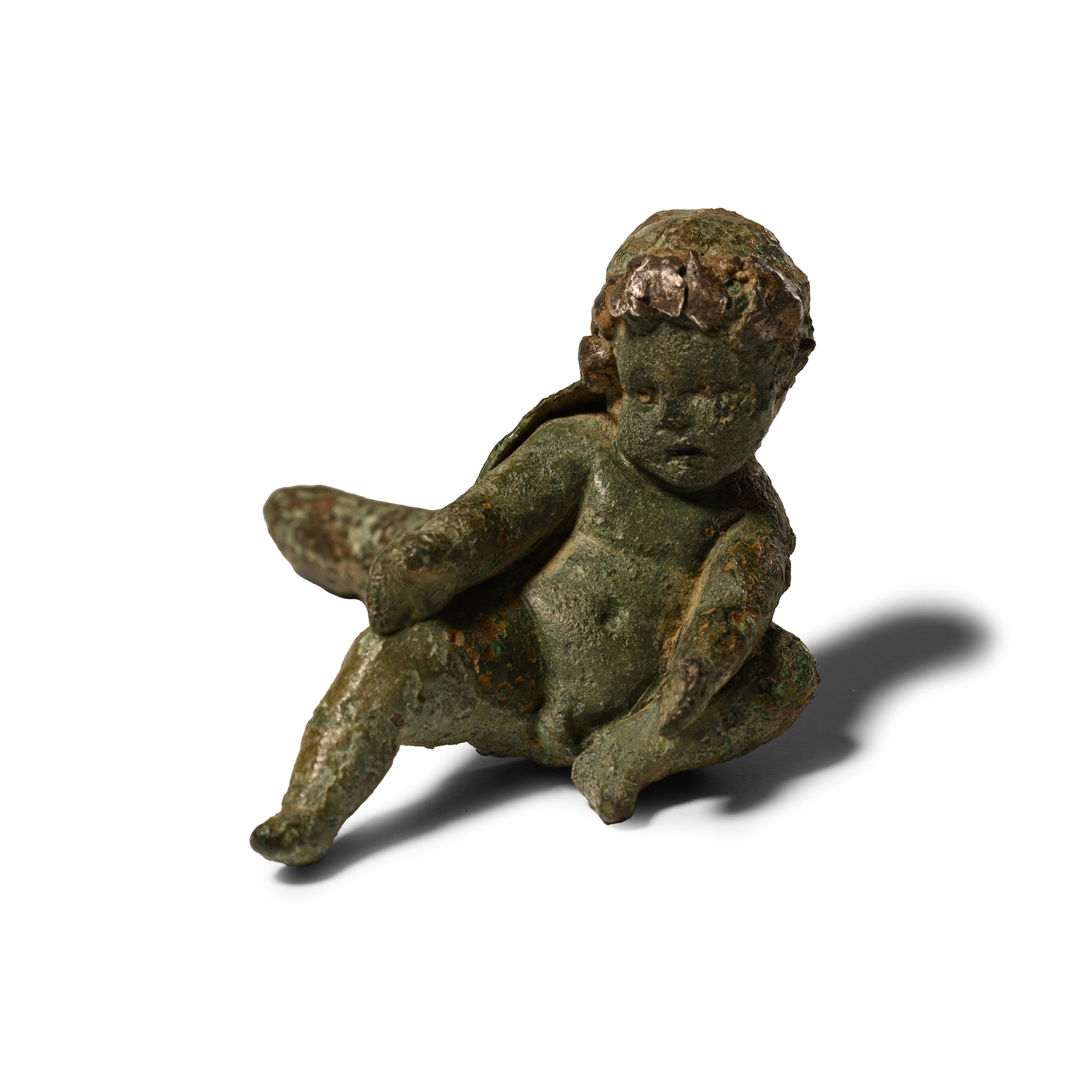
Roman Bronze Figure of Dionysus Child with Silver Inlays
1ST CENTURY A.D.
2 3/8 in. (70.1 grams, 61 mm).
Modelled in the round, a male infant with arms and right leg extended, left leg bent and raised; head looking downwards, with applied silver scales imitating a wreath; sturdy mounting peg to the reverse.
ProvenanceAcquired on the German art market, 2002.
European private collection.
This lot has been checked against the Interpol Database of stolen works of art and is accompanied by search certificate no.12053-211904.
Cf. Rolland, H., Bronzes Antiques de Haute Provence, Paris, 1965, item 111, for type.
FootnotesThe model appears to form part of a figural group.
CONDITIONTimeLine Auctions follows a vetting process to ensure the authenticity and legality of all items, reinforcing our commitment to integrity and responsible trading. Each antiquity, antique, and coin lot undergoes thorough examination by a vetting committee of at least ten external specialists, professional trade association members, scientists, and archaeologists: Our Vetting Process
AUCTIONS:
TimeLine is a leading auction house specialising in antiquities, ancient art, collectables, natural history, coins, medals, and books. Our auctions offer museums, collectors, historians, and enthusiasts the opportunity to acquire unique and historically significant pieces.
LOT 0110
Roman Bronze Figure of Dionysus Child with Silver Inlays
Estimate £1,800 - 2,400€2,090 - 2,780 (for guidance only)$2,430 - 3,240 (for guidance only)
-
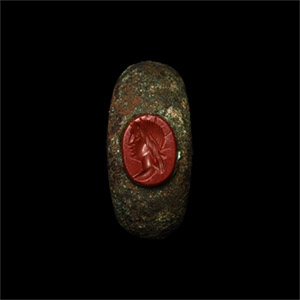
Roman Bronze Ring with Bust of Sol Gemstone
2nd century A.D.Sold for (Inc. bp): £156
With inset jasper gemstone, intaglio profile bust of Sol with radiate crown; supplied with a museum-quality impression. 4.36 grams, 21.88 mm overall, 16.61 mm internal diameter (approximate size British I 1/2, USA 4 1/2, Europe 8.07, Japan 7)
Private collection, England. -
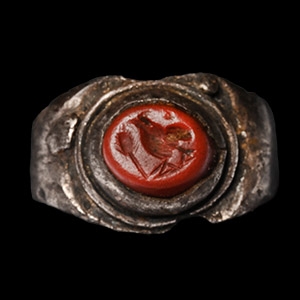
Roman Silver Ring with Cockerel Gemstone
2nd-3rd century A.D.Sold for (Inc. bp): £312
With broad hoop, plaque with cell and applied wire collar, inset jasper cabochon with intaglio bird and teasel motif. 4.58 grams, 20.55 mm overall, 17.07 mm internal diameter (approximate size British K, USA 5 1/4, Europe 9.95, Japan 9)
UK private collection before 2000. Acquired on the UK art market. Property of a London gentleman. -
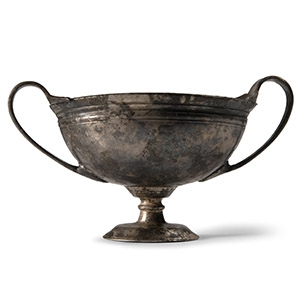
Roman Silver Kantharos Wine Cup
2nd century B.C.-1st century A.D.Estimate: £3,500 - 4,500 (+bp*)
Opening Bid: £1,944
With deep spherical body supported on a round stand; incised with a band around the inner surface and concentric circles on the outer body; two looped high handles, one with stipple engraved monogram on the upper side. 156 grams, 14 cm wide
Ex Mansees collection, formed 1950s-early 1990s. From a large American collection formed in Chicago, Illinois, USA, in 1995. From a European collection. This lot has been checked against the Interpol Database of stolen works of art and is accompanied by search certificate no.11627-197618.
