
Loading, please wait...
LOT 0163
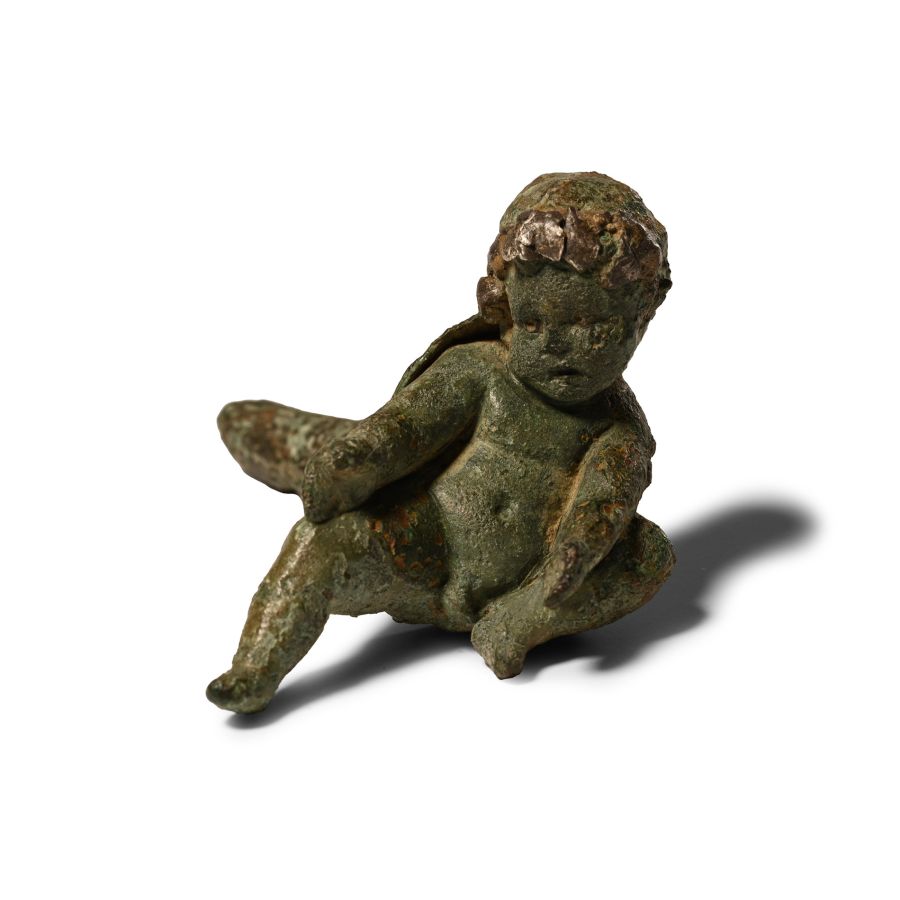
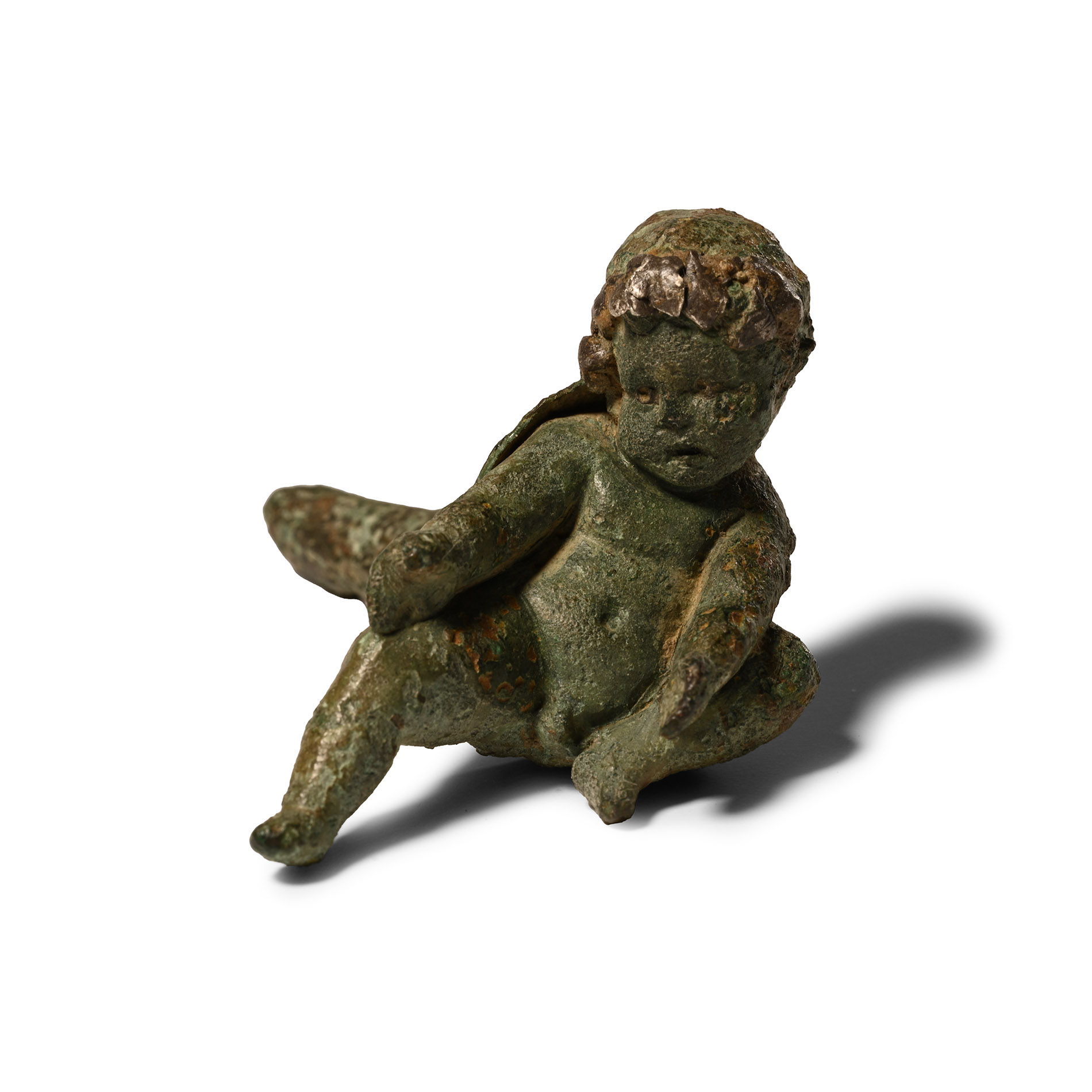
Roman Bronze Figure of a Boy with Silver Inlays
1ST CENTURY A.D.
2 3/8 in. (70.1 grams, 61 mm).
Modelled in the round, a male infant with arms and right leg extended, left leg bent and raised; head looking downwards, with applied silver scales imitating a wreath; sturdy mounting peg to the reverse.
ProvenanceAcquired on the German art market, 2002.
European private collection.
This lot has been checked against the Interpol Database of stolen works of art and is accompanied by search certificate no.12053-211904.
Cf. Rolland, H., Bronzes Antiques de Haute Provence, Paris, 1965, item 111, for type.
FootnotesThe model appears to form part of a figural group.
CONDITIONTimeLine Auctions follows a vetting process to ensure the authenticity and legality of all items, reinforcing our commitment to integrity and responsible trading. Each antiquity, antique, and coin lot undergoes thorough examination by a vetting committee of at least ten external specialists, professional trade association members, scientists, and archaeologists: Our Vetting Process
AUCTIONS:
TimeLine is a leading auction house specialising in antiquities, ancient art, collectables, natural history, coins, medals, and books. Our auctions offer museums, collectors, historians, and enthusiasts the opportunity to acquire unique and historically significant pieces.
LOT 0163
Roman Bronze Figure of a Boy with Silver Inlays
Estimate £2,000 - 3,000€2,320 - 3,480 (for guidance only)$2,700 - 4,050 (for guidance only)
-
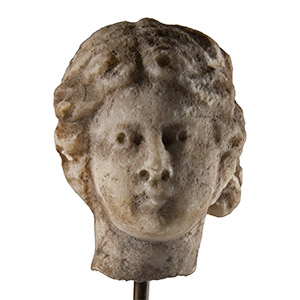
Roman Marble Female Head
Circa 3rd century A.D.Sold for (Inc. bp): £936
From a relief with hair centre-parted and drawn back from the face, gathered at the nape in a chignon; rounded face with soft features, drilled eyes and nostrils; mounted on a custom-made stand. 523 grams total, 78 mm high (12.7 cm high including stand)
London art market, 2000s. Property of a London gentleman. -
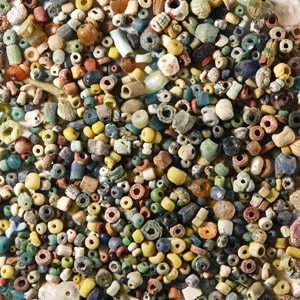
Roman and Other Glass and Stone Bead Group
1st millennium B.C. and laterSold for (Inc. bp): £208
Comprising a quantity of mixed beads, mainly oblate and cylindrical in form, including glass, modelled, faience and stone etc. 58.5 grams total, 1-14 mm
UK gallery, early 2000s.
The use of amber beads as amulets in the Roman world is well attested, even in Britain (series of bracelets have been found in late Roman graves at Cirencester and Colchester). The amber beads were associated with pierced coins, pierced dog’s teeth and a lunate pendant. Pliny said that amber was beneficial to infants ‘when attached to the body in the form of an amulet'. -

Roman Marble Figure of a Dancing Pan
Circa 2nd century A.D.Sold for (Inc. bp): £5,460
Modelled in the round, comprising the lower torso and the goat-legs in vigorous motion, the left raised and bent, right leg straight with the genitals leaning against the length of the thigh, stub of the tail to the reverse; mounted on a custom-made stand. 1.4 kg total, 16.5 cm high (24 cm high including stand)
From the collection of Jan Onderdijk, Belgium, before 1980. Acquired by Mr J.R. an antiquarian in the late 1980s. Accompanied by an academic report by Dr Raffaele D’Amato. This lot has been checked against the Interpol Database of stolen works of art and is accompanied by search certificate number no.12022-213655.
Statues of satyrs, relaxing, dancing, and pursuing nymphs proliferated during the third century B.C., as the cult of Dionysus, god of wine and the pleasures it bestows, grew in importance. The Romans appreciated portrayals of Satyrs and Silens, and borrowed them from Greek art, the god Pan being one of the favourite subjects. This statuette is probably a Roman copy from a Hellenistic original, similar to the specimen from the Garimberti collection, where the god, with the left leg firmly planted on the ground and the other leg raised, is carrying a basket of flowers and fruit on his back.
