
Loading, please wait...
LOT 0853
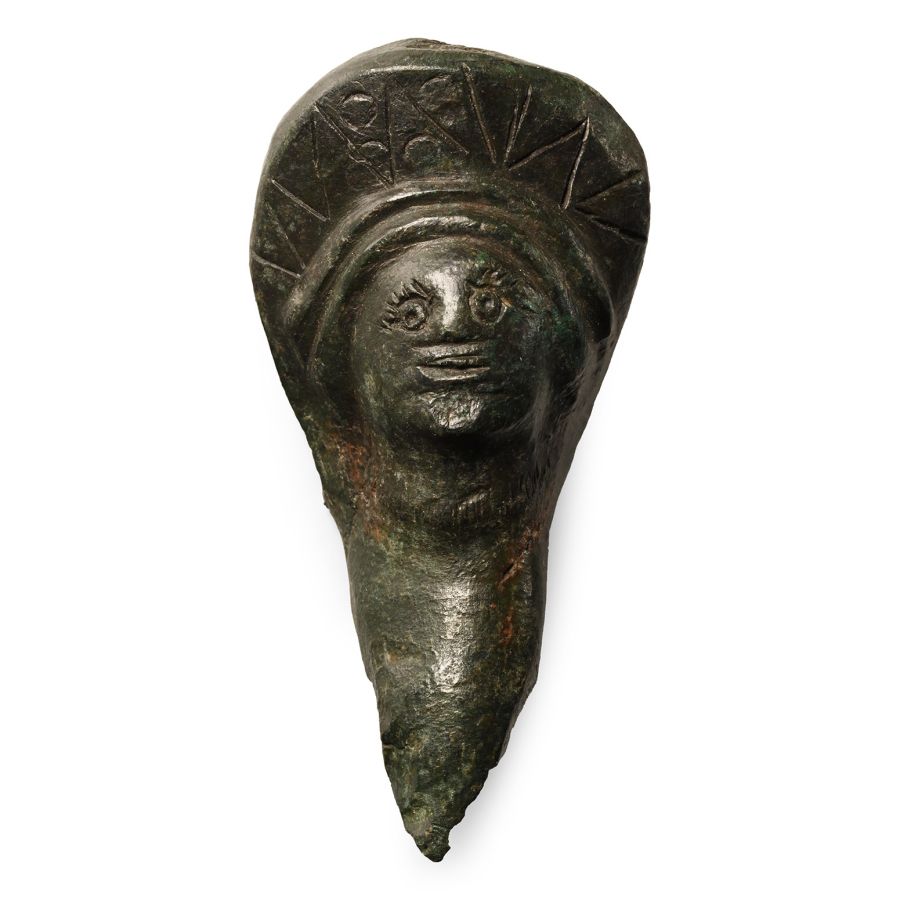
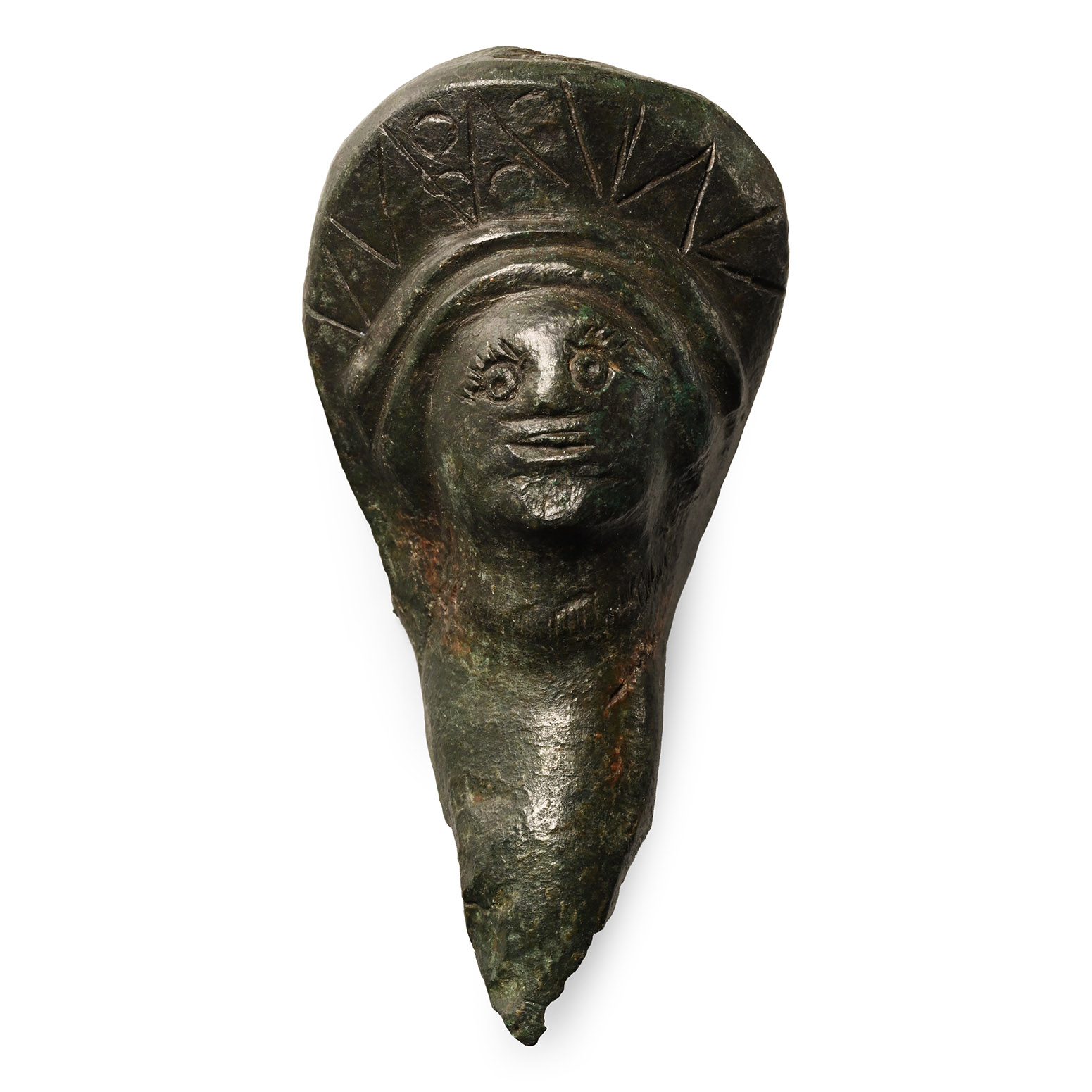
Roman Bronze Figural Attachment
3RD-4TH CENTURY A.D.
2 5/8 in. (71.6 grams, 66 mm).
Piriform mount with stylised facial features, broad band of hair with incised zigzag and roundels, hollow to the reverse. [No Reserve]
ProvenanceEx German art market, 2000s.
Acquired from an EU collector living in London.
From the collection of Surrey, UK, gentleman.
TimeLine Auctions follows a vetting process to ensure the authenticity and legality of all items, reinforcing our commitment to integrity and responsible trading. Each antiquity, antique, and coin lot undergoes thorough examination by a vetting committee of at least ten external specialists, professional trade association members, scientists, and archaeologists: Our Vetting Process
AUCTIONS:
TimeLine is a leading auction house specialising in antiquities, ancient art, collectables, natural history, coins, medals, and books. Our auctions offer museums, collectors, historians, and enthusiasts the opportunity to acquire unique and historically significant pieces.
-
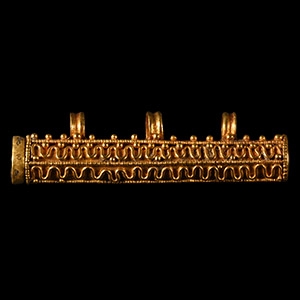
Roman Gold Amulet Holder
1st-4th century A.D.Estimate: £1,200 - 1,700 (+bp*)
Opening Bid: £600
Hexahedral in section, hollow with gusseted suspension loops, applied filigree meanders with granules. 7.40 grams, 47 mm
Ex German art market, 2000s. Acquired from an EU collector living in London. From the collection of Surrey, UK, gentleman. -
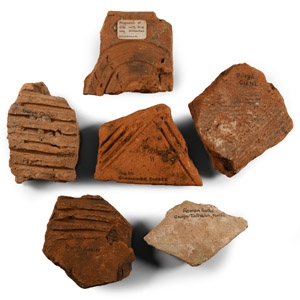
Romano-British and Other Decorated Floor Tile Fragment Group
1st-4th century A.D.Sold for (Inc. bp): £20
Including fragments of terracotta and other tegula with impressed geometric detailing; one with inked inscription: 'Roman Baths / Ghajn Tuffieha, Malta' and 'Floor tile / Sinscombe, Surrey / B1/71', and three pieces with inked inscriptions from: 'Burgh Castle', Norfolk, UK. 725 grams total, 83-88 mm
Found UK. From the collection of a late East Anglian teacher and antiquarian who retired to the Isle of Wight in Hampshire, UK. He amassed a large collection of objects between the 1960s-1980s. -
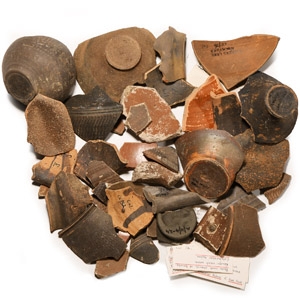
Romano-British Castor Ware and Other Sherd Group
1st-4th century A.D.Sold for (Inc. bp): £130
Mixed group of sherds, many with inked reference number, and collector's display cards including 'Sherd of calcite gritted bowl. Indented rim. Colchester kilns. 4th Cent.', 'NENE VALLEY / NVCIO', 'Col' for Colchester, 'CANVEY ISLAND / CC/6', 'MG/105 / CAMBRIDGE / P.', LONDON / CC/27', 'TINKERS LANE / ROCHFORD / CC/26'. 804 grams total, 2.5-10 cm
Found UK. From the collection of a late East Anglian teacher and antiquarian who retired to the Isle of Wight in Hampshire, UK. He amassed a large collection of objects between the 1960s-1980s. Accompanied by handwritten information display cards.
