
Loading, please wait...
LOT 0660
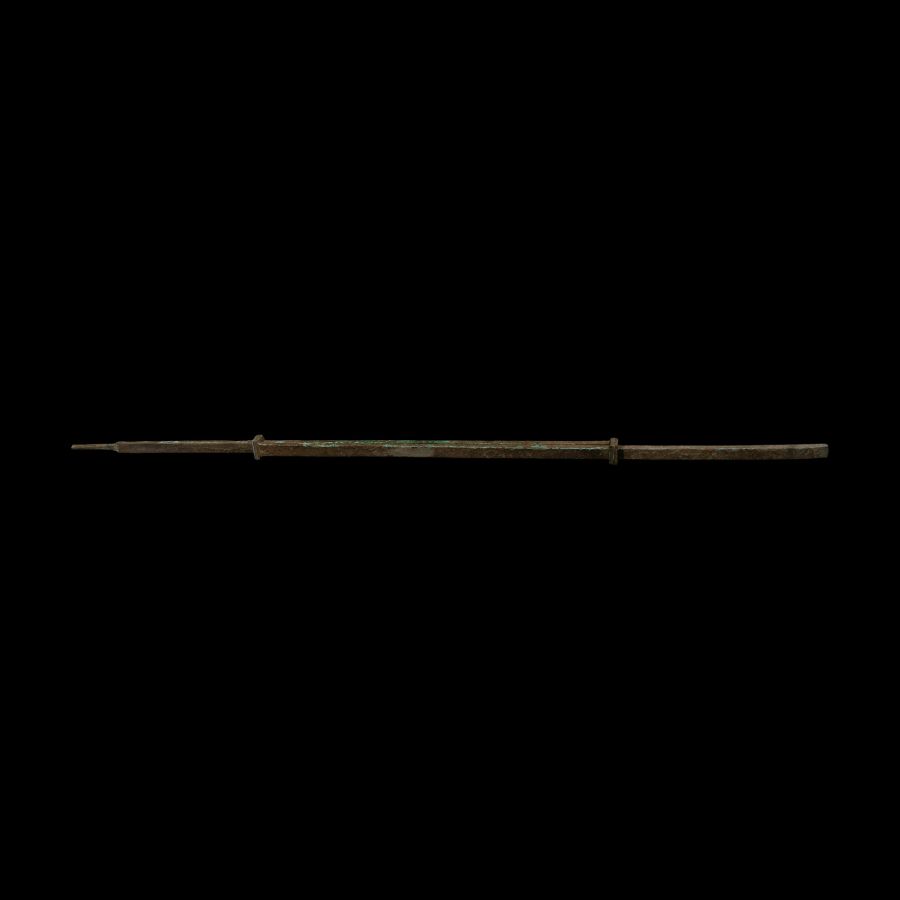
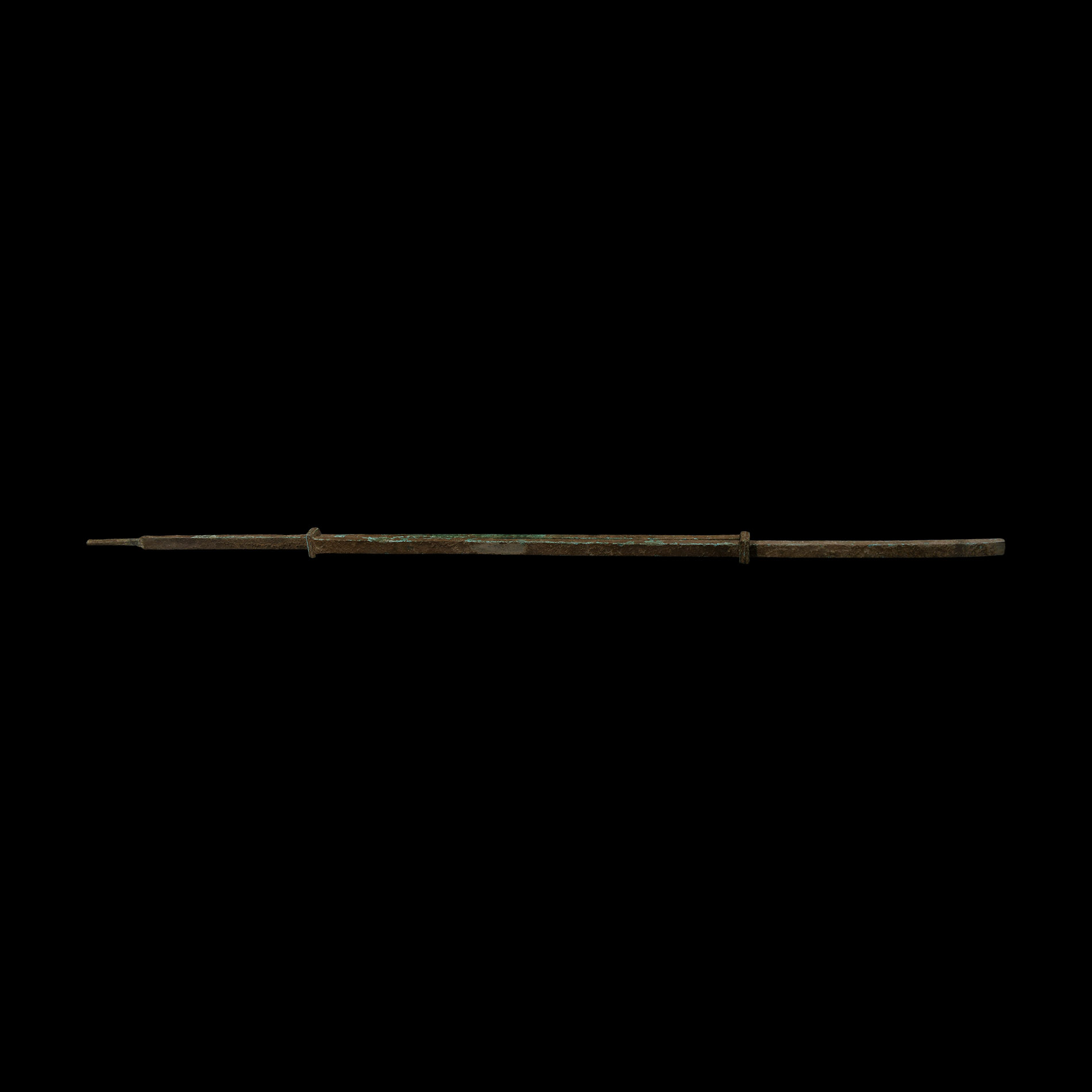
Roman Bronze Extendable Table Leg
2ND-3RD CENTURY A.D.
42 in. (2 kg total, 1.07 m).
Composed of two rectangular-section bars with square-sockets.
ProvenanceAcquired 1990s-early 2000s.
East Anglian private collection.
Cf. Traxler, S., Lang, F., Schlag, B., Die Rücckehr der Legion, Romisches Erbe in Oberössterreich, Linz, 2018, p.74, for similar.
FootnotesThese bars were one of the four supports of a folding table with a height-adjustable frame, often surmounted by busts of divinities. These folding supports for tables, bracers and cauldrons are known finds from important excavations in the Roman world, like Pompeii. The purpose of such folding stands varied; during a meal they were placed between the triclinium beds with bowls and plates hung to the hooks at the back of the holders.
CONDITIONTimeLine Auctions follows a vetting process to ensure the authenticity and legality of all items, reinforcing our commitment to integrity and responsible trading. Each antiquity, antique, and coin lot undergoes thorough examination by a vetting committee of at least ten external specialists, professional trade association members, scientists, and archaeologists: Our Vetting Process
AUCTIONS:
TimeLine is a leading auction house specialising in antiquities, ancient art, collectables, natural history, coins, medals, and books. Our auctions offer museums, collectors, historians, and enthusiasts the opportunity to acquire unique and historically significant pieces.
-
.jpg)
Roman Bronze Musical Flute
Circa 2nd-3rd century A.D.Estimate: £6,000 - 8,000 (+bp*)
Opening Bid: £2,000
An extremely rare aulos or tibia with round-section body, six circular holes to one side and a D-shaped hole to the reverse. 87 grams, 23 cm
Fine condition. Extremely rare.
From the late Alison Barker collection, a retired London barrister; from her collection formed early 1960s-1990s. Accompanied by an academic report by Dr Raffaele D'Amato. This lot has been checked against the Interpol Database of stolen works of art and is accompanied by search certificate number no.11055-184396.
The flute was used for religious ceremonies and for entertainment. The pyrrhic, a war dance of Doric origin, was a rapid dance to the double flute, and made to resemble an action in battle. -
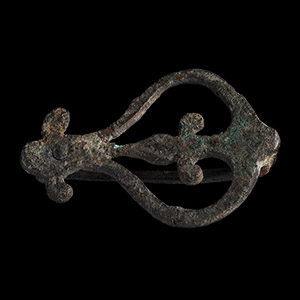
Roman Bronze Openwork Plate Brooch
Circa 2nd century A.D.Sold for (Inc. bp): £33
Comprising an openwork piriform frame enclosing a fleur, leading to a trilobite finial; complete with pin and catchplate to reverse. 2.99 grams, 31 mm
Acquired from York Antiques Centre. Accompanied by a certificate of authenticity signed by Gary Edwards. -
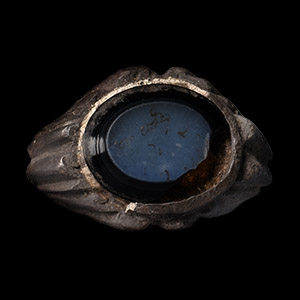
Roman Silver Ring with Gemstone
2nd-3rd century A.D.Sold for (Inc. bp): £156
Hoop with angled shoulders with fluting; inset with a polished and chipped agate stone; setting damaged. 33.07 grams, 33.29 mm overall, 18.64 mm internal diameter (approximate size British K 1/2, USA 5 1/2, Europe 10.58, Japan 10)
Private collection, Germany, 1970s. Acquired 2009.
