
Loading, please wait...
LOT 0619
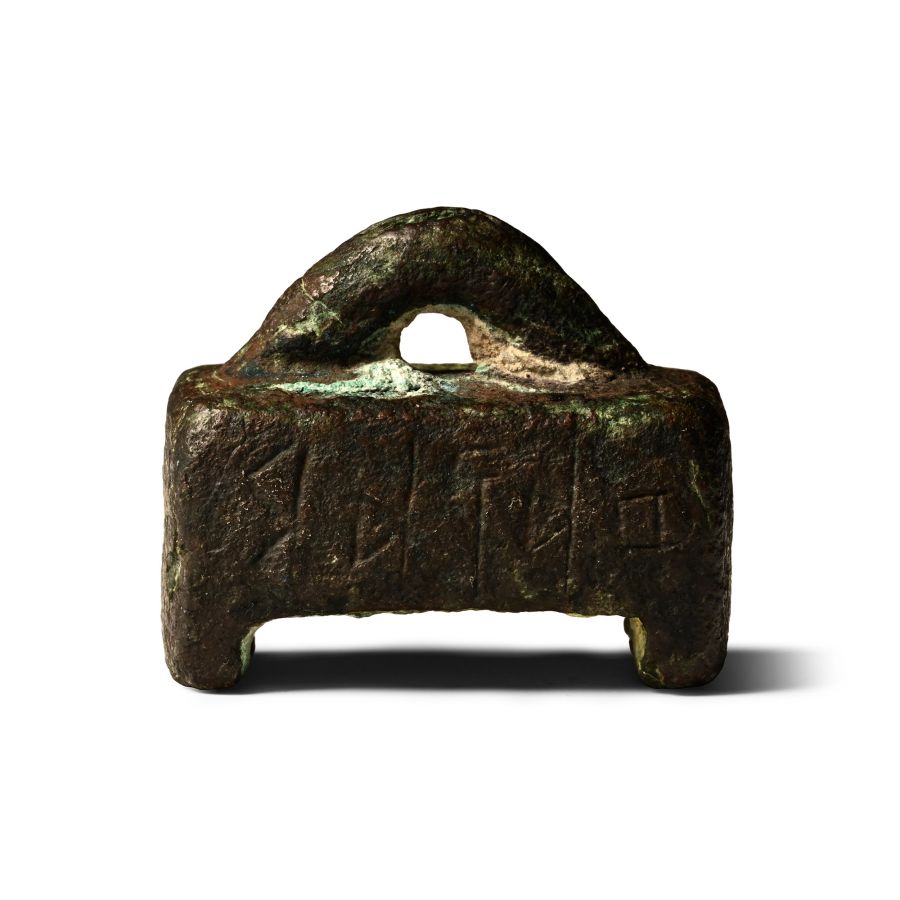
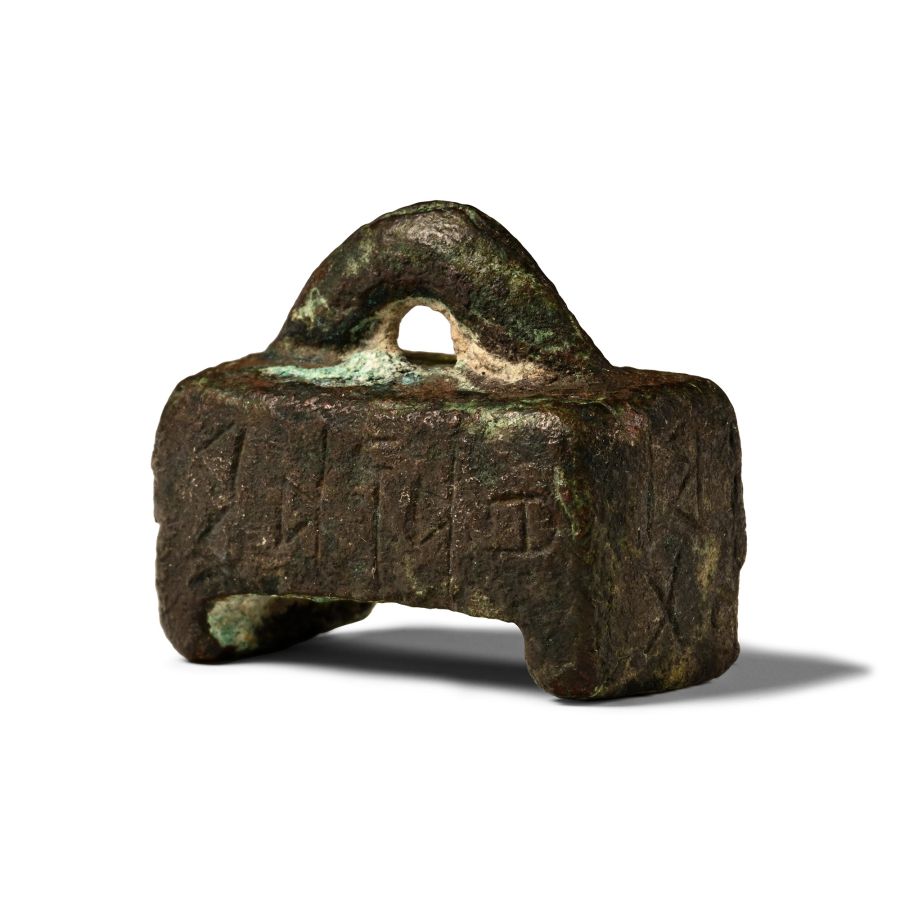
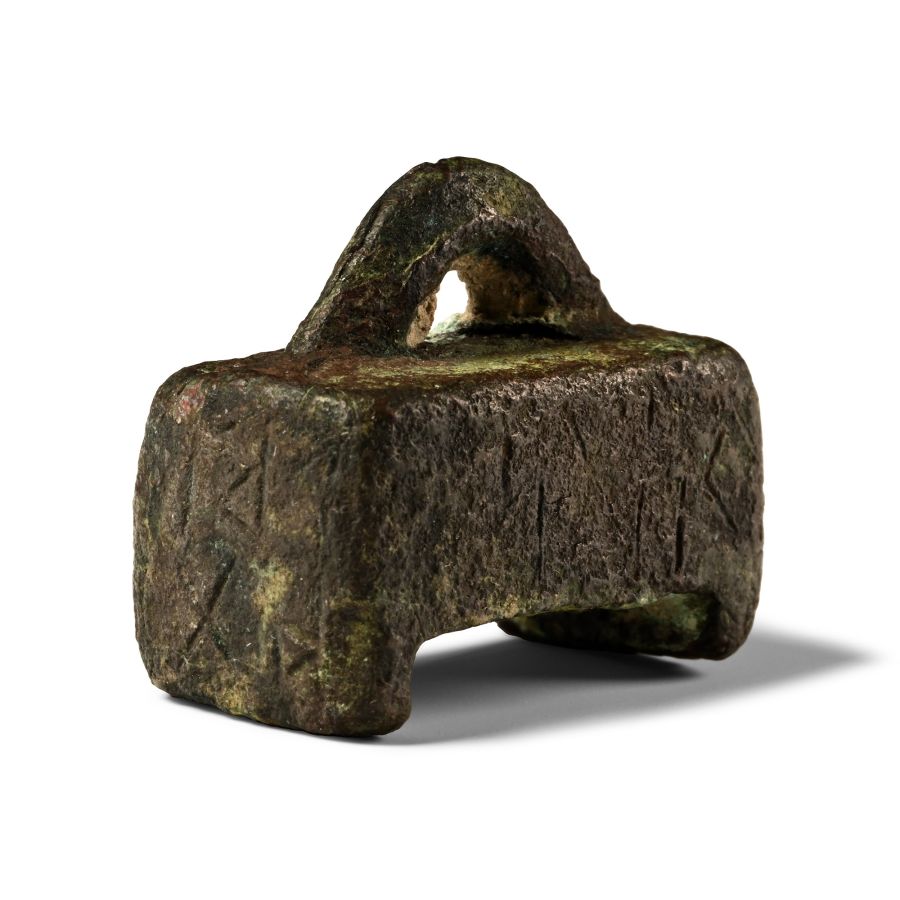
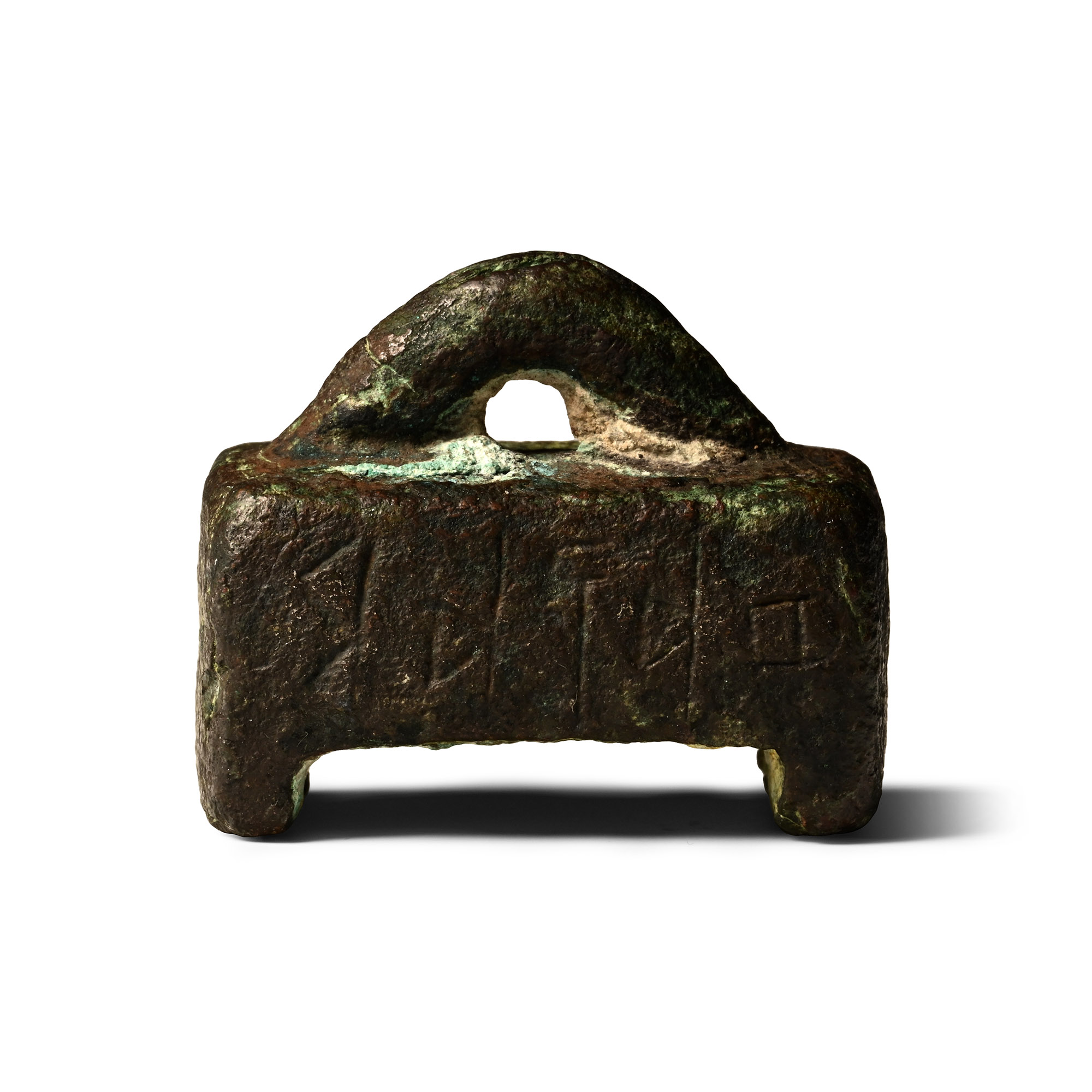
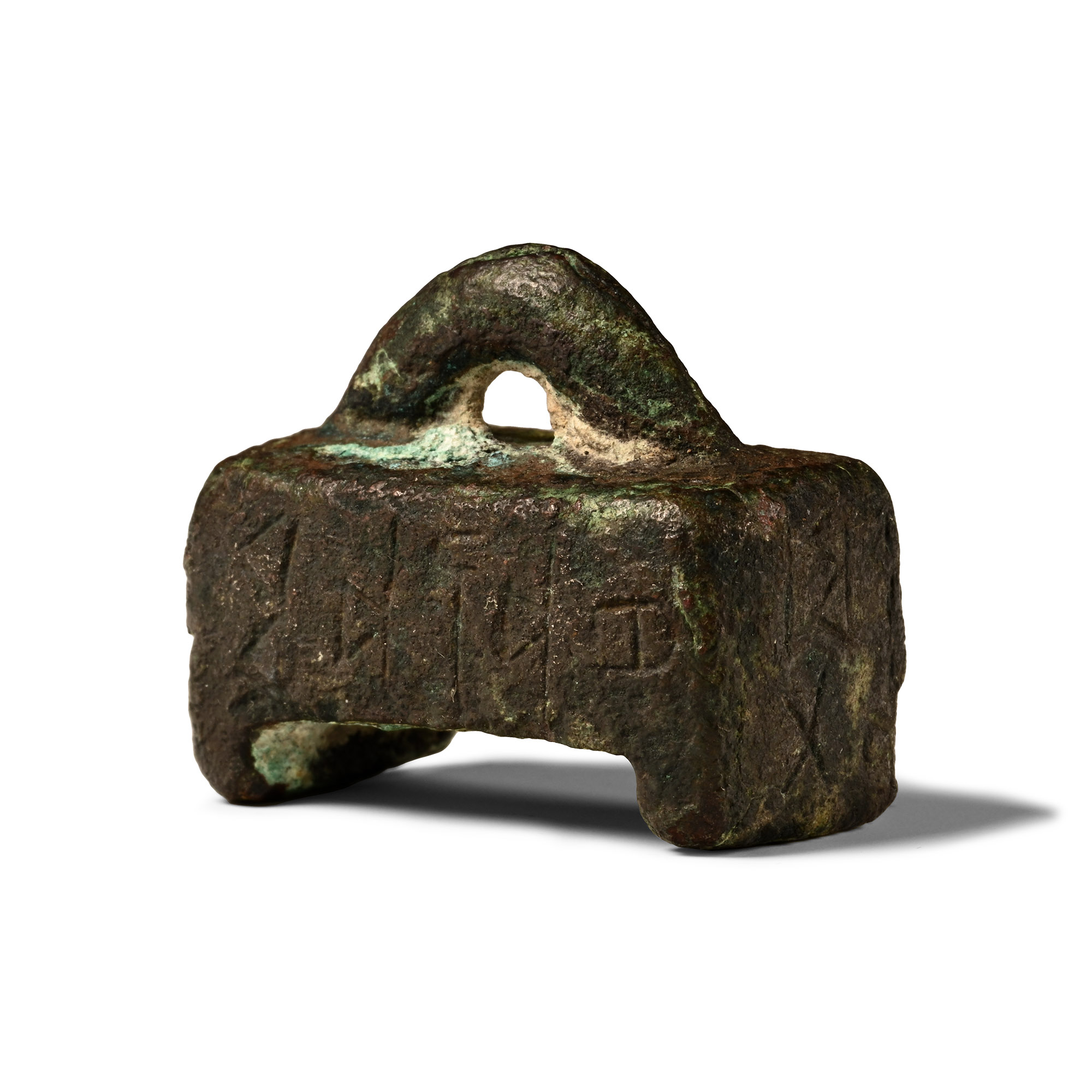
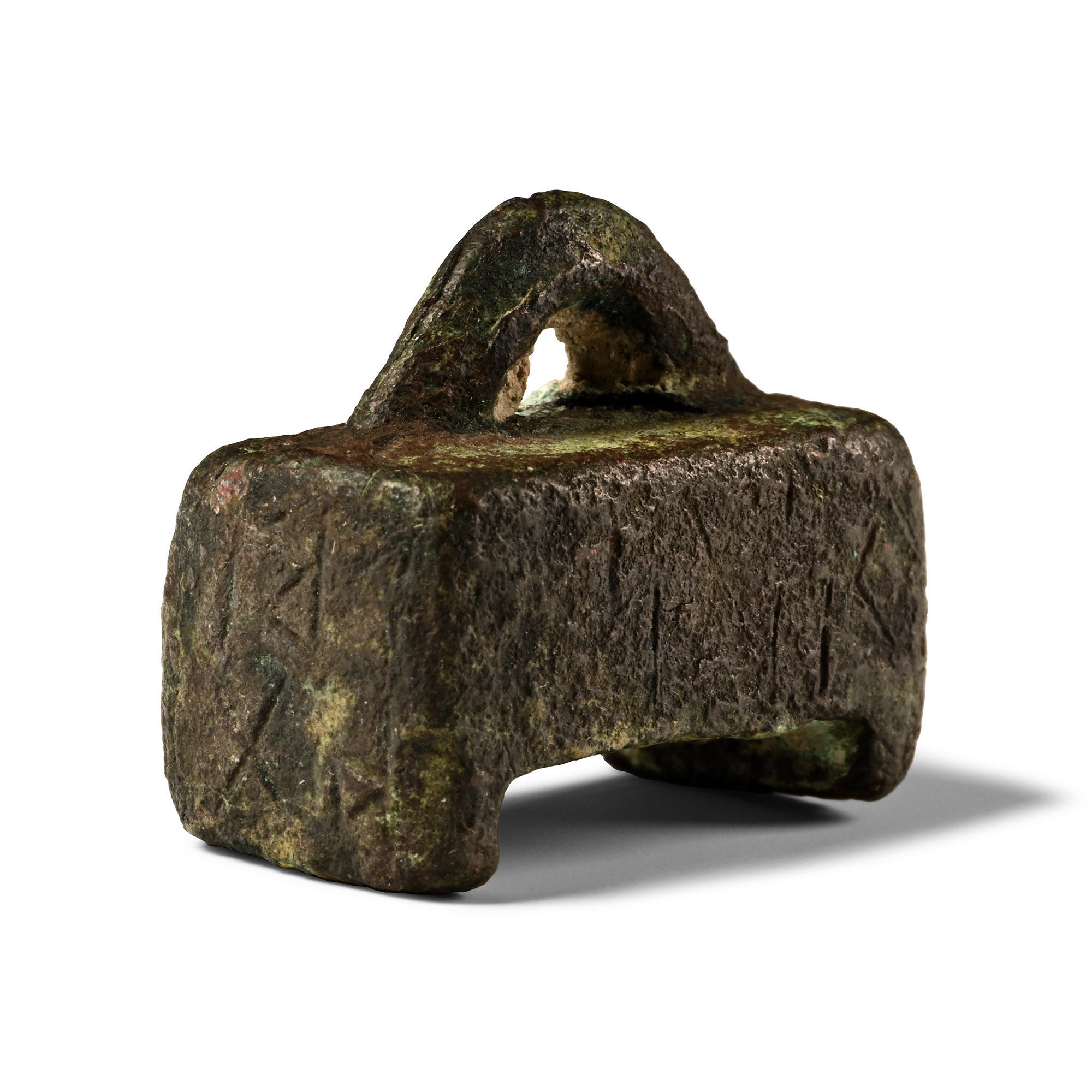
Roman Bronze Epigraphic Codex Ansatus Model
1ST-4TH CENTURY A.D.
1 1/4 in. (63.7 grams, 33 mm).
Rectangular with two supporting bars to the underside, extended loop above; enigmatic (Greek) letters to all faces.
Provenancewith Hotel des Ventes, Drouot, Paris, France.
From the collection of Mr H. Naudy, Paris, France.
Acquired at between 2004-2010.
Property of a French collector.
Cf. Willi, A., Manual of Roman Everyday Writing Volume 2, Writing Equipment, Nottingham, 2021, fig.5, for similar object on a sculpture.
FootnotesThis small counter-weight bears letters indicating numbers: on one of the short sides Α (1), Δ (4), Χ (600); on the other short side they worn and difficult to read; and on one of the longer sides Υ (400), φ (500). The other letters are challenging to read, but the object would have been used as unit of measure. Another possibility is that it belonged to a statuette of a man holding a codex ansatus (box with a handle for carrying writing tablets).
CONDITIONTimeLine Auctions follows a vetting process to ensure the authenticity and legality of all items, reinforcing our commitment to integrity and responsible trading. Each antiquity, antique, and coin lot undergoes thorough examination by a vetting committee of at least ten external specialists, professional trade association members, scientists, and archaeologists: Our Vetting Process
AUCTIONS:
TimeLine is a leading auction house specialising in antiquities, ancient art, collectables, natural history, coins, medals, and books. Our auctions offer museums, collectors, historians, and enthusiasts the opportunity to acquire unique and historically significant pieces.
-
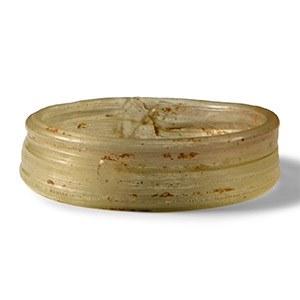
Late Roman Glass Bangle
5th-7th century A.D.Sold for (Inc. bp): £117
Aqua-coloured glass lamp-work bangle with ribbed construction. 29.5 grams, 66 mm
Acquired from Allan Cherry, Bournemouth, UK, 2005. Ian Wilkinson collection, Nottinghamshire, UK. Accompanied by an illustrated display card.
The type is well known in the Eastern Empire from the 5th to the 7th century A.D. Usually these bracelets are decorated on outer surface with five continuous parallel horizontal ribs. -
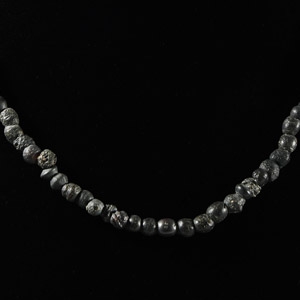
Roman and Other Bead Necklace
1st-4th century A.D. and laterSold for (Inc. bp): £20
A restrung designer necklace including oblate, biconvex and other types. 22.7 grams, 41.5 cm
Acquired on the London, UK, art market in the 1990s. Ex London, UK, gallery. -
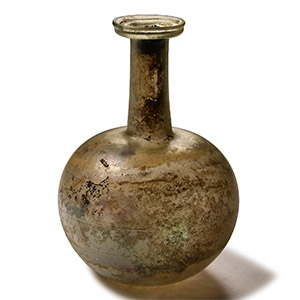
Roman Glass Vessel with Wheel-Cut Design
1st-3rd century A.D.Estimate: £600 - 800 (+bp*)
Opening Bid: £300
With globular body and long tubular neck, dimple base, everted rim with gusset to the outer edge; wheel-cut horizontal lines to the body. 115 grams, 13 cm
Acquired on the German art market, 1989-1995. with The Museum Gallery, 19 Bury Place, London, WC, UK, 1998-2003. Property of a London based academic, 2003-present.
