
Loading, please wait...
LOT 0880
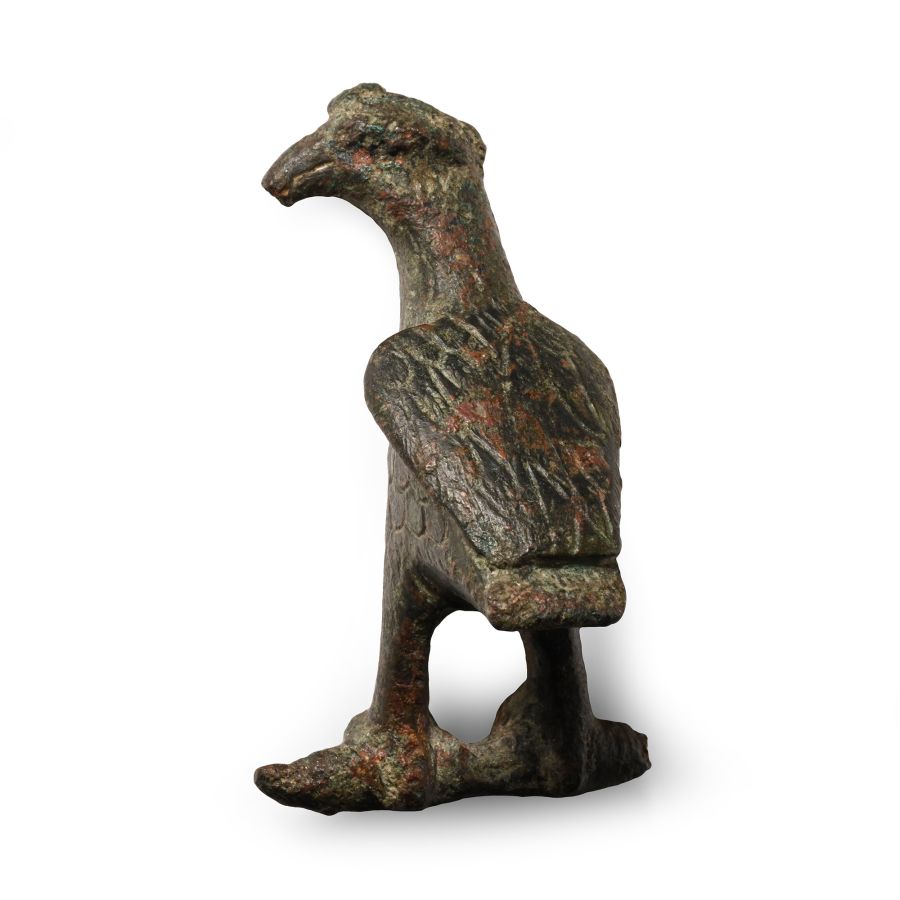
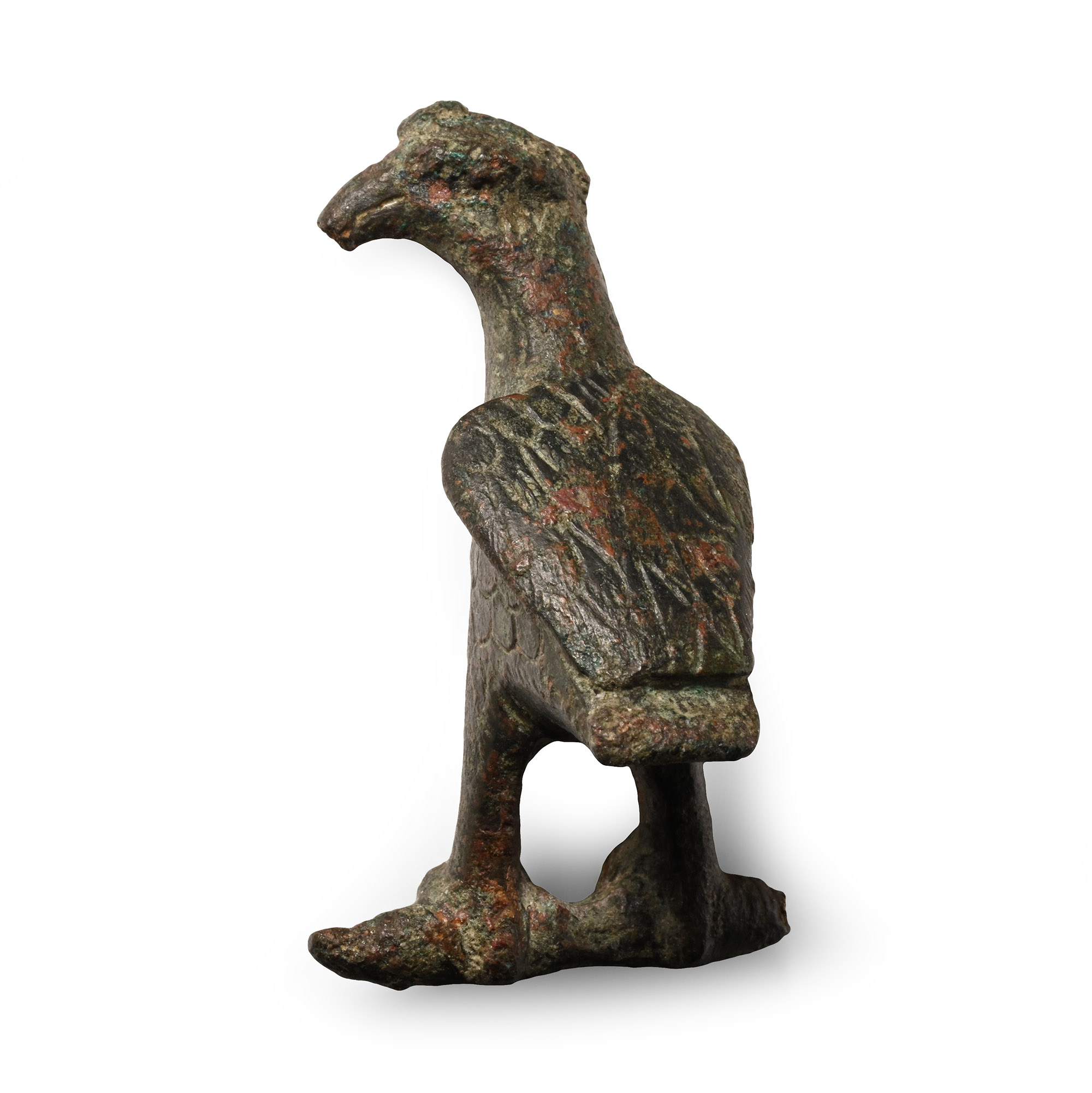
Roman Bronze Eagle Statuette
1ST CENTURY A.D.
2 in. (45 grams, 51 mm).
Standing on an integral base with its wings folded, and head turned, hooked beak, incised feather detailing to the body and wings. [No Reserve]
ProvenanceEx DRG Coins and Antiquities, Bishops Stortford, Essex, UK.
From the private collection of a West London, UK, gentleman, formed since the early 2000s.
Accompanied by a handwritten dealer's ticket.
Cf. Durham, E., Metal Figurines in Roman Britain, vol. 2, Reading, 2010, pl.215, for type.
CONDITIONTimeLine Auctions follows a vetting process to ensure the authenticity and legality of all items, reinforcing our commitment to integrity and responsible trading. Each antiquity, antique, and coin lot undergoes thorough examination by a vetting committee of at least ten external specialists, professional trade association members, scientists, and archaeologists: Our Vetting Process
AUCTIONS:
TimeLine is a leading auction house specialising in antiquities, ancient art, collectables, natural history, coins, medals, and books. Our auctions offer museums, collectors, historians, and enthusiasts the opportunity to acquire unique and historically significant pieces.
-
.jpg)
Roman Rock Crystal Sleeping Dog
1st-2nd century A.D.Sold for (Inc. bp): £2,860
Carved in the round model of a recumbent canine with head resting on the forelegs; leaf-shaped ears, and deep-set eyes. 14.2 grams, 40 mm
Acquired in the mid 1980s-1990s. Private collection, Switzerland, thence by descent. Private collection, since the late 1990s. This lot has been checked against the Interpol Database of stolen works of art and is accompanied by a search certificate number no.12588-232168.
The small rock crystal sculpture is modelled on similar figures representing sleeping hunting dogs. The subject occurs in cameos, plastic vases, as well as in lamps. These images have symbolic value, implying something of the fidelity of the dogs they depict, as well as their bravery and dependability as guardians. -
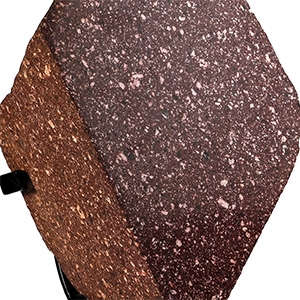
Late Roman Imperial Porphyry Fragment
4th-6th century A.D.Sold for (Inc. bp): £3,640
Formed as a parallelepiped with round corner having a possibly later polished side and the other three sides straight and round, with signs of carving; probably from an Imperial sarcophagus or monument; mounted on a custom-made stand. 9.85 kg total, 36.5 cm including stand
Acquired from the private collection of a Somerset gentleman who was related to Sir Arthur Evans. From the private collection of a UK gentleman since before 2005.
For the Romans, porphyry was the Imperial marble par excellence, and from Constantine the Great until the end of the 5th century, but probably also later, it was used to create sarcophagi for the emperors and members of the Imperial families. This particular stone was connected with the Imperial family because of its red colour, recalling the violet and red shades of the purple (porphyra), the precious colour assigned only to emperors and their relatives. In Constantinople, a room of the Imperial palace was called Porphýra, located on one of the palace terraces overlooking the Sea of Marmara and the Bosphorus. It was perfectly square in shape with a pyramidal ceiling and was entirely covered in purple porphyry speckled with white dots: this was the room where the empresses gave birth to the heir of the Roman Empire, called Porphyrogénnētos, meaning ‘born in the purple room’. Porphyry was widely used for building churches in the Christian Empire, and Justinian exhausted the supplies from Egypt by building the Great Church of Hagia Sophia, where still today a great amount of this material can be seen. The impressive Imperial sarcophagi were kept in the Church of the Holy Apostles, as well as the great porphyry sarcophagus of Constantine the Great, of which only a small fragment survives today in the Archaeological Museum of Istanbul. -
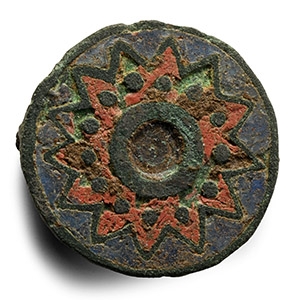
Romano-British Enamelled Bronze 'Sunburst' Plate Brooch
2nd century A.D.Sold for (Inc. bp): £195
Discoid with a thirteen-pointed red star with thirteen pellets within, blue enamelled background; pin-lugs and catchplate on the reverse. 3.68 grams, 23 mm
Found Norfolk, UK. From a Kent collection formed in the 1990s.
