
Loading, please wait...

LOT 0165
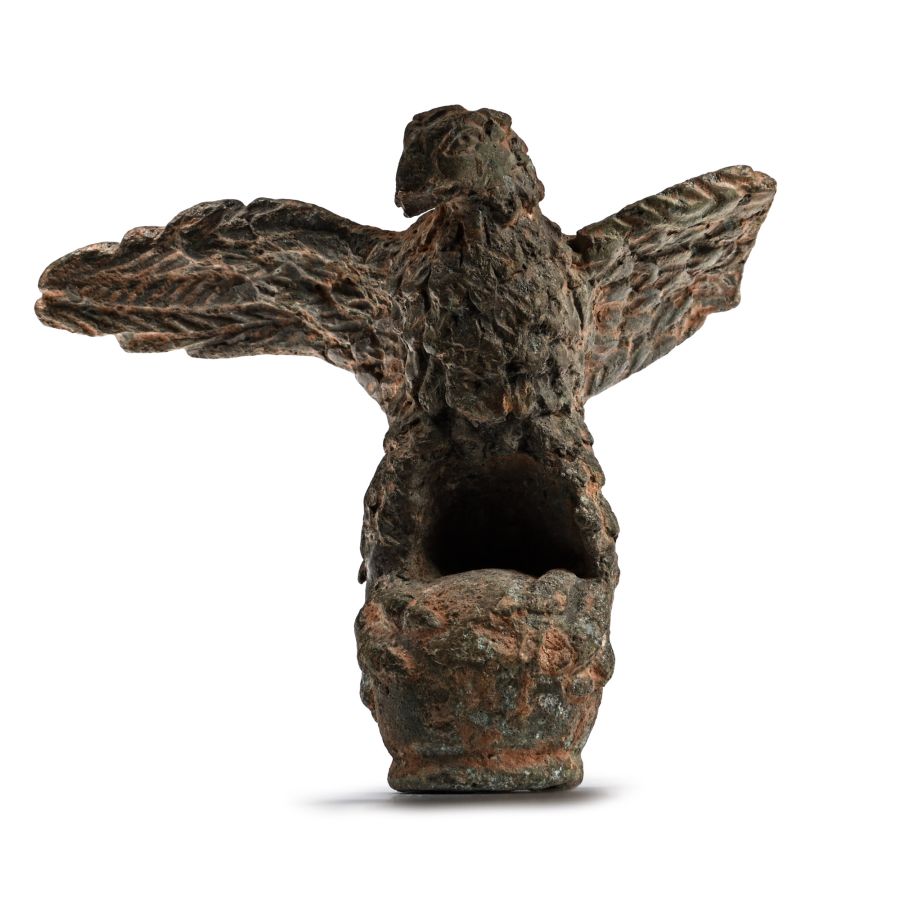
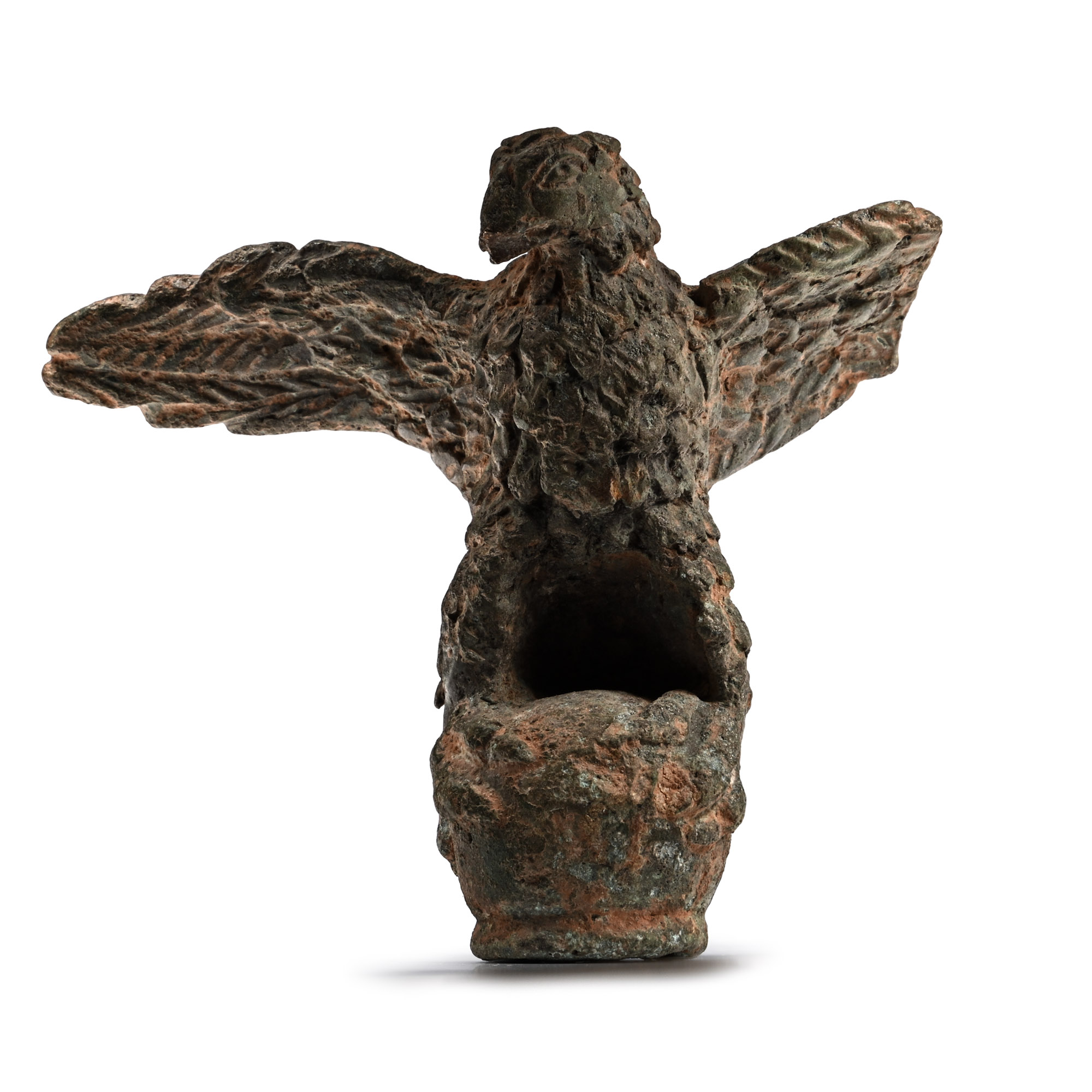
Roman Bronze Eagle Staff Terminal
2ND-3RD CENTURY A.D.
3 1/8 in. (236 grams, 81 mm).
Comprising a hollow-formed knop with collar to the socket, eagle modelled in the round perching on the knop with wings spread and head turned; socket behind the shoulders.
ProvenanceAcquired in the mid 1980s-1990s.
Private collection, Switzerland, thence by descent.
Private collection, since the late 1990s.
This lot has been checked against the Interpol Database of stolen works of art and is accompanied by search certificate number no.12238-222314.
Cf. Rolland, H., Bronzes Antiques de Haute Provence, Paris, 1965, item 271, for type.
CONDITIONTimeLine Auctions follows a vetting process to ensure the authenticity and legality of all items, reinforcing our commitment to integrity and responsible trading. Each antiquity, antique, and coin lot undergoes thorough examination by a vetting committee of at least ten external specialists, professional trade association members, scientists, and archaeologists: Our Vetting Process
AUCTIONS:
TimeLine is a leading auction house specialising in antiquities, ancient art, collectables, natural history, coins, medals, and books. Our auctions offer museums, collectors, historians, and enthusiasts the opportunity to acquire unique and historically significant pieces.
LOT 0165
Roman Bronze Eagle Staff Terminal
Estimate £1,800 - 2,400€2,090 - 2,780 (for guidance only)$2,430 - 3,240 (for guidance only)
-
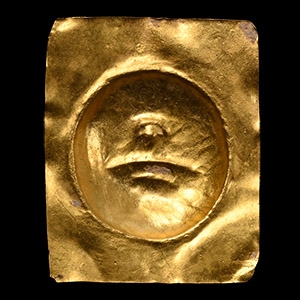
Roman Gold Votive Plaque
2nd-3rd century A.D.Sold for (Inc. bp): £1,105
Rectangular sheet-gold with boss to the centre, repoussé phallus motif. 2.24 grams, 30 mm
Acquired in the mid 1980s-1990s. Private collection, Switzerland, thence by descent. Private collection, since the late 1990s. -
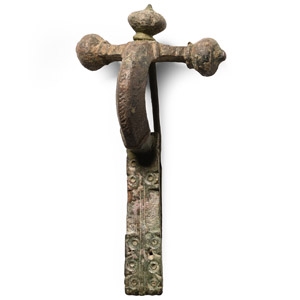
Roman Bronze Crossbow Brooch
4th century A.D.Sold for (Inc. bp): £72
With three faceted knops to the crossbar, the upper one with beaded collar, and pierced moulding to the upper face, deep bow, stepped junction with foot, trapezoidal foot with ring-and-dot motifs and integral catch; hinged pin to reverse; Keller Type 4. 56 grams, 88 mm
Ex German art market, 2000s. Acquired from an EU collector living in London. From the collection of Surrey, UK, gentleman. -
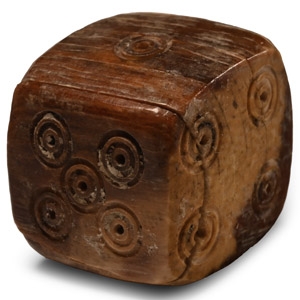
Late Roman Bone Dice Gaming Piece
4th-6th century A.D.Sold for (Inc. bp): £221
Cuboid with rounded edges and corners, ring-and-dot markings disposed 1:2, 3:4, 5:6; with old collector's identification tag '156'. 4.08 grams, 14 mm
Found Wiltshire, UK. From the important private collection of dice and gaming pieces of Colin Narbeth, London, UK, collection no.156.
