
Loading, please wait...
LOT 0704
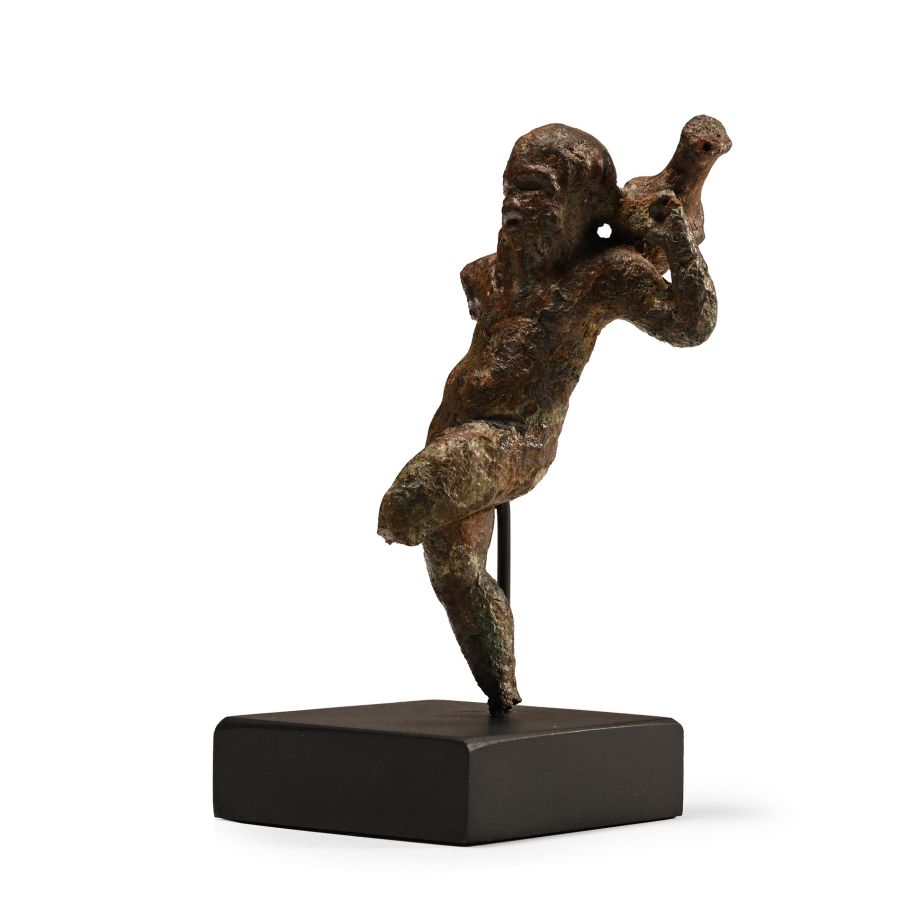
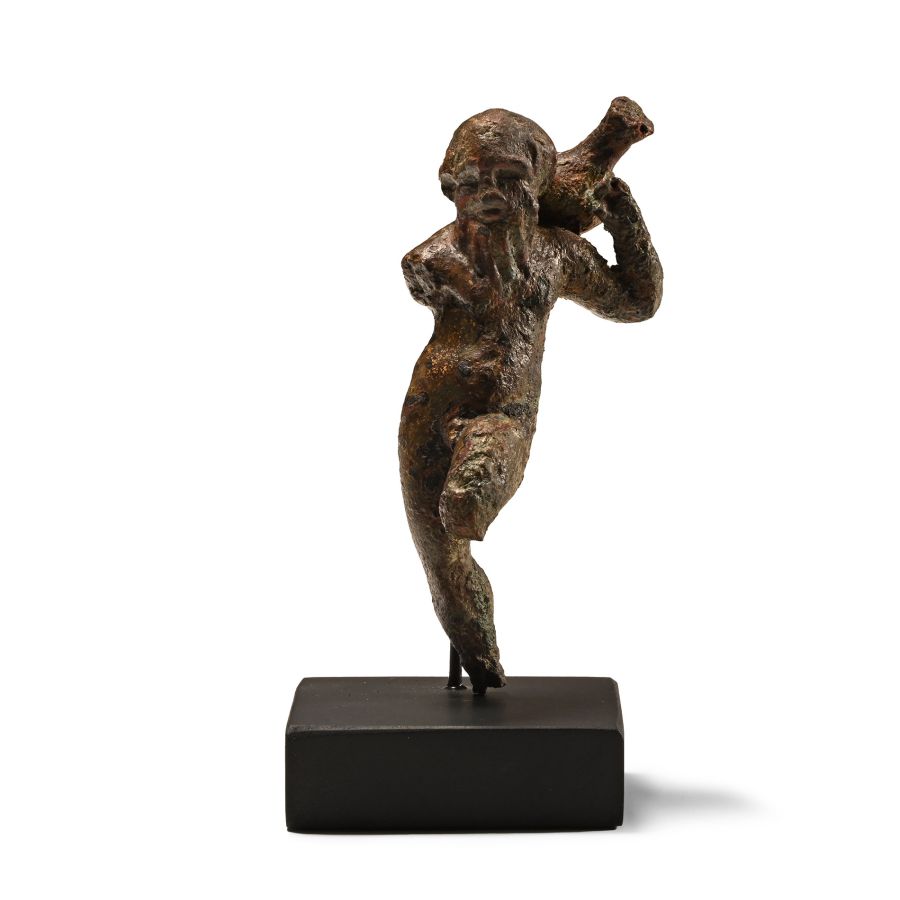
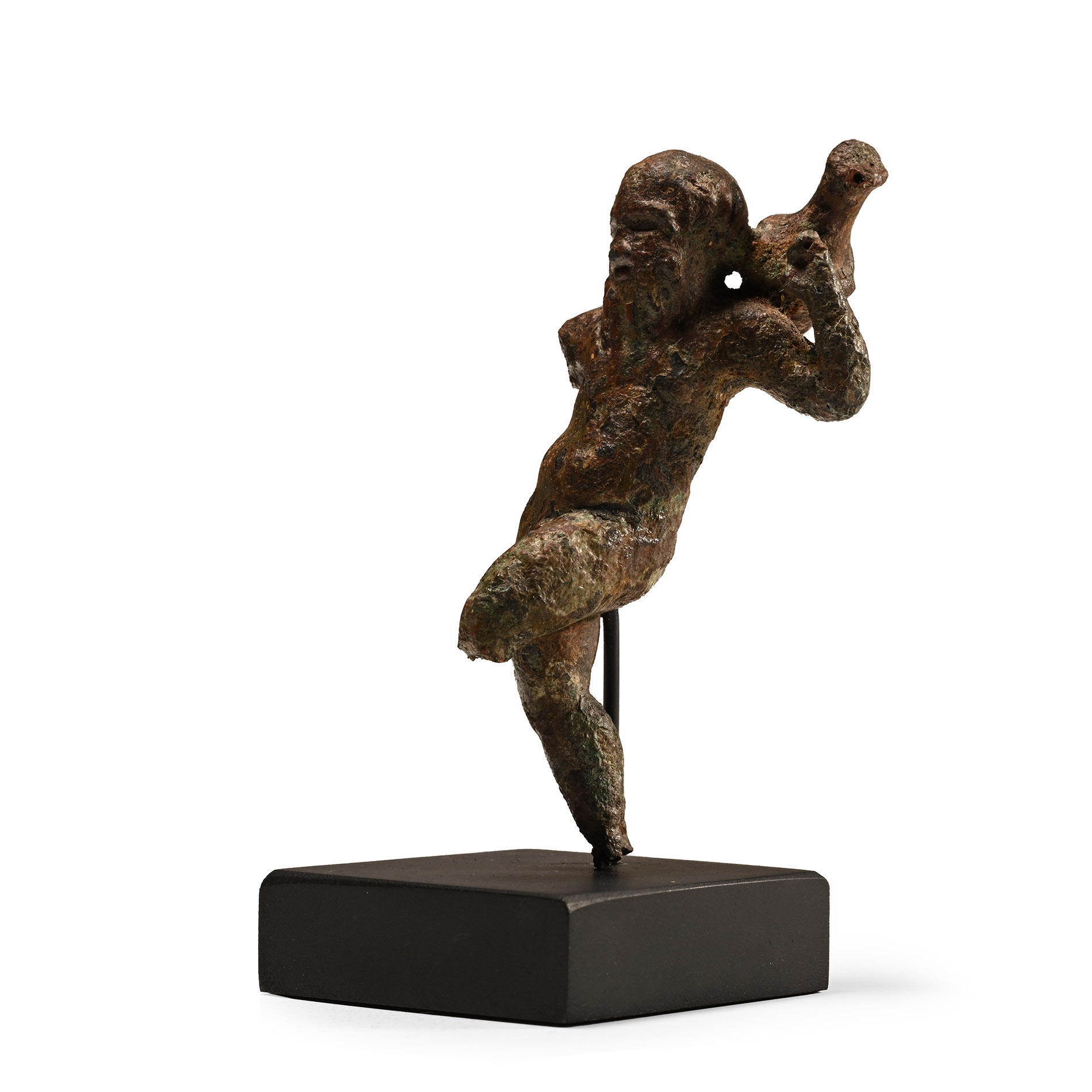
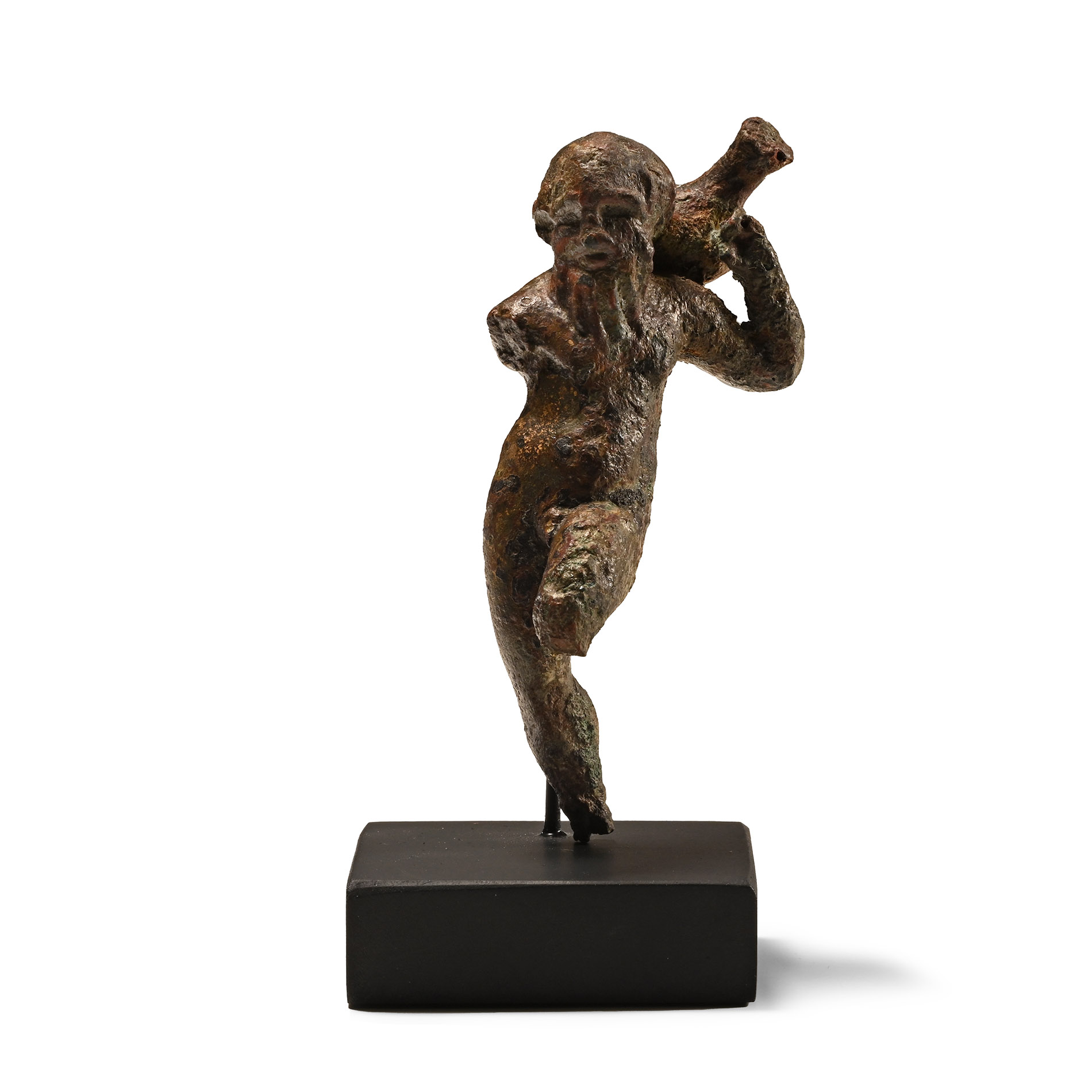
Roman Bronze Drunken Silenus Statuette
1ST CENTURY B.C.-2ND CENTURY A.D.
4 in. (201 grams total, 10.4 cm including stand).
Modelled nude supporting an amphora of wine on his left shoulder, holding the loop handle in his left hand; the right leg raised stepping forward; mounted on a custom-made stand. [No Reserve]
ProvenanceFrom a collection acquired on the UK art market from various auction houses and collections mostly before 2000.
From an important Cambridgeshire estate; thence by descent.
Cf. Rolland, H., Bronzes Antiques de Haute Provence, Paris, 1965, item 140, for type.
CONDITIONTimeLine Auctions follows a vetting process to ensure the authenticity and legality of all items, reinforcing our commitment to integrity and responsible trading. Each antiquity, antique, and coin lot undergoes thorough examination by a vetting committee of at least ten external specialists, professional trade association members, scientists, and archaeologists: Our Vetting Process
AUCTIONS:
TimeLine is a leading auction house specialising in antiquities, ancient art, collectables, natural history, coins, medals, and books. Our auctions offer museums, collectors, historians, and enthusiasts the opportunity to acquire unique and historically significant pieces.
-
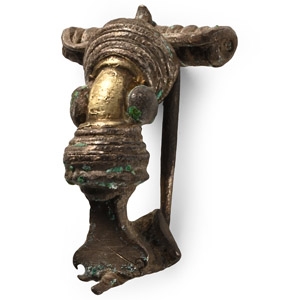
Roman Silver Gilt Bow Brooch
1st century A.D.Sold for (Inc. bp): £234
Reversed fantail type with ribbed bulbs above and below the bow formed as three plain bulbs, pelta-shaped foot with long catch to the reverse, spring and pin intact. 17.9 grams, 38 mm
Acquired 1980-2015. Ex Abelita family collection. -
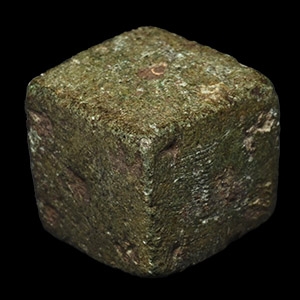
Roman Bronze Dice Gaming Piece
1st-4th century A.D.Sold for (Inc. bp): £46
Cuboid with very lightly incised spot markings disposed 1:6, 3:5, 2:4; old collector's tag with notation 'numbers hard to decipher'. 7.46 grmas, 10 mm
From the important private collection of dice and gaming pieces of Colin Narbeth, London, UK, collection no.60. Accompanied by a Colin Narbeth catalogue identification card. -
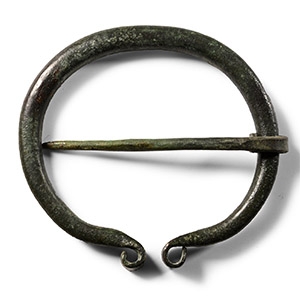
Roman Bronze Penannular Brooch
2nd-4th century A.D.Sold for (Inc. bp): £416
With round-section body and curved terminals, free-running pin. 29.8 grams, 57 mm
Ex German art market, 2000s. Acquired from an EU collector living in London. From the collection of Surrey, UK, gentleman.
