
Loading, please wait...
LOT 0933
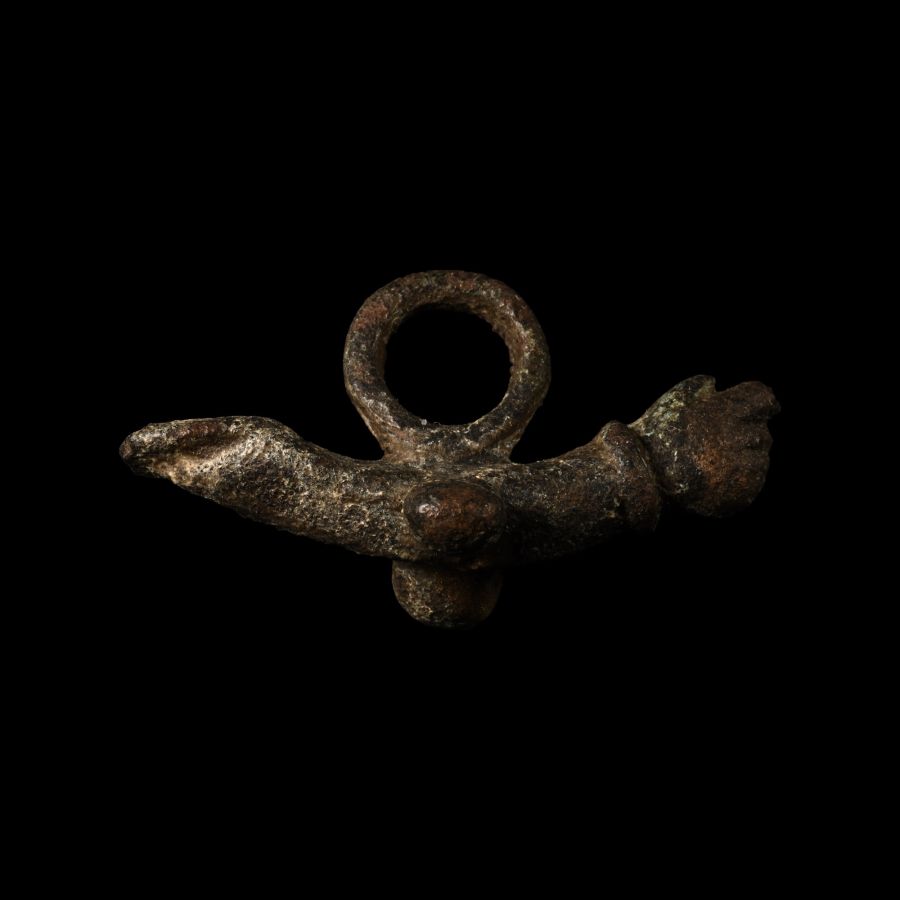
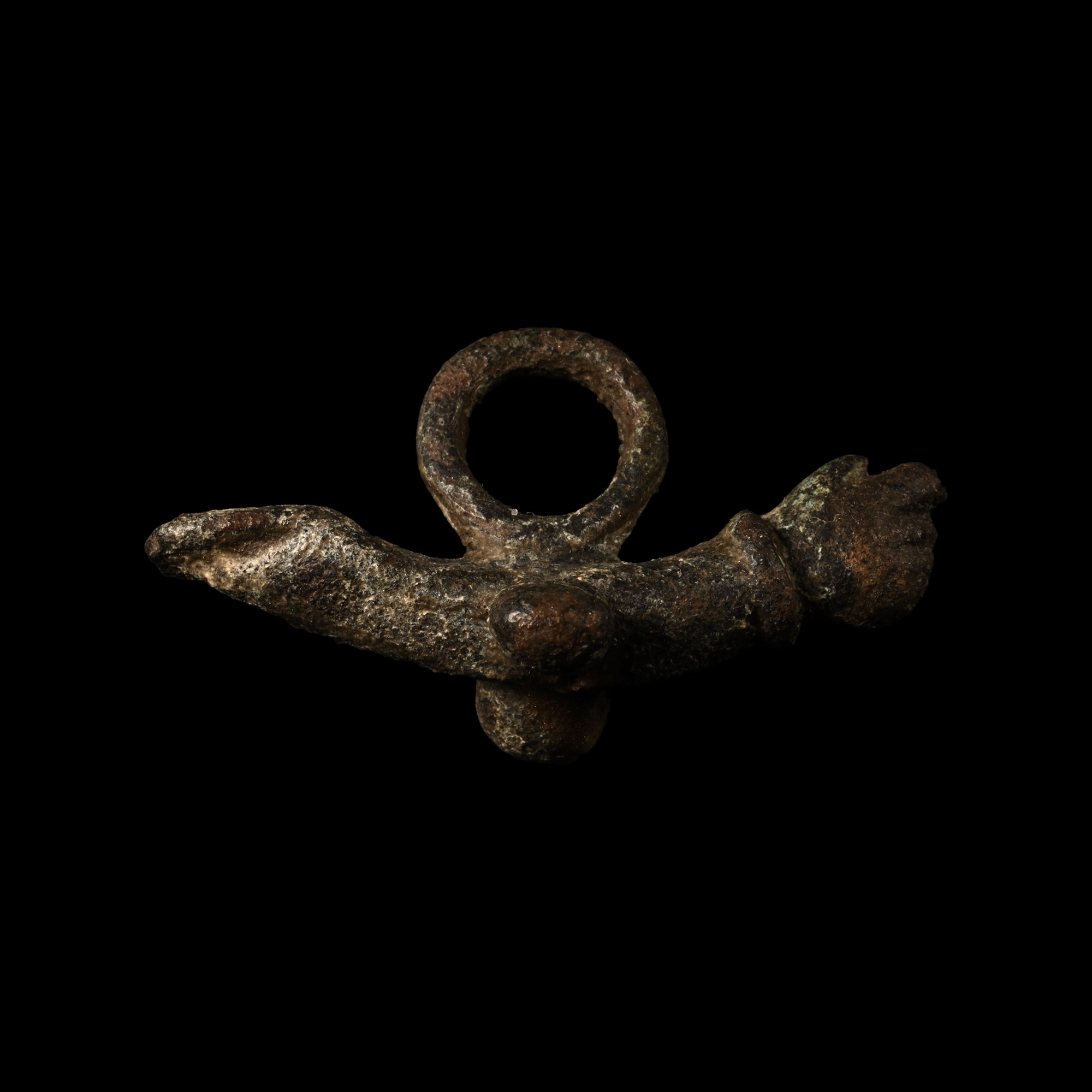
Roman Bronze Double Phallic Pendant
1ST-4TH CENTURY A.D.
1 7/8 in. (21 grams, 48 mm).
Formed as addorsed phallus and hand in the fica gesture, with suspension loop above. [No Reserve]
ProvenanceFrom a collection acquired on the UK art market from various auction houses and collections mostly before 2000.
From an important Cambridgeshire estate; thence by descent.
See Rolland, H., Bronzes Antiques de Haute Provence, Paris, 1965, item 435, for type.
CONDITIONTimeLine Auctions follows a vetting process to ensure the authenticity and legality of all items, reinforcing our commitment to integrity and responsible trading. Each antiquity, antique, and coin lot undergoes thorough examination by a vetting committee of at least ten external specialists, professional trade association members, scientists, and archaeologists: Our Vetting Process
AUCTIONS:
TimeLine is a leading auction house specialising in antiquities, ancient art, collectables, natural history, coins, medals, and books. Our auctions offer museums, collectors, historians, and enthusiasts the opportunity to acquire unique and historically significant pieces.
-
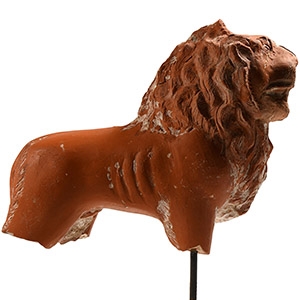
Roman Terracotta Lion Statuette
Late 2nd-early 3rd century A.D.Sold for (Inc. bp): £4,550
Modelled naturalistically in the round in an advancing pose with face, muzzle and tooth detailing within the open mouth, the tufts of the animal's mature mane individually rendered; filling hole on the back; the mouth open acting as a spout; North African workmanship; mounted on a custom-made display stand. 1.5 kg total, 20.5 cm high including stand
with Sotheby’s London, 9 December 1994, no.221. Accompanied by an academic report by Dr Raffaele D’Amato. Accompanied by copies of relevant Sotheby's catalogue pages. This lot has been checked against the Interpol Database of stolen works of art and is accompanied by search certificate number no.11797-206532.
The lion was famously featured in many ancient myths, perhaps the most famous being that of Hercules (Herakles) slaying the Nemean lion for his first labour, but it was also linked with the cult of the goddess Cybele, where it is usually represented sculptured in relief on either side of her throne. -
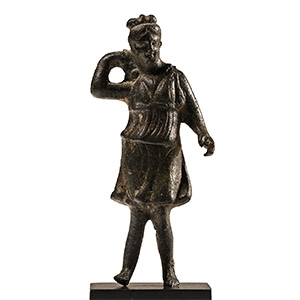
Roman Bronze Statuette of Diana
2nd-3rd century A.D.Sold for (Inc. bp): £390
The goddess advancing in active pose wearing a knee-length tunic gathered below her breasts, her hair tied above her crown; quiver to her right shoulder, right arm bent reaching for an arrow, left arm extended and hand open to grip a bow (absent); mounted on a custom-made stand. 105 grams total, 94 mm including stand
From a collection acquired on the UK art market from various auction houses and collections mostly before 2000. From an important Cambridgeshire estate; thence by descent. -
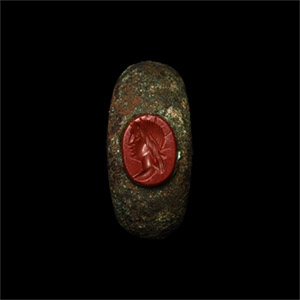
Roman Bronze Ring with Bust of Sol Gemstone
2nd century A.D.Sold for (Inc. bp): £156
With inset jasper gemstone, intaglio profile bust of Sol with radiate crown; supplied with a museum-quality impression. 4.36 grams, 21.88 mm overall, 16.61 mm internal diameter (approximate size British I 1/2, USA 4 1/2, Europe 8.07, Japan 7)
Private collection, England.
