
Loading, please wait...
LOT 0773
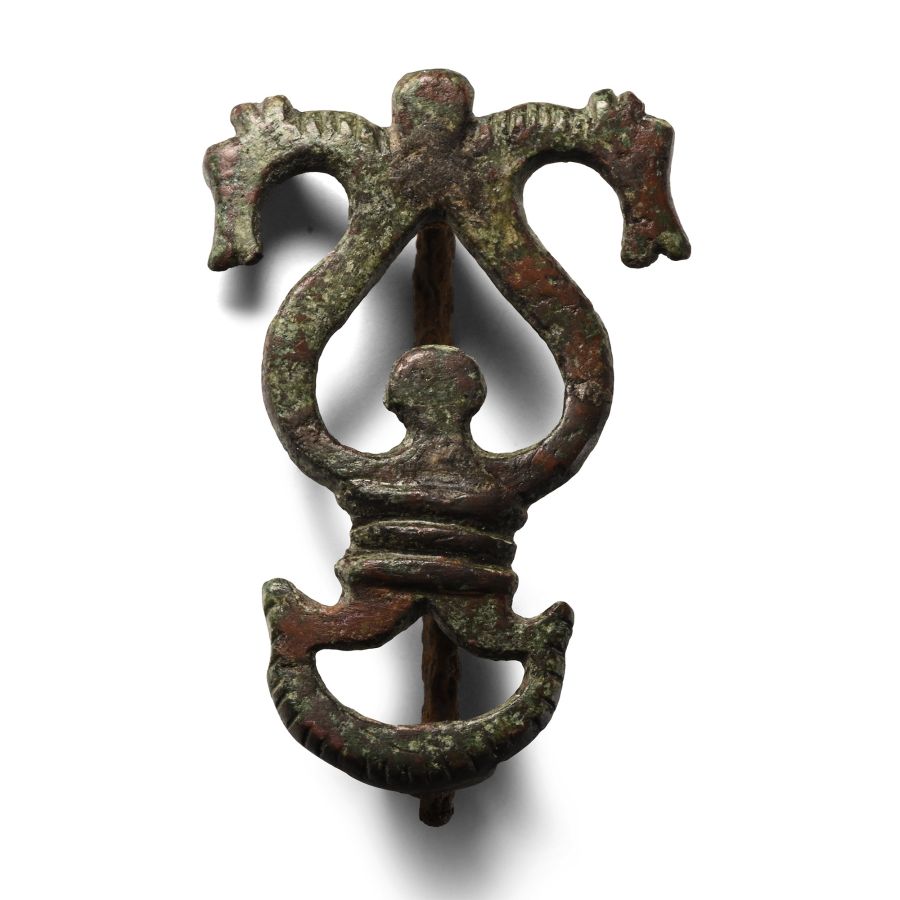
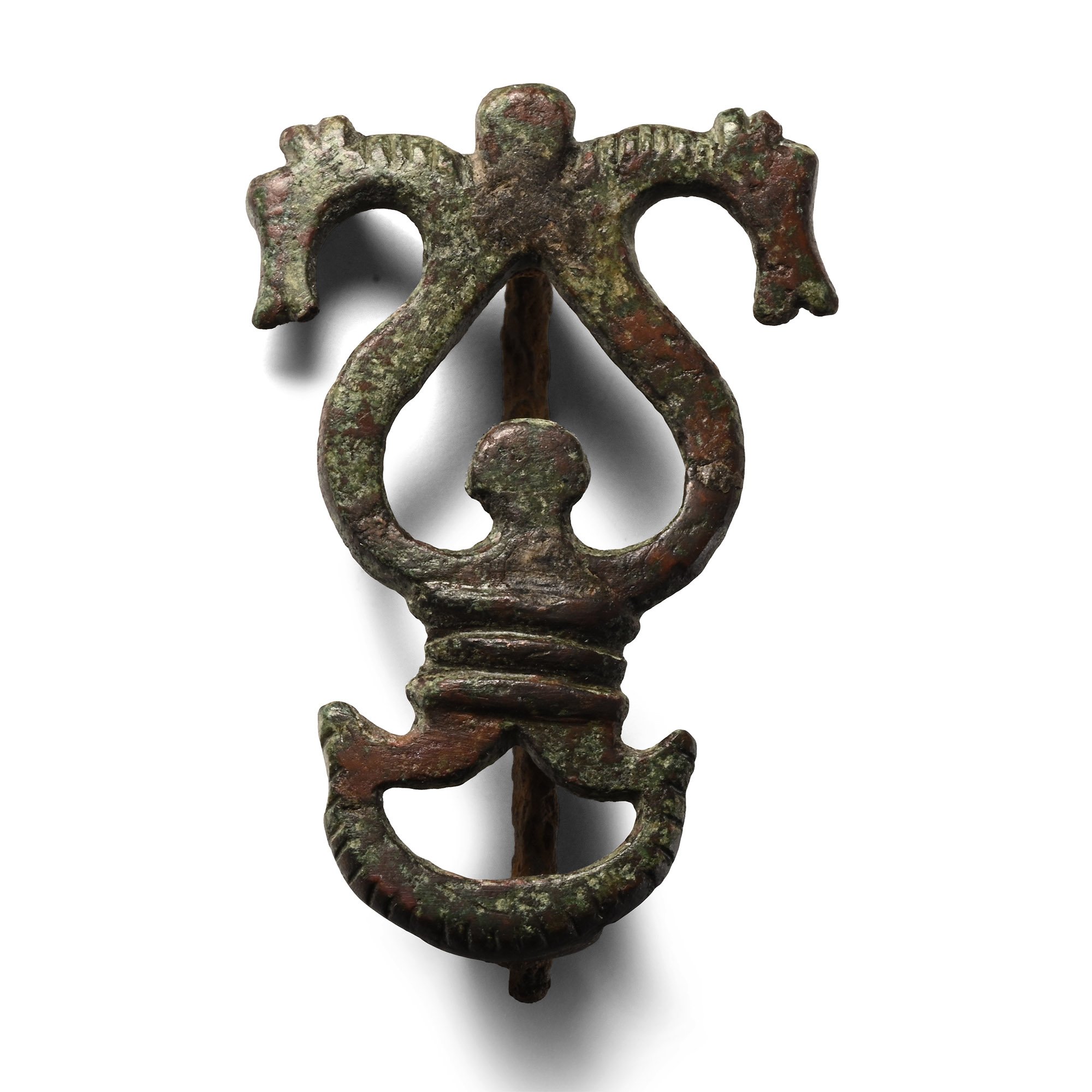
Roman Bronze Double Horse-Headed Brooch
2ND CENTURY A.D.
1 5/8 in. (6.95 grams, 42 mm).
Skeuomorphic type with openwork crescent to the foot, transverse ribbed panel and two swept arms developing to addorsed horse-heads; ferrous pin and catch to the reverse. [No Reserve]
ProvenanceEx DRG Coins and Antiquities, Bishops Stortford, Essex, UK.
From the private collection of a West London, UK, gentleman, formed since the early 2000s.
Accompanied by a handwritten dealer's ticket.
Cf. Hattatt, R., Ancient and Romano-British Brooches, Sherborne, 1982, item 1628, for type.
CONDITIONTimeLine Auctions follows a vetting process to ensure the authenticity and legality of all items, reinforcing our commitment to integrity and responsible trading. Each antiquity, antique, and coin lot undergoes thorough examination by a vetting committee of at least ten external specialists, professional trade association members, scientists, and archaeologists: Our Vetting Process
AUCTIONS:
TimeLine is a leading auction house specialising in antiquities, ancient art, collectables, natural history, coins, medals, and books. Our auctions offer museums, collectors, historians, and enthusiasts the opportunity to acquire unique and historically significant pieces.
-
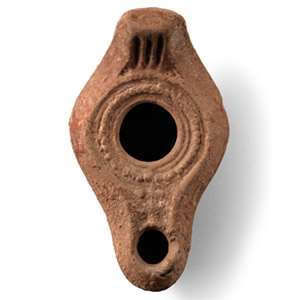
Roman Redware Terracotta Oil Lamp
3rd-4th century A.D.Sold for (Inc. bp): £65
Slipper-shaped type with stub nozzle, broad discus with beaded border to the filler-hole, ribbed reflector, incised detail to underside. 120 grams, 10.8 cm
From the old private collection of a retired UK gentleman; his collection formed in the 1990s. -
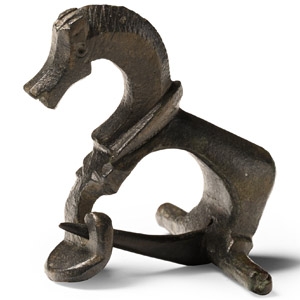
Roman Bronze Horse Crossbow Brooch
2nd-3rd century A.D.Sold for (Inc. bp): £195
Bow brooch formed as a horse modelled in the round with halter to the neck, notched mane, punched pellet eyes; fore-legs forming the catch, rear legs with transverse bar and hinged pin beneath. 19 grams, 35 mm
Ex David Miller, Hemel Hempstead, London, UK. From the private collection of a West London, UK, gentleman, formed since the early 2000s. -
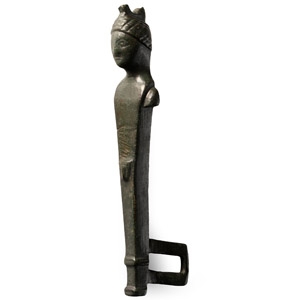
Roman Bronze Figural Lock Hasp
2nd-3rd century A.D.Sold for (Inc. bp): £65
Formed as a herm wearing a headdress, genitalia on the column, the shoulders forming lateral lugs, remains of a suspension ring above, stepped base below and an openwork rectangular plate to the underside. 19.9 grams, 69 mm
Ex German art market, 2000s. Acquired from an EU collector living in London. From the collection of a Surrey, UK, gentleman.
