
Loading, please wait...
LOT 0689
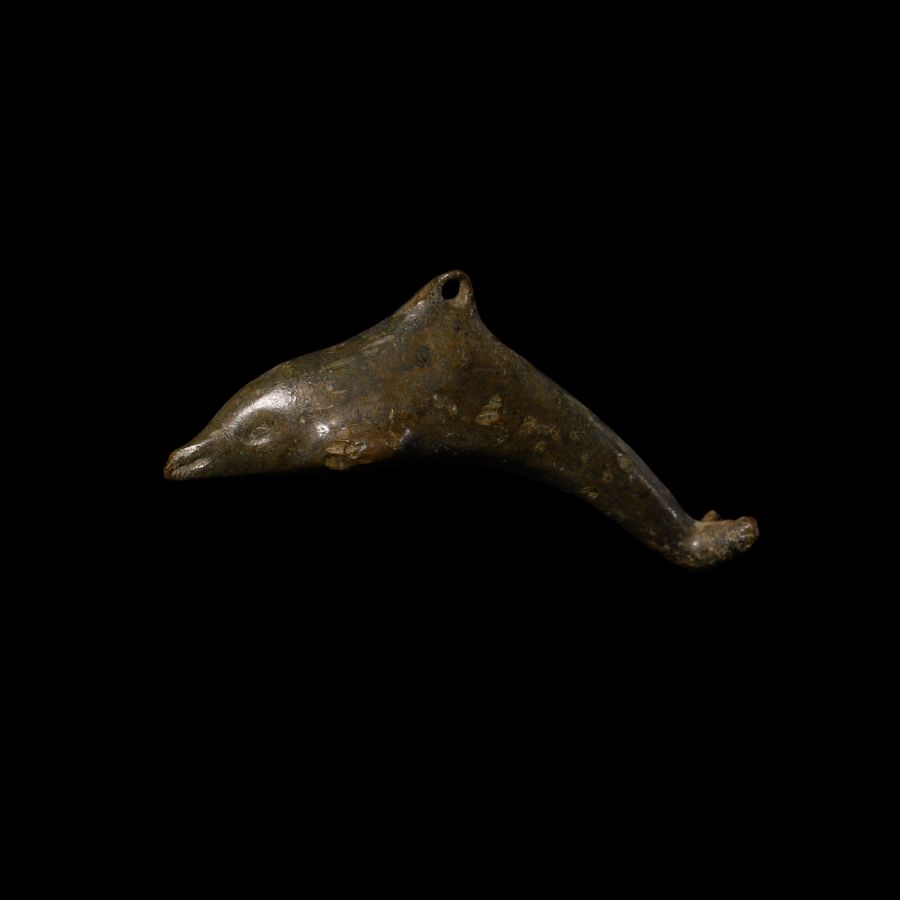
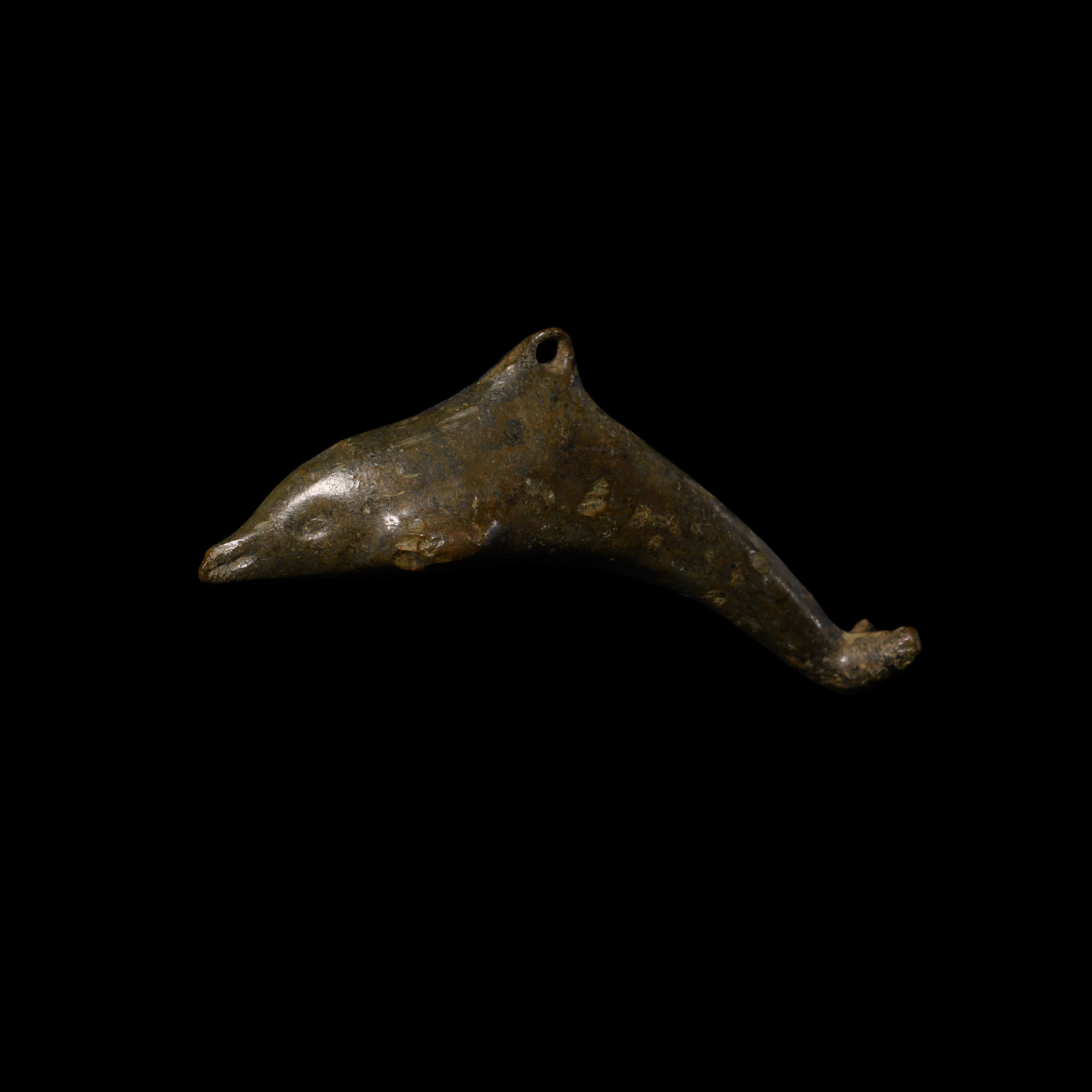
Roman Bronze Dolphin Pendant
2ND-3RD CENTURY A.D.
2 1/8 in. (26 grams, 55 mm).
Modelled in the round with eye detailing and suspension loop pierced through dorsal fin. [No Reserve]
ProvenanceFrom the collection of a North American gentleman, formed in the 1990s.
CONDITIONTimeLine Auctions follows a vetting process to ensure the authenticity and legality of all items, reinforcing our commitment to integrity and responsible trading. Each antiquity, antique, and coin lot undergoes thorough examination by a vetting committee of at least ten external specialists, professional trade association members, scientists, and archaeologists: Our Vetting Process
AUCTIONS:
TimeLine is a leading auction house specialising in antiquities, ancient art, collectables, natural history, coins, medals, and books. Our auctions offer museums, collectors, historians, and enthusiasts the opportunity to acquire unique and historically significant pieces.
-
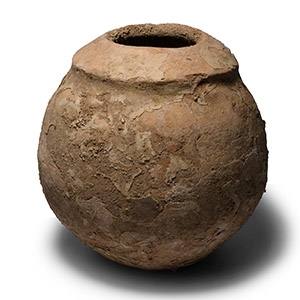
Roman Terracotta Jar
Circa 1st-4th century A.D.Sold for (Inc. bp): £52
Composed of a bulbous body and inverted rim. 2.17 kg, 19 cm high
Acquired 1990s-early 2000s. East Anglian private collection. -
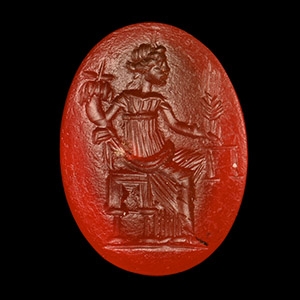
Roman Gemstone with Ceres
2nd-3rd century A.D.Sold for (Inc. bp): £260
Oval-shaped with scene depicting the goddess Ceres seated right, holding a cornucopia and ears of corn with scales below, wearing a modius. 0.93 grams, 14 mm
Altstetten collection since 1969.
Ceres was a goddess of agriculture, maternal relationships and fertility, and represents transition, motherhood and nurture. She was also the only one of ancient Rome's agricultural deities to be listed amongst the Dii Consentes, the Roman equivalent to the Twelve Olympians of Greek mythology. -
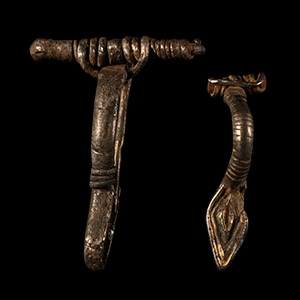
Late Roman Silver Bow Brooch Group
3rd-4th century A.D.Sold for (Inc. bp): £78
Comprising: brooch of Elbefibel type with notched bow and lozenge-shaped footplate with chased lozenges within; spring, pin and catchplate intact to reverse; P-shaped bow brooch with coiled spring and footplate curving backwards to form the catchplate, one corner tapering to a slender bar coiled around the base of the bow. 12.5 grams total, 38-46 mm
From the collection of an EU gentleman formed in the 1990s. Acquired on the UK art market.
