
Loading, please wait...
LOT 0787
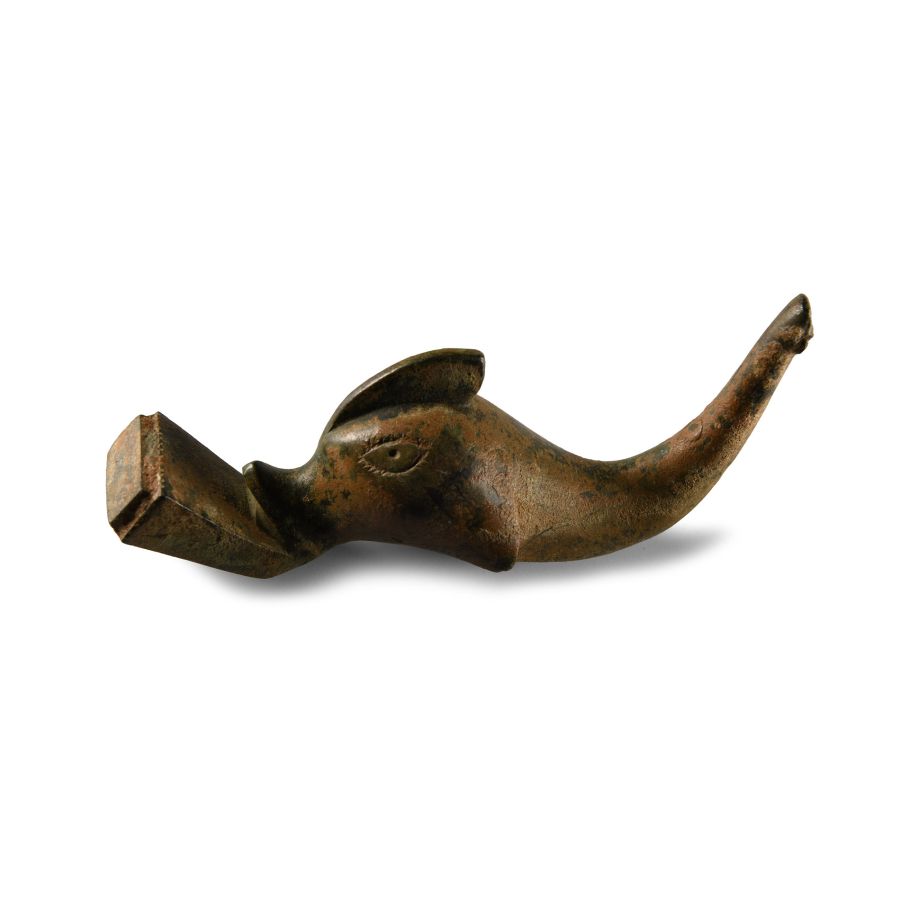
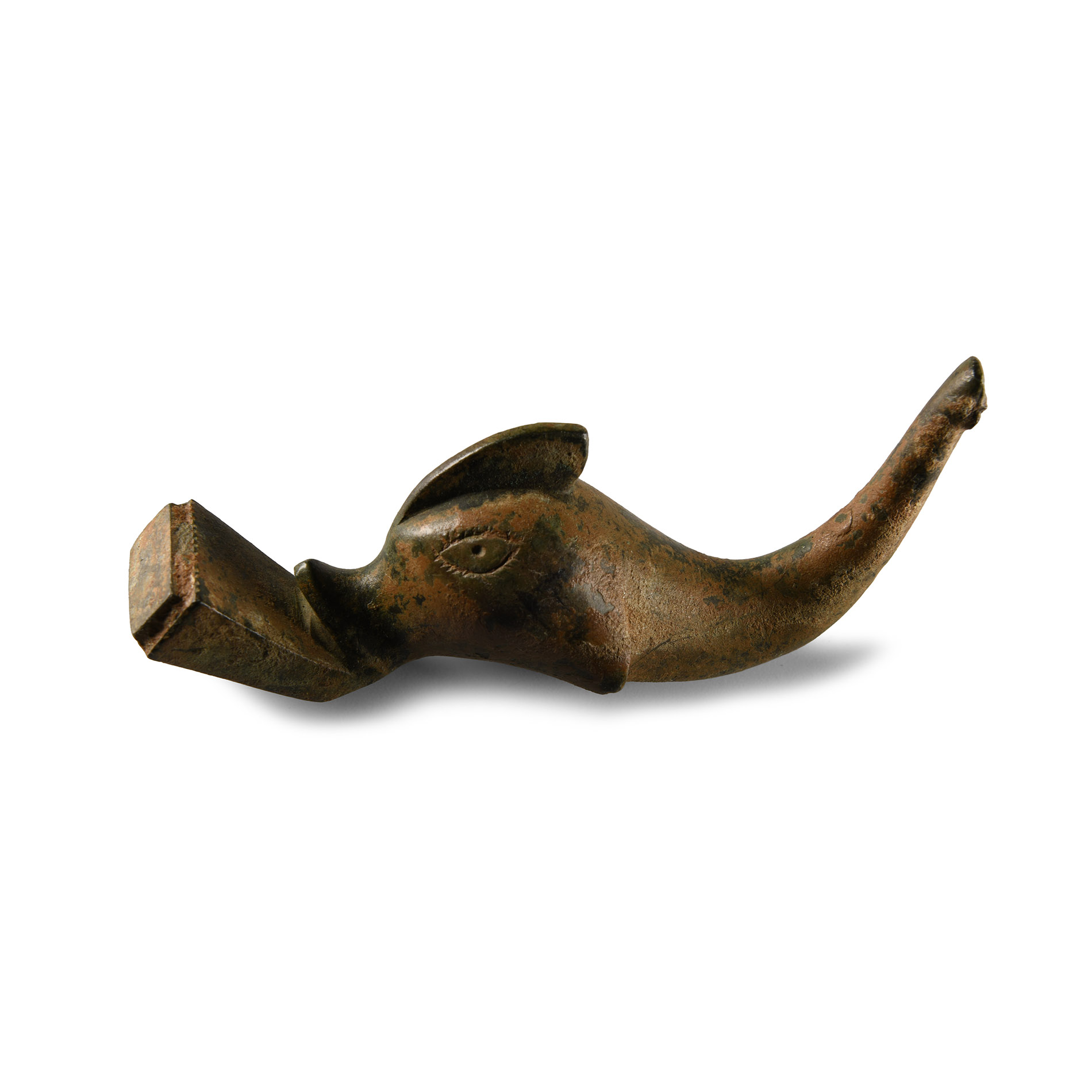
Roman Bronze Dolphin Figure
1ST-3RD CENTURY A.D.
3 3/4 in. (129 grams, 96 mm).
Hollow to the underside with rectangular-section tapering panel, S-curved dolphin with prominent dorsal fin, low-relief eyes; probably a furniture fitting.
ProvenancePrivate collection of Mr S.A., Switzerland, 1990s, thence by descent.
LiteratureCf. Rolland, H., Bronzes Antiques de Haute Provence, Paris, 1965, item 284, for type.
CONDITIONTimeLine Auctions follows a vetting process to ensure the authenticity and legality of all items, reinforcing our commitment to integrity and responsible trading. Each antiquity, antique, and coin lot undergoes thorough examination by a vetting committee of at least ten external specialists, professional trade association members, scientists, and archaeologists: Our Vetting Process
AUCTIONS:
TimeLine is a leading auction house specialising in antiquities, ancient art, collectables, natural history, coins, medals, and books. Our auctions offer museums, collectors, historians, and enthusiasts the opportunity to acquire unique and historically significant pieces.
-
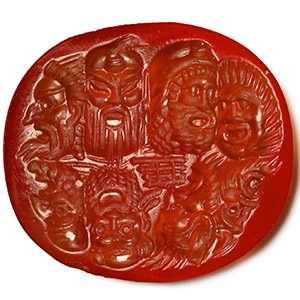
Roman Carnelian Gemstone with Theatre Masks
1st-3rd century A.D.Sold for (Inc. bp): £3,640
Polished to an oval shape, engraved with eight theatre masks in two rows; one row with three tragic masks in profile, one depicting a satyr, and a tragic mask of an old man shown frontally; the opposing row with a tragic mask of an old man in profile, a Bacchus mask, a mask of a bearded man wearing a cap shown in three-quarter view, and a mask of a young hero facing the centre. 2.51 grams, 22.02 mm
From the collection of a late London, UK, gentleman, 1980s. This lot has been checked against the Interpol Database of stolen works of art and is accompanied by search certificate no.12033-214124.
The masks represented seem to be relevant to the typologies of the 'new comedy', an image that appears on cameos and gems since the Augustan era. -
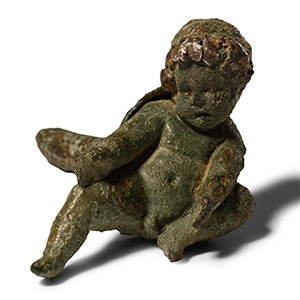
Roman Bronze Figure of a Boy with Silver Inlays
1st century A.D.Estimate: £2,000 - 3,000 (‡+bp*)
Opening Bid: £1,000
Modelled in the round, a male infant with arms and right leg extended, left leg bent and raised; head looking downwards, with applied silver scales imitating a wreath; sturdy mounting peg to the reverse. 70.1 grams, 61 mm
Acquired on the German art market, 2002. European private collection. This lot has been checked against the Interpol Database of stolen works of art and is accompanied by search certificate no.12053-211904.
The model appears to form part of a figural group. -
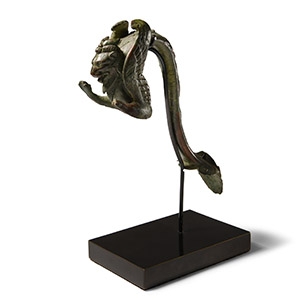
Roman Bronze Handle with Winged Lion and Mask
1st-2nd century A.D.Sold for (Inc. bp): £2,405
D-section swept-curve handle, the upper end developing to the foreparts of a winged lion with forelegs bent and paws resting on the vessel's rim, wings folded to the flanks; high-relief foliage detailing to the outer face of the handle; acanthus leaf to the lower end developing to a facing bearded mask of a satyr; mounted on a custom-made stand. 452 grams total, 13 cm high (17 cm high including stand)
Acquired between 1980-1983. From the 'Empire' collection, an important UK private collection of seals.
Usually this type of handles decorated ovoid-shaped oinochoai, a type of vase widespread in Southern Italy. Numerous specimens in the National Museum of Archaeology, Naples present panther or horse protomes, as do some provincial specimens from Gaul. Particular and unusual here is the lion-griffin, which refers to Greek-Egyptian motifs, perhaps connected to the cult of Isis-Serapis.
