
Loading, please wait...
LOT 0130
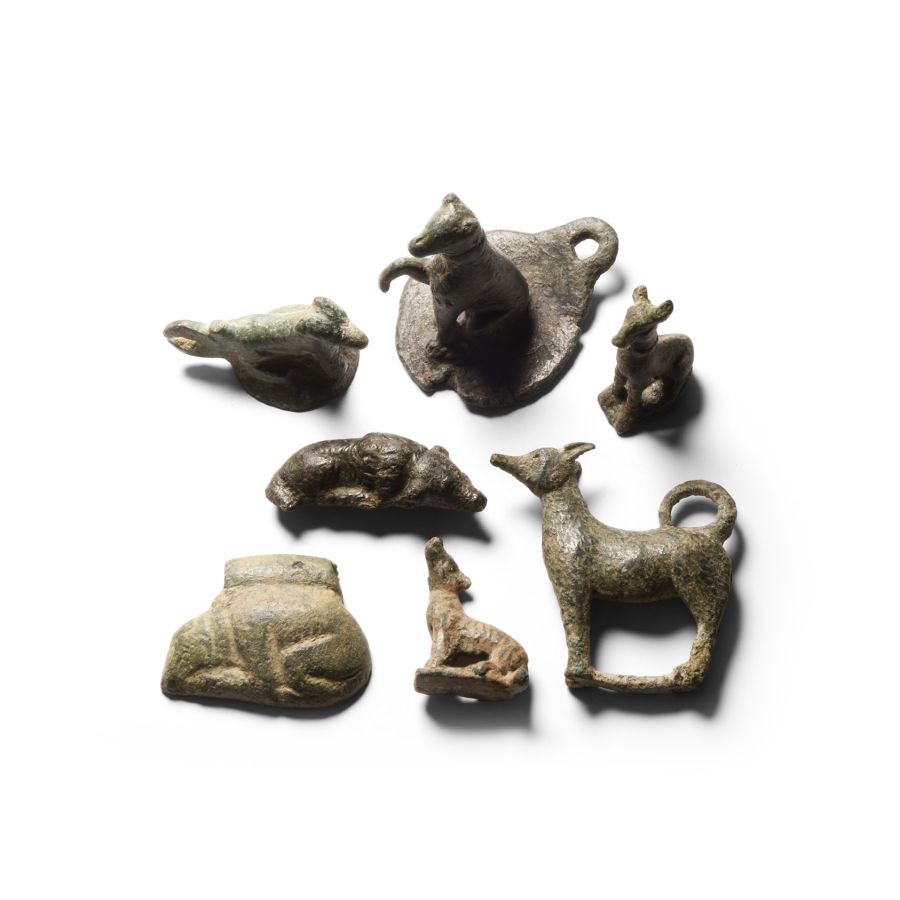
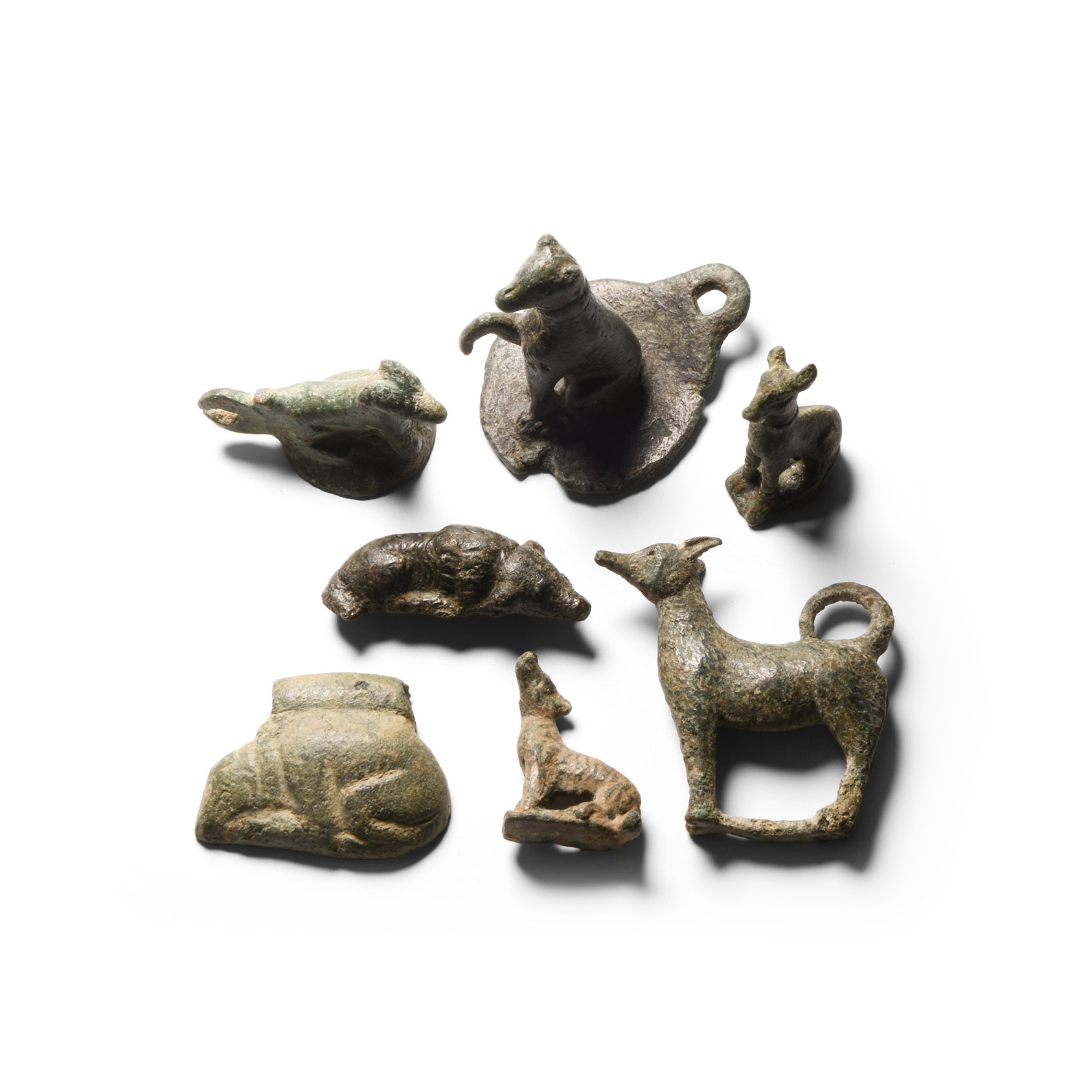
Roman Bronze Dog Collection
1ST-4TH CENTURY A.D.
1 - 1 1/2 in. (155 grams total, 25-40 mm).
Comprising dogs formed as pendants, lids, mounts and figurines, most displaying stylised or semi-naturalistic detailing and modelled in the round. [7]
Provenance‘The Ancient Menagerie Collection’ formerly the property of a Cambridgeshire lady, collected since the 1990s and acquired from auctions and dealers throughout Europe and the USA, now ex London collection.
CONDITIONTimeLine Auctions follows a vetting process to ensure the authenticity and legality of all items, reinforcing our commitment to integrity and responsible trading. Each antiquity, antique, and coin lot undergoes thorough examination by a vetting committee of at least ten external specialists, professional trade association members, scientists, and archaeologists: Our Vetting Process
AUCTIONS:
TimeLine is a leading auction house specialising in antiquities, ancient art, collectables, natural history, coins, medals, and books. Our auctions offer museums, collectors, historians, and enthusiasts the opportunity to acquire unique and historically significant pieces.
LOT 0130
Roman Bronze Dog Collection
Estimate £1,000 - 1,400€1,160 - 1,620 (for guidance only)$1,350 - 1,890 (for guidance only)
-
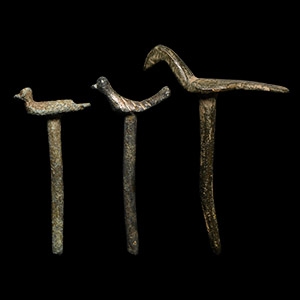
Roman Bronze Bird Pin Group
1st-4th century A.D.Sold for (Inc. bp): £65
Comprising a trio of graduated bird-headed pins, two with stylised feather detailing. 19.7 grams total, 42-54 mm
Acquired before 1980. Ex property of a London, UK, collector. -
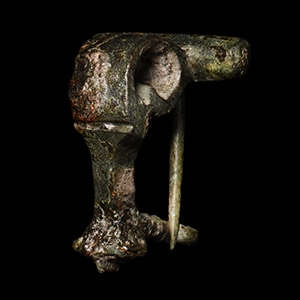
Roman Silvered Bronze Bow Brooch
Circa 1st-2nd century A.D.Sold for (Inc. bp): £33
Composed of a comma-shaped piercing to bow; complete with pin and catchplate. 15.2 grams, 30 mm
Acquired before 2000. Ex property of a Hampshire, UK, gentleman. -
.jpg)
Romano-British Bronze Adlocutio Type Repousse Brooch
2nd century A.D.Sold for (Inc. bp): £2,340
Imitating Hadrian's sestertius adlocutio, the emperor with a companion (or Castor and Pollux) on horseback, one of the horsemen holding a round shield; arrayed legions in front of them wearing crested helmets, raised spears and quadrangular shields; legionary eagle in the foreground; the scene enclosed within a rope border; pin lugs and catchplate to the reverse. 12.9 grams, 33 mm
From a Cambridgeshire, UK, collection, 1990s. This brooch is an extreme rarity and is believed to be the finest known example. Accompanied by an academic report by Dr Raffaele D'Amato. This lot has been checked against the Interpol Database of stolen works of art and is accompanied by search certificate number no.11747-202502.
These brooches were a mystery until one was excavated at Wiggonholt, Sussex, together with three other damaged specimens now in the Devizes Museum, all from Wiltshire (more precisely Cold Kitchen Hill). The image of the original coin was slightly modified. The local craftsman improved the coin type making his brooch more interesting, transforming the Emperor Hadrian on horseback into two cavalrymen, probably the sacred Dioscuri, while the Roman Aquila, symbol of the legions, was taken from the top of the signa and placed in the foreground.
