
Loading, please wait...
LOT 0783
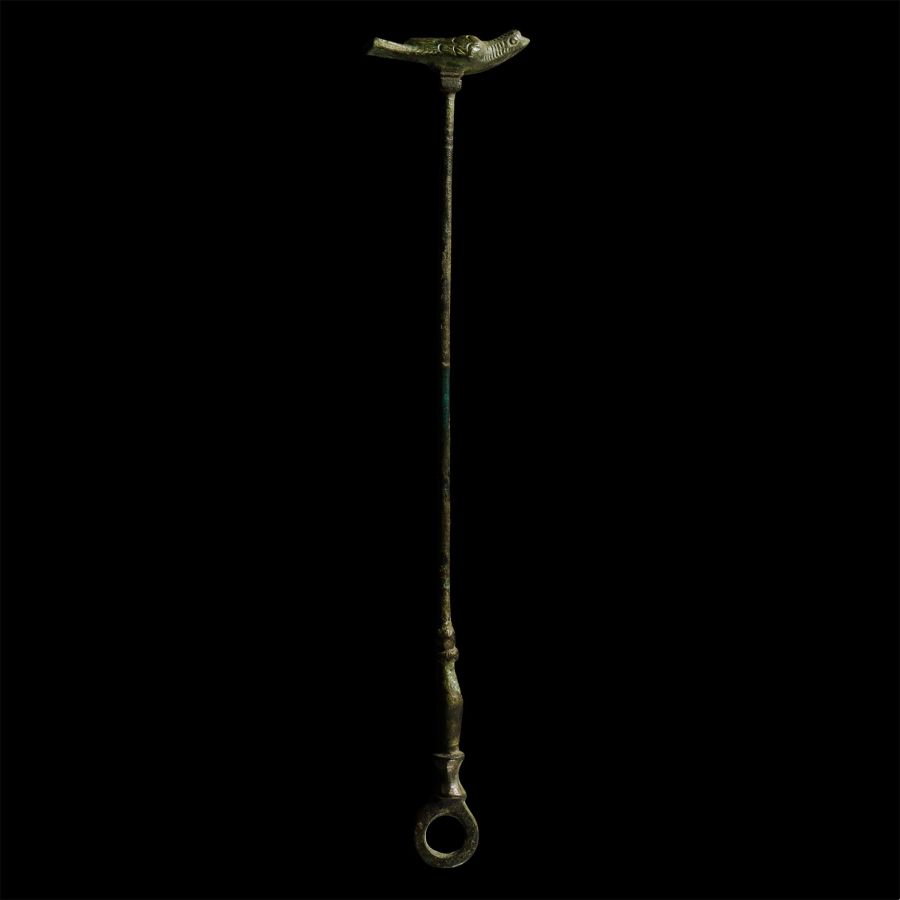
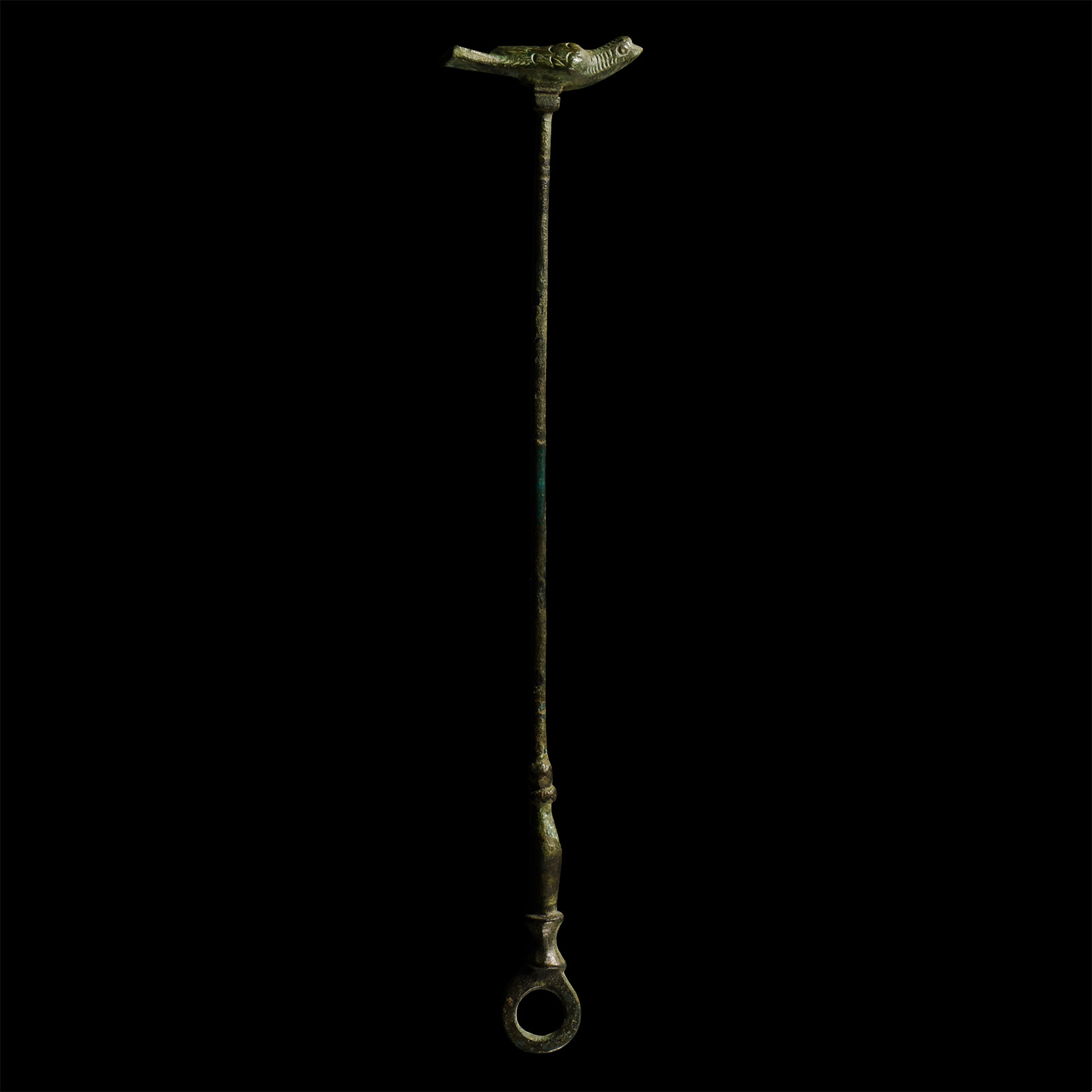
Roman Bronze Distaff with Bird Finial
4TH-6TH CENTURY A.D.
7 1/4 in. (28 grams, 18.5 cm).
Comprising a slender stem with collar and baluster above the attachment loop; perching bird finial with incised plumage detailing. [No Reserve]
ProvenanceFrom a collection acquired on the UK art market from various auction houses and collections mostly before 2000.
From an important Cambridgeshire estate; thence by descent.
TimeLine Auctions follows a vetting process to ensure the authenticity and legality of all items, reinforcing our commitment to integrity and responsible trading. Each antiquity, antique, and coin lot undergoes thorough examination by a vetting committee of at least ten external specialists, professional trade association members, scientists, and archaeologists: Our Vetting Process
AUCTIONS:
TimeLine is a leading auction house specialising in antiquities, ancient art, collectables, natural history, coins, medals, and books. Our auctions offer museums, collectors, historians, and enthusiasts the opportunity to acquire unique and historically significant pieces.
-
.jpg)
Roman Bronze Neptune Statuette
1st century B.C.-1st century A.D.Sold for (Inc. bp): £39
Standing nude with arms raised, legs in advancing pose. 37 grams, 60 mm
From a collection acquired on the UK art market from various auction houses and collections mostly before 2000. From an important Cambridgeshire estate; thence by descent.
The condition of the statuette does not allow a easy identification of its original characterization, but the position of the body shows a certain affinity with provincial statuettes of the god Neptune, especially produced in Gallo-Roman ateliers. Some statuettes of Sucellus, the Gallic divinity assimilated into the Roman Pantheon as the equivalent of the Dispater, brother of Jupiter, could possibly also bear resemblance with our statuette for the position of the body. -
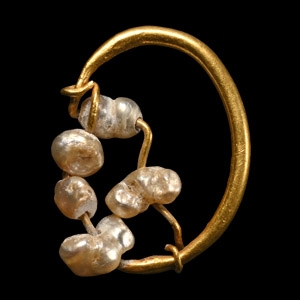
Roman Gold Earring with Pearls
3rd century A.D.Sold for (Inc. bp): £520
Gold wire hoop with hook-and-eye closure, threaded with seed pearls. 1.99 grams, 20 mm
Ex H. Norry collection, 1980s-1990s. -
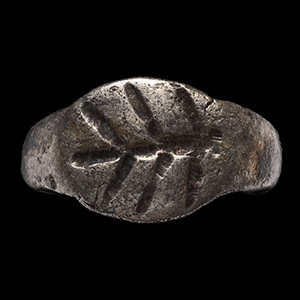
Roman Silver Child's Ring with Palm Branch
1st-2nd century A.D.Sold for (Inc. bp): £33
With lentoid-profile hoop, ellipsoid bezel with incuse frond motif. 2.31 grams, 16.88 mm overall, 13.87 mm internal diameter (approximate size British E, USA 2 1/4, Europe 2.41, Japan 2)
UK private collection before 2000. Acquired on the UK art market. Property of a London gentleman.
