
Loading, please wait...
LOT 0814
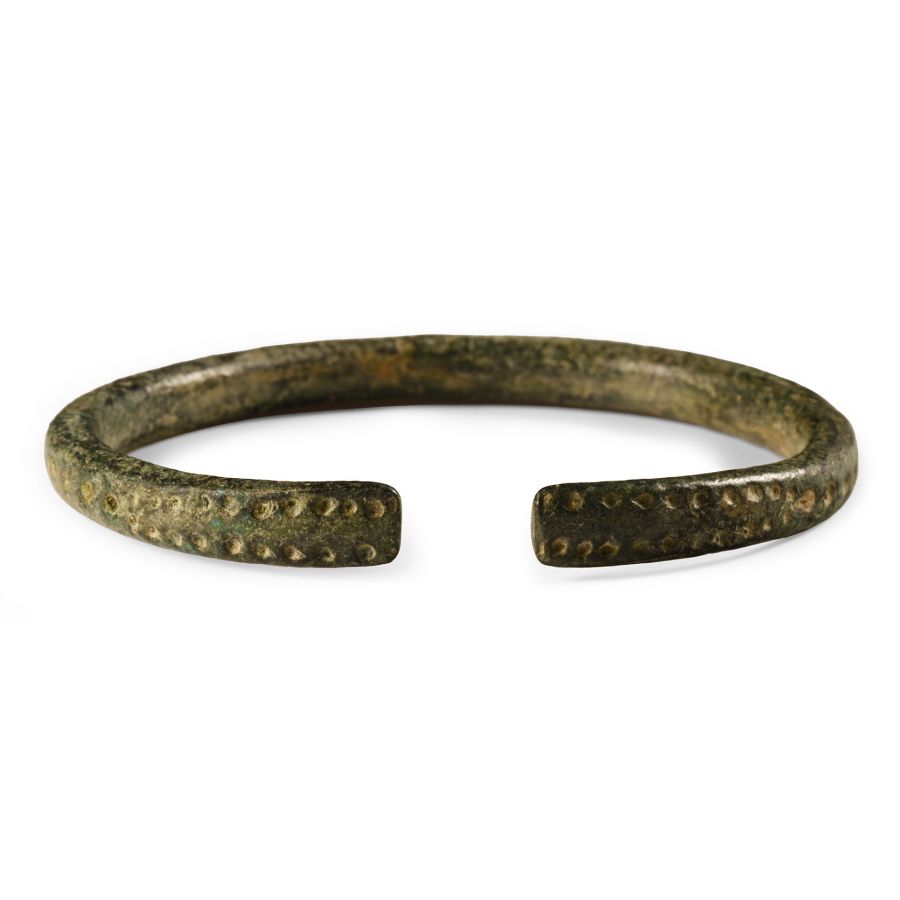
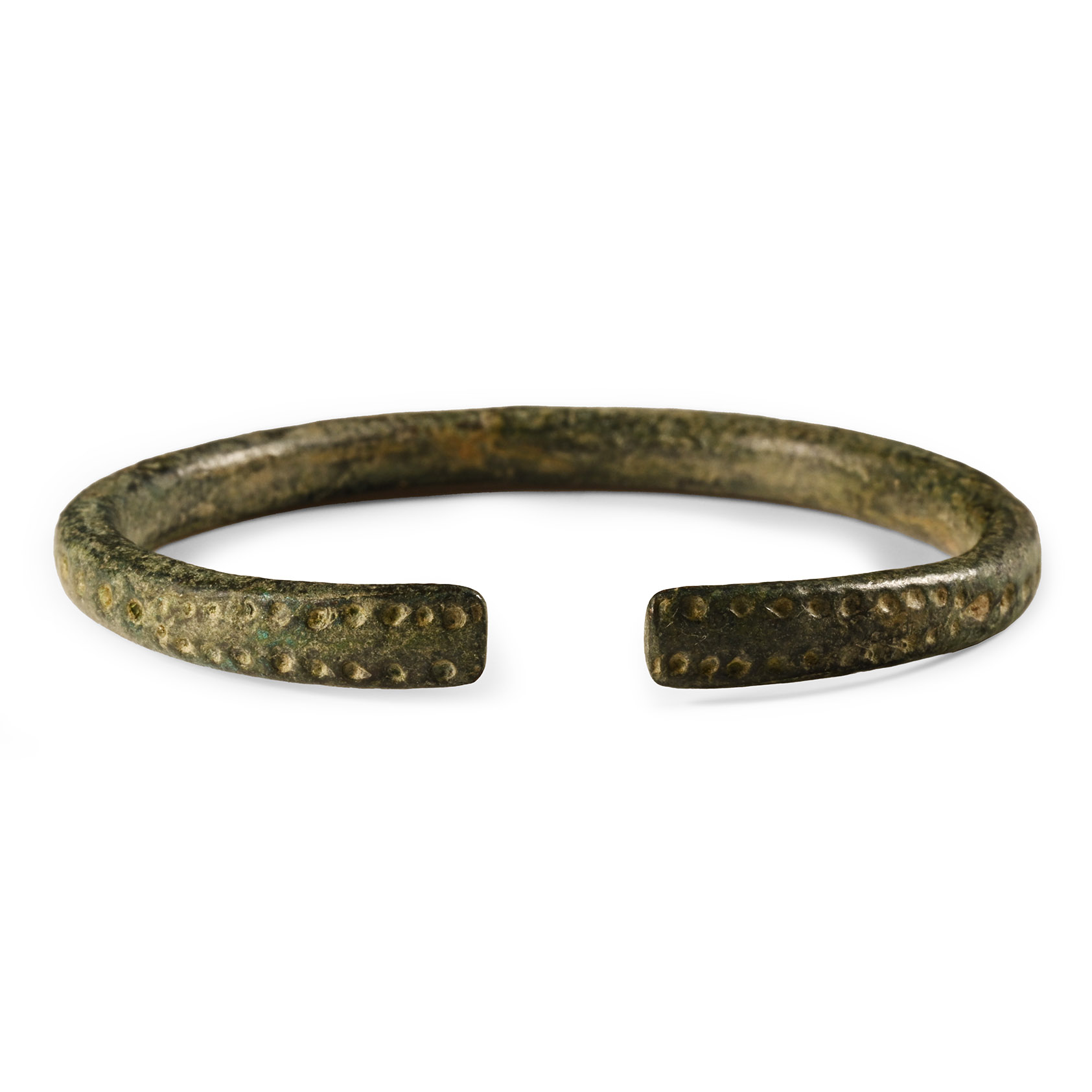
Roman Bronze Decorated Bracelet
1ST-4TH CENTURY A.D.
2 1/8 in. (18.8 grams, 55 mm).
Penannular type with flattened ends, pointillé detailing. [No Reserve]
ProvenanceEx German art market, 2000s.
Acquired from an EU collector living in London.
From the collection of Surrey, UK, gentleman.
TimeLine Auctions follows a vetting process to ensure the authenticity and legality of all items, reinforcing our commitment to integrity and responsible trading. Each antiquity, antique, and coin lot undergoes thorough examination by a vetting committee of at least ten external specialists, professional trade association members, scientists, and archaeologists: Our Vetting Process
AUCTIONS:
TimeLine is a leading auction house specialising in antiquities, ancient art, collectables, natural history, coins, medals, and books. Our auctions offer museums, collectors, historians, and enthusiasts the opportunity to acquire unique and historically significant pieces.
-
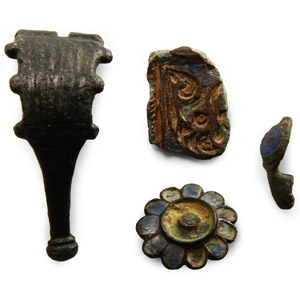
Roman Enamelled Bronze and Other Artefact Group
2nd century A.D.Sold for (Inc. bp): £33
Including a substantial Aucissa-type brooch, floral strap-slider and other items. 43.1 grams total, 22-55 mm
Found whilst searching with a metal detector in Yorkshire, UK. -
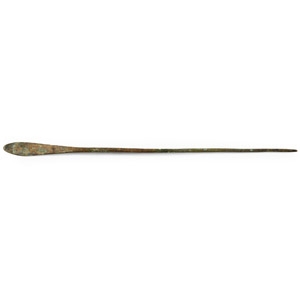
Roman Bronze Medical Spatula
1st-4th century A.D.Sold for (Inc. bp): £59
Comprising a rounded leaf-shaped finial, round-section shank with rounded tip. 12.1 grams, 20.5 cm
Found Nottingham area, Nottinghamshire, UK. Acquired from Ancient & Oriental, UK, circa 2002. Ian Wilkinson collection, Nottinghamshire, UK.
Catheters, spatulas, ear spoons, incisory instruments, spoons and spoon catheters, forceps, pincers, scissors, needles and elevator scalpels/dissectors, knives, phlebotomies, chisels, lenticulars and retractors were included among the medical instruments of antiquity which displayed considerable diversity. -
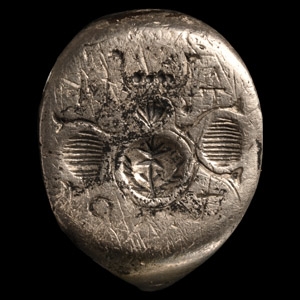
Roman Silver Ring with Insignia
2nd-4th century A.D.Sold for (Inc. bp): £130
Comprising a narrow D-section hoop and a large circular bezel with insignia. 3.56 grams, 20.13 mm overall, 16.26 x 18.07 mm internal diameter (approximate size British P, USA 7 1/2, Europe 16.23, Japan 15)
Ex German art market, 2000s. Acquired from an EU collector living in London. From the collection of Surrey, UK, gentleman.
