
Loading, please wait...
LOT 1388
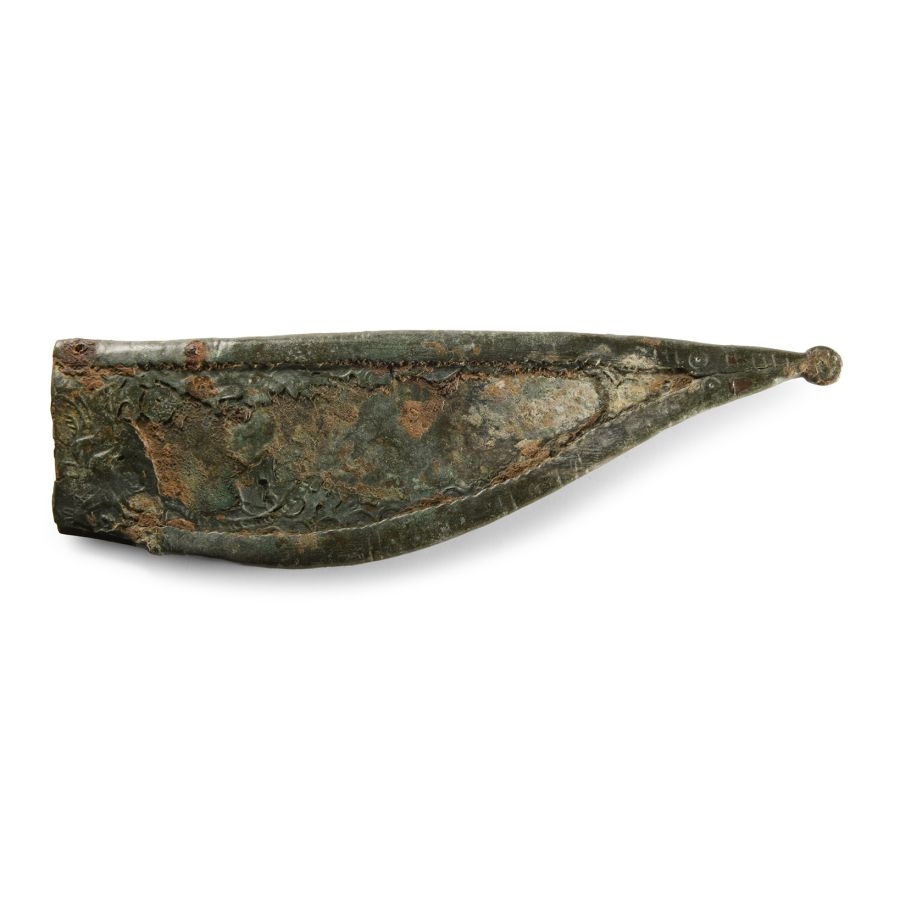
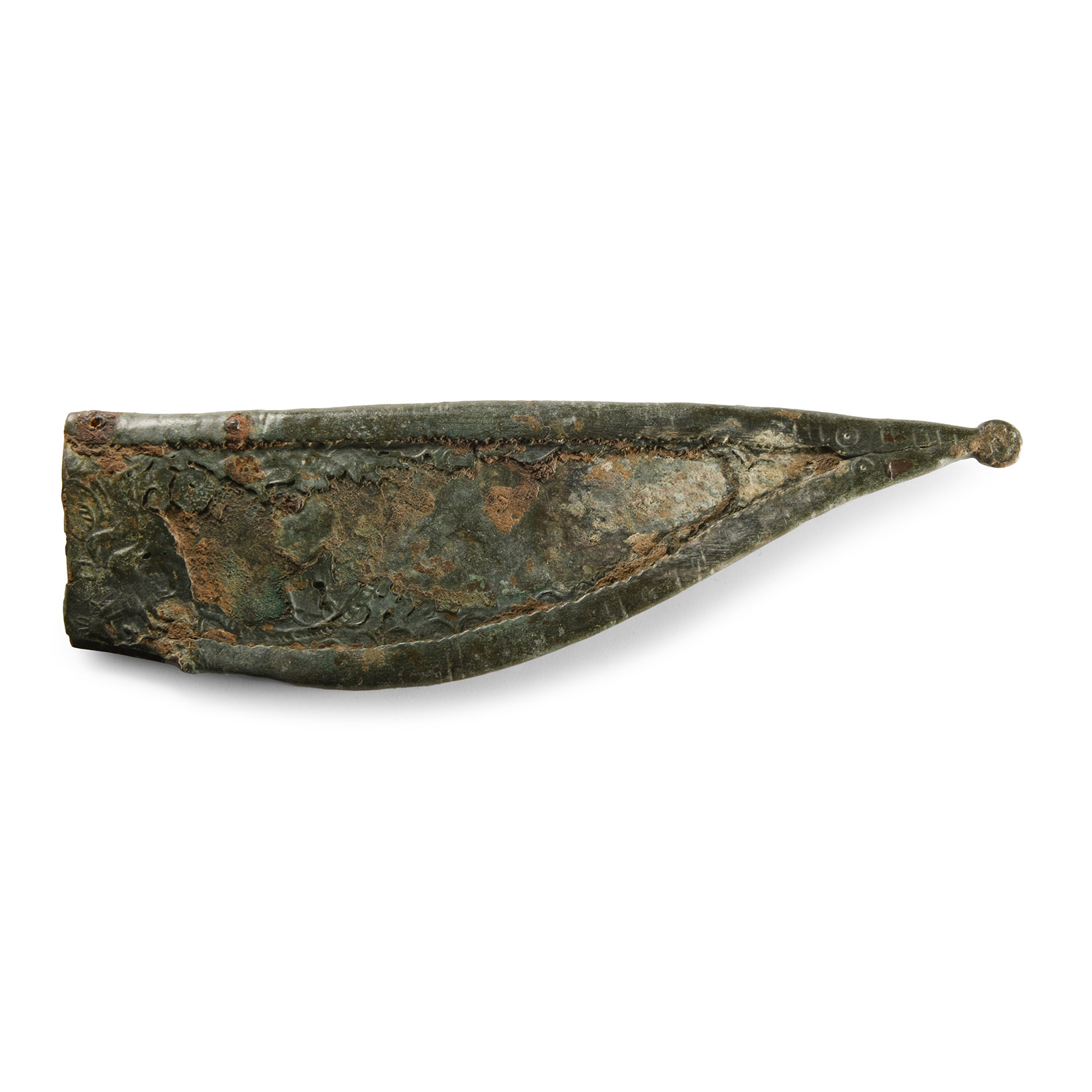
Roman Bronze Dagger Sheath
2ND-3RD CENTURY A.D.
5 7/8 in. (46 grams, 15 cm).
With remains of repoussé running horses to verso; C-section frame and knop finial. [No Reserve]
ProvenanceFrom a collection acquired on the UK art market from various auction houses and collections mostly before 2000.
From an important Cambridgeshire estate; thence by descent.
Cf. Stephenson, I.P., Roman Infantry Equipment: The Later Empire, Stroud, 1999, p.77.
CONDITIONTimeLine Auctions follows a vetting process to ensure the authenticity and legality of all items, reinforcing our commitment to integrity and responsible trading. Each antiquity, antique, and coin lot undergoes thorough examination by a vetting committee of at least ten external specialists, professional trade association members, scientists, and archaeologists: Our Vetting Process
AUCTIONS:
TimeLine is a leading auction house specialising in antiquities, ancient art, collectables, natural history, coins, medals, and books. Our auctions offer museums, collectors, historians, and enthusiasts the opportunity to acquire unique and historically significant pieces.
-
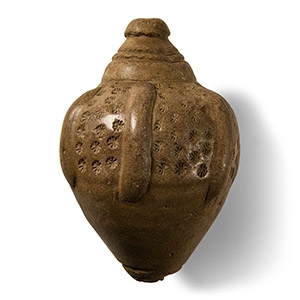
Byzantine 'Greek Fire' Ceramic Fire Bomb or Hand Grenade
9th-11th century A.D.Sold for (Inc. bp): £176
Piriform body with thick ribs to the shoulder and impressed panels between, domed filler-hole, intended to be filled with explosive liquid and wick, used as a hand grenade. 708 grams, 15 cm
Acquired 1980-2015. Ex Abelita family collection. Accompanied by an academic paper by military specialist Dr Raffaele D'Amato, dated 15 July 2019 and titled 'Eastern Roman Empire - Greek Fire Bomb or Hand Grenade (μεσαίον kακάβιον) 9th-11th century AD'.
Apart from the use of siphons or manual flame-throwers called cheirosiphona, special corps of Roman soldiers employed terracotta grenades, in the form of small jars, abundantly evidenced in archaeological excavations. They were called μεσαία kακαβιά or κυτροκακάβια where the former had a bulbous shape and the latter a more cylindrical form. -
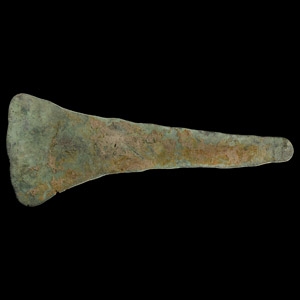
Western Asiatic Copper Flat Axe
2nd millennium B.C.Sold for (Inc. bp): £59
Flat in section with rounded butt and flared blade. 152 grams, 17.2 cm
From an old English collection formed in the 1980s. Property of an Essex gentleman; acquired on the UK art market. -
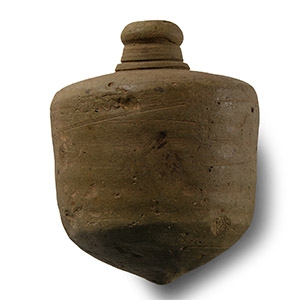
Byzantine 'Greek Fire' Ceramic Fire Bomb or Hand Grenade
9th-11th century A.D.Sold for (Inc. bp): £221
With broad shoulder, short neck, domed square-shaped lip and conical base, broad medial band, intended to be filled with explosive liquid and a wick, and used as a hand grenade. 472 grams, 10.7 cm
Acquired 1980-2015. Ex Abelita family collection. Accompanied by an academic paper by military specialist Dr Raffaele D'Amato, dated 15 July 2019 and titled 'Eastern Roman Empire - Greek Fire Bomb or Hand Grenade (μεσαίον kακάβιον) 9th-11th century AD'.
The effectiveness of these grenades was much lower than the fire liquid thrown by the siphons. They were thrown by hand as it is evident by the presence of some sort of handle on the body of some of them to better allow the grip of the object (Raimondo, 2000 Plate 11a; fig. 4, c-d). Nothing excludes that they were also launched at more long distance with catapults or other war engines. The presence of a fuse for triggering the explosion is evidenced by the narrow mouth of the largest part of the grenades.
