
Loading, please wait...
LOT 0777
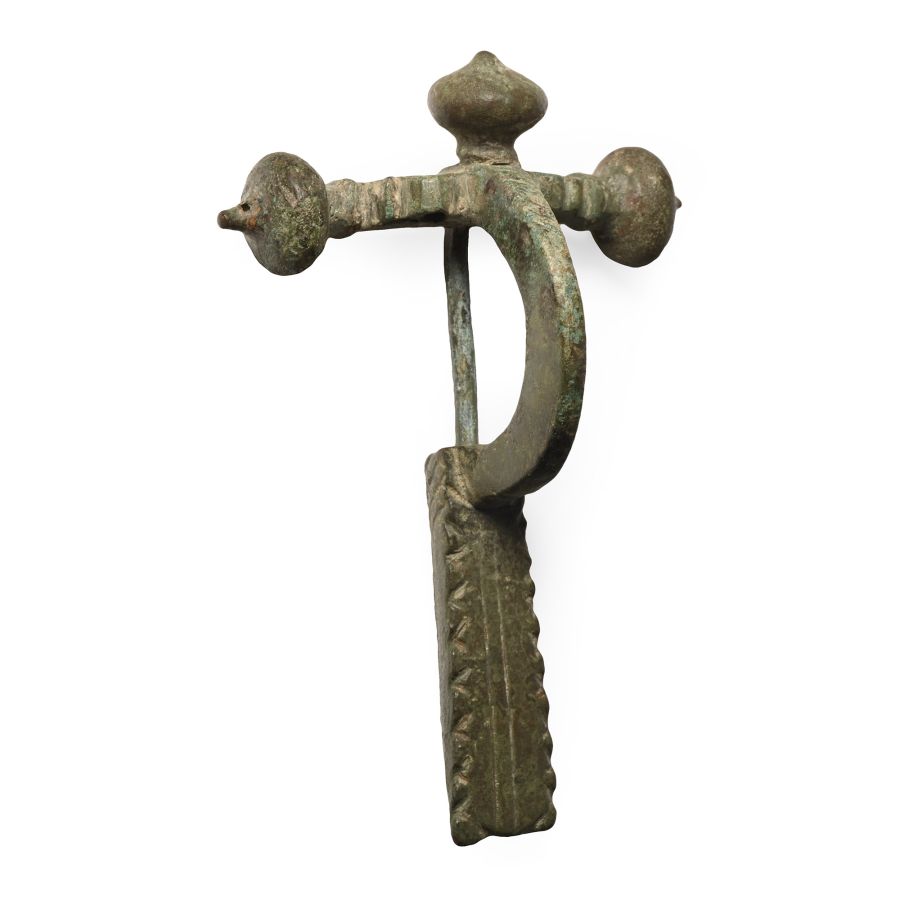
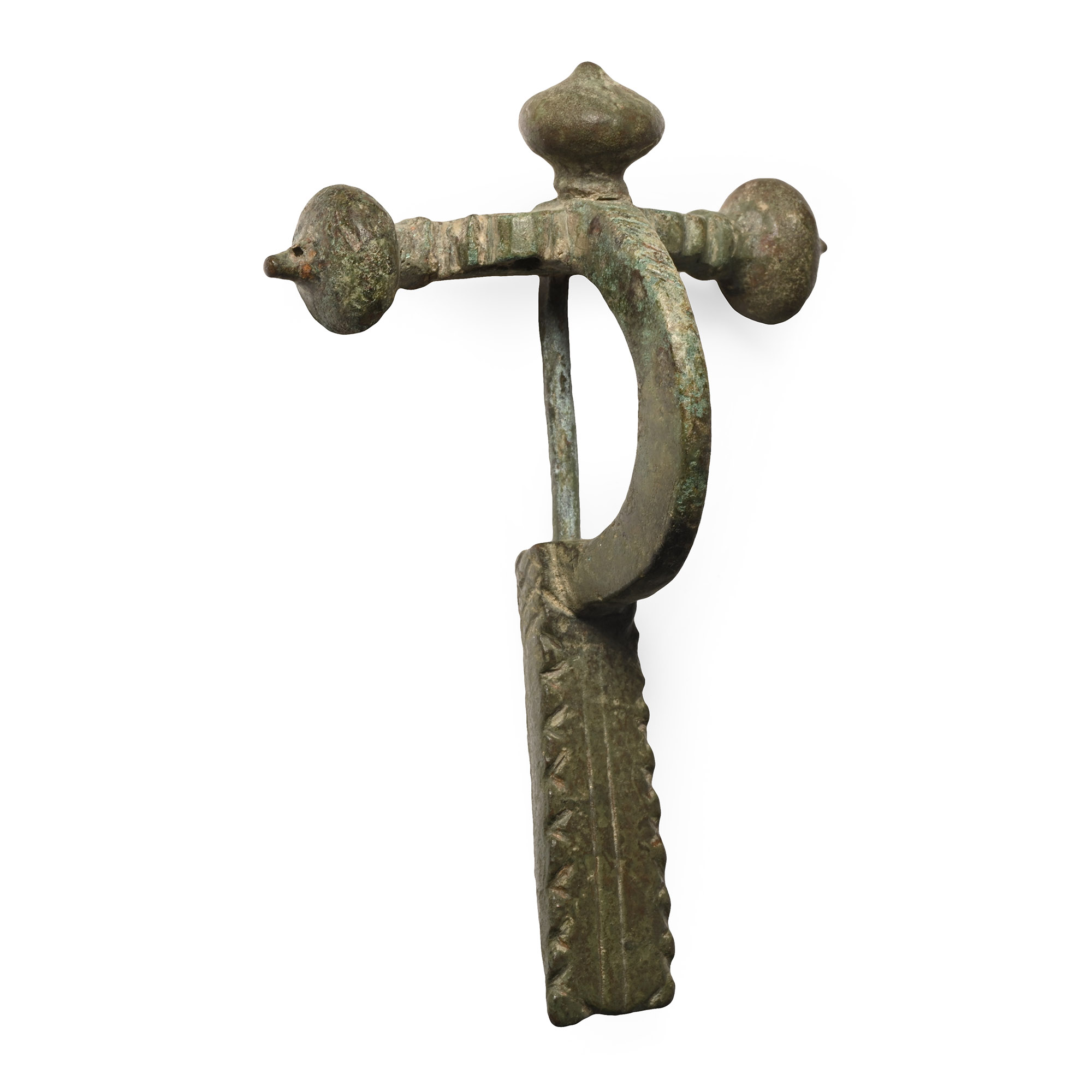
Roman Bronze Crossbow Brooch
CIRCA 4TH CENTURY A.D.
2 7/8 in. (37.8 grams, 73 mm).
With three onion-shaped knops to the crossbar and pierced moulding to the upper face, deep bow, trapezoidal foot with notched edges and longitudinal lines; integral catch; hinged pin to reverse; Keller Type 4. [No Reserve]
ProvenanceFrom a private Tyneside collection, formed since the early 2000s.
LiteratureCf. Mackreth, D.F., Brooches in Late Iron Age and Roman Britain, Oxford, 2011, vol.2, pl.140, item 12576.
CONDITIONTimeLine Auctions follows a vetting process to ensure the authenticity and legality of all items, reinforcing our commitment to integrity and responsible trading. Each antiquity, antique, and coin lot undergoes thorough examination by a vetting committee of at least ten external specialists, professional trade association members, scientists, and archaeologists: Our Vetting Process
AUCTIONS:
TimeLine is a leading auction house specialising in antiquities, ancient art, collectables, natural history, coins, medals, and books. Our auctions offer museums, collectors, historians, and enthusiasts the opportunity to acquire unique and historically significant pieces.
-
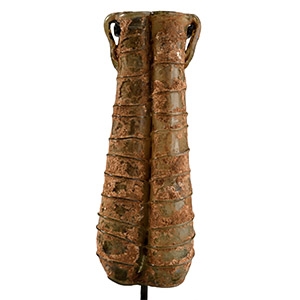
Roman Glass Double Unguentarium
4th-5th century A.D.Estimate: £400 - 600 (+bp*)
Opening Bid: £210
Comprising two conjoined tapering tubular cells, with applied handles at the shoulder; mounted on a custom-made stand. 89 grams total, 13.5 cm including stand
From an important collection of glass, London, UK, 1990s. -
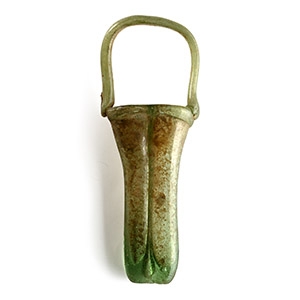
Roman Green Glass Double Unguentarium
Circa 4th century A.D.Sold for (Inc. bp): £234
With rolled rim and large applied loop handle above. 58 grams, 14.6 cm
Acquired Christie's, London, 6 May, 1982, no.14 (part). From a private Wiltshire, UK, collection. Accompanied by a copy of the relevant Sotheby's catalogue pages. -
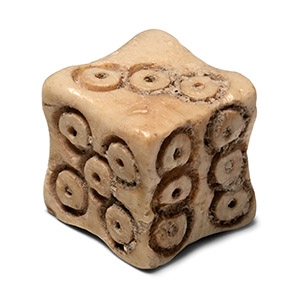
Roman Bone Gaming Dice
1st-4th century A.D.Sold for (Inc. bp): £156
Cuboid with slightly dished faces, incised ring-and-dot markings disposed 1:6, 2:5, 3:4. 3.45 grams, 12 x 13 mm
From a collection of gaming items, formed 1980-1990s.
