
Loading, please wait...
LOT 0724
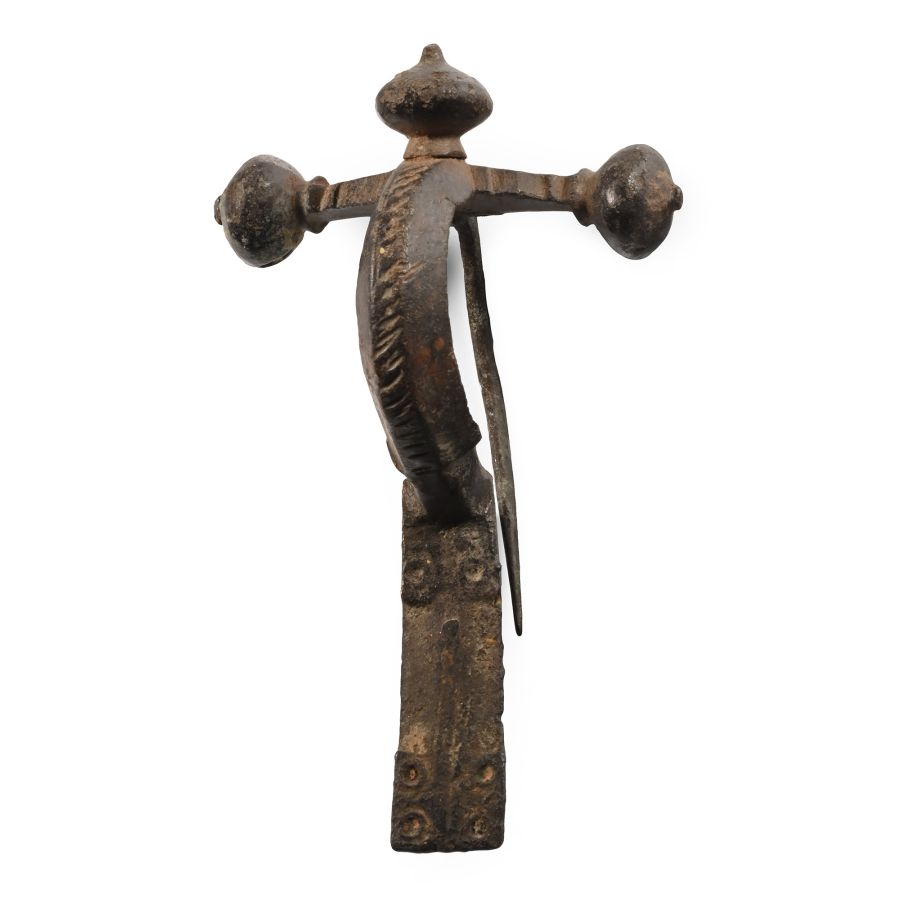
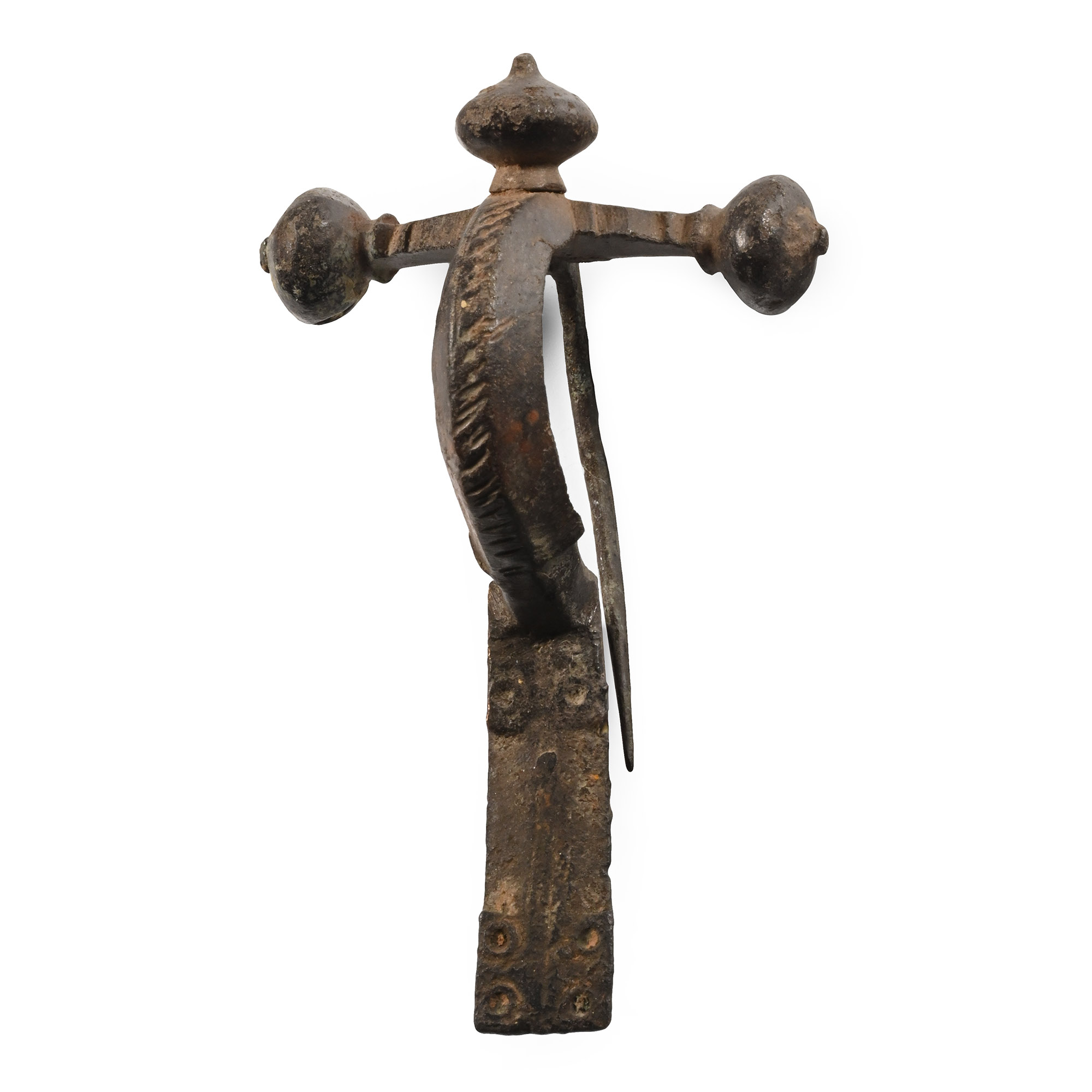
Roman Bronze Crossbow Brooch
4TH CENTURY A.D.
3 in. (41 grams, 77 mm).
With onion-knop finials, deep bow with hatched band, long footplate with ring-and-dot motifs; hinged pin. [No Reserve]
ProvenanceEx German art market, 2000s.
Acquired from an EU collector living in London.
From the collection of a Surrey, UK, gentleman.
This lot is accompanied by an illustrated lot declaration signed by the Head of the Antiquities Department, Dr Raffaele D'Amato.
TimeLine Auctions follows a vetting process to ensure the authenticity and legality of all items, reinforcing our commitment to integrity and responsible trading. Each antiquity, antique, and coin lot undergoes thorough examination by a vetting committee of at least ten external specialists, professional trade association members, scientists, and archaeologists: Our Vetting Process
AUCTIONS:
TimeLine is a leading auction house specialising in antiquities, ancient art, collectables, natural history, coins, medals, and books. Our auctions offer museums, collectors, historians, and enthusiasts the opportunity to acquire unique and historically significant pieces.
-
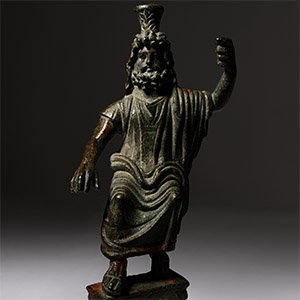
Roman Bronze Figure of Serapis
1st century B.C.-1st century A.D.Sold for (Inc. bp): £5,200
Depicted seated with his feet resting on a low stool, left hand raised and once holding sceptre or a staff; a modius crown resting on his curly hair, decorated with three incised olive sprays; dressed in a chiton and a draped himation, with his sandal-clad feet showing from beneath the folds of his garments; mounted on a custom-made display stand. 233 grams total, 12 cm high excluding stand
Private collection, Florida, USA, 1980s. European private collection, acquired in 2002. Accompanied by a copy of an Art Loss Register certificate, no.S00019356. Accompanied by an academic report by Dr Raffaele D’Amato. This lot has been checked against the Interpol Database of stolen works of art and is accompanied by search certificate number no.12611-234679. This lot has been cleared against the Art Loss Register database, and is accompanied by an illustrated lot declaration signed by the Head of the Antiquities Department, Dr Raffaele D'Amato.
The facial features are of the bearded Hellenistic type, well known by the features of the seated cult statue from the Serapeum in Alexandria and the prototypes of a number of separated heads or busts which also survive in innumerable copies in all the corners of the Roman Empire. A statue made by the Hellenistic sculptor Bryaxis was the model for this statuette and the successive iconography. -
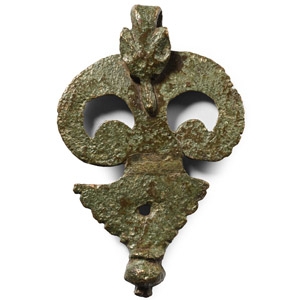
Roman Bronze Military Pendant
2nd-3rd century A.D.Sold for (Inc. bp): £46
Comprising an ivy-leaf panel with comma-scrolls above. knop finial, fox-mask to the loop. 4.66 grams, 46 mm
Ex German art market, 2000s. Acquired from an EU collector living in London. From the collection of a Surrey, UK, gentleman. This lot is accompanied by an illustrated lot declaration signed by the Head of the Antiquities Department, Dr Raffaele D'Amato. -
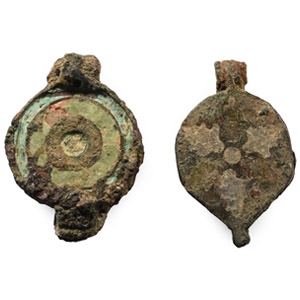
Roman Enamelled Bronze Seal Box Pair
2nd-3rd century A.D.Sold for (Inc. bp): £20
Comprising two boxes with lids decorated with enamelling, holes to the reverse. 12.8 grams total, 27 mm each
Ex German art market, 2000s. Acquired from an EU collector living in London. From the collection of a Surrey, UK, gentleman. This lot is accompanied by an illustrated lot declaration signed by the Head of the Antiquities Department, Dr Raffaele D'Amato.
