
Loading, please wait...

LOT 0849
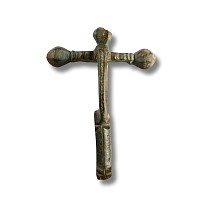
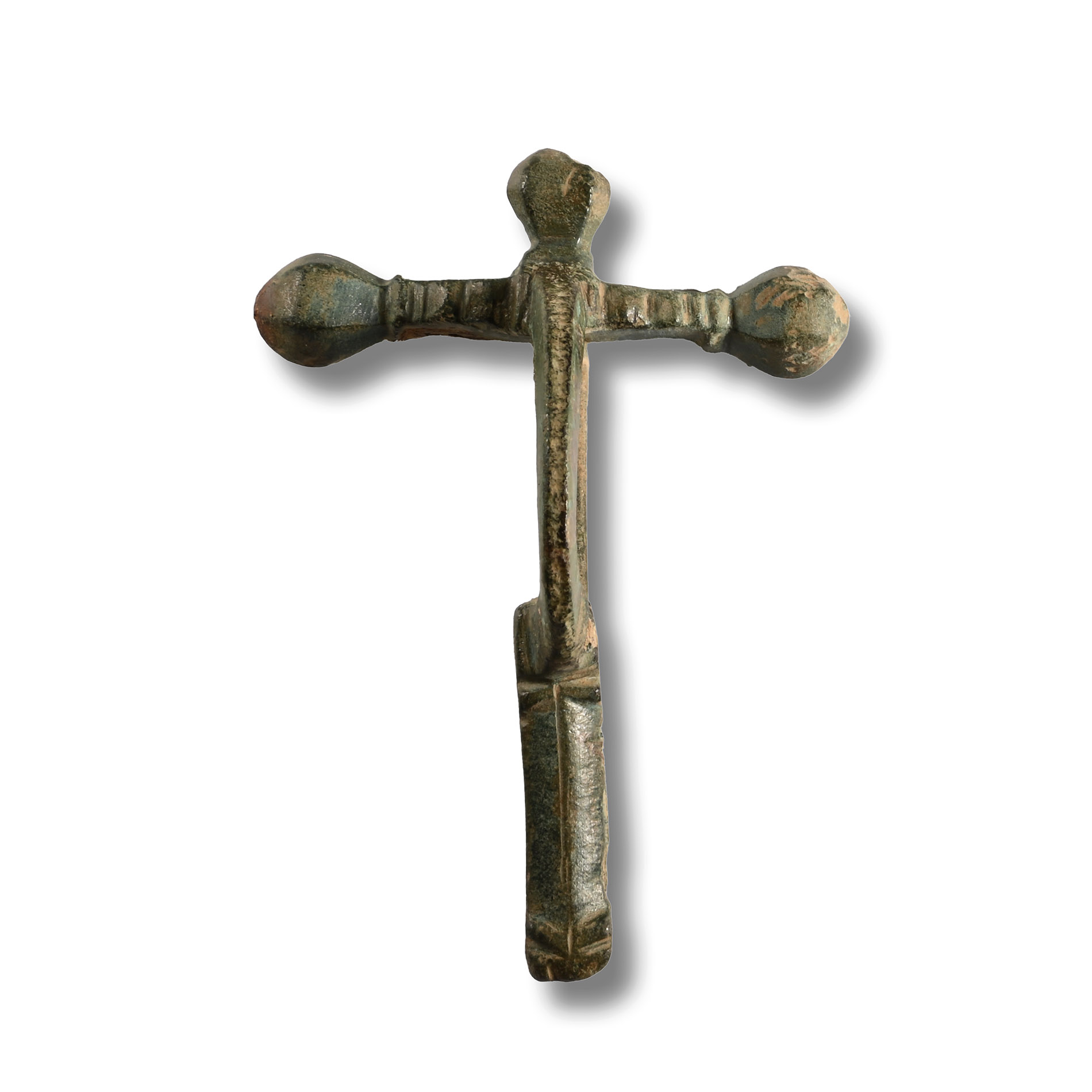
Roman Bronze Crossbow Brooch
4TH CENTURY A.D.
2 3/4 in. (31.3 grams, 69 mm).
With three onion-shaped knops on the crossbar and stepped upper face, narrow bow, rectangular footplate with catch to the reverse, hinged pin. [No Reserve]
ProvenanceEx German art market, 2000s.
Acquired from an EU collector living in London.
From the collection of Surrey, UK, gentleman.
Cf. Bayley, J. & Butcher, S., Roman Brooches in Britain: A Technological and Typological Study based on the Richborough Collection, London, 2004, p.182, item T191, for type.
CONDITIONTimeLine Auctions follows a vetting process to ensure the authenticity and legality of all items, reinforcing our commitment to integrity and responsible trading. Each antiquity, antique, and coin lot undergoes thorough examination by a vetting committee of at least ten external specialists, professional trade association members, scientists, and archaeologists: Our Vetting Process
AUCTIONS:
TimeLine is a leading auction house specialising in antiquities, ancient art, collectables, natural history, coins, medals, and books. Our auctions offer museums, collectors, historians, and enthusiasts the opportunity to acquire unique and historically significant pieces.
-
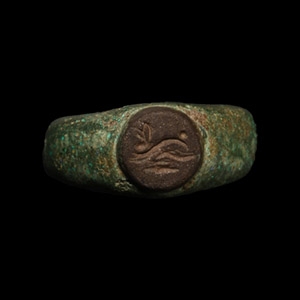
Roman Bronze Ring with Dolphin Gemstone
3rd century A.D.Sold for (Inc. bp): £195
With lateral carinations and inset glass intaglio of a dolphin breasting the waves; supplied with a museum-quality impression. 9.75 grams, 27.00 mm overall, 17.29 mm internal diameter (approximate size British N, USA 6 1/2, Europe 13.72, Japan 13)
Private collection, England. -
.jpg)
Roman Bronze Dolphin Brooch
Circa 2nd century A.D.Sold for (Inc. bp): £26
With deep curved bow, dorsal fin to the apex and fantail footplate, hinged pin. 7.89 grams, 36 mm
Property of the vendor's grandfather, thence by family descent, circa 1985. From the private collection of a New York, USA gentleman. -
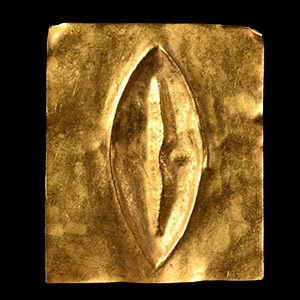
Roman Gold Votive Plaque
2nd-3rd century A.D.Sold for (Inc. bp): £1,105
Rectangular sheet-gold with boss to the centre, repoussé vulva motif. 2.32 grams, 30 mm
Acquired in the mid 1980s-1990s. Private collection, Switzerland, thence by descent. Private collection, since the late 1990s.
