
Loading, please wait...

LOT 0727
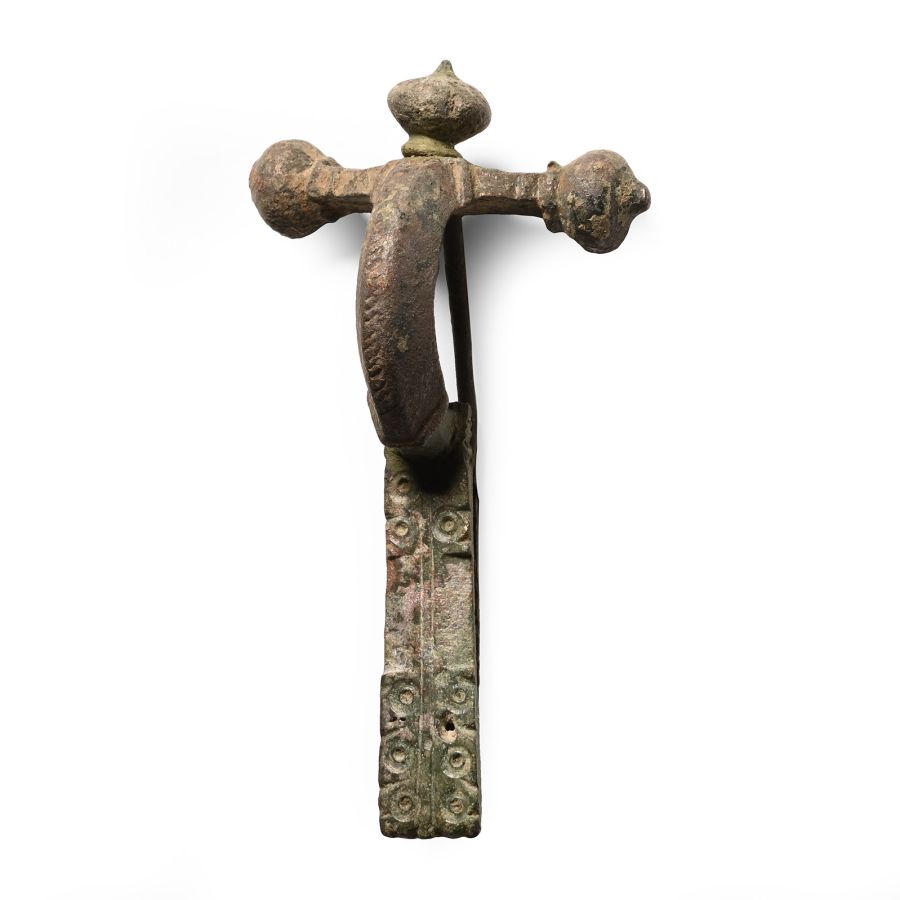
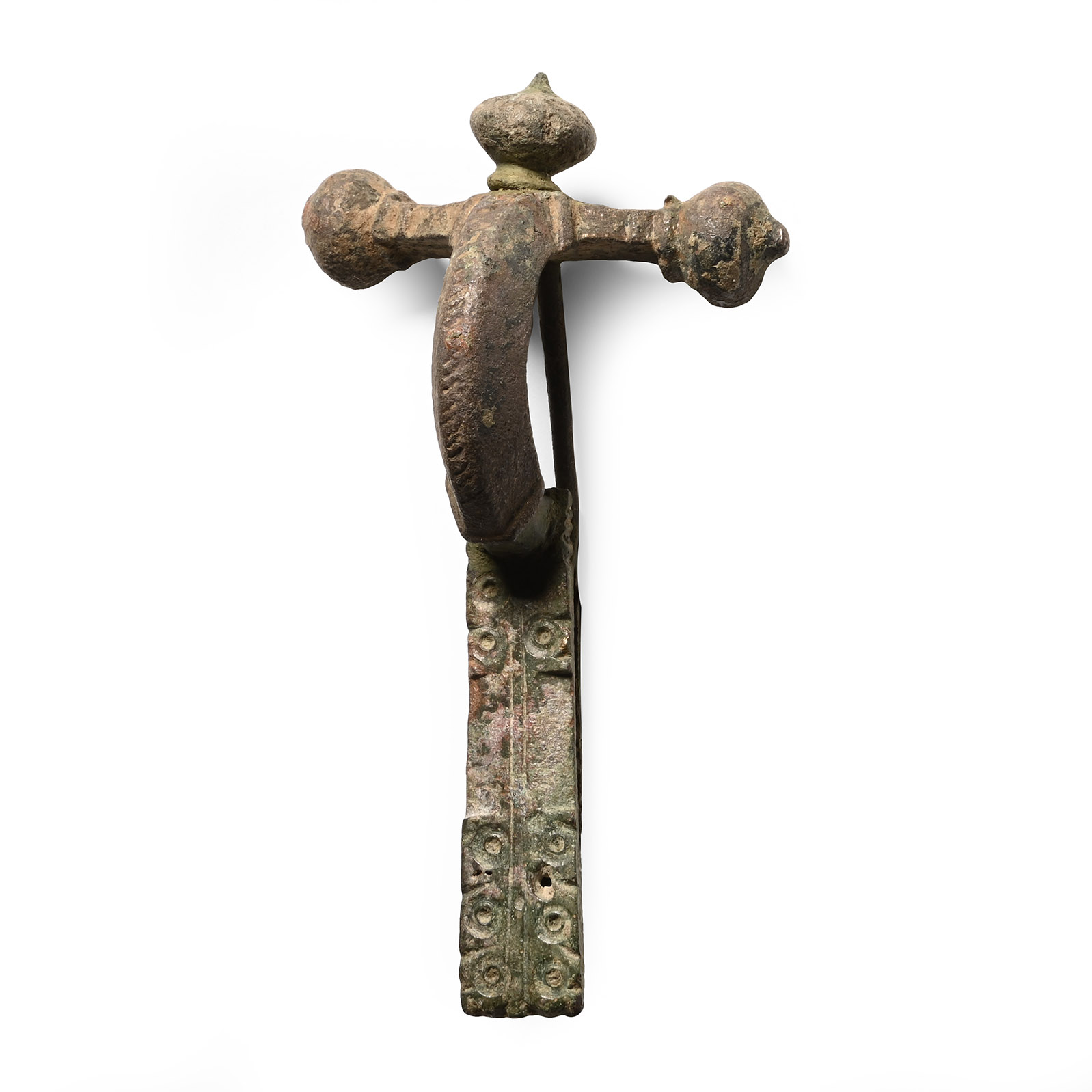
Roman Bronze Crossbow Brooch
4TH CENTURY A.D.
3 1/2 in. (56 grams, 88 mm).
With three faceted knops to the crossbar, the upper one with beaded collar, and pierced moulding to the upper face, deep bow, stepped junction with foot, trapezoidal foot with ring-and-dot motifs and integral catch; hinged pin to reverse; Keller Type 4. [No Reserve]
ProvenanceEx German art market, 2000s.
Acquired from an EU collector living in London.
From the collection of Surrey, UK, gentleman.
Cf. Mackreth, D.F., Brooches in Late Iron Age and Roman Britain, Oxford, 2011, vol.2, pl.140, item 12576.
CONDITIONTimeLine Auctions follows a vetting process to ensure the authenticity and legality of all items, reinforcing our commitment to integrity and responsible trading. Each antiquity, antique, and coin lot undergoes thorough examination by a vetting committee of at least ten external specialists, professional trade association members, scientists, and archaeologists: Our Vetting Process
AUCTIONS:
TimeLine is a leading auction house specialising in antiquities, ancient art, collectables, natural history, coins, medals, and books. Our auctions offer museums, collectors, historians, and enthusiasts the opportunity to acquire unique and historically significant pieces.
-
.jpg)
Roman Bronze Bow Brooch
1st-3rd century A.D.Sold for (Inc. bp): £59
Of kräftig profilierte 'anchor' type, with a broad plaque in front of the spring and pin, trumpet-type bow; broad footplate with catch to the rear. 23 grams, 45 mm
Property of a gentleman from Vienna; from his private collection formed since 1970. -
Roman Bronze Wine Strainer
1st-3rd century A.D.Estimate: £3,000 - 4,000 (‡+bp*)
Opening Bid: £1,500
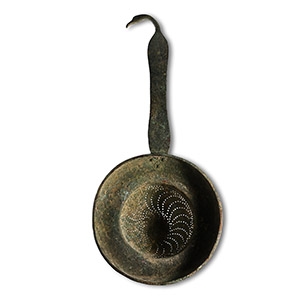
Cup-shaped body with flared and curved rim, flat-section handle with swan-head finial; the body with pierced rosette pattern. 159 grams, 27.4 cm
Acquired in the mid 1980s-1990s. Private collection, Switzerland, thence by descent. Private collection, since the late 1990s. This lot has been checked against the Interpol Database of stolen works of art and is accompanied by search certificate number no.12233-222331. -
Roman Translucent Glass Jar with Gallery
3rd-4th century A.D.Sold for (Inc. bp): £546
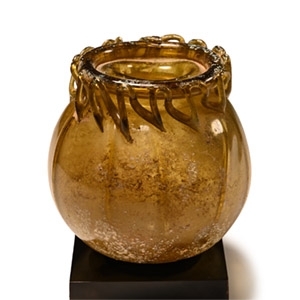
Globular in profile with wide double-stepped rolled rim, applied wavy line trails forming a gallery from rim to body, pinched diagonal ribs to outer face and dimple to the underside; supplied with a custom-made stand. 46 grams, 74 mm wide (125 grams, 85 mm high including stand)
From the glass collection of a London gentleman, UK, 1990s.
