
Loading, please wait...
LOT 0757
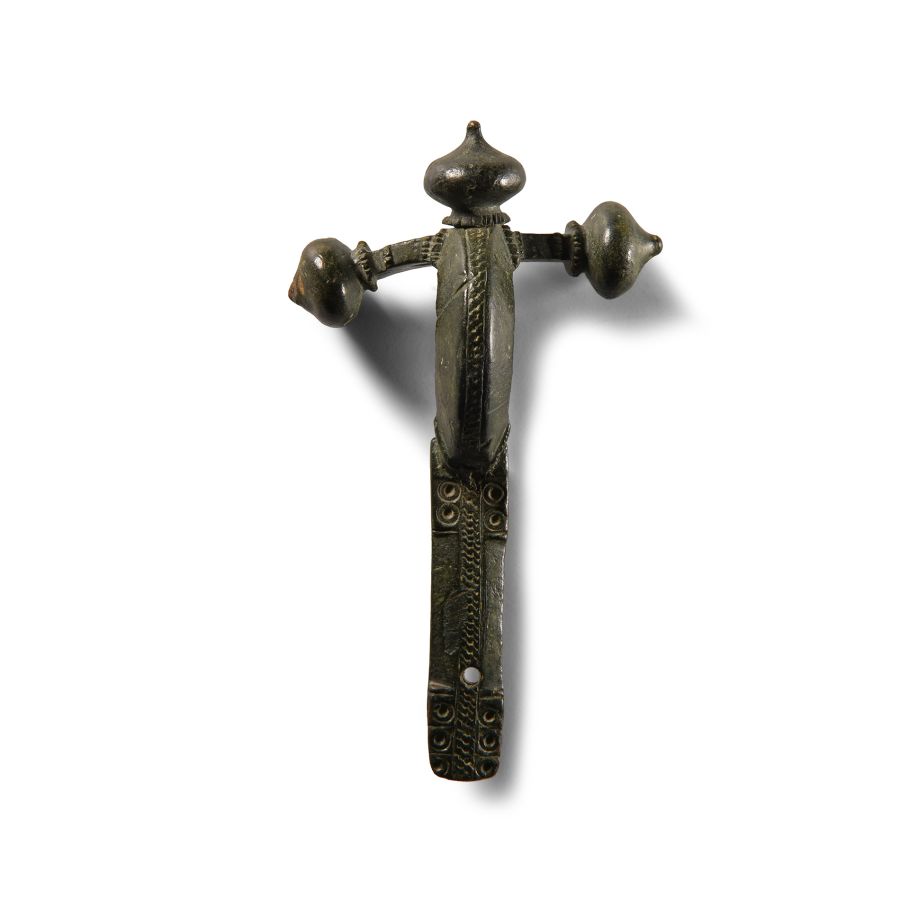
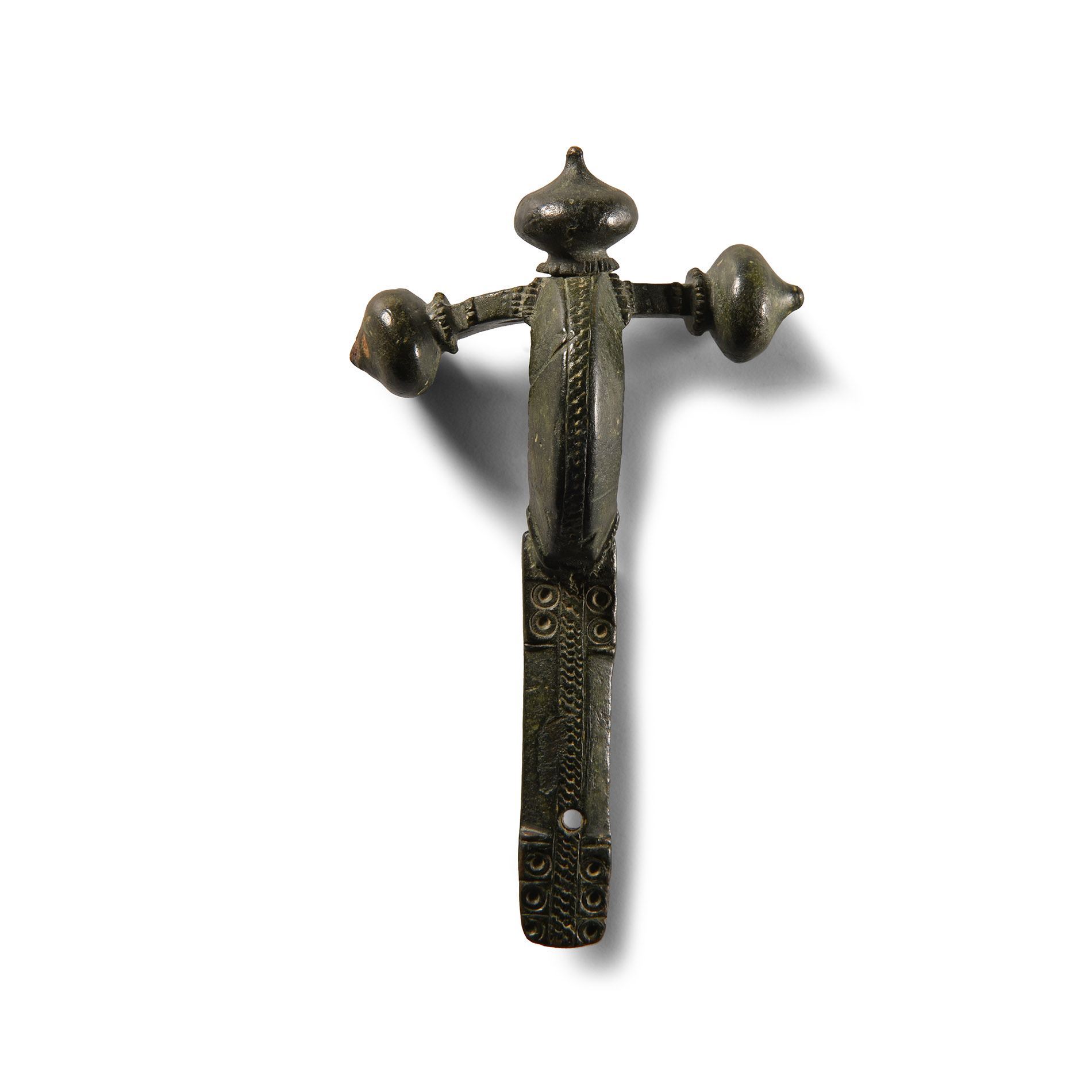
Roman Bronze Crossbow Brooch
4TH CENTURY A.D.
3 1/2 in. (64 grams total, 90 mm).
With onion-knop terminals, carinated bow with a median band of guilloche decoration; the footplate with ring-and-dot decoration to each end, central guilloche panel with chamfered sides; hinged pin and pierced catch-plate to reverse. [No Reserve]
ProvenanceProperty of a Gloucestershire, UK, collector.
Property of an East Sussex, UK, gentleman.
Cf. Beck, H. et al., Fibel und Fibeltracht, Berlin, 2000, fig.119(7), for type.
FootnotesThe piercing runs through both the body and catchplate. Such alterations, for the attachment of a securing chain or thong, are not uncommon on heavy brooches, but the hole is usually restricted to the reverse (the catch).
CONDITIONTimeLine Auctions follows a vetting process to ensure the authenticity and legality of all items, reinforcing our commitment to integrity and responsible trading. Each antiquity, antique, and coin lot undergoes thorough examination by a vetting committee of at least ten external specialists, professional trade association members, scientists, and archaeologists: Our Vetting Process
AUCTIONS:
TimeLine is a leading auction house specialising in antiquities, ancient art, collectables, natural history, coins, medals, and books. Our auctions offer museums, collectors, historians, and enthusiasts the opportunity to acquire unique and historically significant pieces.
-
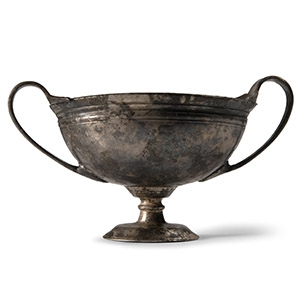
Roman Silver Kantharos Wine Cup
2nd century B.C.-1st century A.D.Estimate: £3,500 - 4,500 (+bp*)
Opening Bid: £1,850
With deep spherical body supported on a round stand; incised with a band around the inner surface and concentric circles on the outer body; two looped high handles, one with stipple engraved monogram on the upper side. 156 grams, 14 cm wide
Ex Mansees collection, formed 1950s-early 1990s. From a large American collection formed in Chicago, Illinois, USA, in 1995. From a European collection. This lot has been checked against the Interpol Database of stolen works of art and is accompanied by search certificate no.11627-197618. -
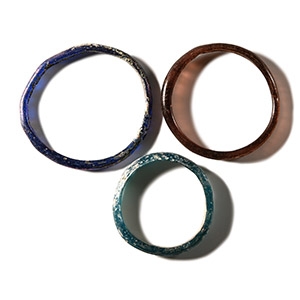
Roman Coloured Glass Bracelet Group
Circa 3rd-4th century A.D.Sold for (Inc. bp): £221
Comprising one round-section in deep blue, one similar in deep red, and a D-section in pale blue/turquoise. 14.3 grams total, 42-55 mm
Formerly with a Bournemouth gentleman. Ex Essex collection. Property of a Scottish collector, acquired in 2013. -
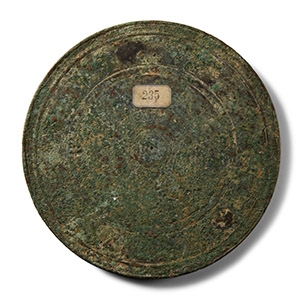
Roman Bronze Mirror
1st-2nd century A.D.Sold for (Inc. bp): £260
Discoid plaque with one polished face, slightly raised rim, incised concentric rings, old label '235' to one side '258' to the other. 127 grams, 10.3 cm
Ex Louis-Gabriel Bellon (1819?-1899), France. Acquired from Jack-Philippe Ruellan, 4 April 2009, no.258.
