
Loading, please wait...
LOT 0879
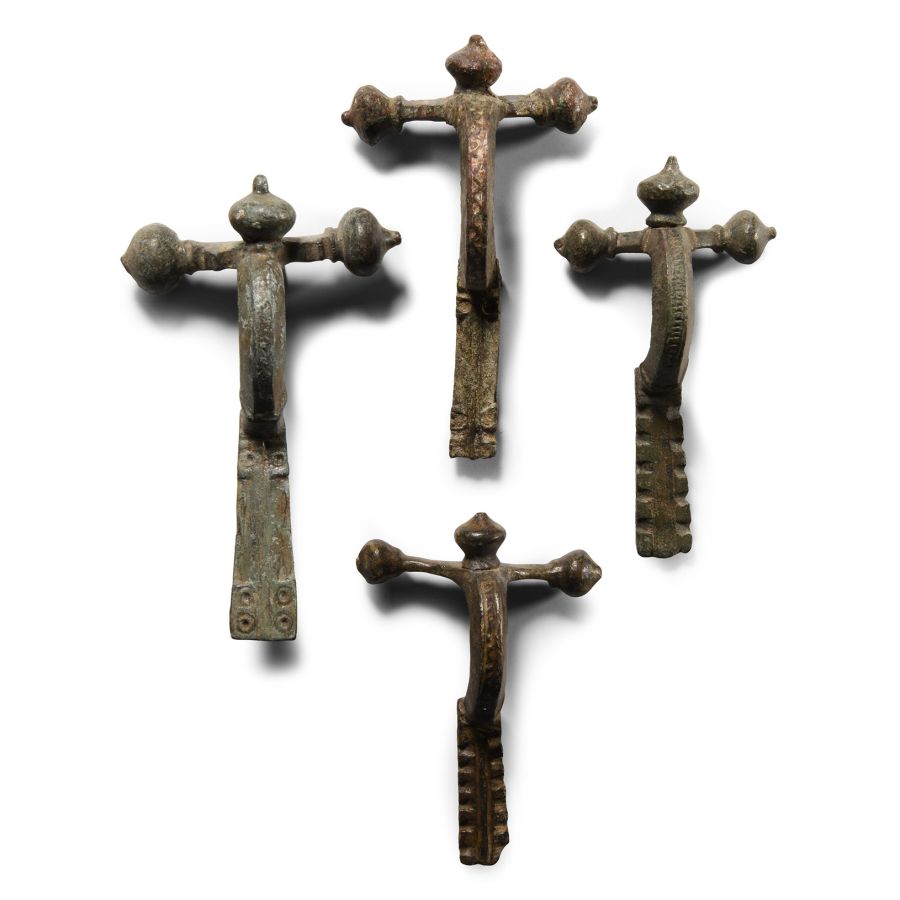
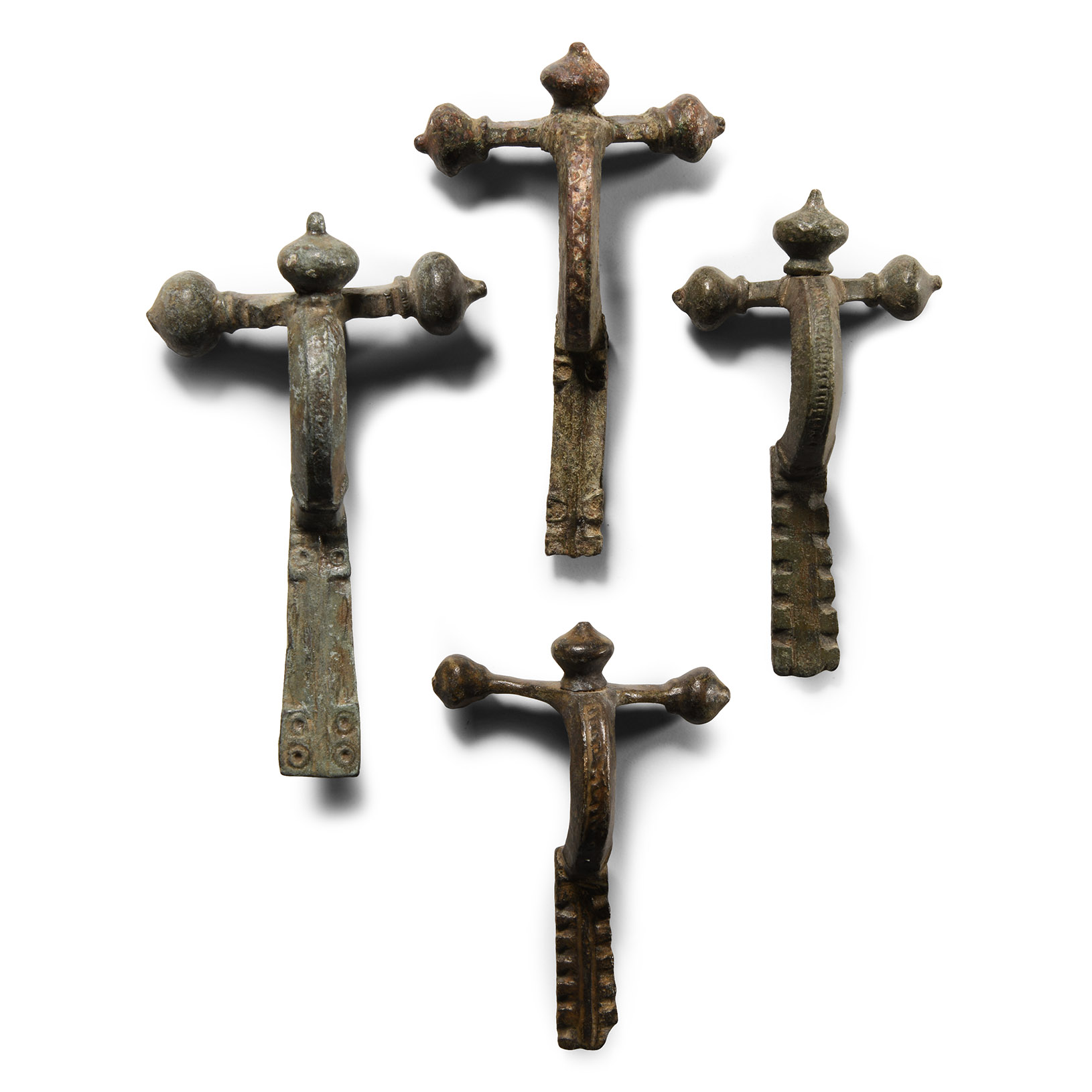
Roman Bronze Crossbow Brooch Group
3RD-4TH CENTURY A.D.
2 1/2 - 3 1/4 in. (147 grams total, 65-82 mm).
Each with onion-shaped knops to the head, deep bow and footplate with decorative detailing. [4, No Reserve]
ProvenanceUK art market, acquired prior to 1980.
Property of a Scottish collector, acquired in 2013.
TimeLine Auctions follows a vetting process to ensure the authenticity and legality of all items, reinforcing our commitment to integrity and responsible trading. Each antiquity, antique, and coin lot undergoes thorough examination by a vetting committee of at least ten external specialists, professional trade association members, scientists, and archaeologists: Our Vetting Process
AUCTIONS:
TimeLine is a leading auction house specialising in antiquities, ancient art, collectables, natural history, coins, medals, and books. Our auctions offer museums, collectors, historians, and enthusiasts the opportunity to acquire unique and historically significant pieces.
-
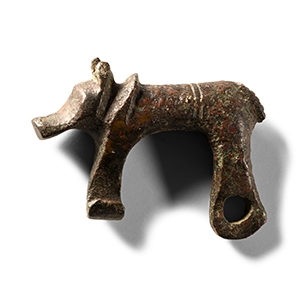
Roman Bronze Boar Brooch
Circa 2nd century A.D.Sold for (Inc. bp): £72
Modelled in the round with catch beneath the foreleg, hole for hinged pin beneath the hindleg. 11.2 grams, 31 mm
From a collection acquired on the UK art market from various auction houses and collections mostly before 2000. From an important Cambridgeshire estate; thence by descent. -
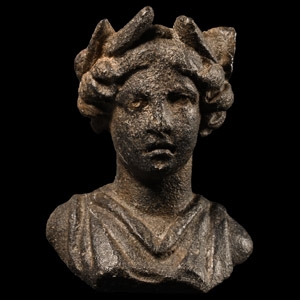
Roman Bronze Statuette Head of Apollo
1st-2nd century A.D.Sold for (Inc. bp): £416
With delicately modelled youthful features, thick hair framing the face adorned with a laurel-wreath secured at the rear, traces of silvering to the eyes; ledge base; possibly Apollo the sun-god, or a lar (guardian spirit). 31 grams, 32 mm
From a collection acquired on the UK art market from various auction houses and collections mostly before 2000. From an important Cambridgeshire estate; thence by descent.
The use of domestic gods continued in the Roman Empire also in later times. Of particular interest is a group of sculptures discovered in the Theodosian Palace in Stobi. The finds consist of marble and bronze statuettes and reliefs that were deposited in one of the ornamental basins located in the peristyle. Four of the smaller bronze sculptures— a lar, Apollo, Venus, and a satyr— may have formed the contents of a lararium. The palace was in use until the 5th century A.D., but the sculptures consists of heirloom and reused pieces dated at 2nd-1st century B.C. However, an unusual feature of this bronze assemblage is the fact that they date overwhelmingly to the 3rd century A.D. -
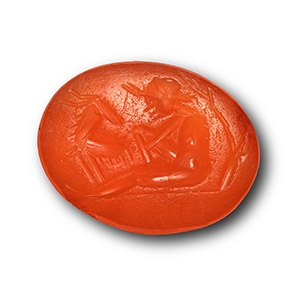
Roman Gemstone with a Shepherd Milking a Goat
1st-3rd century A.D.Sold for (Inc. bp): £156
With intaglio scene of a man milking a goat with one leg extended, his back resting on a tree-trunk; supplied with a museum-quality impression. 0.79 grams, 12 mm
Collected from 1970-1999. From the collection of the late Mr S.M., London, UK. Accompanied by a previous catafalque information slip.
