
Loading, please wait...
LOT 0962
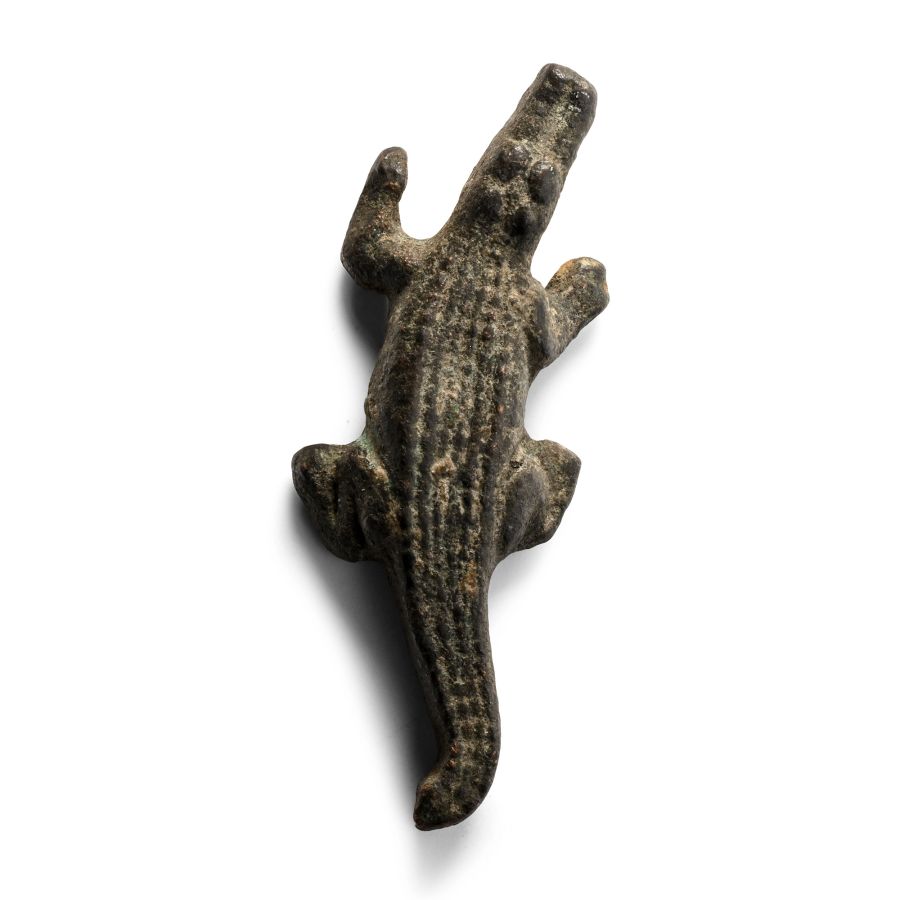
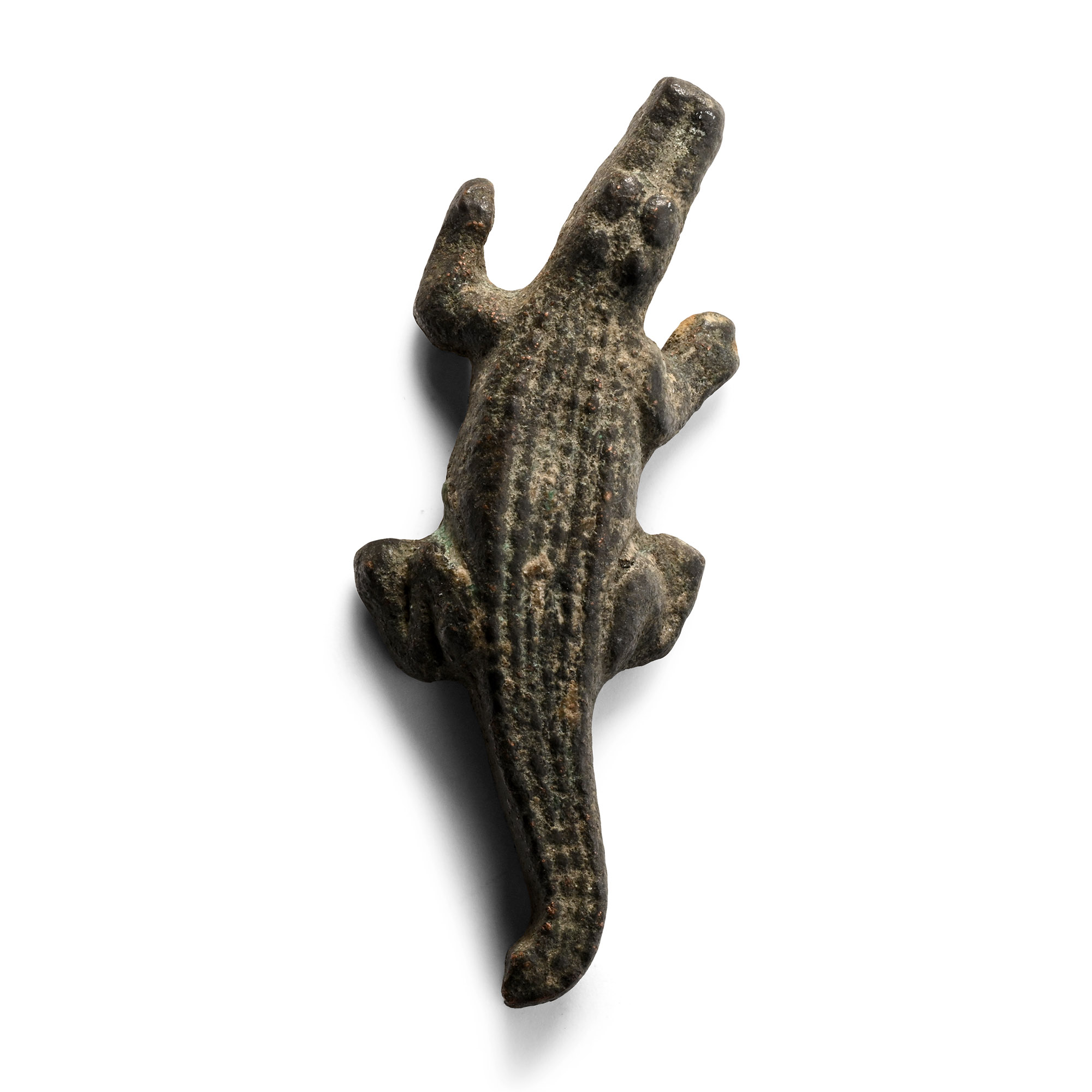
Roman Bronze Crocodile Statuette
1ST-4TH CENTURY A.D.
2 3/8 in. (28.2 grams, 61 mm).
Modelled in the round with its head raised, scale detailing on the body.
ProvenanceFrom the collection of a gentleman, acquired on the London art market in the 1990s.
CONDITIONTimeLine Auctions follows a vetting process to ensure the authenticity and legality of all items, reinforcing our commitment to integrity and responsible trading. Each antiquity, antique, and coin lot undergoes thorough examination by a vetting committee of at least ten external specialists, professional trade association members, scientists, and archaeologists: Our Vetting Process
AUCTIONS:
TimeLine is a leading auction house specialising in antiquities, ancient art, collectables, natural history, coins, medals, and books. Our auctions offer museums, collectors, historians, and enthusiasts the opportunity to acquire unique and historically significant pieces.
-
Roman Iridescent Glass Flask
2nd-3rd century A.D.Sold for (Inc. bp): £234
Bulbous body and a short tubular neck with everted mouth. 44 grams, 72 mm
Acquired Christie's, London, 6 May, 1982, no.35 (illus). From a private Wiltshire, UK, collection. Accompanied by a copy of the relevant Sotheby's catalogue pages. -
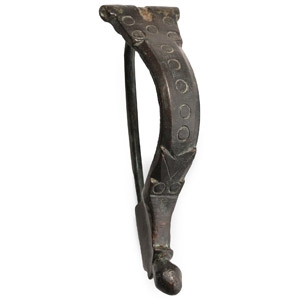
Large Roman Decorated Bronze Bow Brooch
3rd-4th century A.D.Sold for (Inc. bp): £59
Wide bow with punched annulet decoration, short footplate with a knop finial. 28 grams, 72 mm
Ex German art market, 2000s. Acquired from an EU collector living in London. From the collection of a Surrey, UK, gentleman. -
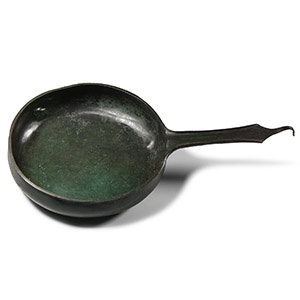
Roman Bronze Patera with Handle
1st century B.C.-1st century A.D.Sold for (Inc. bp): £715
The bowl with a wide flat bottom and convex sides; the inside with incised concentric circles; flat handle with raised edges and hooked finial for suspension. 483 grams, 39.5 cm
German private collection, Mr O., collecting in the 1950s-1960s; thence by descent. with Bonhams, London, 7 July 2016, lot 191 (£3,000-5,000). Accompanied by an academic report by Dr Raffaele D’Amato. Accompanied by copies of the relevant Bonhams printed catalogue pages (full page). This lot has been checked against the Interpol Database of stolen works of art and is accompanied by search certificate number no.11735-201189.
This vessel was part of Roman and provincial bronze instrumentum domesticum, i.e. culinary or domestic utility ware. Such cooking vessels are rare: some are found in central and northern Italy, in Pannonia, Germany and in Britain. The Aylesford Pan, today in the British Museum (inventory no.1886.1112.1), is one of the most important finds. This specimen (Eggers type 130), probably pre-Caesarian or Caesarian, was found in a grave together with a Celtic bucket and a jug.
