
Loading, please wait...
LOT 0754
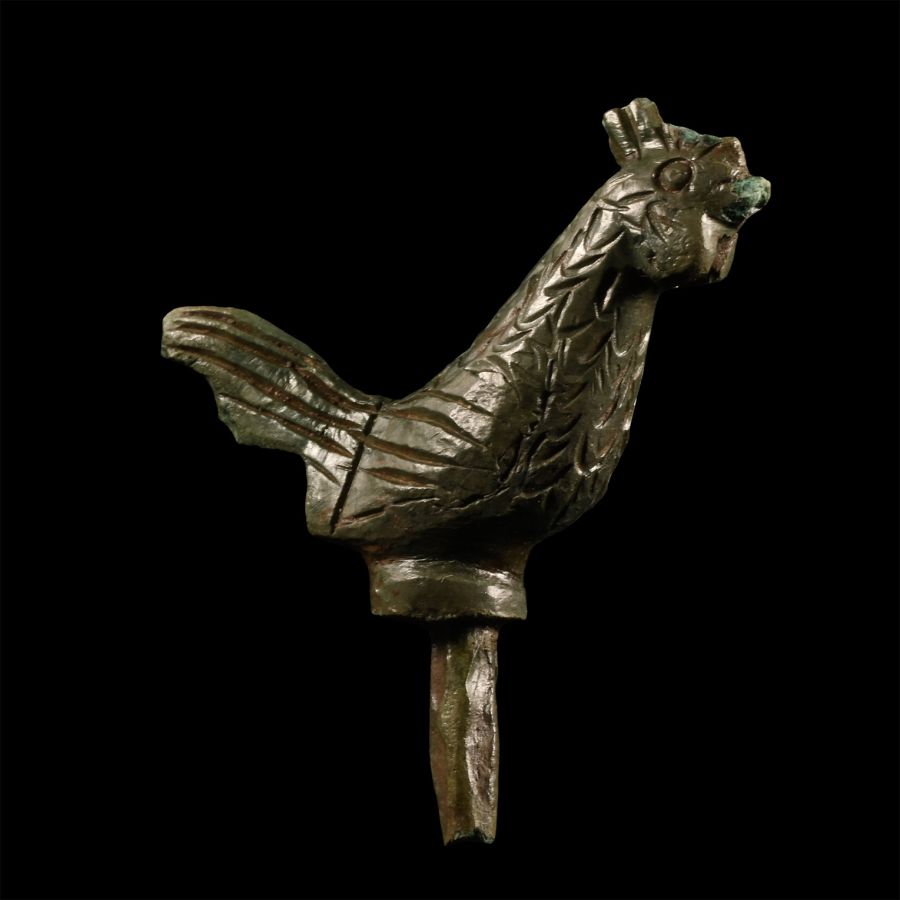
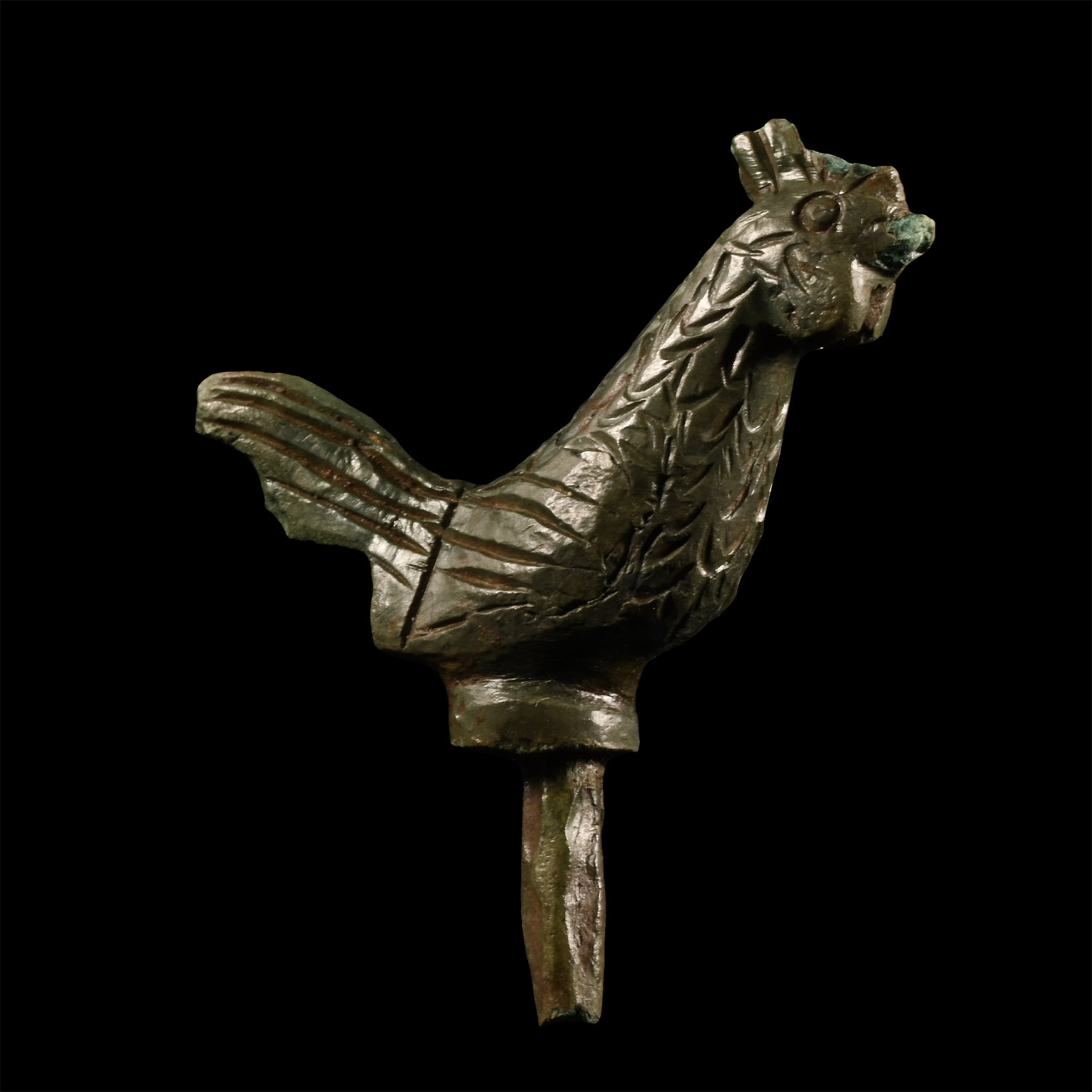
Roman Bronze Cockerel Finial
2RD-3RD CENTURY A.D.
1 5/8 in. (15.4 grams, 40 mm).
Modelled in the round on a circular base with attachment peg; applied feather detailing to the neck, wings and tail.
ProvenancePrivate collection of Mr S.A., Switzerland, 1990s, thence by descent.
LiteratureCf. Boucher, S. & Tassinari, S., Musée de la Civilisation Gallo-Romaine a Lyon: Bronzes Antiques I. Inscriptions, Statuaire, Vaisselle, Lyon, 1976, item 99, for type.
CONDITIONTimeLine Auctions follows a vetting process to ensure the authenticity and legality of all items, reinforcing our commitment to integrity and responsible trading. Each antiquity, antique, and coin lot undergoes thorough examination by a vetting committee of at least ten external specialists, professional trade association members, scientists, and archaeologists: Our Vetting Process
AUCTIONS:
TimeLine is a leading auction house specialising in antiquities, ancient art, collectables, natural history, coins, medals, and books. Our auctions offer museums, collectors, historians, and enthusiasts the opportunity to acquire unique and historically significant pieces.
LOT 0754
Roman Bronze Cockerel Finial
Estimate £200 - 300€230 - 350 (for guidance only)$270 - 410 (for guidance only)
-
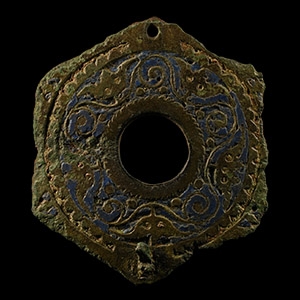
Romano-British Enamelled Bronze Lid of a Pyxis
2nd-3rd century A.D.Sold for (Inc. bp): £442
Hexagonal in plan with fastening holes, a band of cobalt blue enamelled spirals around the central aperture, interspersed with floral motifs, all enclosed within a scalloped border. 43.9 grams, 64 mm
Acquired 1980s-1990s. Private collection of H. N., Milton Keynes, Berkshire, UK.
Scholars have been able to establish the extent to which the manufacture of glass for enamel production was standardised through the Roman Empire during the 1st to 4th centuries. Enamels were probably fused from primary raw materials in specific production centres, one of which has been located in the Gallo-Roman villa of Anthee, France. The decoration with its undulating tendril and pellets in contrasting enamel is influenced by La Tène design of the 1st century B.C.-1st century A.D. -
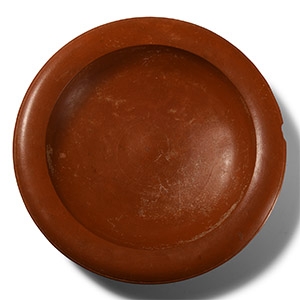
Roman Redware Bowl
North Africa, 3rd-4th century A.D.Sold for (Inc. bp): £143
Broad dish or shallow bowl with rounded flange rim and base. 350 grams, 23.5 cm
From a collection acquired on the UK art market from various auction houses and collections mostly before 2000. From an important Cambridgeshire estate; thence by descent. -
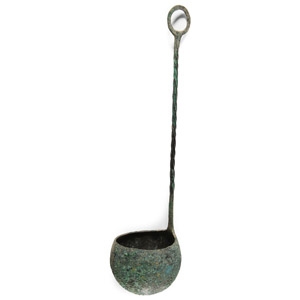
Roman Bronze Ladle with Twisted Handle
2nd century B.C.- 1st century A.D.Sold for (Inc. bp): £286
With deep bowl, integral bronze handle twisted about it own axis, loop finial. 77 grams, 26.2 cm
UK private collection before 2000. UK art market. Property of a London gentleman.
