
Loading, please wait...
LOT 0703
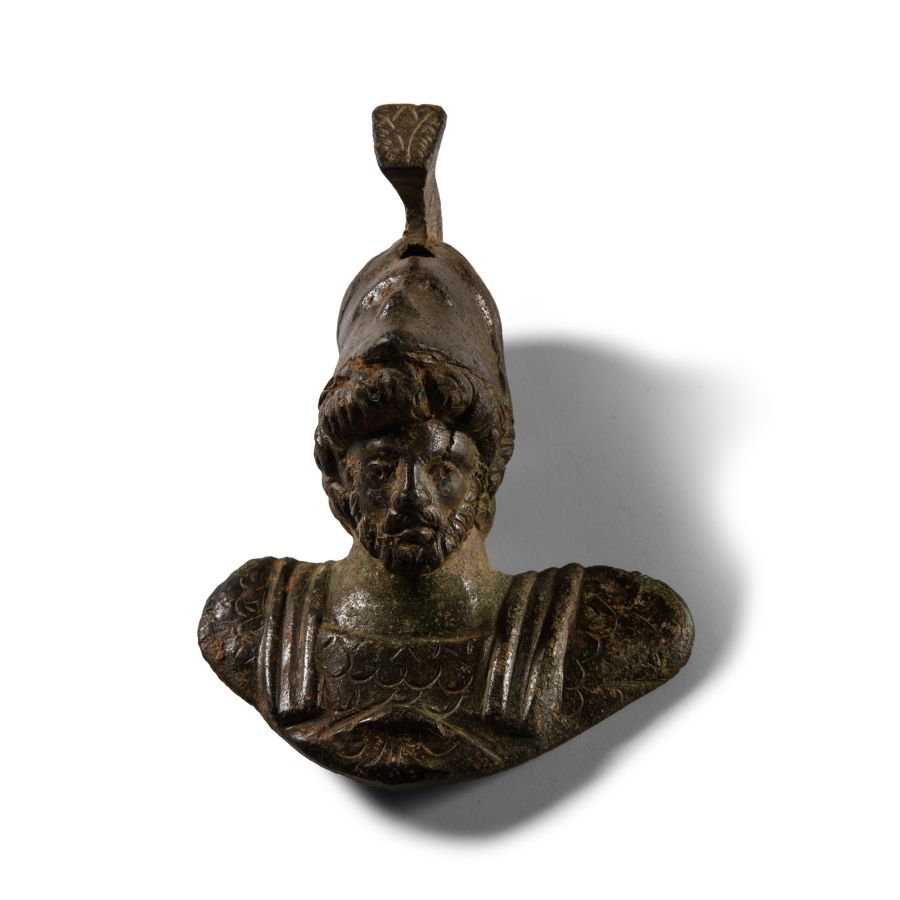
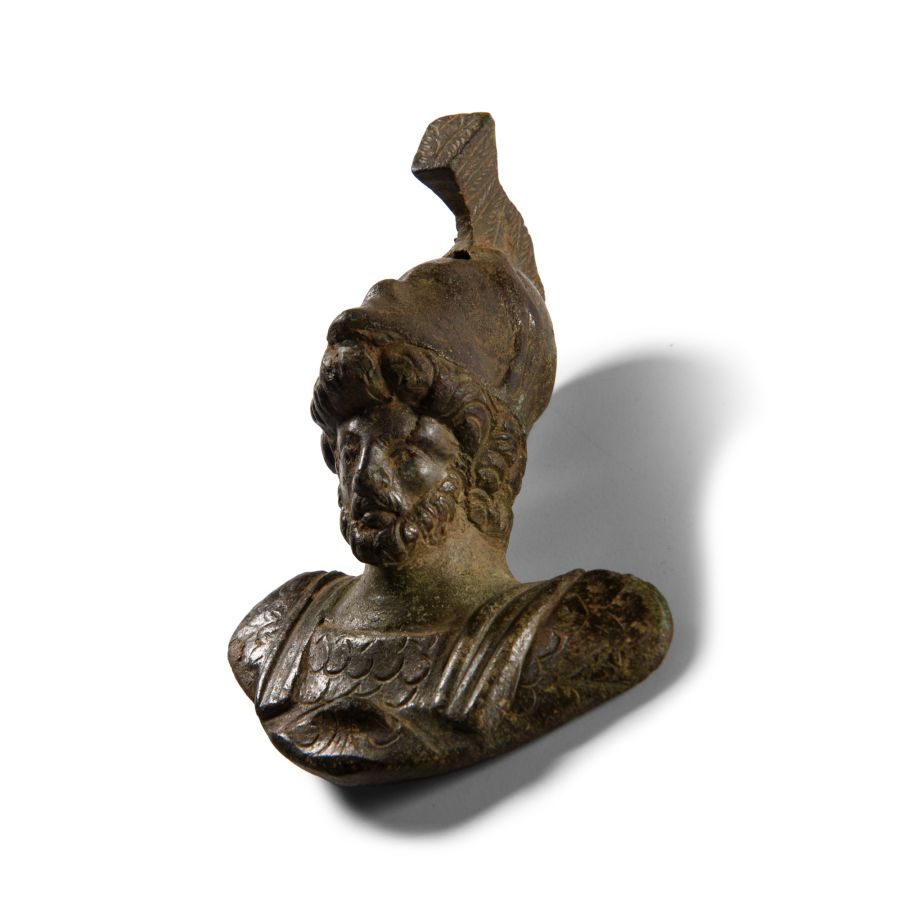
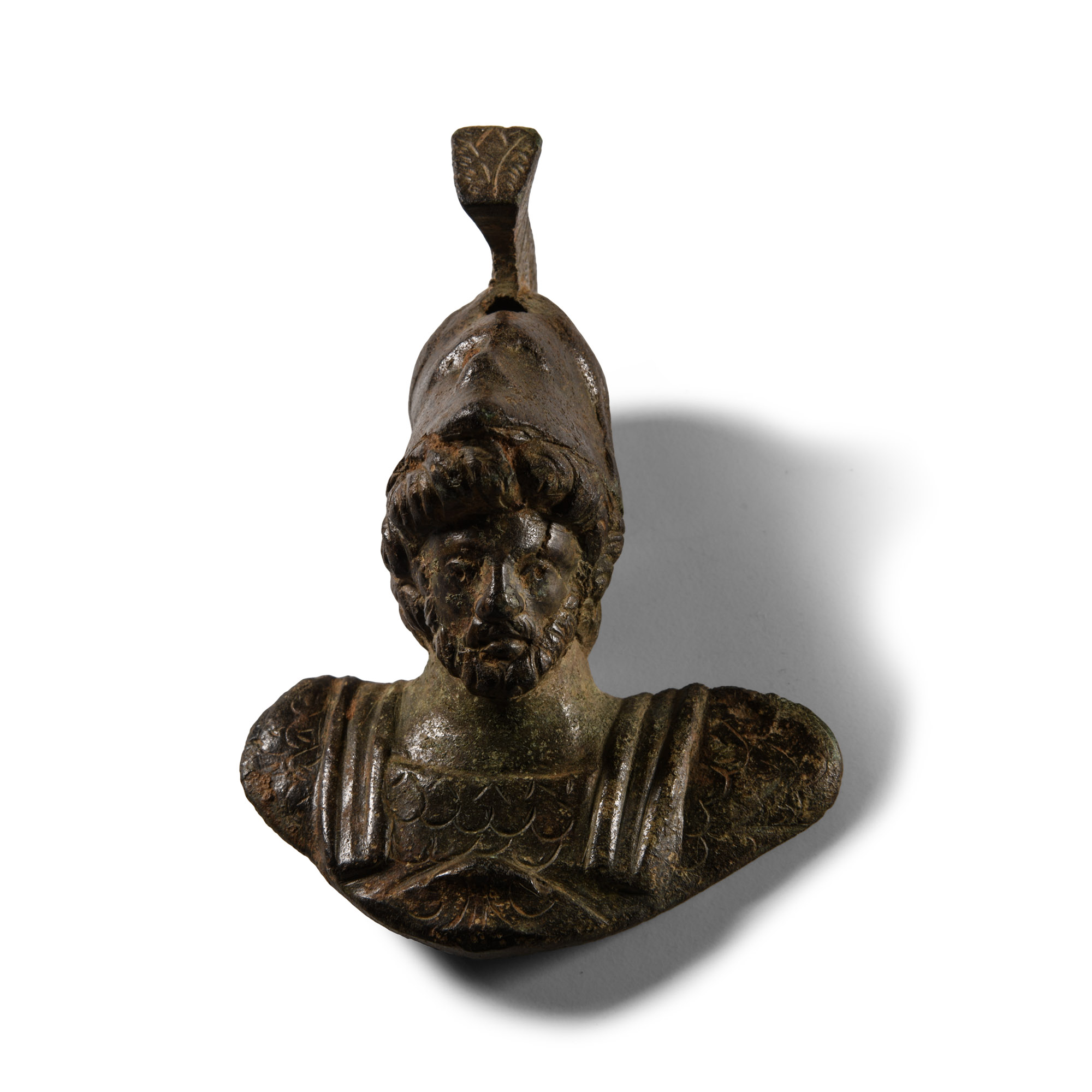
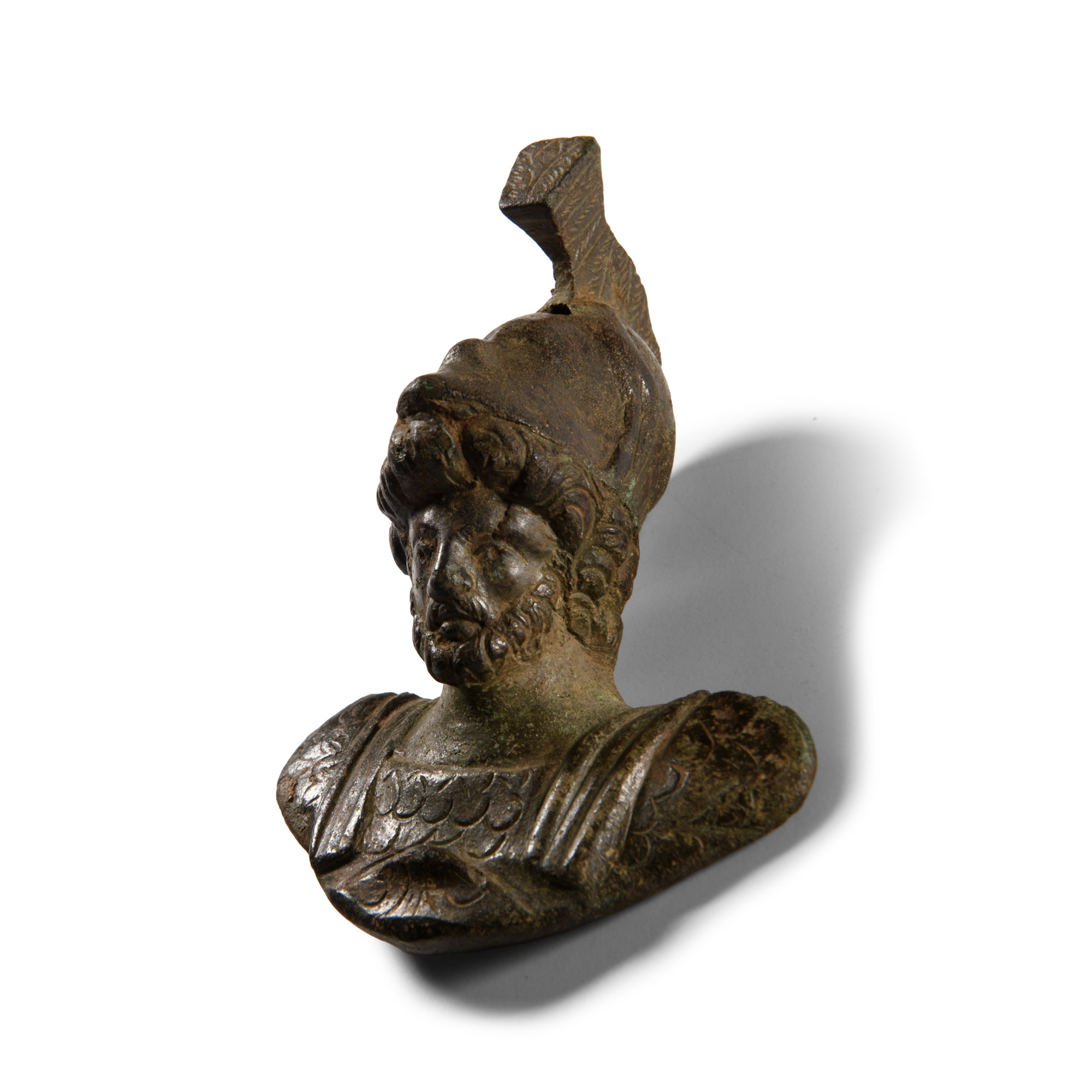
Roman Bronze Bust of Mars
CIRCA 2ND-3RD CENTURY A.D.
3 in. (82 grams, 75 mm).
Highly detailed bearded head with thick hair locks surmounted by a pseudo-Corinthian helmet with high crest; the breast covered by a scale armour (squama) fitted with shoulder-guards. [No Reserve]
ProvenanceFrom the collection of the famous author, writer and speaker, Gordon Bailey, Essex, UK; formed since 1968.
PublishedBailey, G., Detector Finds 6, Witham, 2008, p.95, fig.C16.53.
FootnotesThe pseudo-Corinthian or Apulo-Corinthian helmet, here worn by the divinity, was originally a legionary helmet, which transformed in the late Consular Age into an officer's helmet, to become a typical attribute of the commanders and then of the war god.
CONDITIONTimeLine Auctions follows a vetting process to ensure the authenticity and legality of all items, reinforcing our commitment to integrity and responsible trading. Each antiquity, antique, and coin lot undergoes thorough examination by a vetting committee of at least ten external specialists, professional trade association members, scientists, and archaeologists: Our Vetting Process
AUCTIONS:
TimeLine is a leading auction house specialising in antiquities, ancient art, collectables, natural history, coins, medals, and books. Our auctions offer museums, collectors, historians, and enthusiasts the opportunity to acquire unique and historically significant pieces.
-

Roman Tabular Lead Weight Collection
1st-4th century A.D.Sold for (Inc. bp): £26
Square in plan, some with incised markings, one with impressed hole. 95 grams total, 8-25 mm
Ex Simmons gallery, London, UK. From a North London collection, 1990s. -

Roman Tinned Bronze Plate Brooch
2nd-3rd century A.D.Sold for (Inc. bp): £98
Comprising a triangular plaque joined by three radiating struts to a disc with radiating lugs and central enamelled concentric rings; the plaque with lateral leaf-shaped panels all decorated with herringbone motifs, catch and hinged pin to the reverse. 6.9 grams, 36 mm
Ex German art market, 2000s. Acquired from an EU collector living in London. From the collection of Surrey, UK, gentleman. -
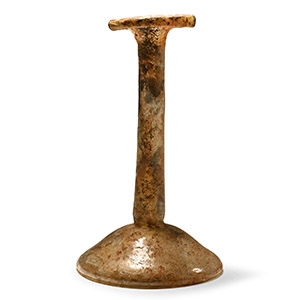
Roman Glass Vial
3rd century A.D.Sold for (Inc. bp): £195
Wide domed body with flat base, tall narrow piriform neck and splayed rim. 42 grams, 14 cm
Ex London, UK, collection, 1980-1990s.
The lachrymatous (or lacrimal vase or unguentarium) was a vial of glass that contained ointments or perfumes. These small vessels, often found in Roman tombs, were formerly supposed to have been bottles into which mourners dropped their tears. Instead they contained perfume and unguents, and the large quantity of vessels found in tombs is due to the use of unguents at funeral ceremonies.
