
Loading, please wait...
LOT 0068
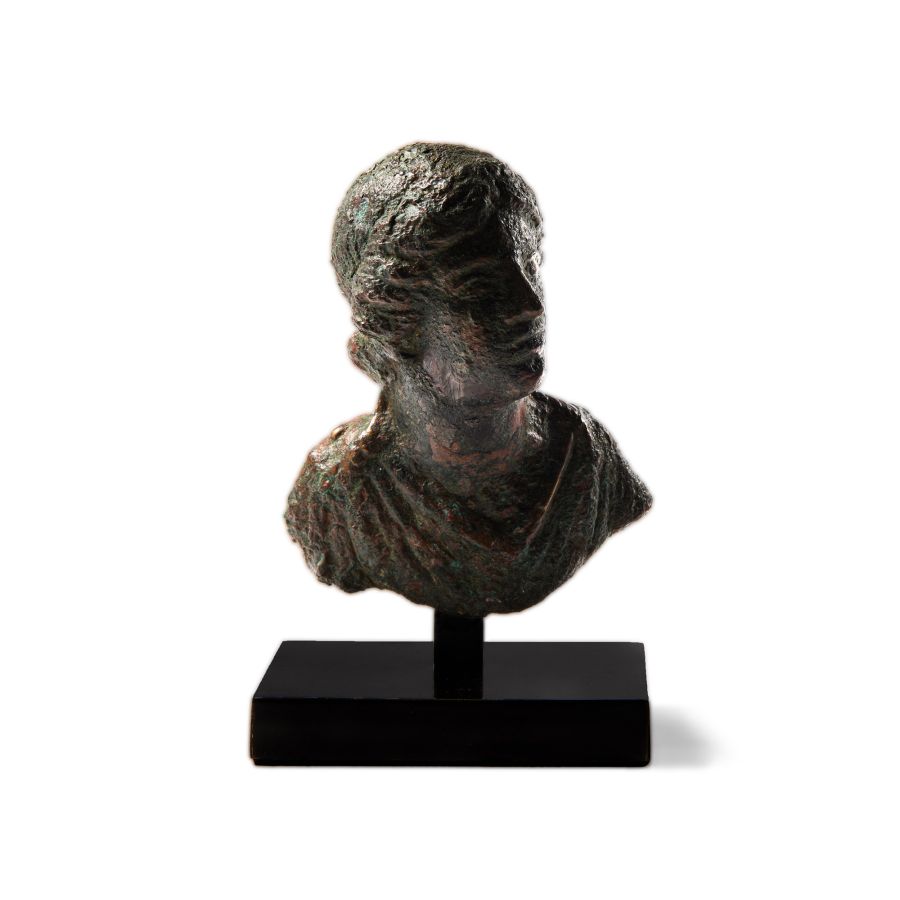
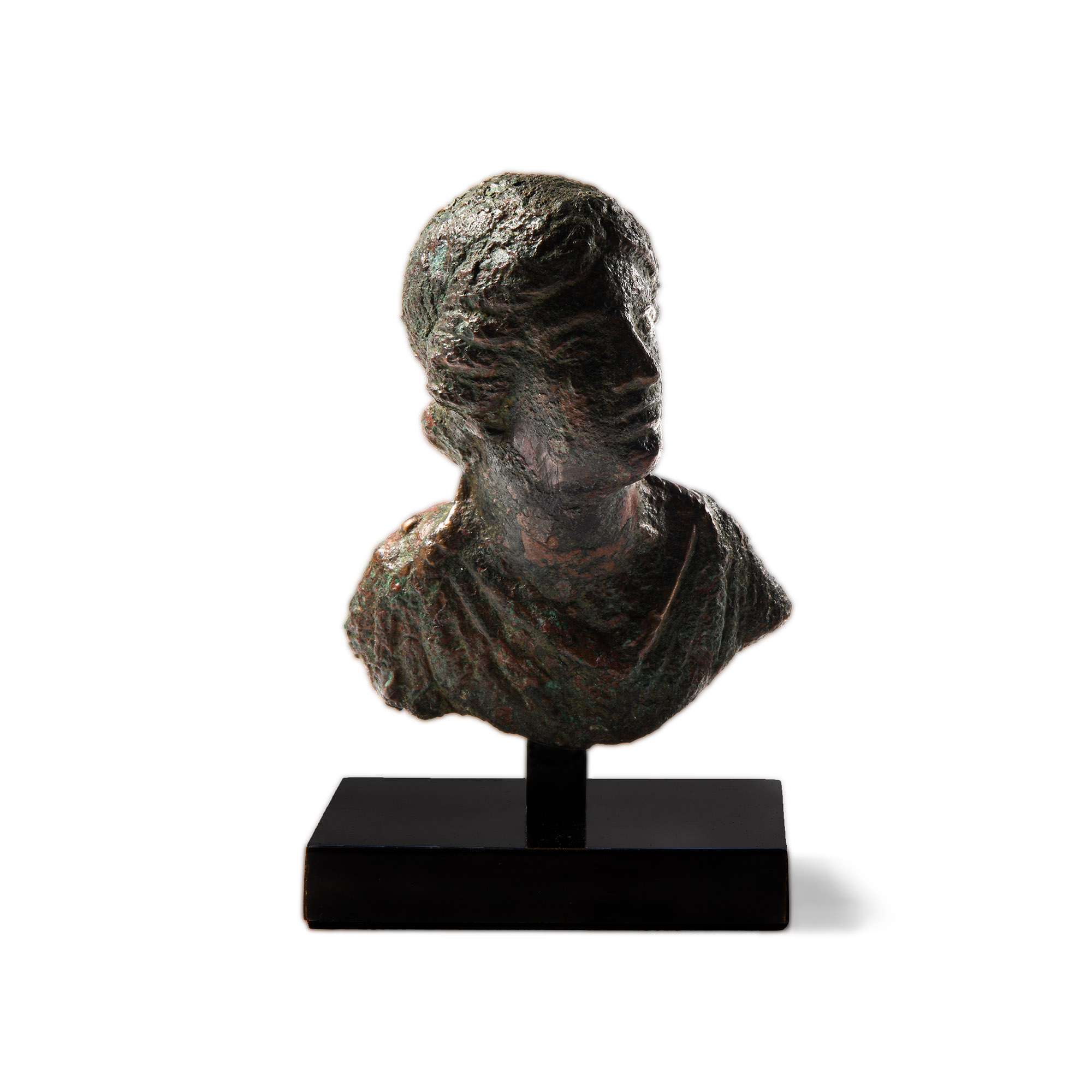
Roman Bronze Bust of a Noble Lady
2ND CENTURY A.D.
4 1/4 in. (425 grams total, 11 cm high including stand).
Modelled in the round with semi-naturalistic facial features and hair style with centre parting and tied in a chignon at the nape, detailing to the folds in the fabric of her garment; accompanied by a custom-made display stand.
ProvenanceAcquired 1960s-1990s.
Late Alison Barker collection, a retired London barrister.
Cf. Boucher, S., Inventaire des Collections Publiques Françaises - 17 Vienne: Bronzes Antiques, Paris, 1971, p.85, for a bronze bust in similar style.
FootnotesThis bust probably served as a weight. The head of the sculpture is slightly turned up to the left, with a serious expression. The small sculpture could represent a bacchante or maenad, even if there are no visible iconographic elements directly linked to the cult of Dionysus.
CONDITIONTimeLine Auctions follows a vetting process to ensure the authenticity and legality of all items, reinforcing our commitment to integrity and responsible trading. Each antiquity, antique, and coin lot undergoes thorough examination by a vetting committee of at least ten external specialists, professional trade association members, scientists, and archaeologists: Our Vetting Process
AUCTIONS:
TimeLine is a leading auction house specialising in antiquities, ancient art, collectables, natural history, coins, medals, and books. Our auctions offer museums, collectors, historians, and enthusiasts the opportunity to acquire unique and historically significant pieces.
LOT 0068
Roman Bronze Bust of a Noble Lady
Estimate £700 - 900€810 - 1,040 (for guidance only)$950 - 1,220 (for guidance only)
-
.jpg)
Large Roman Fragmentary Cameo with Face
3rd century A.D.Sold for (Inc. bp): £1,690
Carved in high-relief in (likely) agate; sympathetically mounted on a naturalistic base; chipped; mounted by the late Alison Barker in her own inimitable style. 95 grams, 55 mm
Acquired 1960s-1990s. Late Alison Barker collection, a retired London barrister. -
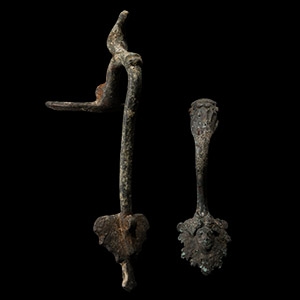
Roman Bronze Tankard Handle Group
Circa 2nd-4th century A.D.Sold for (Inc. bp): £59
Comprising two differently sized handles: one featuring a leaf plaque to base with head of Bacchus(?) in relief, fluting and a second head to the top; one with a leaf plaque to base and swan head in relief, collars and thumb pad to top. 605 grams total, 16-24 cm
Acquired 1990s-early 2000s. East Anglian private collection. -
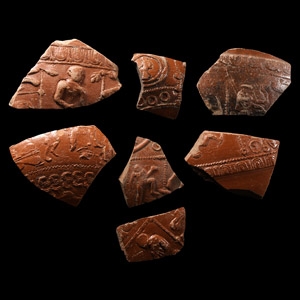
Roman 'Thames' Decorated Samian Ware Pottery Collection with Figures
Circa 2nd century A.D.Sold for (Inc. bp): £72
Mainly from vessel bowls, each displaying a design in relief, including figures, architectural elements and foliage. 120 grams, 4.5 - 7.5 cm
Found Billingsgate spoil from the Thames foreshore, London, UK.
