
Loading, please wait...
LOT 0663
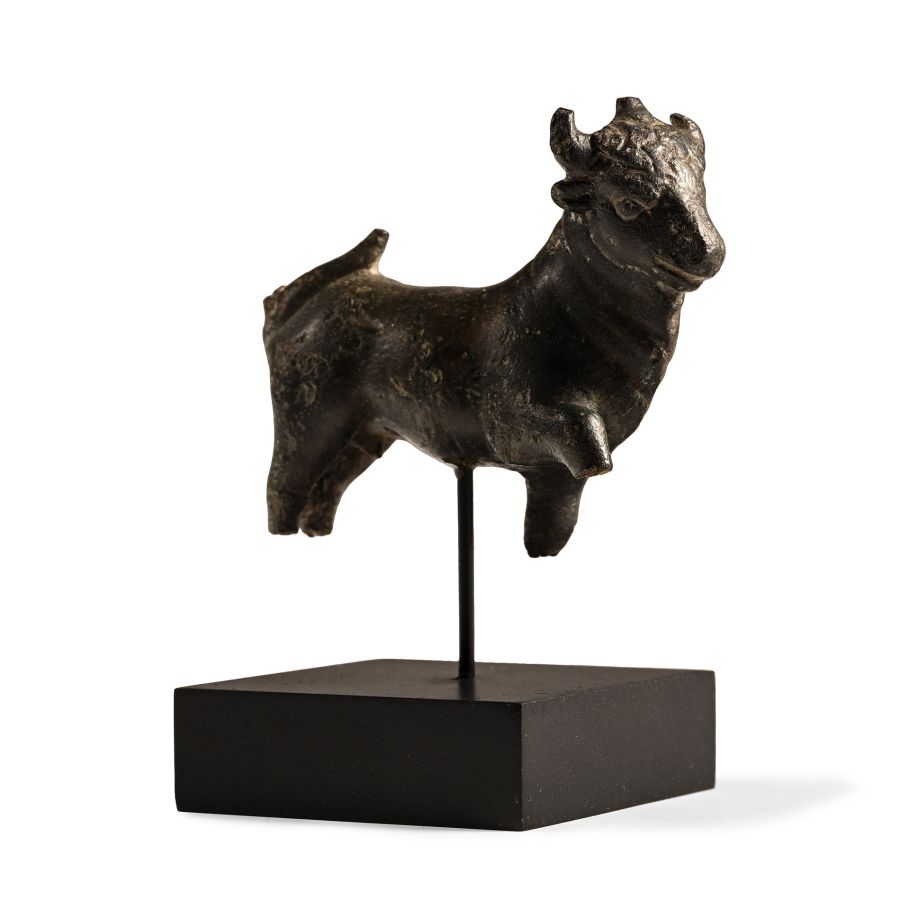
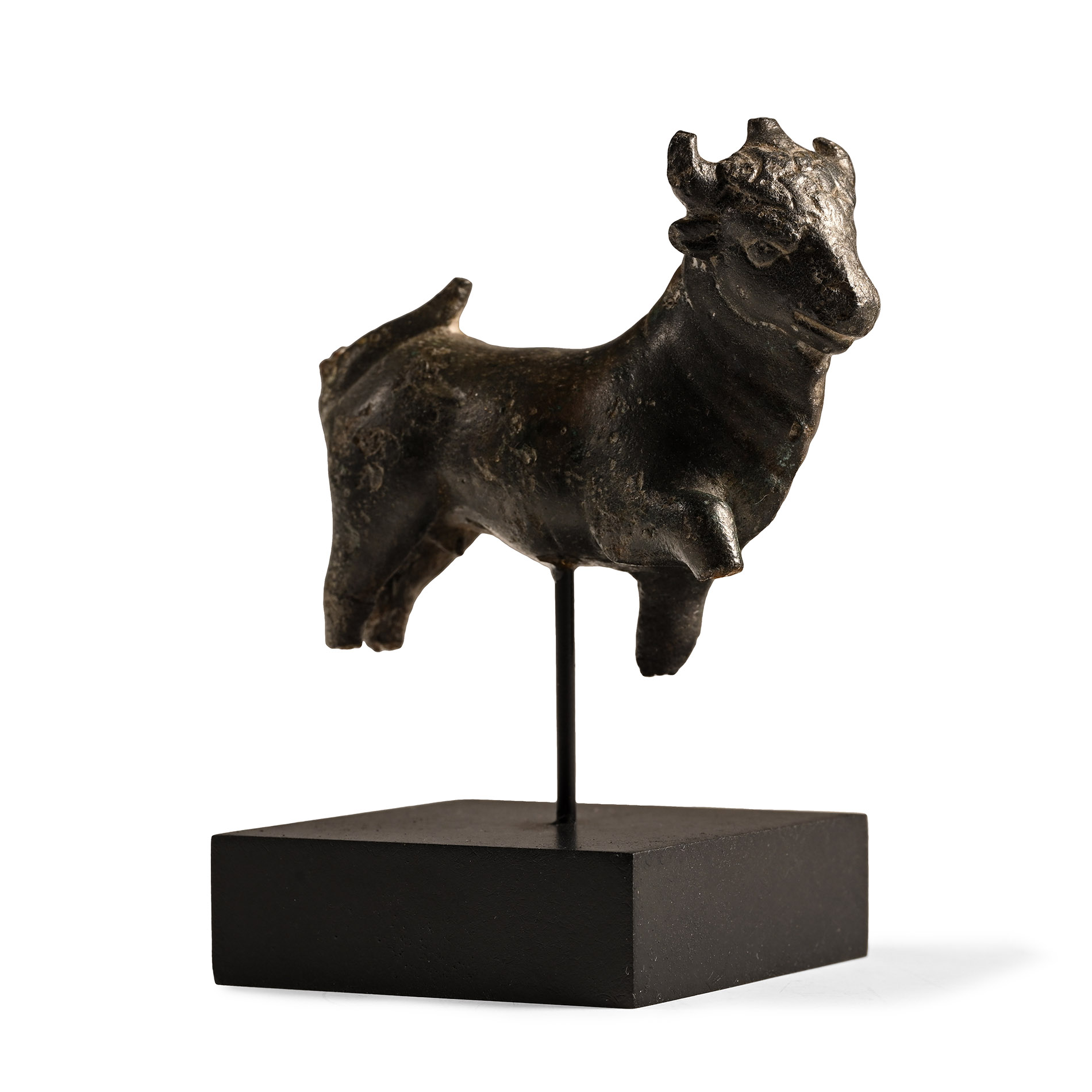
Roman Bronze Bull Statuette
2ND CENTURY A.D.
3 3/8 in. (227 grams total, 86 mm high including stand).
Modelled in advancing pose with one foreleg raised and tail looped over onto the rump, head erect with suggestion of an ornamental plate or garland on the brow; mounted on a custom-made display stand. [No Reserve]
ProvenanceFrom a collection acquired on the UK art market from various auction houses and collections mostly before 2000.
From an important Cambridgeshire estate; thence by descent.
Cf. Rolland, H., Bronzes Antiques de Haute Provence, Paris, 1965, item 242, for type; cf. similar statuette in the Leo Mildenberg collection in Kozloff, A.P., Animals in Ancient Art, from the Leo Mildenberg Collection, Mainz, 1981, no.62; various parallels can be found in the Cincinnati Art Museum (inv.1956.13), in Walters Art Gallery (inv.54.1565) and in the British Museum.
FootnotesAfter the Roman annexation of Egypt, Egyptian cults such as that of the Apis bull were syncretised, becoming part of a distinctively Egyptian form of Roman polytheism. Representations of prancing Apis bulls, turned either left or right, have been found throughout the Roman Empire.
CONDITIONTimeLine Auctions follows a vetting process to ensure the authenticity and legality of all items, reinforcing our commitment to integrity and responsible trading. Each antiquity, antique, and coin lot undergoes thorough examination by a vetting committee of at least ten external specialists, professional trade association members, scientists, and archaeologists: Our Vetting Process
AUCTIONS:
TimeLine is a leading auction house specialising in antiquities, ancient art, collectables, natural history, coins, medals, and books. Our auctions offer museums, collectors, historians, and enthusiasts the opportunity to acquire unique and historically significant pieces.
-
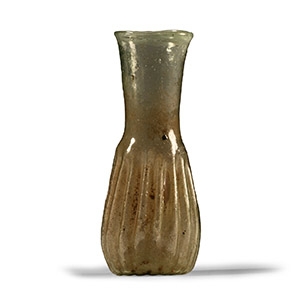
Late Roman Green Glass Vessel
1st-3rd century A.D.Sold for (Inc. bp): £46
A small mould-blown vessel with body formed from asymmetrical pleats, long neck, flared and rolled rim, pontil on base. 10.4 grams, 70 mm
Acquired from Allan Cherry, Bournemouth, UK, 2004. Ian Wilkinson collection, Nottinghamshire, UK. -
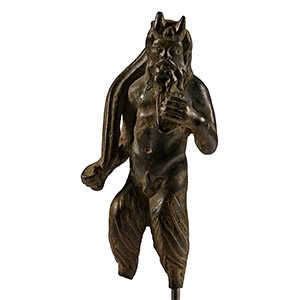
Roman Bronze Figure of Pan
1st-early 2nd century A.D.Sold for (Inc. bp): £4,290
The god standing nude supporting a cornucopia on his right shoulder and a syrinx in his left hand; ithyphallic with furry legs and short tail; mounted on a custom-made stand. 323 grams total, 16.5 cm including stand
Acquired from Sasson Ancient Art, Jerusalem, Israel, in 2008. From the Keane private collection, Kent, UK. Accompanied by an original signed certificate of authenticity, export approval, and invoice (US $9,500.00), from Sasson Ancient Art. Accompanied by a copy of the Israel Antiquities Authority export licence. This lot has been checked against the Interpol Database of stolen works of art and is accompanied by a search certificate number no.12100-216768 -
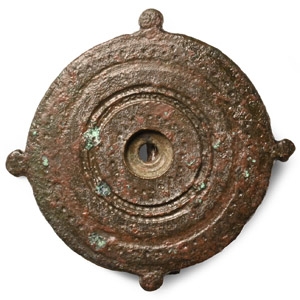
Roman Bronze Discoid Plate Brooch
2nd century A.D.Sold for (Inc. bp): £72
With concentric rings and punched detailing, radiating knops, pin, pin-lugs and catchplate to the reverse. 6.97 grams, 30 mm
Ex property of a London collector, acquired before 1980. Property of a Kent lady collector.
