
Loading, please wait...
LOT 0672
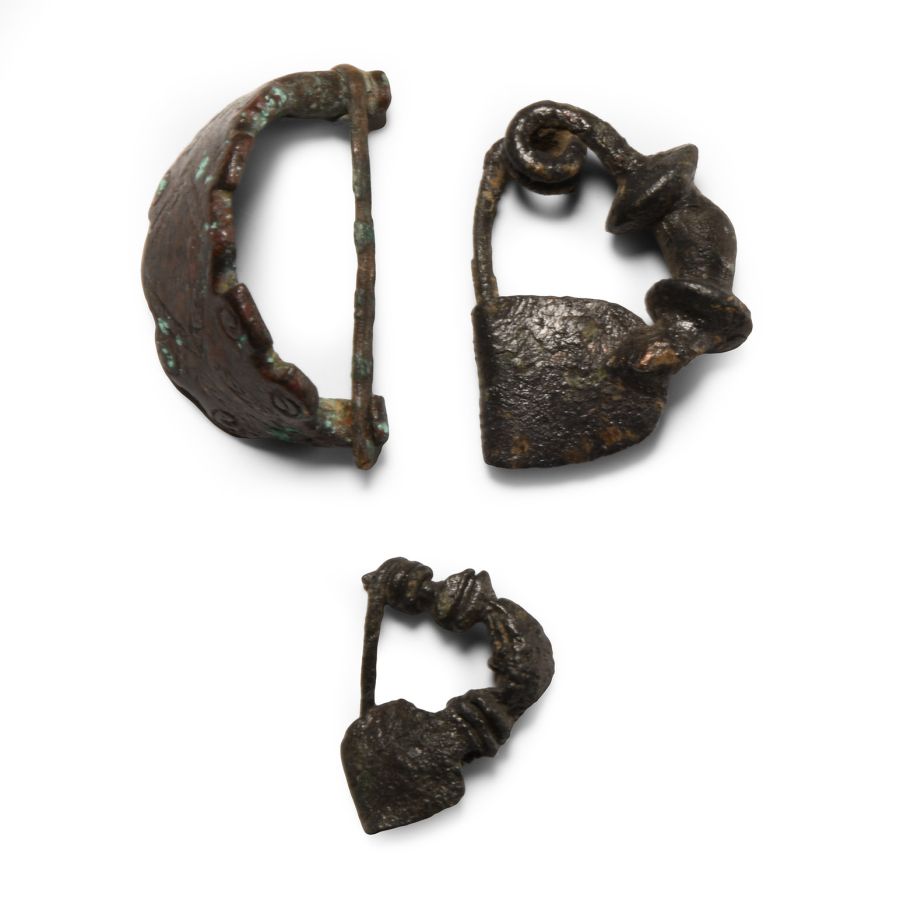
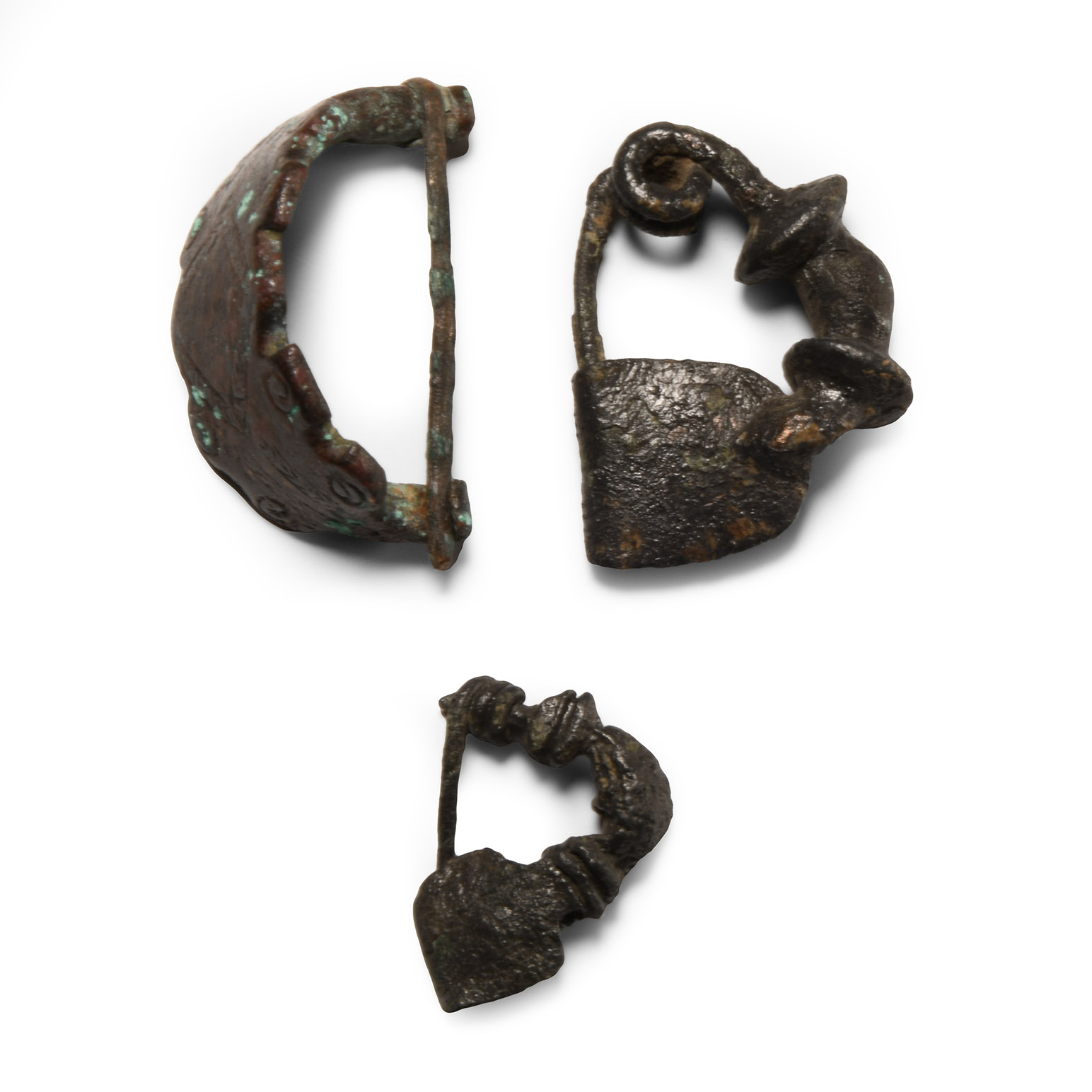
Roman Bronze Brooch Group
CIRCA 2ND-3RD CENTURY A.D.
1 1/8 - 1 5/8 in. (44.1 grams total, 29-43 mm).
Comprising: one with a wide plaque with incised decoration, pin and catch-plate to the reverse; two with balustered bows and wide catch-plates. [3, No Reserve]
ProvenanceUK private collection before 2000.
On the UK art market.
Property of a London gentleman.
TimeLine Auctions follows a vetting process to ensure the authenticity and legality of all items, reinforcing our commitment to integrity and responsible trading. Each antiquity, antique, and coin lot undergoes thorough examination by a vetting committee of at least ten external specialists, professional trade association members, scientists, and archaeologists: Our Vetting Process
AUCTIONS:
TimeLine is a leading auction house specialising in antiquities, ancient art, collectables, natural history, coins, medals, and books. Our auctions offer museums, collectors, historians, and enthusiasts the opportunity to acquire unique and historically significant pieces.
-
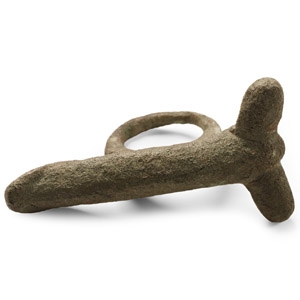
Roman Bronze Phallic Pendant
1st-3rd century A.D.Sold for (Inc. bp): £85
Comprising an elongated body with splayed testes and a large suspension loop above. 8.12 grams, 35 mm
Ex German art market, 2000s. Acquired from an EU collector living in London. From the collection of Surrey, UK, gentleman. -
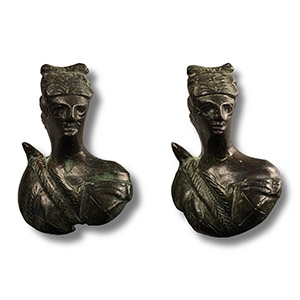
Roman Bronze Diana Attachment Pair
1st century A.D.Sold for (Inc. bp): £624
Matched pair of appliqués each a bust of the goddess Diana modelled in the round with hair dressed tight to the head, tunic and strap for a quiver passing over the right shoulder; the eyes formed oversize to accept silver inserts. 94 grams total, 60 mm each
Ex German art market, 2000s. Acquired from an EU collector living in London. From the collection of Surrey, UK, gentleman. -
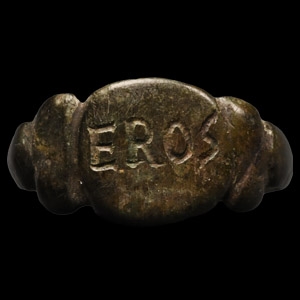
Roman Bronze Signet Ring for EROS
3rd-4th century A.D.Sold for (Inc. bp): £247
With cluster of bulbs to each shoulder, discoid bezel with 'EROS' inscription. 3.56 grams, 21.30 mm overall, 18.34 mm internal diameter (approximate size British Q, USA 8, Europe 17.49, Japan 16)
Ex German art market, 2000s. Acquired from an EU collector living in London. From the collection of Surrey, UK, gentleman.
