
Loading, please wait...
LOT 0774
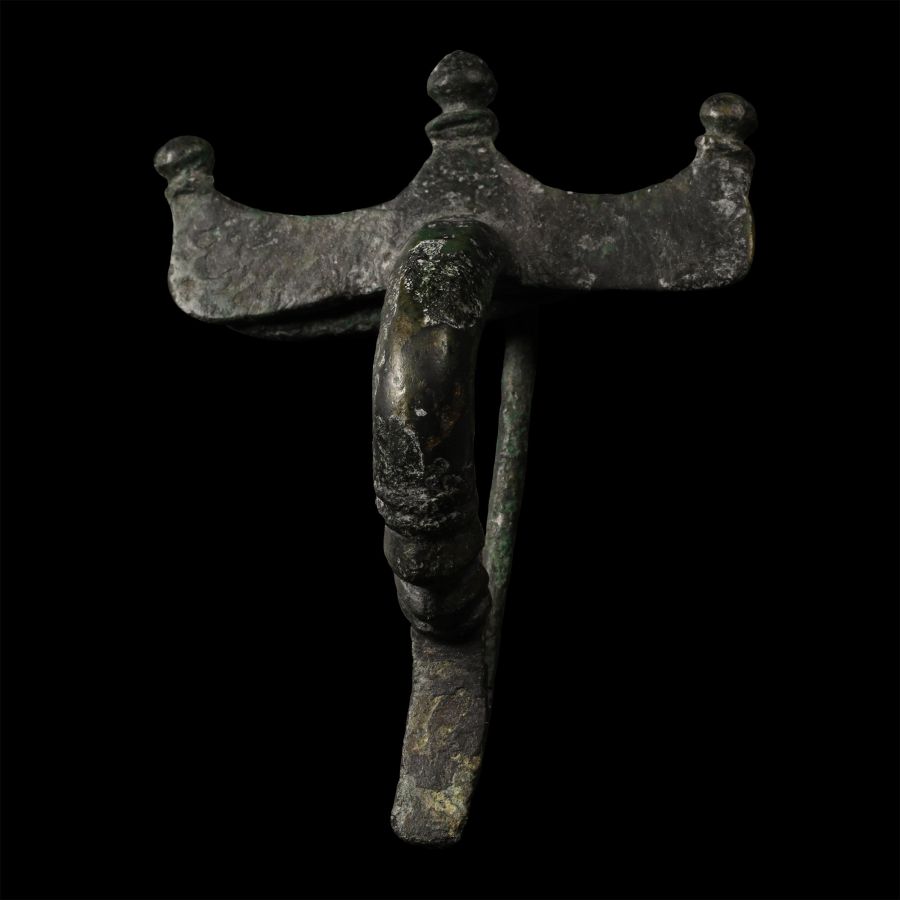
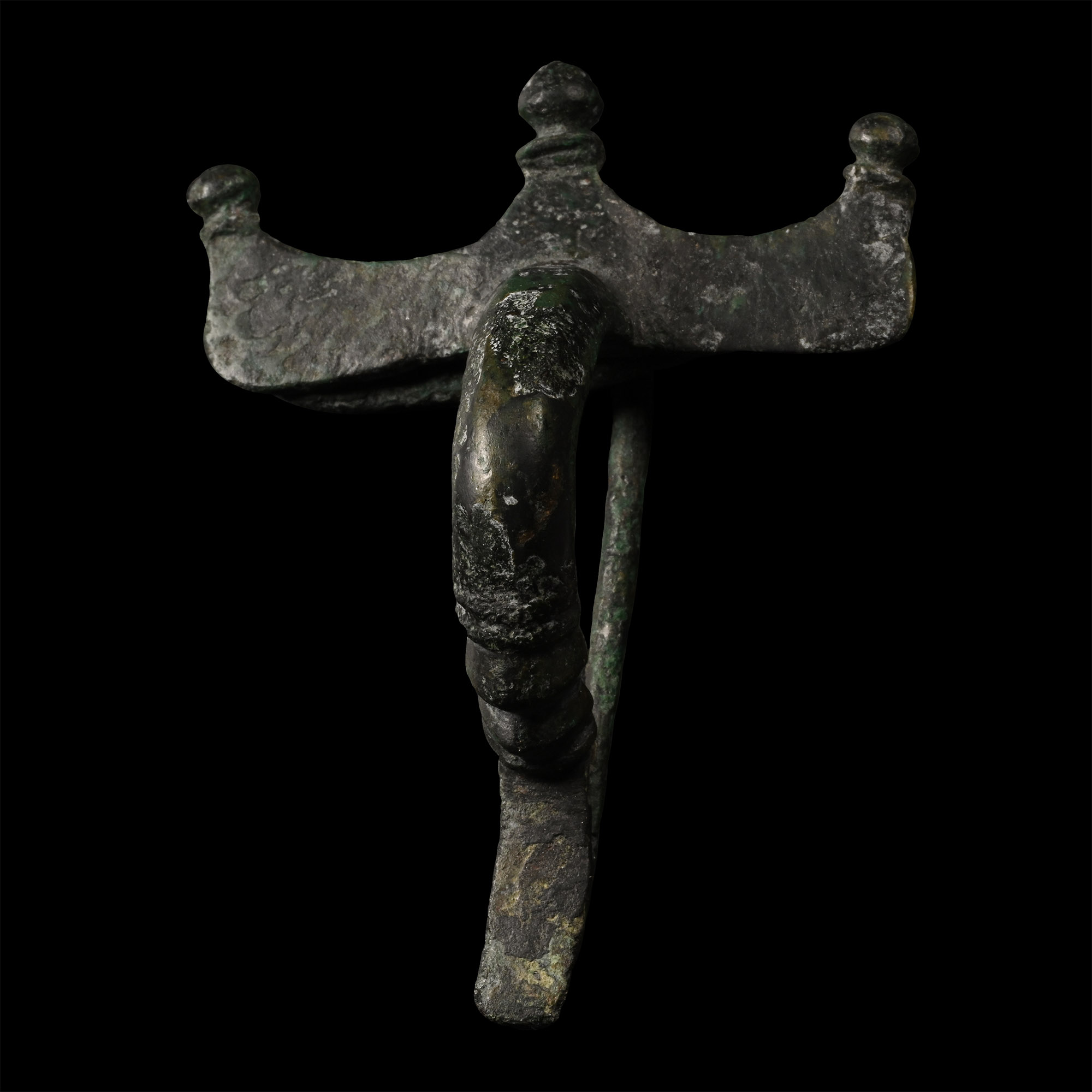
Roman Bronze Bow Brooch
2ND CENTURY A.D.
2 3/4 in. (38.4 grams, 69 mm).
P-shaped bow brooch with three onion-shaped knops to the upper edge of the headplate, chord and pin to reverse, deep bow with ribbed section above junction with the rectangular foot; catch to reverse.
ProvenanceEx important German collection, 1990s.
This lot is accompanied by an illustrated lot declaration signed by the Head of the Antiquities Department, Dr Raffaele D’Amato.
Cf. Hattatt, R., Ancient Brooches and Other Artefacts, Oxford, 1989, item 1255, for type.
FootnotesThis type of fibula falls within the P-shaped bow brooch typology, a provincial form found in Britain, Pannonia, and the Balkan Peninsula. It is usually associated with men's costume.
CONDITIONTimeLine Auctions follows a vetting process to ensure the authenticity and legality of all items, reinforcing our commitment to integrity and responsible trading. Each antiquity, antique, and coin lot undergoes thorough examination by a vetting committee of at least ten external specialists, professional trade association members, scientists, and archaeologists: Our Vetting Process
AUCTIONS:
TimeLine is a leading auction house specialising in antiquities, ancient art, collectables, natural history, coins, medals, and books. Our auctions offer museums, collectors, historians, and enthusiasts the opportunity to acquire unique and historically significant pieces.
-
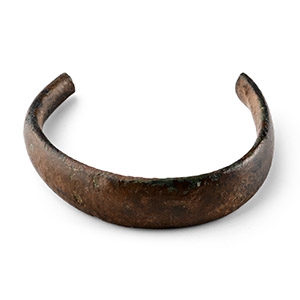
'The Dale Abbey' Romano-British Bronze Bracelet
300-450 A.D.Sold for (Inc. bp): £59
Penannular in form and D-plano-convex in section, tapering to the end of each arm; finials absent. 45 grams, 63 mm
Found whilst searching with a metal detector in Dale Abbey, Erewash, Derbyshire, UK. Accompanied by a copy of the British Museum's Portable Antiquities Scheme (PAS) report no.DENO-89B82E. -
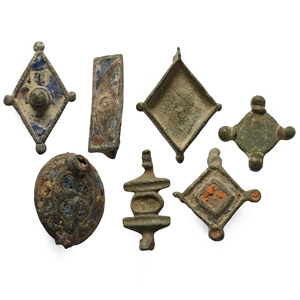
Roman Enamelled Bronze Plate Brooch Group
Circa 2nd century A.D.Sold for (Inc. bp): £124
Comprising seven brooches, most with remaining enamel. 28.4 grams total, 22-33 mm
From a Dunmow, UK, collection; formed from 1970. -
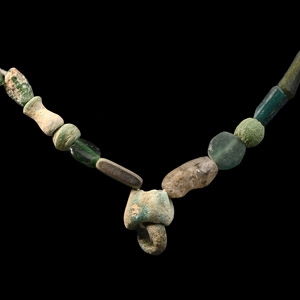
Roman Green Glass Bead Necklace String
1st-4th century A.D. and laterSold for (Inc. bp): £33
Restrung designer necklace string of tubular, oblate and other types with pendant centrepiece. 17.45 grams, 42.5 cm
London, UK, collection, 2000s.
