
Loading, please wait...
LOT 0935
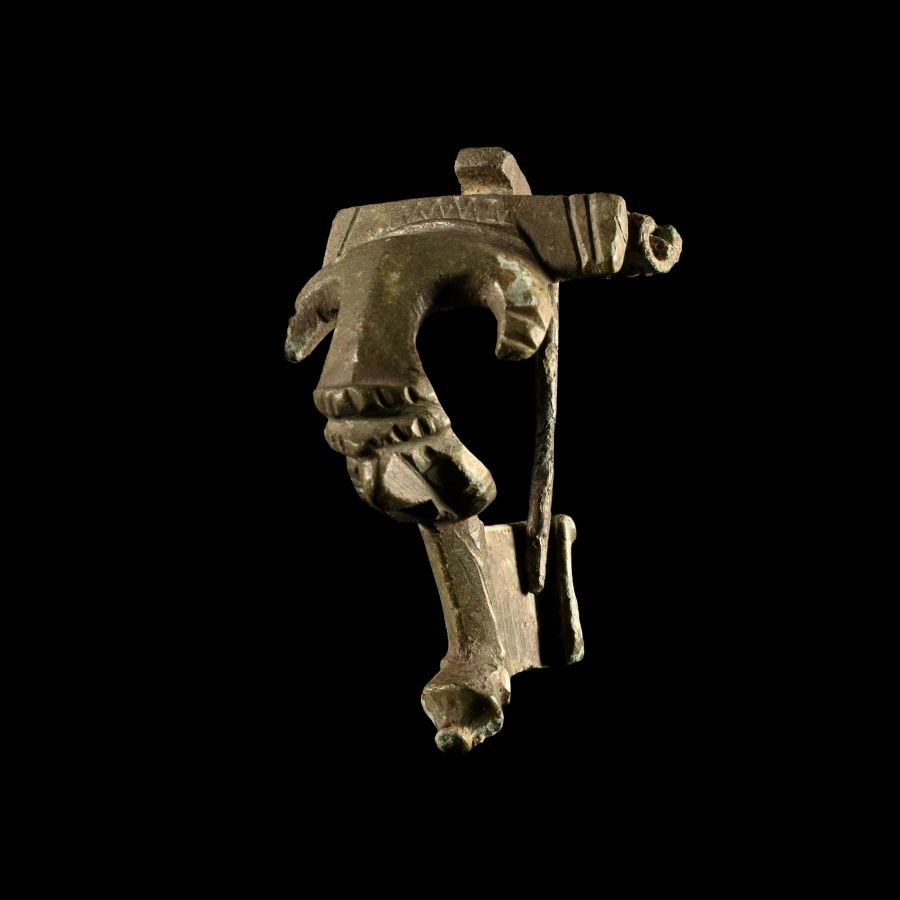
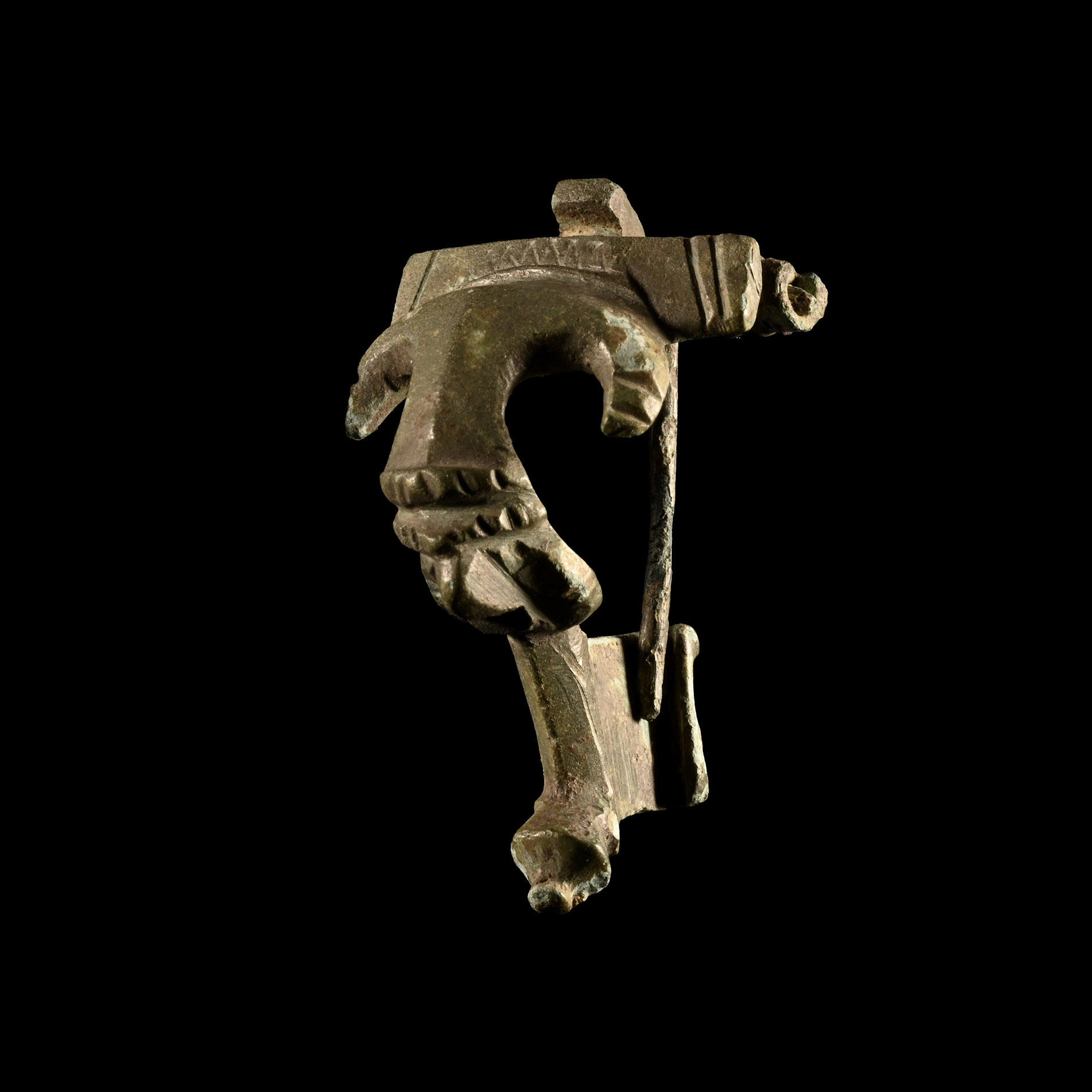
Roman Bronze Bow Brooch
1ST-3RD CENTURY A.D.
1 3/4 in. (23 grams, 45 mm).
Of kräftig profilierte 'anchor' type, with a broad plaque in front of the spring and pin, trumpet-type bow; broad footplate with catch to the rear. [No Reserve]
ProvenanceProperty of a gentleman from Vienna; from his private collection formed since 1970.
LiteratureSee Hattatt, R., Brooches of Antiquity, Oxford, 1987, item 1396, for type.
CONDITIONTimeLine Auctions follows a vetting process to ensure the authenticity and legality of all items, reinforcing our commitment to integrity and responsible trading. Each antiquity, antique, and coin lot undergoes thorough examination by a vetting committee of at least ten external specialists, professional trade association members, scientists, and archaeologists: Our Vetting Process
AUCTIONS:
TimeLine is a leading auction house specialising in antiquities, ancient art, collectables, natural history, coins, medals, and books. Our auctions offer museums, collectors, historians, and enthusiasts the opportunity to acquire unique and historically significant pieces.
-
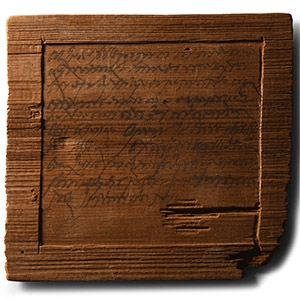
Roman Inked Wooden Tablet for a Contract Between Bassus and Neronianus
4th century A.D.Sold for (Inc. bp): £15,600
A reused tablet with a recessed panel on one side, the last tablet of a legal document which consisted of two (diptychon) or three tablets (triptychon); ten black inked lines of New Roman cursive script, the end of a record of a transaction in formulaic legal language, probably a sales contract, between the buyer (emptor) Bassus and a person called Neronianus; traces of text (perhaps in rustic capitals) to the reverse. 40 grams, 15.1 x 13.9 cm
From an important London collection since 1975. Accompanied by a collection of two 1970s photographs of the the tablet.
The contract follows standard Roman legal formulae. -
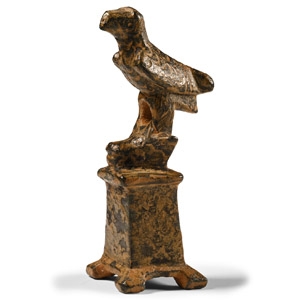
Roman Bronze Eagle on Bull's Head Statuette
2nd-3rd century A.D.Sold for (Inc. bp): £169
Comprising an altar with a severed head of a bull on the top and an eagle perching on it; hollow to the underside, four stub feet to the angles. 46.4 grams, 58 mm
From a collection acquired on the UK art market from various auction houses and collections mostly before 2000. From an important Cambridgeshire estate; thence by descent.
The image of an eagle on the severed head of a bull was probably connected with the cult of Jupiter Dolichenus. -

Roman and Other Glass and Stone Bead Group
1st millennium B.C. and laterSold for (Inc. bp): £208
Comprising a quantity of mixed beads, mainly oblate and cylindrical in form, including glass, modelled, faience and stone etc. 58.5 grams total, 1-14 mm
UK gallery, early 2000s.
The use of amber beads as amulets in the Roman world is well attested, even in Britain (series of bracelets have been found in late Roman graves at Cirencester and Colchester). The amber beads were associated with pierced coins, pierced dog’s teeth and a lunate pendant. Pliny said that amber was beneficial to infants ‘when attached to the body in the form of an amulet'.
