
Loading, please wait...
LOT 0838
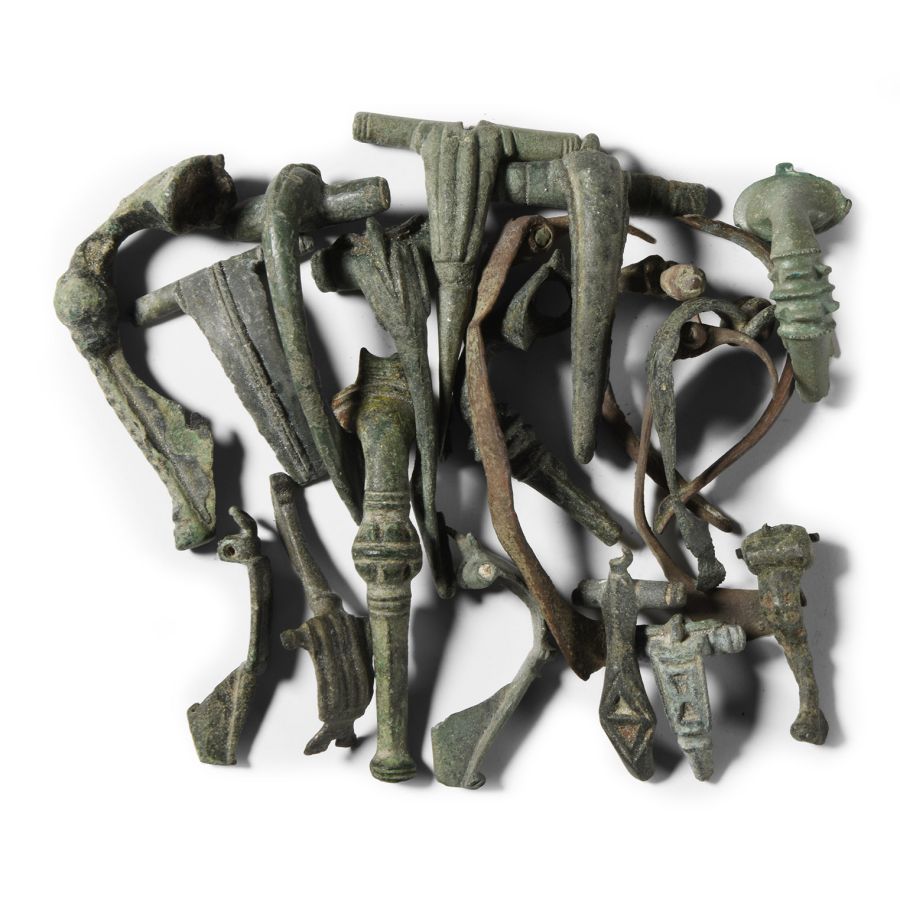
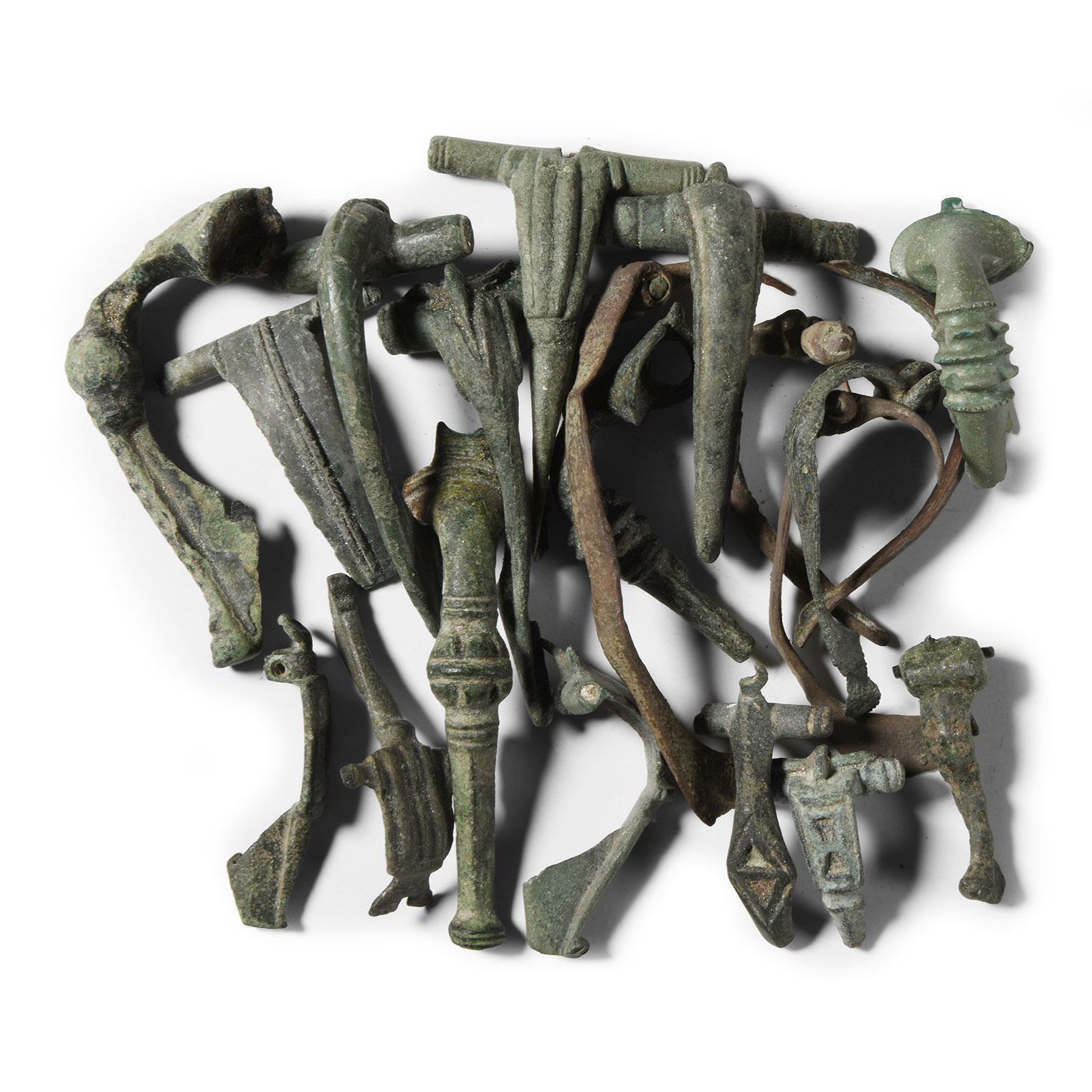
Roman Bronze Bow Brooch Group
1ST-2ND CENTURY A.D.
1 - 2 1/2 in. (142 grams total, 23-67 mm).
Including Colchester, dolphin, trumpet and other types. [20, No Reserve]
ProvenanceFound Wiltshire, UK, before 1974.
CONDITIONTimeLine Auctions follows a vetting process to ensure the authenticity and legality of all items, reinforcing our commitment to integrity and responsible trading. Each antiquity, antique, and coin lot undergoes thorough examination by a vetting committee of at least ten external specialists, professional trade association members, scientists, and archaeologists: Our Vetting Process
AUCTIONS:
TimeLine is a leading auction house specialising in antiquities, ancient art, collectables, natural history, coins, medals, and books. Our auctions offer museums, collectors, historians, and enthusiasts the opportunity to acquire unique and historically significant pieces.
-
Roman Medical Instrument, Stylus and Spatula Group
3rd-5th century A.D.Sold for (Inc. bp): £260
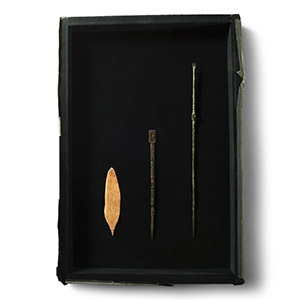
Comprising: a leaf-shaped bone spatula with pointed tang; stylus with twisted grip and median baluster, rectangular head with erasing blade; slender bronze probe (cyathiscomele) with one pointed end, small measuring spoon to the other and median baluster with incised pellets; mounted in a glass-fronted wooden case. 750 grams total, 22 x 32 cm
Private collection, USA, formed in the 1980s. -
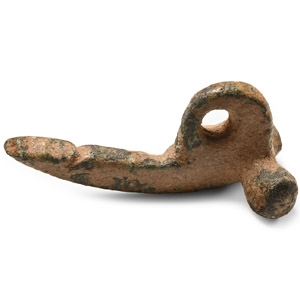
Roman Bronze Phallic Pendant
1st-2nd century A.D.Sold for (Inc. bp): £59
Modelled as an elongated phallus with lateral testis, integral suspension loop above. 10 grams, 36 mm
UK private collection before 2000. On the UK art market. Property of a London gentleman. -
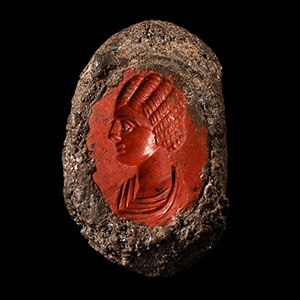
Roman Silver Ring with Portrait Gemstone
Circa 200 A.D.Estimate: £800 - 1,000 (+bp*)
Opening Bid: £444
Ellipsoid jasper insert with profile portrait bust of a female with tiered hairstyle and palla. 9.85 grams, 25.65 mm overall, 17.84 mm internal diameter (approximate size British G, USA 3 1/4, Europe 4.92, Japan 4)
From a London gentleman's, UK, collection, in the 1990s.
