
Loading, please wait...
LOT 0930
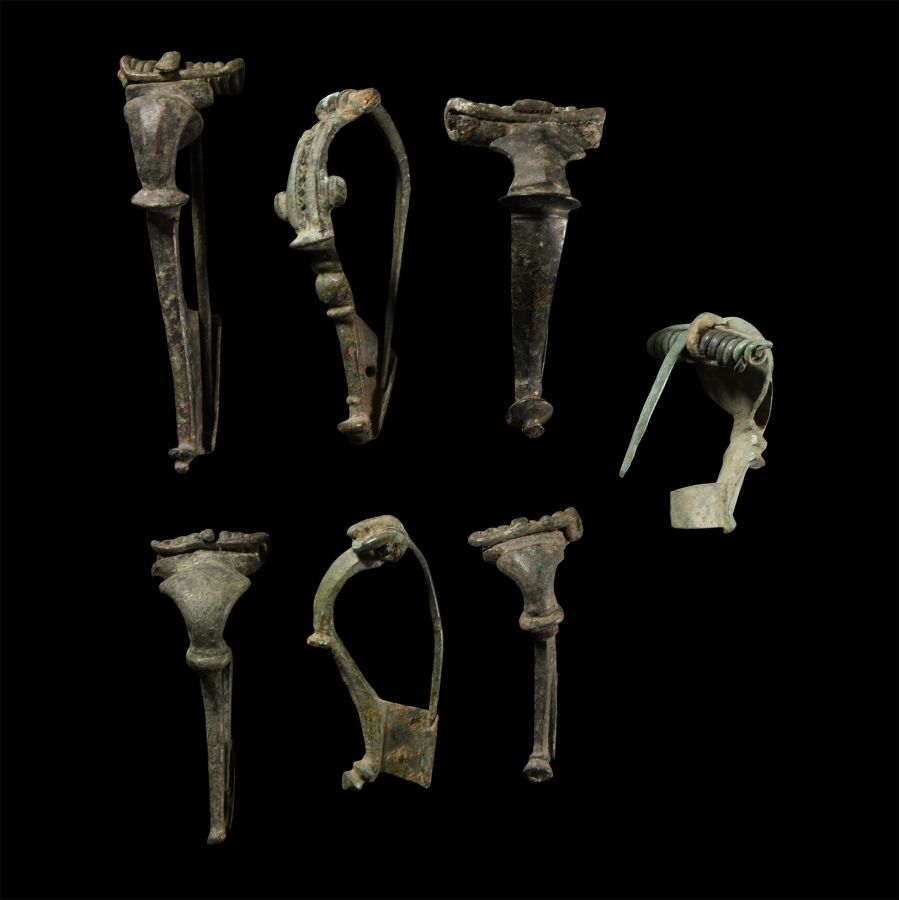
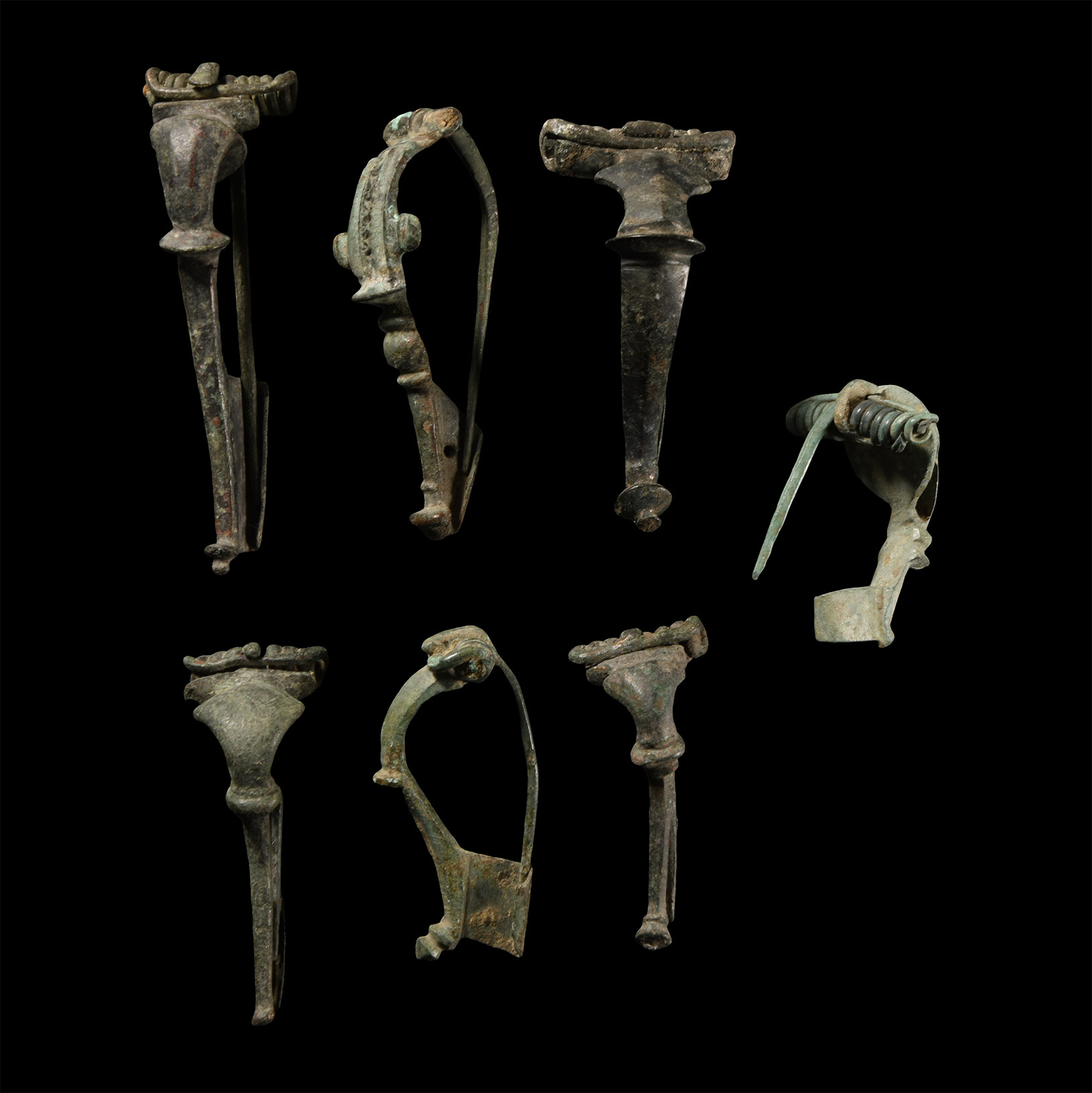
Roman Bronze Bow Brooch Colection
2ND CENTURY A.D.
1 3/8 - 2 3/4 in. (99 grams total, 36-70 mm).
Comprising different types, all with pins and catchplates in situ. [7, No Reserve]
ProvenanceEx property of an Austrian private collector since the 1970s.
CONDITIONTimeLine Auctions follows a vetting process to ensure the authenticity and legality of all items, reinforcing our commitment to integrity and responsible trading. Each antiquity, antique, and coin lot undergoes thorough examination by a vetting committee of at least ten external specialists, professional trade association members, scientists, and archaeologists: Our Vetting Process
AUCTIONS:
TimeLine is a leading auction house specialising in antiquities, ancient art, collectables, natural history, coins, medals, and books. Our auctions offer museums, collectors, historians, and enthusiasts the opportunity to acquire unique and historically significant pieces.
-
.jpg)
Roman Marble Head of Mithras Wearing a Phrygian Cap
2nd-3rd century A.D.Sold for (Inc. bp): £1,560
Carved in the round, the god with long wavy locks escaping from beneath his pointed Phrygian cap; mounted on a custom-made display stand. 24.25 kg total, 41.5 cm including stand
From a collection acquired on the UK art market from various auction houses and collections mostly before 2000. From an important Cambridgeshire estate; thence by descent. -
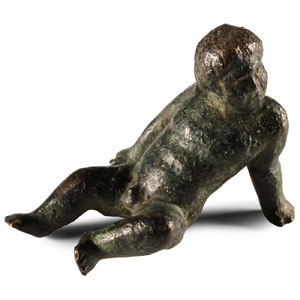
Roman Bronze Putto Statuette
1st-2nd century A.D.Sold for (Inc. bp): £312
Modelled in the round reclining with weight on the left arm, left leg drawn up, head turned. 26 grams, 37 mm
From a collection acquired on the UK art market from various auction houses and collections mostly before 2000. From an important Cambridgeshire estate; thence by descent. -
.jpg)
Roman Silver Fish Brooch
2nd century A.D.Sold for (Inc. bp): £416
Plate brooch formed as a fish with broad, gently curved lozengiform body, small lateral fins, chevron tail, D-shaped head with large discoid eye; the body with five rows of crescent punchmarks denoting scales; hinge-plate and catch to the reverse. 4.98 grams, 38 mm
Fine condition.
Property of a gentleman from Vienna; from his private collection formed since 1970.
The brooch is of a type found in Britain, corresponding to Hull's type 223. The fish represented here is likely a salmon.
