
Loading, please wait...
LOT 0192
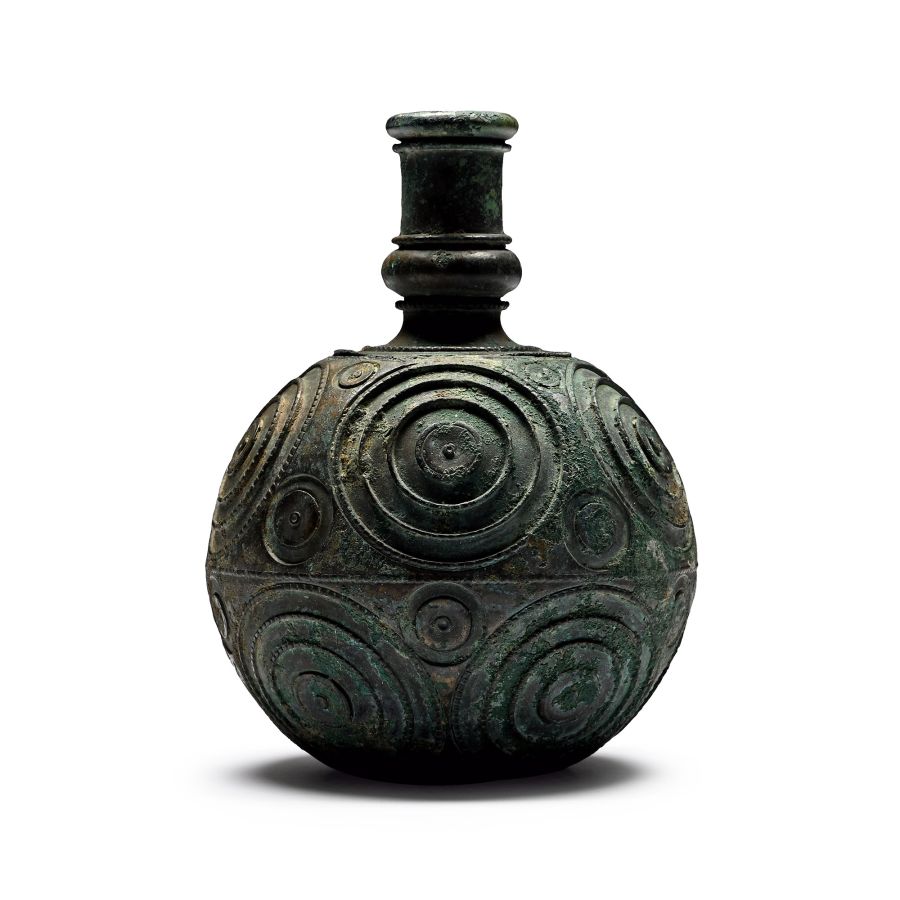
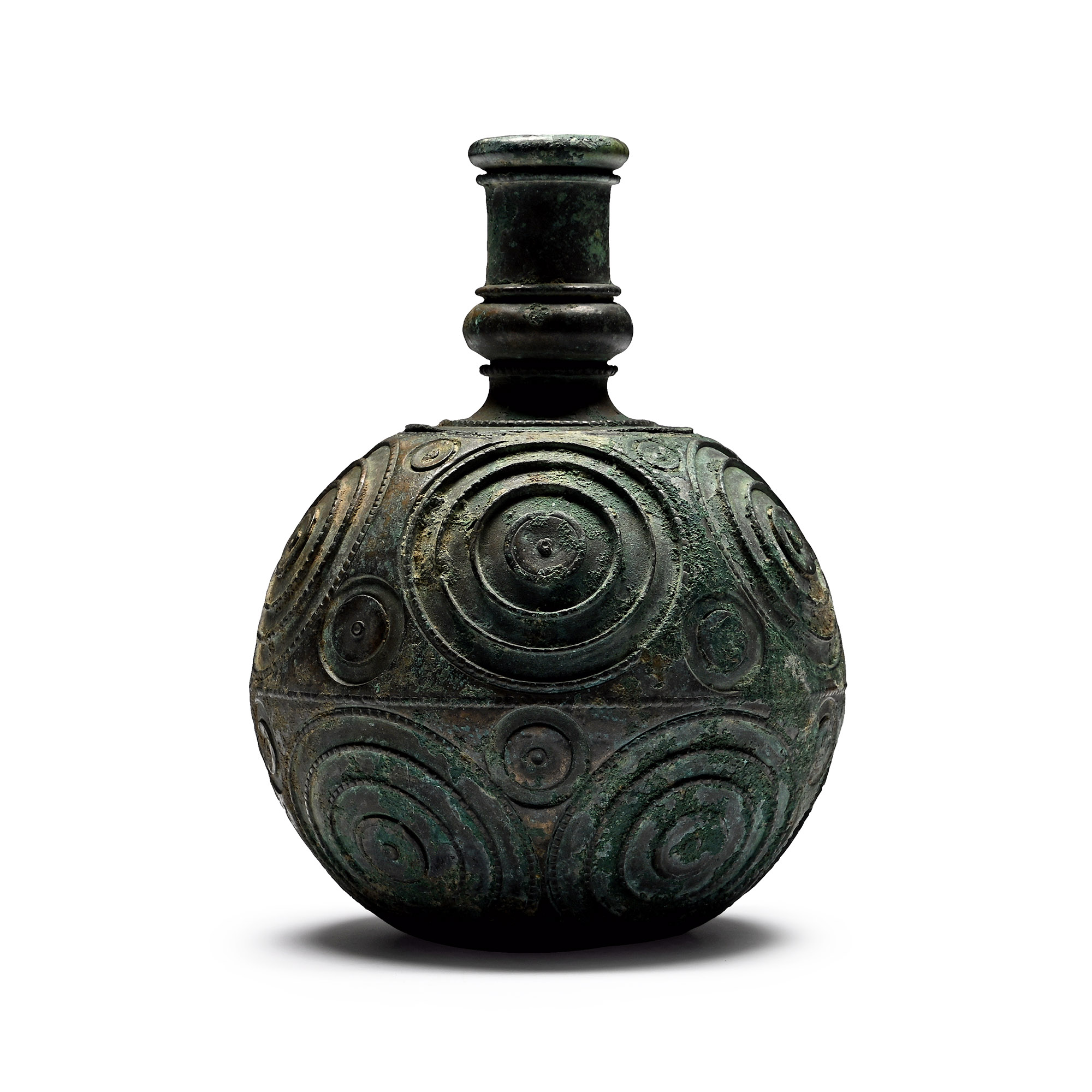
Roman Bronze Bottle with Circular Design
3RD-4TH CENTURY A.D.
1 5/8 - 2 5/8 in. (310 grams total, 40-66 mm).
Spherical in profile with flat base, large raised concentric circles in two bands with smaller similar motifs between; separate balustered neck. [2]
ProvenanceAcquired in London in 2002.
European private collection.
This lot has been checked against the Interpol Database of stolen works of art and is accompanied by a search certificate number no.12686-234678.
This lot has been cleared against the Art Loss Register database, and is accompanied by an illustrated lot declaration signed by the Head of the Antiquities Department, Dr Raffaele D'Amato.
Cf. Comstock, M. & Vermeule, C., Greek, Etruscan and Roman Bronzes in the Museum of Fine Arts Boston, Boston, 1971, p. 345, no. 484; Richter, G.M.A., Greek, Etruscan and Roman Bronzes, The Metropolitan Museum of Art, New York, 1915, pp.196-197, no. 517.
FootnotesThis is a rare type of Roman vessel, dated to the late Imperial period, between the late 3rd and 4th century A.D. The closest known parallel is a near-identical example in the Metropolitan Museum of Art, New York, which retains its original chain attachment and suspension holes at the shoulder. Such vessels were likely sealed with a perishable stopper and intended for storing or transporting perfumes or cosmetic oils.
CONDITIONTimeLine Auctions follows a vetting process to ensure the authenticity and legality of all items, reinforcing our commitment to integrity and responsible trading. Each antiquity, antique, and coin lot undergoes thorough examination by a vetting committee of at least ten external specialists, professional trade association members, scientists, and archaeologists: Our Vetting Process
AUCTIONS:
TimeLine is a leading auction house specialising in antiquities, ancient art, collectables, natural history, coins, medals, and books. Our auctions offer museums, collectors, historians, and enthusiasts the opportunity to acquire unique and historically significant pieces.
-
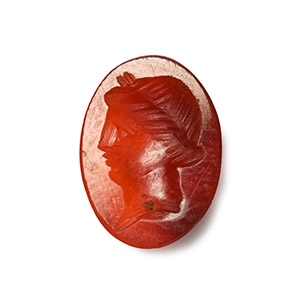
Roman Carnelian Gemstone with Female Portrait
1st-2nd century A.D.Estimate: £200 - 300 (+bp*)
Opening Bid: £100
Ellipsoid in plan with intaglio profile portrait bust of a female with hair in a chignon. 0.22 grams, 9 mm
Acquired on the German art market, 1989-1995. with The Museum Gallery, 19 Bury Place, London, WC1, UK, 1998-2003. Property of a London based academic, 2003 to present. This lot is accompanied by an illustrated lot declaration signed by the Head of the Antiquities Department, Dr Raffaele D'Amato. -
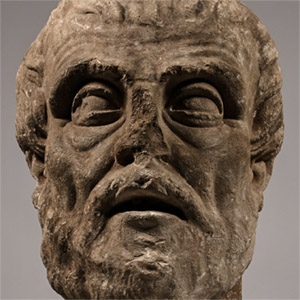
Monumental Marble Head of a Greek Philosopher
1st century B.C.-1st century A.D.Estimate: £25,000 - 35,000 (‡+bp*)
Opening Bid: £11,250
Carved in the round bust of a philosopher or a poet with short tousled hair and trimmed beard, exaggerated protruding eyes, the mouth modelled slightly open and teeth within; mounted on a custom-made stand. 47.6 kg total, 60 cm including stand
Private collection, Paris, 1980s. European private collection. Accompanied by a copy of French passport no.237041. Accompanied by an academic report by Professor Neritan Ceka. This lot has been checked against the Interpol Database of stolen works of art and is accompanied by a search certificate number no.12610-234690. This lot has been cleared against the Art Loss Register database, and is accompanied by an illustrated lot declaration signed by the Head of the Antiquities Department, Dr Raffaele D'Amato. -
.jpg)
Late Roman Decorated Iron Bow Brooch
Circa 6th century A.D.Sold for (Inc. bp): £39
Comprising a broad flat-section bow, narrow waist and flat-section foot, all with herringbone hatching; returned foot forming the catch, spring and pin at the head. 16.5 grams, 69 mm
From a private, UK, collection in the 1980s. Property of a London, UK, antiquarian. This lot is accompanied by an illustrated lot declaration signed by the Head of the Antiquities Department, Dr Raffaele D'Amato.
