
Loading, please wait...
LOT 0822
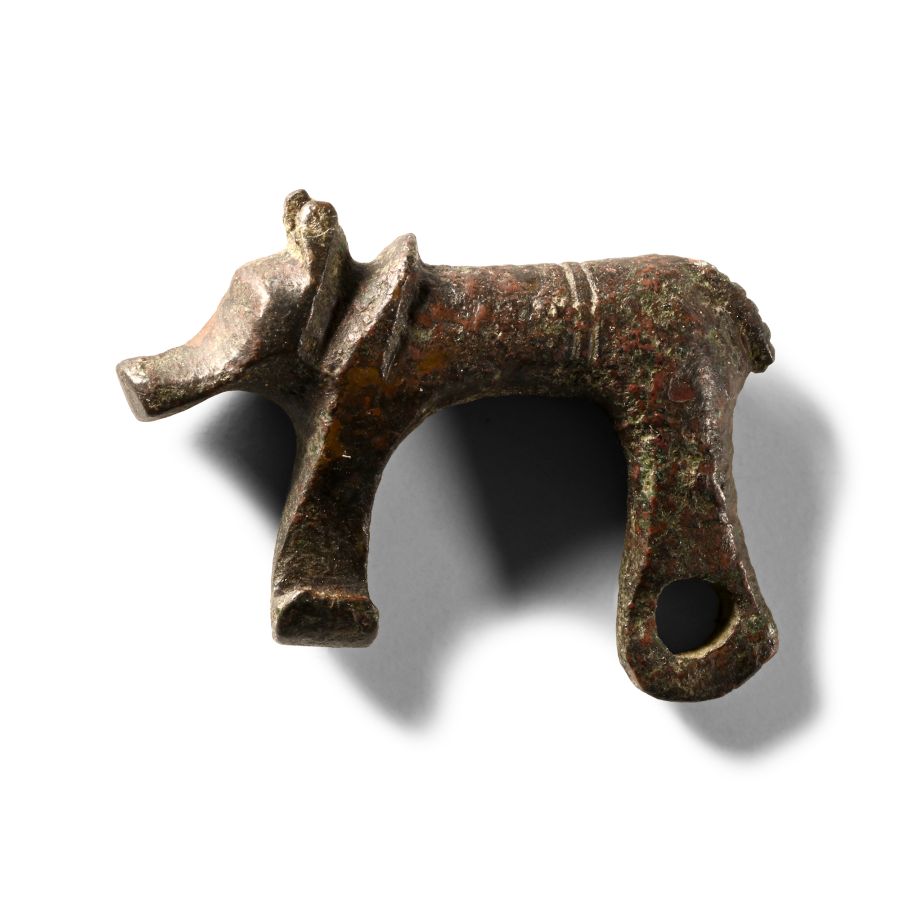
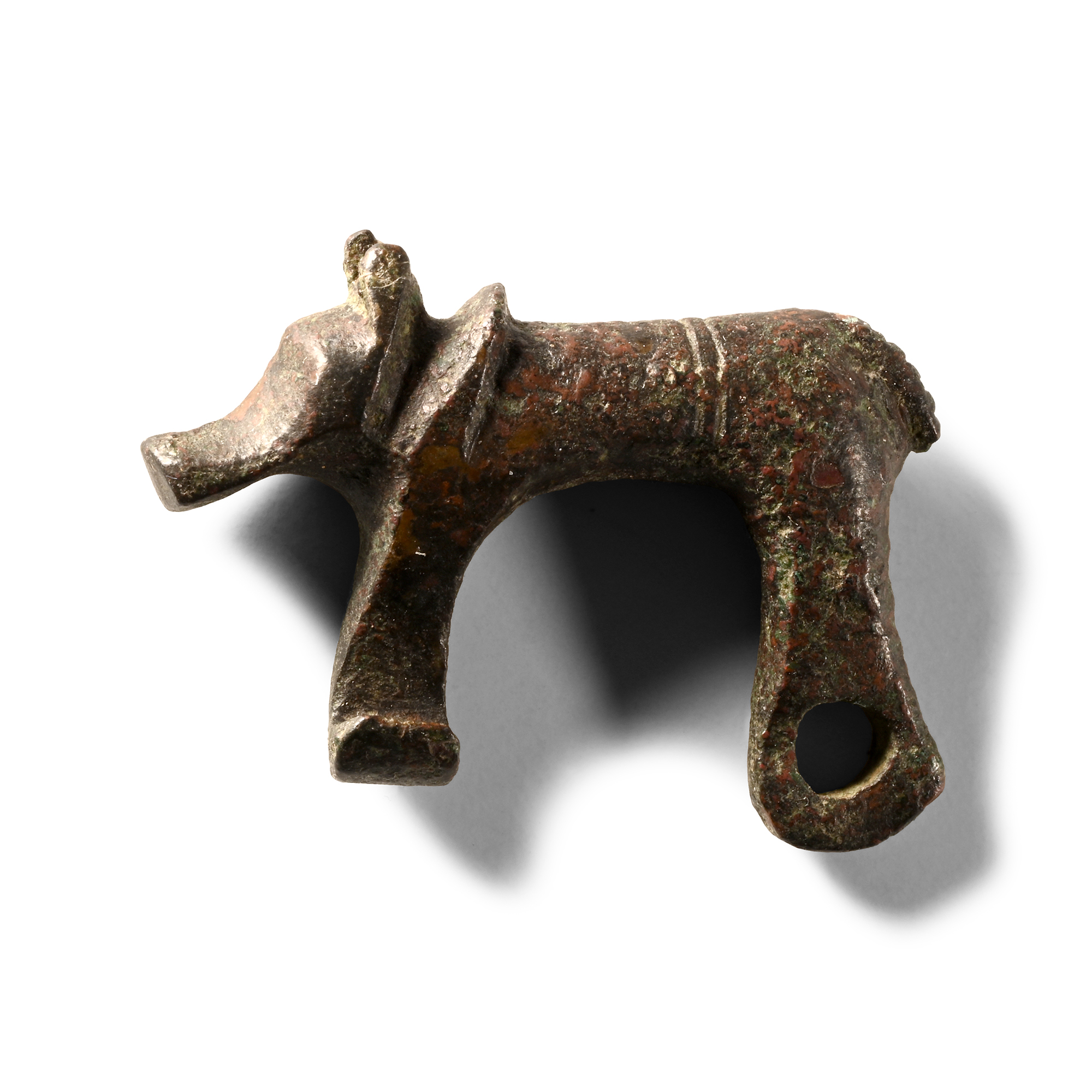
Roman Bronze Boar Brooch
CIRCA 2ND CENTURY A.D.
1 1/4 in. (11.2 grams, 31 mm).
Modelled in the round with catch beneath the foreleg, hole for hinged pin beneath the hindleg. [No Reserve]
ProvenanceFrom a collection acquired on the UK art market from various auction houses and collections mostly before 2000.
From an important Cambridgeshire estate; thence by descent.
TimeLine Auctions follows a vetting process to ensure the authenticity and legality of all items, reinforcing our commitment to integrity and responsible trading. Each antiquity, antique, and coin lot undergoes thorough examination by a vetting committee of at least ten external specialists, professional trade association members, scientists, and archaeologists: Our Vetting Process
AUCTIONS:
TimeLine is a leading auction house specialising in antiquities, ancient art, collectables, natural history, coins, medals, and books. Our auctions offer museums, collectors, historians, and enthusiasts the opportunity to acquire unique and historically significant pieces.
-
Roman Ribbed Glass Vessel
4th-5th century A.D.Sold for (Inc. bp): £130
With dimple base, radiating ribs to the bulb, gently tapering neck, flared rim with rolled edge. 20.11 grams, 95 mm
Acquired 1980-2015. Ex Abelita family collection. -
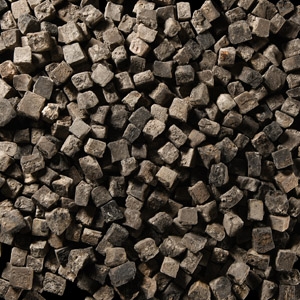
Roman Stone Tesserae Group
1st-4th century A.D.Sold for (Inc. bp): £130
A mixed group of four hundred and thirty single stone tesserae of various colours and sizes. 830 grams total, 10-17 mm
From a collection acquired on the UK art market from various auction houses and collections mostly before 2000. From an important Cambridgeshire estate; thence by descent. -
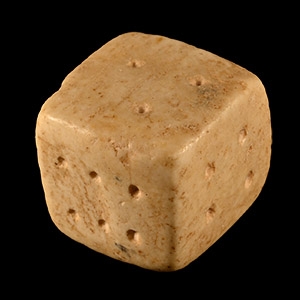
Large Roman Marble Gaming Dice
1st-4th century A.D.Sold for (Inc. bp): £104
Cuboid with rounded edges, spots disposed 1:6, 2:4, 3:5; the '1' a ring-and-dot, the others dimples. 18 grams, 20 mm
Ex Dr. Champion collection. Acquired 31 October 2003. From the important private collection of dice and gaming pieces of Colin Narbeth, London, UK, collection no.205. Accompanied by a Colin Narbeth catalogue identification slip.
