
Loading, please wait...
LOT 0780
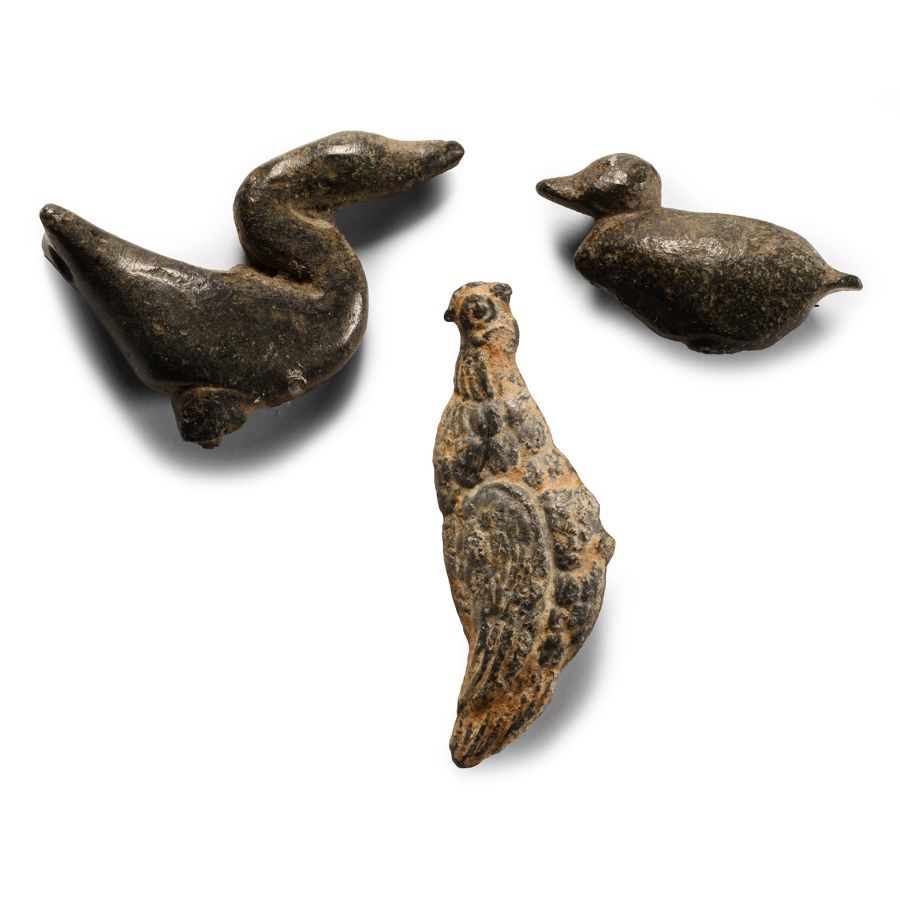
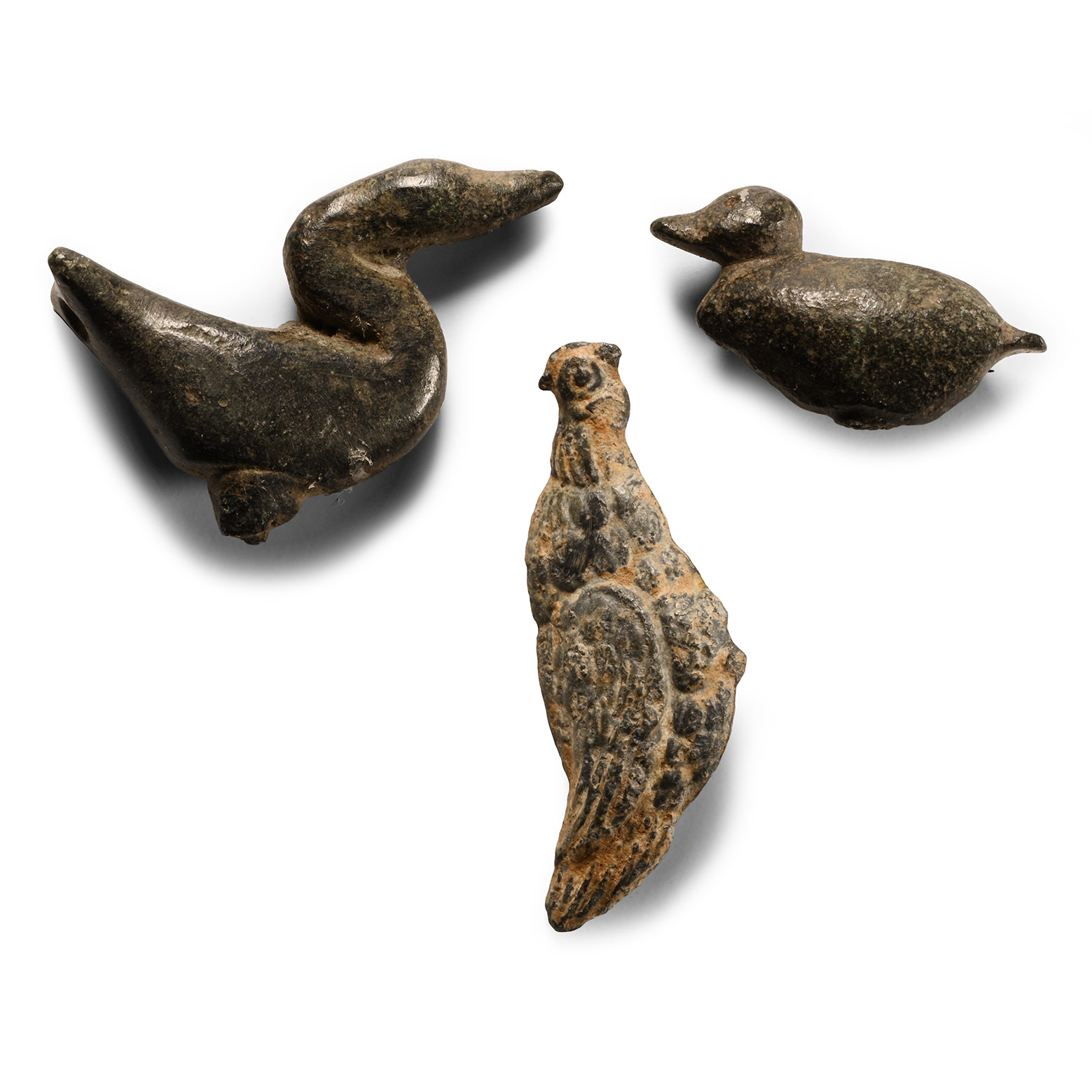
Roman Bronze Bird Statuette Group
2ND-3RD CENTURY A.D.
1 - 1 1/2 in. (42 grams total, 27-39 mm).
Group of three figures modelled in the round comprising: game bird (beak absent); goose with peg to underside and pierced tail; duck. [3, No Reserve]
ProvenanceFrom a collection acquired on the UK art market from various auction houses and collections mostly before 2000.
From an important Cambridgeshire estate; thence by descent.
Cf. Durham, E., Metal Figurines in Roman Britain, vol. 2, Reading, 2010, pl.314 (goose).
CONDITIONTimeLine Auctions follows a vetting process to ensure the authenticity and legality of all items, reinforcing our commitment to integrity and responsible trading. Each antiquity, antique, and coin lot undergoes thorough examination by a vetting committee of at least ten external specialists, professional trade association members, scientists, and archaeologists: Our Vetting Process
AUCTIONS:
TimeLine is a leading auction house specialising in antiquities, ancient art, collectables, natural history, coins, medals, and books. Our auctions offer museums, collectors, historians, and enthusiasts the opportunity to acquire unique and historically significant pieces.
-
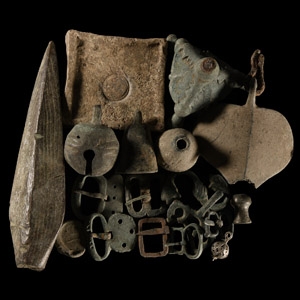
Roman to Medieval Artefact Group
1st-19th century A.D.Sold for (Inc. bp): £52
Including an ivy-leaf pendant, belt buckles, crotal bell, spearhead-finial and other items 1.12 kg total, 2.1-15 cm
From a Surrey collection. Property of a Scottish collector, acquired in 2013. -
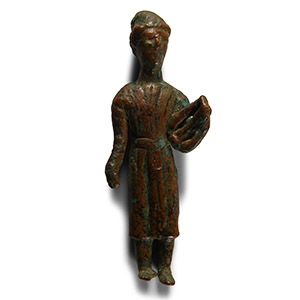
Gallo-Roman Bronze Statuette of a Lyre Player
Circa 2nd century A.D.Sold for (Inc. bp): £221
Standing wearing a three-quarter-length striped tunic belted at the waist and a tight-fitting cap, lyre resting on the left forearm. 59 grams, 77 mm
From a collection acquired on the UK art market from various auction houses and collections mostly before 2000. From an important Cambridgeshire estate; thence by descent. -
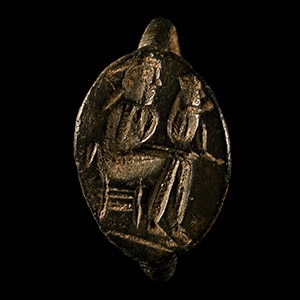
Romano-Parthian Ring with Trader and Seated Child
1st century B.C.-1st century A.D.Sold for (Inc. bp): £52
With round-section hoop, ellipsoid bezel, intaglio representing a Parthian trader with a child seated. 4.26 grams, 22.90 mm overall, 19.01 x 18.83 mm internal diameter (approximate size British R, USA 8 1/2, Europe 18 3/4, Japan 18)
UK private collection before 2000. UK art market. Property of a London gentleman.
