
Loading, please wait...
LOT 0880
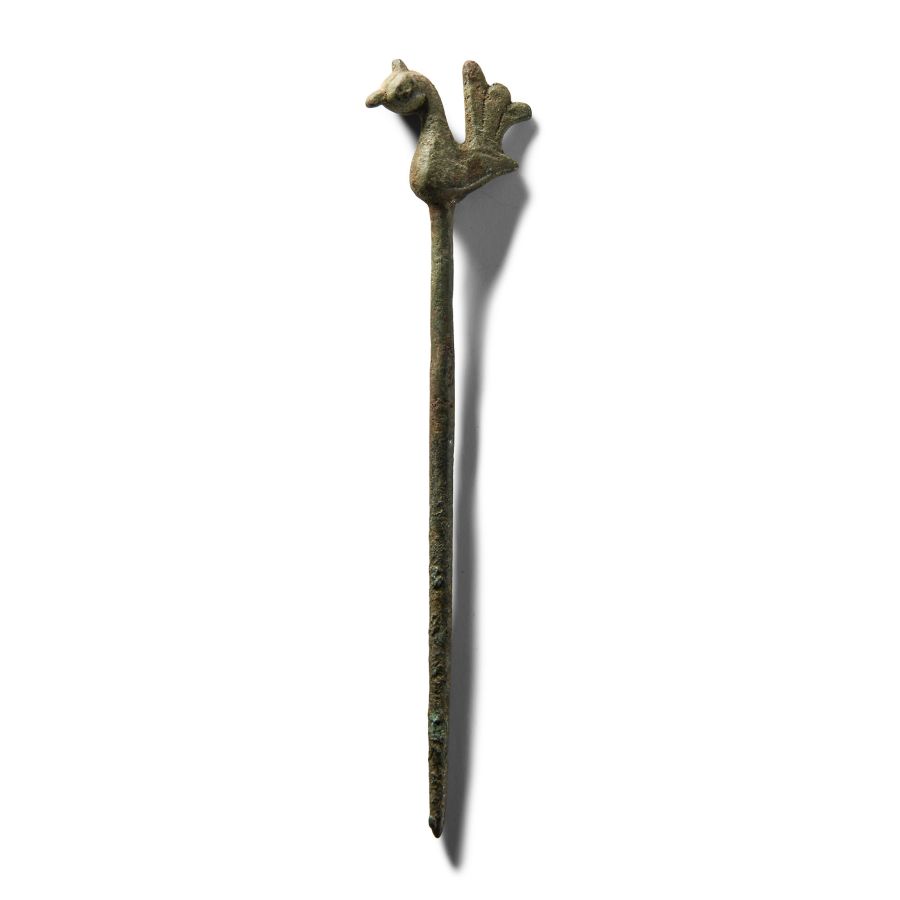
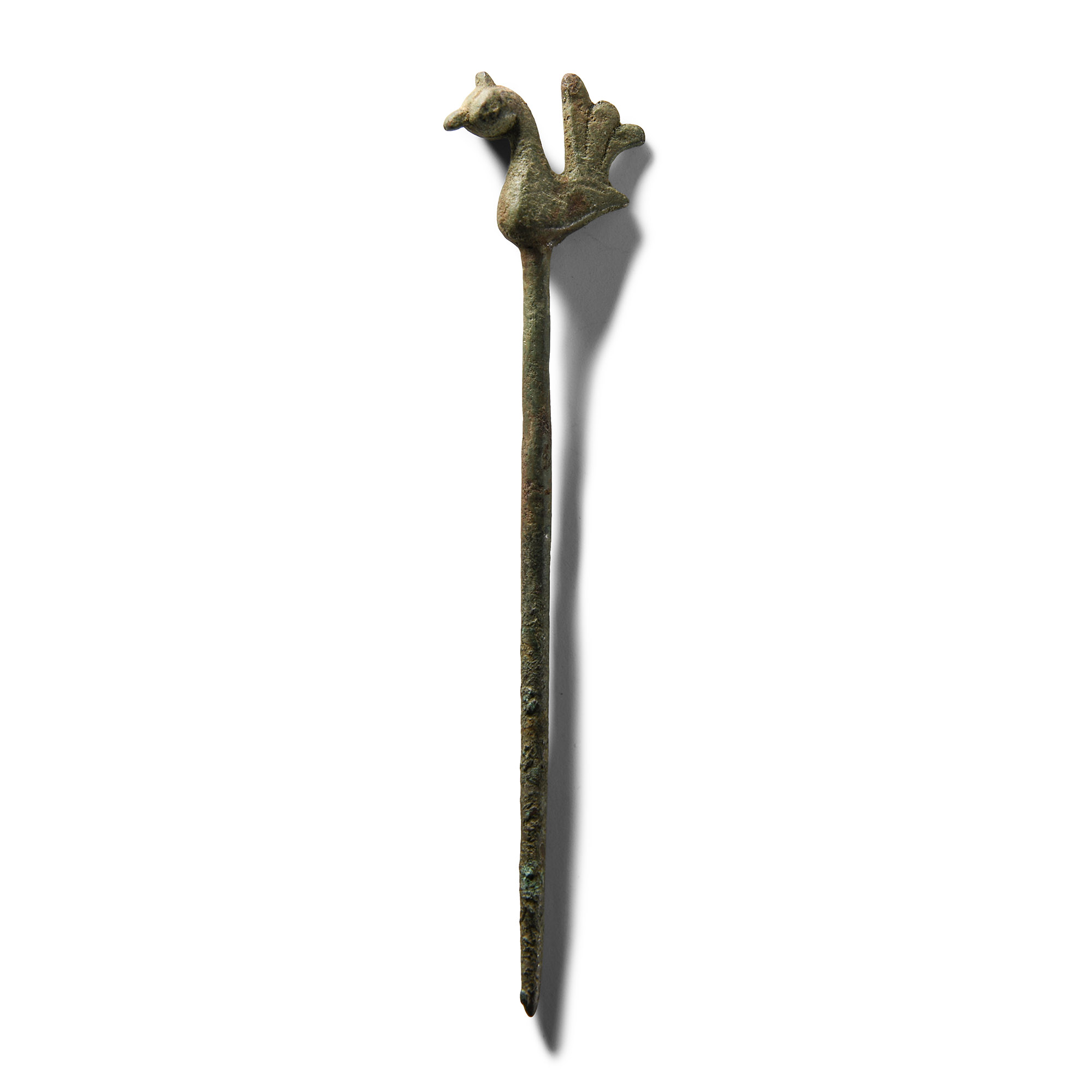
Roman Bronze Bird-Headed Dress Pin
CIRCA 4TH CENTURY A.D.
6 1/8 in. (32.9 grams, 15.5 cm).
Substantial pin with slight bulb below the finial formed as a stylised bird modelled in the round with bulbous head and eyes, lobed tail. [No Reserve]
ProvenanceFrom a collection acquired on the UK art market from various auction houses and collections mostly before 2000.
From an important Cambridgeshire estate; thence by descent.
See Corbet Anderson, J., The Roman City of Uriconium, London, 1867, p.79ff, for discussion.
CONDITIONTimeLine Auctions follows a vetting process to ensure the authenticity and legality of all items, reinforcing our commitment to integrity and responsible trading. Each antiquity, antique, and coin lot undergoes thorough examination by a vetting committee of at least ten external specialists, professional trade association members, scientists, and archaeologists: Our Vetting Process
AUCTIONS:
TimeLine is a leading auction house specialising in antiquities, ancient art, collectables, natural history, coins, medals, and books. Our auctions offer museums, collectors, historians, and enthusiasts the opportunity to acquire unique and historically significant pieces.
-
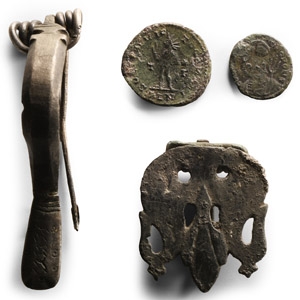
Roman Silver and Bronze Artefact and Coin Group
1st-4th century A.D.Sold for (Inc. bp): £39
Mixed group including a vine-leaf plate brooch, repaired P-shaped bow brooch, and silver coin of Constantine and another. 39.1 grams total, 17-69 mm
From a Suffolk collection. Property of a Scottish collector, acquired in 2013. -
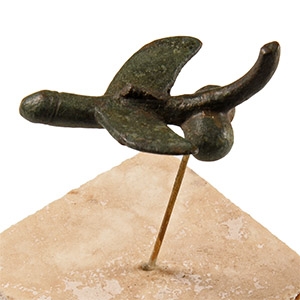
Roman Bronze Flying Phallus
2nd-3rd century A.D.Sold for (Inc. bp): £234
Amuletic model phallus with swept lateral wings; mounted on a custom-made stand. 99 grams total, 67 mm high including stand
From a collection acquired on the UK art market from various auction houses and collections mostly before 2000. From an important Cambridgeshire estate; thence by descent. -
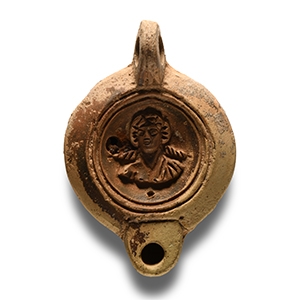
Roman Terracotta Oil Lamp with Frontal Bust
2nd century A.D.Sold for (Inc. bp): £286
With brown slip, loop handle to the rear, the discus with a facing bust of a young woman within a concentric circle border; maker's mark 'LCΛPΓ' within tabula ansata-shaped stamp. 63 grams, 10.2 cm
Acquired on the European art market, 1980s. English private collection.
The discus decorations of these lamps are various: Diana, Dioscuri, Sol and Luna, Africa, Lares, and griffin; portraits of Domitian, Hadrian, male head, bust of a young man, bust of a young woman (our specimen), bust of a bearded old man, fisherman, and an aulete; scorpion, boar, and lion with crocodile; etc. They were an African production and not less than seven worskshops have been individuated: M N O V I V, M N O V I V S T (our case) , M N O V I V S T I , I V N I A L E X I, C C O R V R S , E X F N A / LV C C E I O R V M . Here we can add LCAPIT (Lucius Capito).
